
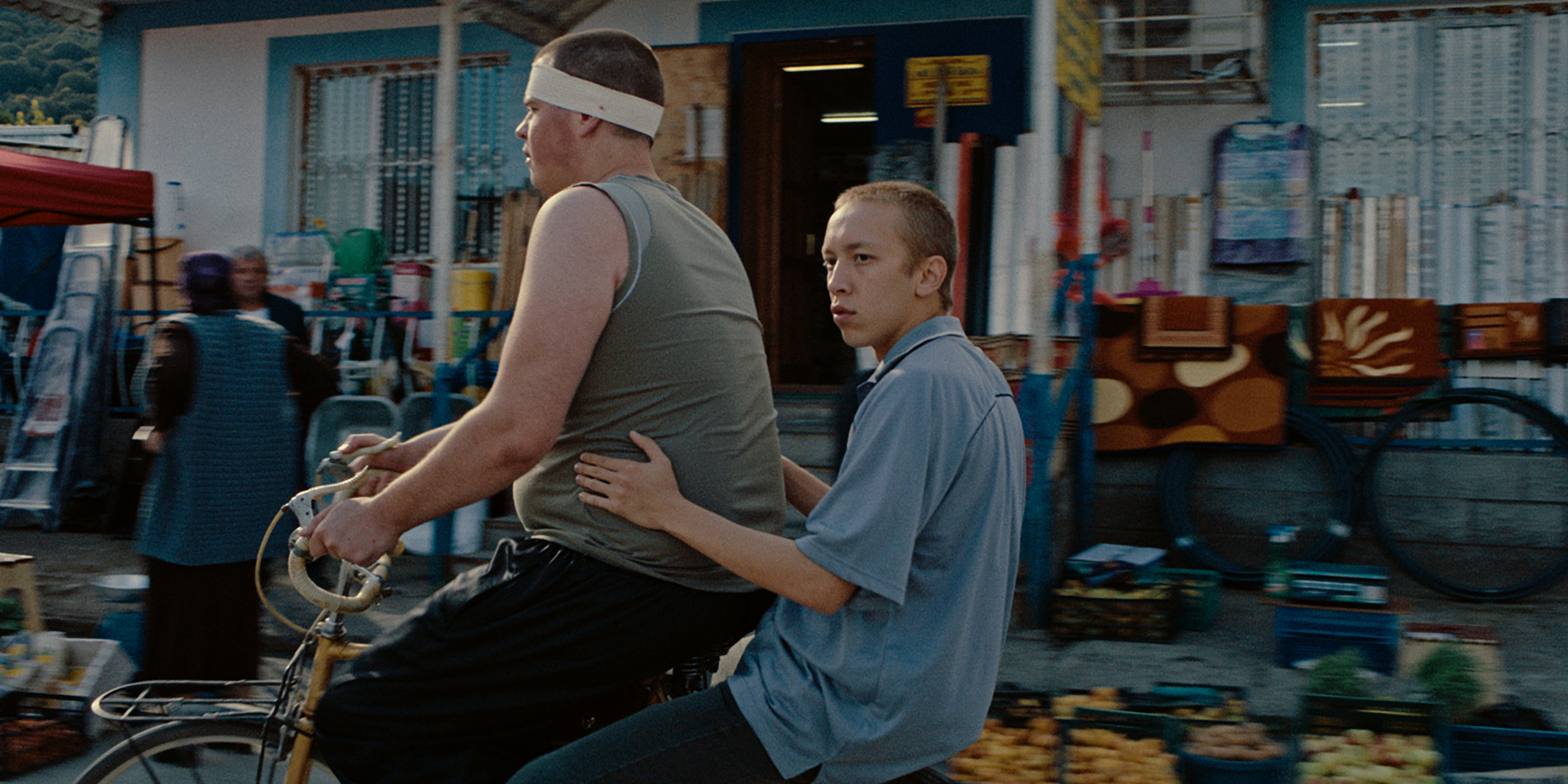
On September 22, "Express", one of the most unusual and lively Russian films of recent years, was released. About why this original film should not be missed – in our review.
Sasha Soslanov (Lev Zulkarnaev, a great talent) nicknamed SOS is a provincial student. He has long been on the verge of expulsion and avoids this seemingly inevitable event only because he has nowhere to live except the dormitory. He also has no money to live on, so the enterprising Soslanov regularly picks up people with difficult fates on the street, takes them to a betting shop, and registers cards with a gift deposit of a thousand rubles on them, which he then uses for bets.
On the card of the last such unlucky player, Sasha places an "express" bet – eight matches, eight bets; if one fails, everything is lost; if all win – the "express comes through" – a thousand turns into a million. This is, of course, a test of fate – what if he gets that lucky? – but the director goes further, and Soslanov indeed starts to get lucky.
Any ordinary film would end here, but "Express" is an unusual film; it begins here. And it is not at all about hitting the jackpot, drawing a lucky ticket, or outplaying fate. Rather, it is about what to do if you have hit, drawn, and outplayed.
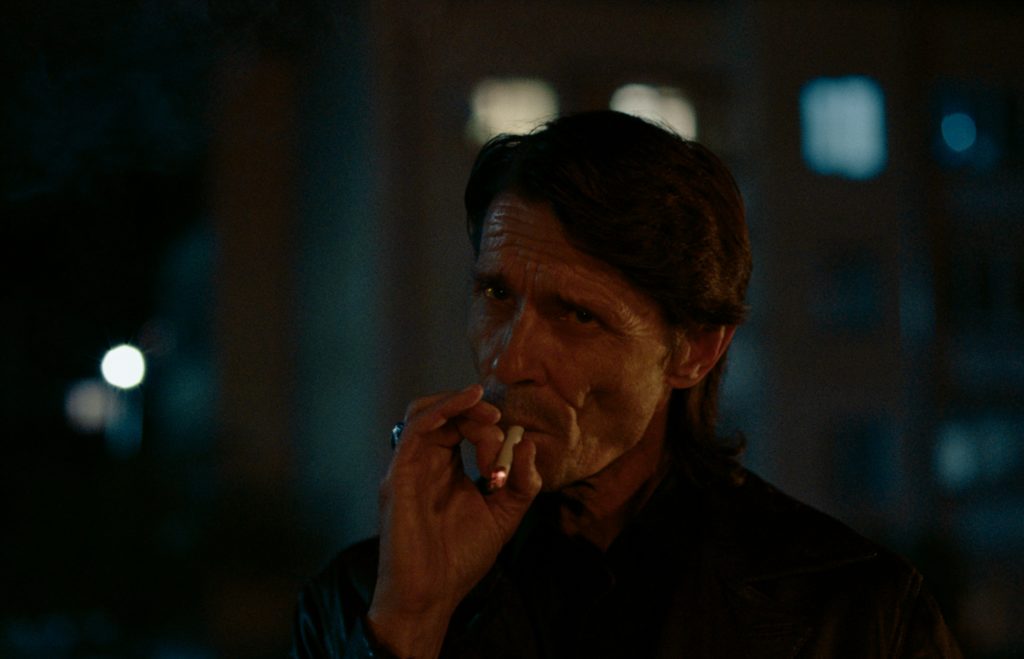
The plot about complex relationships even with a lucky fate is the main one, but not the only one: the provincial town with views of the North Caucasus is populated in the debut film by Bratov with such an abundance of characters – phantasmagoric, amazing, and, most importantly, very alive – that your eyes, of course, dart around. Take, for example, Oleg, a man with a sad face, on whom Sasha's "express" is registered. He travels around the city with doom, a guitar, and a hedgehog, looking for housing, but actually, of course, for the meaning of life. And naturally, he does not find it.
In general, none of the characters find it – the melancholic taxi driver Viktor (wonderful actor Artur Khatagov), the ever-hurrying Sasha, the poet at heart Sery (his phrase "Lyrics.." at the sight of a burning pharmacy is perhaps the best thing domestic cinema has given us this year), and even a group of mountaineers who have descended into the city. They all want to lift their gaze to the sky, to see happiness, but the city does not allow it – they have to lower their gaze, everywhere there are sewer pits. Everyone looks down and instead of happiness sees emptiness. And this is not just a beautiful gesture, a poetic metaphor (although the film is pure poetry, of the highest class), but also a political commentary.
Like any decent film about the provinces, "Express" is, of course, a socially acute film, although it does not contain a single didactic episode. There is, however, some unexpected sentimentality. It would seem that in a story about people chasing a winning ticket, there is no place for sentiment, but on the other hand, where else, essentially, should it be? After all, there is something purely romantic in the idea that if you find the cherished ticket, having searched the entire city for it, you can also find happiness as a bonus. Despite the realism of the kitchen sink, the truth of life that breaks into the frame, "Express" is a film with a fairy-tale narrative, simply shot in the cinematic language of a different, not-so-fairy-tale era.
In this seemingly realistic film, even Soslanov's adventures are strangely rhymed with the labors of Hercules. He tries, on the orders of the dean and a very funny PE teacher, to clean a pool that resembles a nuclear waste dump; he moves a refrigerator, looks for a friend, runs away from bandits – the level of heroism is, of course, not the same, but times have indeed become smaller. Such a mythological framing is needed for this story: on the tragicomic contrast between the sluggishness of the town and the activity of the main character, between the great model and the failed life, the film acquires not so much a second bottom, but some ontological depth.
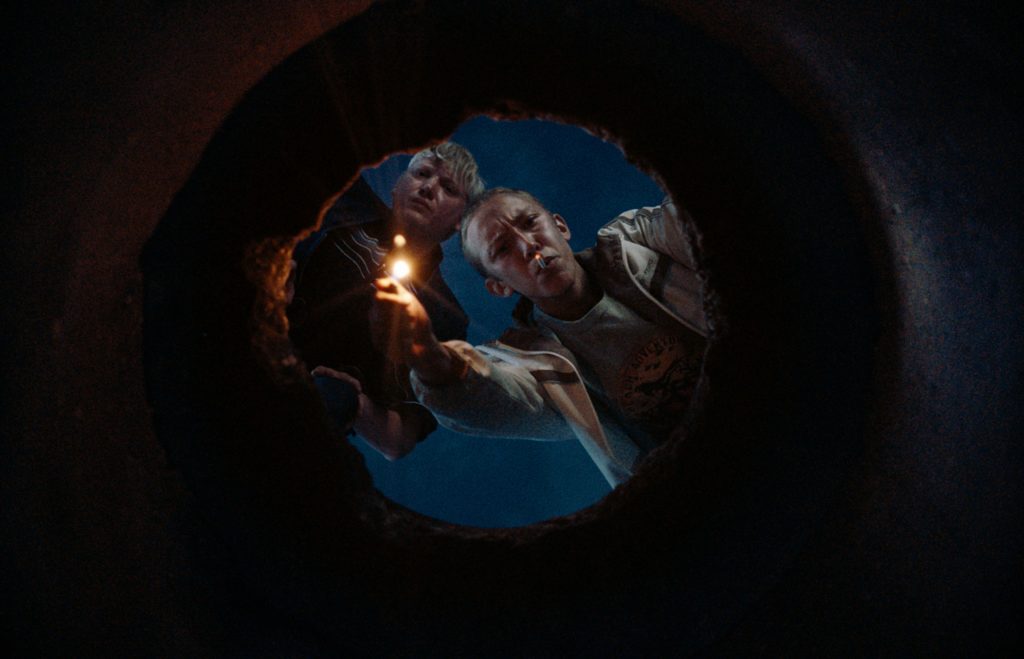
"Express" is not just a film about not losing the cards on which you place winning bets, but also a reflection on the fate of man in general and man in Russia. A somewhat folkloric metaphor, repeated at the beginning and end, when the characters peer into a hole leading to the sewer, but actually straight into the abyss, only confirms: the director is concerned with big questions, existential quests. He simply seeks – meaning, answers, truth – not in lofty words, not in universals, and not in abstractions in the spirit of, but somewhere closer to the ground, or, if you will, to the abyss. And this is also truly worthy; such a film would not be ashamed to be made by Ken Loach (whose "The Angels' Share" is somewhat similar to Bratov's film), and that is a rarity for our latitudes.

Compiling a list of the 10 best films of the first half of 2020 was difficult but fascinating.
Open materialImportantly, despite not so much hopelessness as uncertainty, "Express", like the best films of Ken Loach and Mike Leigh, still makes you look to the future with a certain hope. That is, everything is definitely bad, there is nowhere to run, the winner gets nothing, but poetry can be seen in the horror, a light flickers in the abyss. By turning crude truth into great cinema, the director caught something in the air that even Sokurov's students, for example, could not grasp – while they were making films about how to break free from dust and decay, Bratov thought about where to go. There is no answer, of course, probably, but that is no sin to complain about.
The film "Express" is in theaters since September 22.
Comments
0No comments yet.
Sign in to join the discussion.