
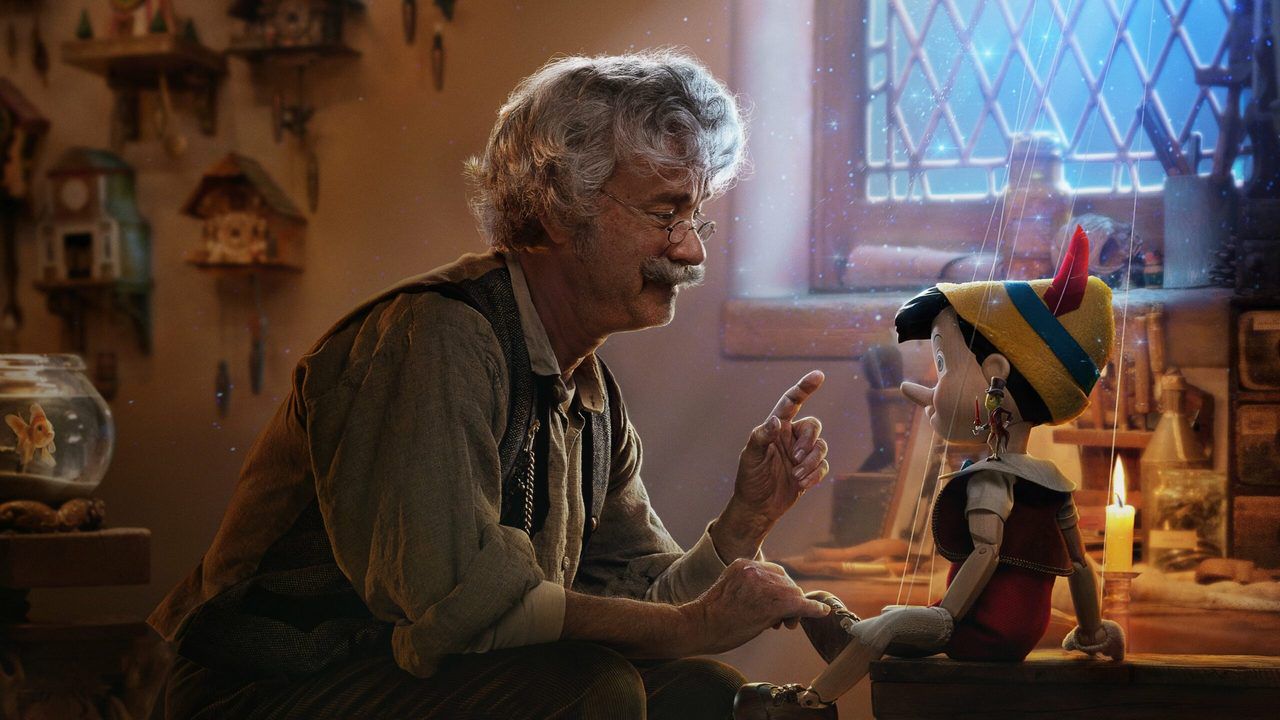
The cohort of Disney film remakes has been joined by 'Pinocchio' directed by Robert Zemeckis. It would have been better if it hadn't.
Synopsis
Old Geppetto (Tom Hanks), seeing a magical star in the sky, makes an unusual wish: that the wooden marionette he made, Pinocchio (Benjamin Evan Ainsworth), would become a real boy. Geppetto's wish is heard, and the Blue Fairy (Cynthia Erivo) brings the puppet to life – but this is only the beginning of the adventures.
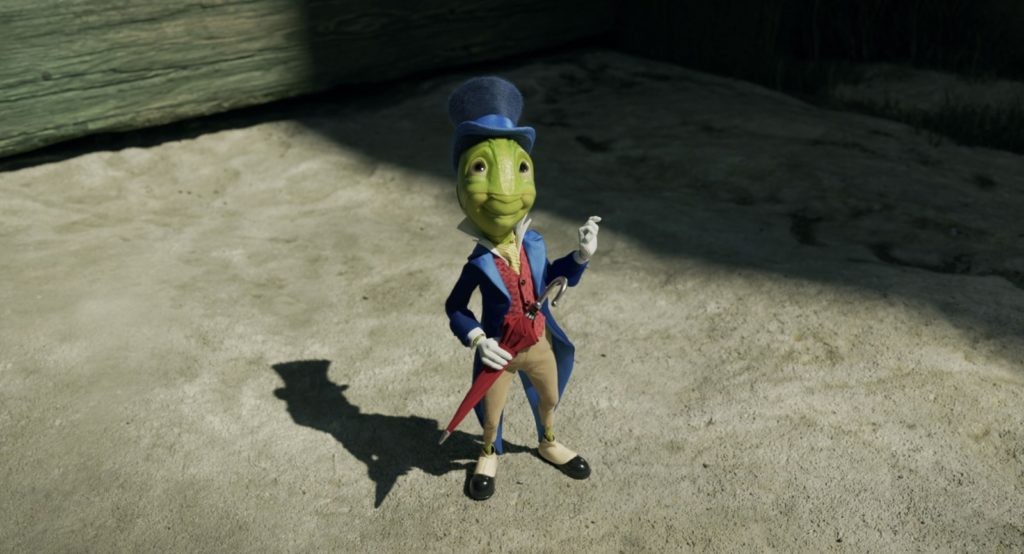
Together with the boy's temporarily acting conscience, the cricket Jiminy (Joseph Gordon-Levitt), Pinocchio will try to learn to distinguish good from evil, pass all the trials, and prove that he deserves to be a real human being.
Visual Problems
Let's start with the most obvious – 'Pinocchio' frankly looks bad. And it's not even about the CGI itself – although there are questions about that too. No, the problem lies in strange directorial decisions – namely, the color palette of the locations, character design, and the amount of computer graphics per square millimeter.
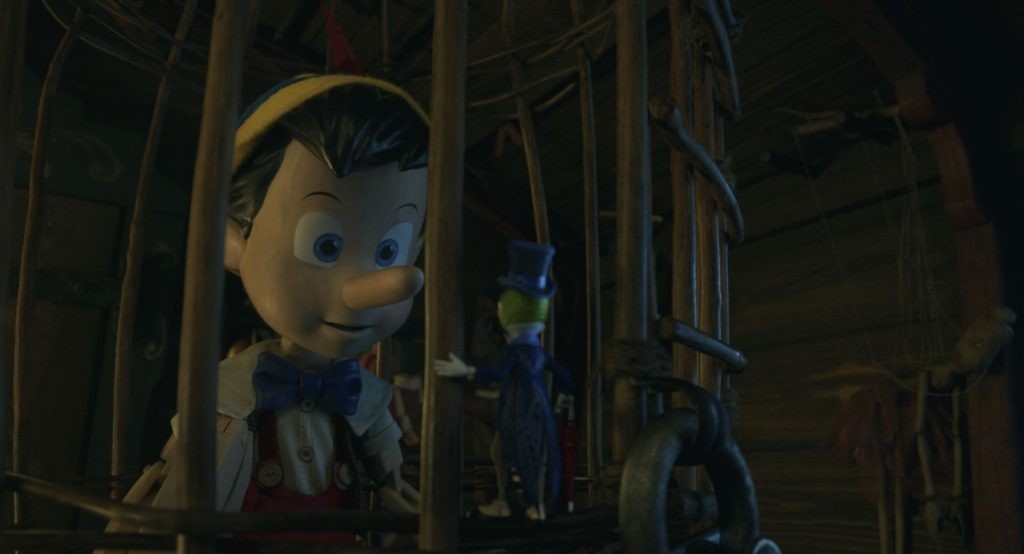
First: for some strange reason, somewhere in Disney they decided that the darker and grayer the picture on screen, the more 'realistic' the film looks. This is, of course, wonderful, except that it gets tiring to squint every time, and the film has no character of its own at all.
Second: a strange mix of contradictory approaches to design makes you scratch your head in bewilderment. Because characters like the fox Honest John (Keegan-Michael Key) are made in hyper-realism a la 'The Lion King', but Pinocchio is so cartoonish and saccharine sweet that he stands out from the overall picture. Probably the most vivid illustration of this contradiction is Jiminy – a highly stylized, garishly green head attached to an anatomically flawless human body.
Third: forgive me, but when poor Tom Hanks picks up a drawn Pinocchio, starts spinning with him against a background of drawn clocks, and at the same time talks to the drawn cat Figaro and fish Cleo, any belief in what is happening dissolves in an instant.
What Does 'Pinocchio' Teach?
No, we are by no means moralizing or demanding impeccable morality from every children's film. The matter is a bit different here.
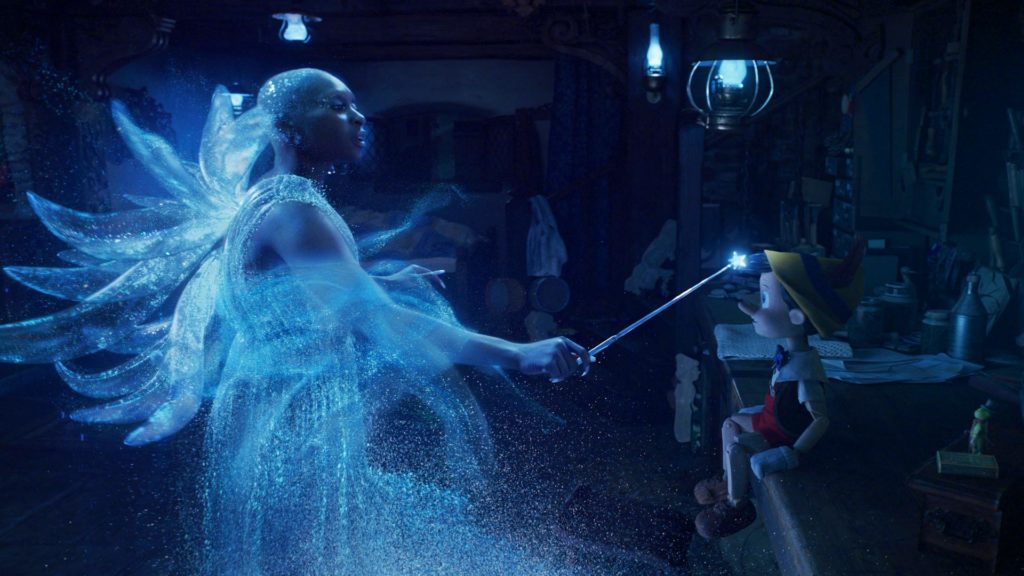
What were the main lessons of the original 'Pinocchio' cartoon? The viewer was told outright that a person grows when they strive to be brave, honest, and selfless. At the same time, throughout the cartoon, it is shown that bad decisions made out of naivety can lead to the same bad consequences as those made with malicious intent. Pinocchio is trusting, prone to lying, and not too inclined to work – and is forced to grow up to get out of difficult situations.
In one scene of the new 'Pinocchio', the protagonist deliberately lies to get out of a similar situation (as if repeating the scene from Shrek 2 parodying Disney's Pinocchio). What can this teach children? That sometimes lying is okay? Doesn't this contradict the old version?
Moreover, the creators tried to cram a modern agenda into the old fairy tale – because now Pinocchio is initially saccharine-perfect, and he makes bad decisions due to a lack of alternatives or pressure from others (a direct analogy to the belittling of minorities and attempts to force them into certain frameworks).
But when you try to impose on an existing story something that was not originally intended, you can put yourself in an awkward position. So what does it mean that the authors, equating Pinocchio with African Americans and gays, are hinting that they are not real people? How easily the arrow turns!
And that's not to mention that the world punishes Pinocchio essentially for no reason. After all, the boy never does anything bad on his own free will throughout the film – and he turns into a donkey just because. Otherwise, we'd have to portray minorities as bad, and we don't want that.
Conclusion
As they say, it would be funny if it weren't so sad. The new 'Pinocchio' literally quotes the original, diluting it with ridiculous and completely unnecessary new characters.
At the same time, it lacks the courage to show what people weren't afraid to show eighty years ago. For example, here the protagonist doesn't drink beer or smoke cigars. How could he? He's a child! And try a hundred times to explain that once upon a time, the unflattering depiction of bad habits in cinema could have an educational purpose.
In other words, 'Pinocchio' 2022 tries to be realistic and progressive, but is frankly afraid to do what 'Pinocchio' 1940 did. And it completely misses the whole point of the story, trying to show it through the prism of modern morality. And what was once eternal and timeless acquires a very specific belonging to a particular time.
And what does that mean? That the new film will become obsolete tomorrow. But the original will be remembered for a very long time. Mark my words.
Comments
0No comments yet.