
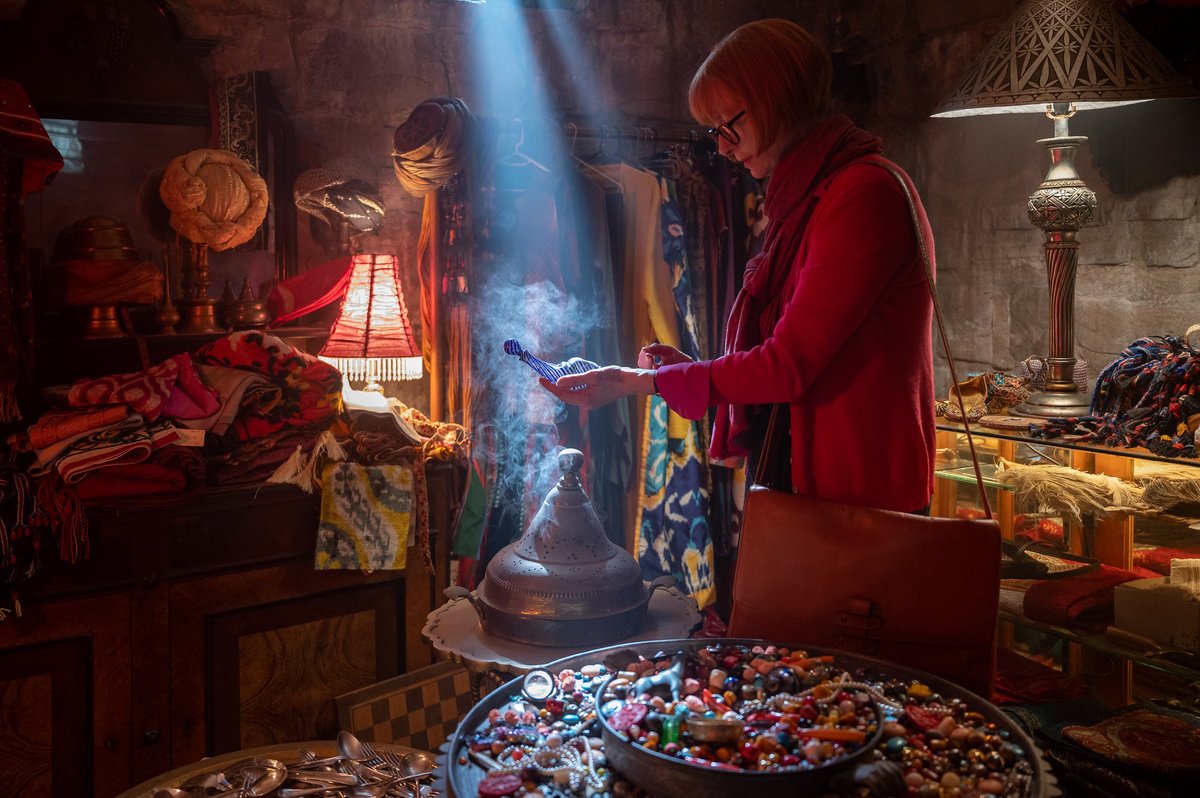
'Three Thousand Years of Longing' has been released, a rare big Hollywood film in our latitudes, and moreover directed by George Miller ('Mad Max'), a director loved and anticipated in Russia. But after watching, you are left with mixed feelings.
Alithea Binnie is a narratologist. She studies myths from different countries and peoples, proving that even very different traditions share common roots and fears. She seeks commonalities to demonstrate that all people have faced similar problems and responded with equally inventive nonsense, which science now solves, rendering myths obsolete, and so on.
Watching this would be rather dull, but Alithea is played by Tilda Swinton, and this fact immediately brings some hope for an interesting turn of events – and that hope is, in a sense, justified. Buying an old, slightly damaged vessel in an antique shop in Istanbul, Alithea tries to clean it the next morning with an electric toothbrush and accidentally opens it. A giant cloud appears, filling the entire room. Alithea thinks that if she closes her eyes, it will disappear, but the materialized being (inflated via CGI to Hagrid-like proportions) has no intention of vanishing – the scholar has released a djinn, a mythical creature ready to grant three wishes.
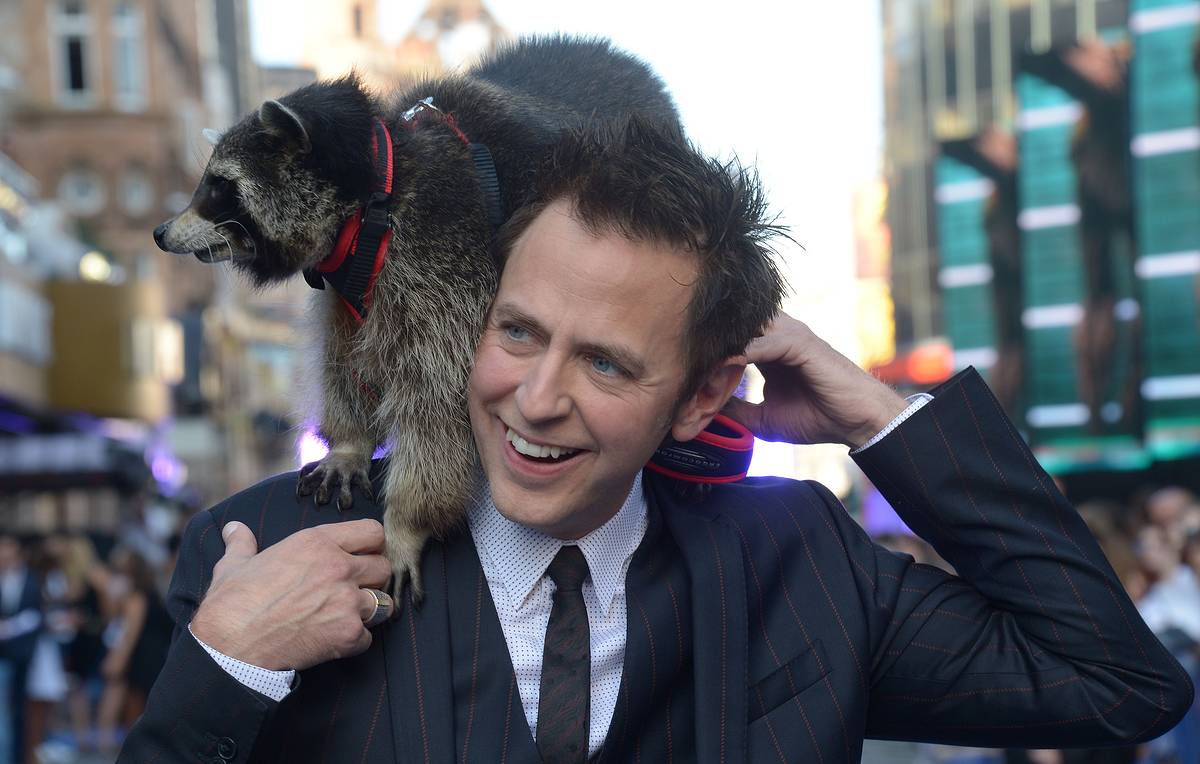
On August 5, the film 'The Suicide Squad' is released. In the director's chair sits James Gunn. Read about Gunn's creative journey in our article.
Open materialHowever, Alithea – a modern person in the extreme – cannot wish for anything. She has a home, no family, but she doesn't need one; she's not ready to die for love, she doesn't need all the world's knowledge, nor half a kingdom. Western Europeans live so well that it seems djinns will never escape their bottles.
But no, a way out is found – postmodernism has taken away human desires, everything has turned into a joke, mystery has become a gag, but the need for stories remains. Alithea begins to listen, mesmerized, to stories about the djinn's difficult fate – imagine, three imprisonments in a bottle, two of them due to love and one due to stupidity – and gradually drowns in them. She is a voyeur, in the same sense as the characters in 'Rear Window' and 'Blow-Up', for example. Someone else's long-finished life turns out to be far more interesting than the present; that's where passions are, that's where sensations are, that's where everything is real.
And following its rational heroine, who transitions from rational mockery ('I know perfectly well that you are a djinn-trickster and will turn my wishes against me, so what's the point?') to hope for sincere love, 'Three Thousand Years of Longing' also makes a leap from post- to metamodernism, from the 20th century to the 21st. Having desired nothing at all, Alithea at some point begins to wish for the impossible, and in this lies, perhaps, the sincerity and inventiveness for which we love George Miller, who, despite all his eclecticism (whose filmography else includes a film about a talking pig and a post-apocalyptic exploitation film about a vigilante traffic cop?), always remains true to himself.
Of course, the themes of 'Three Thousand Years of Longing' are not new, but that hardly makes it less engaging: Miller is an outstanding director, and he retells old truths with delight, almost childlike enthusiasm, and at the same time wisdom (as if he himself had lived three thousand years), so that even in the most banal moments, the film remains a captivating spectacle. The author's taste also remains intact: even when the action is reminiscent, to the point of confusion, of 'The Magnificent Century', one feels that it is not so much vulgarity as a postmodern commentary on it.

But a single postmodern commentary in a genre film is not enough to sustain it, so in the second half of 'Three Thousand Years of Longing', the action moves from the distant past to the present day to tell a modern love story. And here the problems begin.
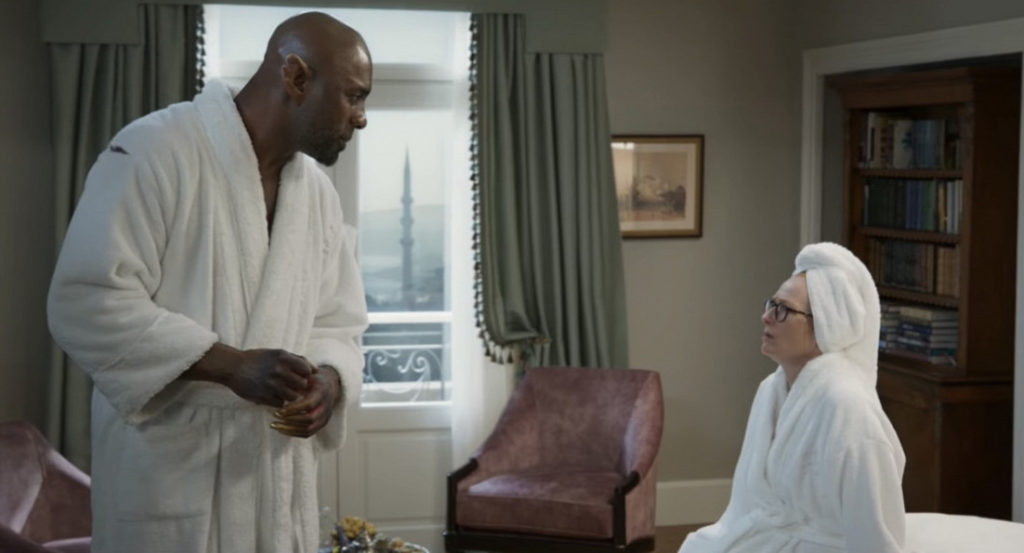
The thing is, Swinton and Elba individually are great artists, but playing 'Kate & Leopold' in the spirit of 'Arabian Nights', they lose to the likes of Hugh Jackman and Meg Ryan – there is no particular chemistry between them, and the film's temperature never rises above room temperature. The characters joke, of course, periodically, and even argue, but it all looks slightly strained. Even their supposedly funny argument about whether the Queen of Sheba visited Solomon (as written in the Bible) or he visited her (as the djinn claims) is delivered in the oppressive silence of the cinema hall, even though the joke is explained and even emphasized.
Miller generally spells everything out, and therein lies the problem, of course – for a genre film, there is too much that needs explaining; for an auteur film, too much is explained. And the fact that it was Solomon who went to the Queen of Sheba turns out to be, in principle, a sensation on the same level as if it were revealed that it wasn't Winnie-the-Pooh who went to Rabbit, but Rabbit who went to Pooh. That is, curious information, undoubtedly, but, in general, unnecessary.
Similarly, 'Three Thousand Years of Longing' – it seems like a good film; morally correct; sarcasm at the right moment gives way to sincerity; and the idea that now, when we have nothing to wish for, we will wish for the impossible, has some ontological depth; but you also want to shove the djinn back into his happy kingdom, and Tilda Swinton into some new <a href="/b/post/18411">'Memoria'</a>.

We tell you what to expect from the film 'Memoria', the new work of Cannes Film Festival laureate Apichatpong Weerasethakul.
Open material'Three Thousand Years of Longing' is in theaters from September 8.
Comments
0No comments yet.
Sign in to join the discussion.