

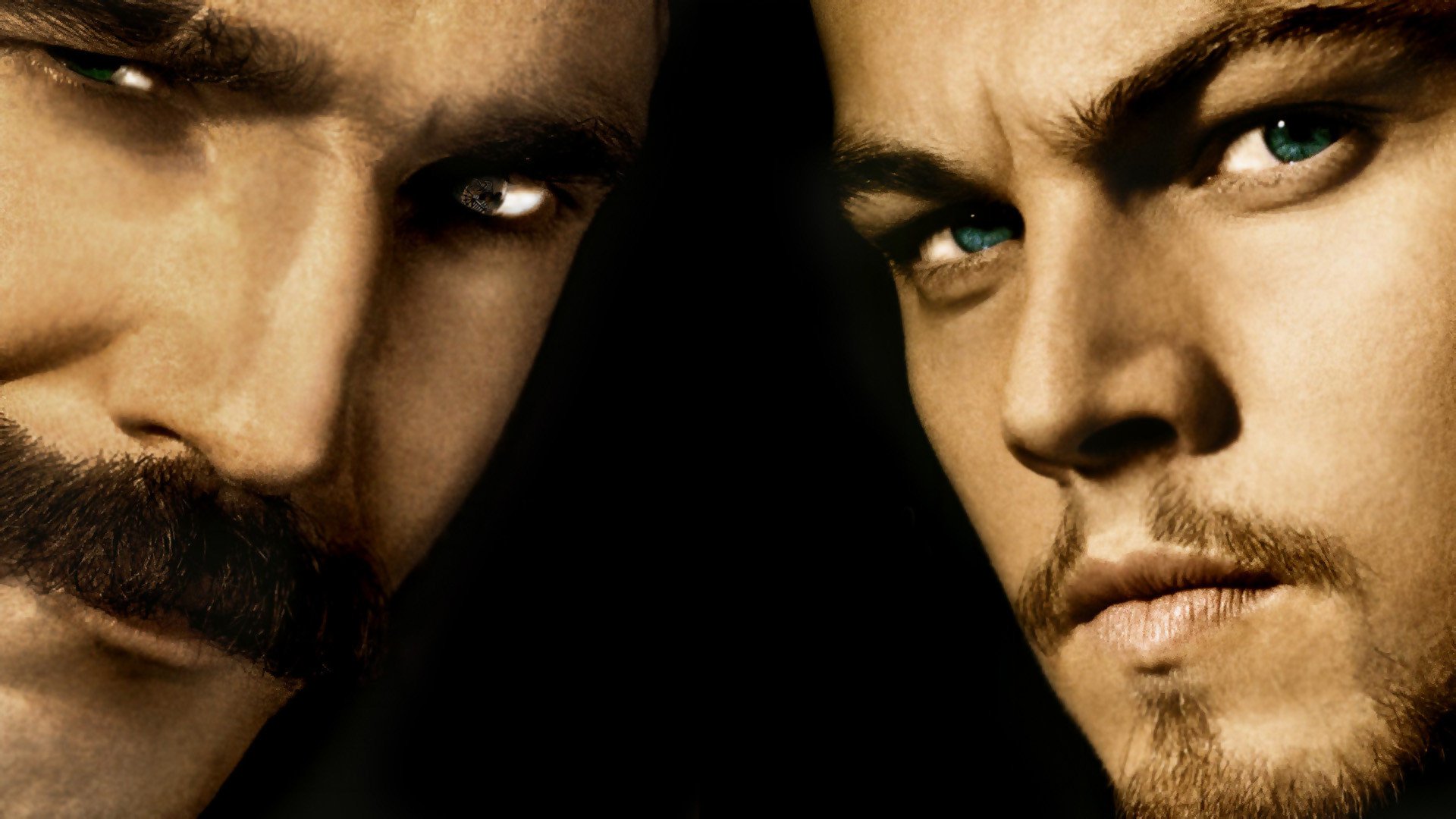
Losing to 'Chicago' in all Oscar nominations, massive shoots, the U2 soundtrack, the birth of a long-standing cinematic duo of the 21st century, and the history of one big country. This year marks 20 years since the release of Martin Scorsese's film...
I wanted to make this film for many years because it touches on the history of this city, and the history of this city, it seems to me, is actually the history of America.
In 1846, in Lower Manhattan's Five Points district, a clash occurs between gangs of "native" Americans and immigrants who had recently settled in New York. During this fight, the leader of the immigrants, Priest Vallon (Liam Neeson), an Irishman by origin, is killed at the hands of the leader of the "natives," Bill "the Butcher" Cutting (Daniel Day-Lewis). Vallon's young son, Amsterdam (Leonardo DiCaprio), ends up in a reformatory, from which he is released only 16 years later.
How It All Began
In 1970, at a New Year's party with friends, Martin Scorsese noticed the novel "The Gangs of New York" by Herbert Asbury, published in 1928. The book told of a time of incredible cruelty and lawlessness in which the city found itself between 1830 and 1861, when the American Civil War began. It was a time when the neighborhoods of Lower Manhattan were effectively controlled by criminal gangs. Bowery Street, located very close to the places in the city where Scorsese grew up, did not escape this fate. He read the book in one sitting and passed it on to Jay Cocks.

He wrote a 179-page script, "broad, almost Dickensian" in scope, which was heavily influenced by the films Federico Fellini's "Satyricon" and Stanley Kubrick's "A Clockwork Orange." The star of the latter, Malcolm McDowell, was once even considered for the lead role of the future film. Then, five days after the premiere of "Raging Bull" in 1980, the expensive film "Heaven's Gate" by Michael Cimino was released – it came out and immediately flopped at the box office, dragging down the entire United Artists company. Along with it, the prospects for creating a historical epic about gangster gangs vanished overnight.
The project was revived only in the 1990s at Warner Brothers, where they planned to realize it after the film "Goodfellas," but it was soon shelved again. The next attempt was made at Disney, but the meager box office returns from "Kundun" again acted as a cold shower on the financiers. Thus, all major studios turned down the film.
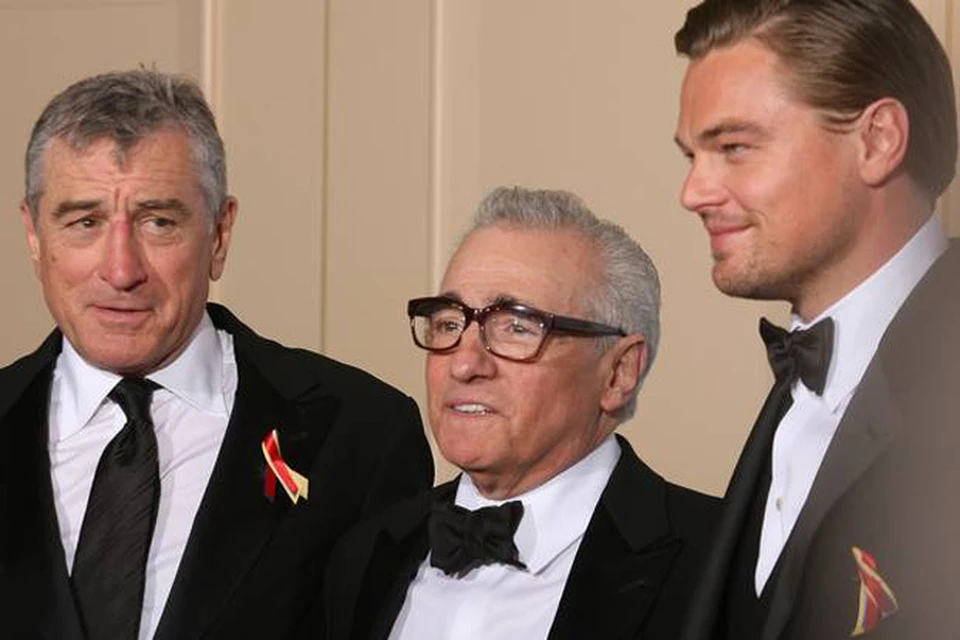
Only after Ovitz visited Scorsese on the set of "Bringing Out the Dead" in 1998 and suggested Leonardo DiCaprio as a potential star did "Gangs" finally begin to look commercially viable. It was Robert De Niro who first told Scorsese about the talent of the young star, with whom he had acted in the film "This Boy's Life."
The Battle for the Film
Later, Martin would call these shoots "nightmarish." The main work began on schedule at the Cinecittà film studio in Rome, where films such as "La Dolce Vita," "Cleopatra," and "Ben-Hur" were once shot. Even now, when visiting the studio, tourists have the opportunity to see these sets again.

"Star Wars" creator George Lucas, who was working on "Attack of the Clones" at the time, visited the enormous set in Rome and told Scorsese that it was probably the last of its kind, since nowadays such things are easier to replace with computer work to save money. Lucas's know-how came in very handy for the filmmakers later, when "Gangs" needed an elephant, but none of the Italian trainers could provide one. Weinstein later recalled that he told Scorsese to keep shooting, while he called Lucas and asked for his help: "Everything is going to hell here! We don't have an elephant! Tell us how to shoot it!" Lucas, being a well-known professional in such matters, advised them throughout the process of shooting without an elephant and later, when creating its digital version. In the film, the elephant was the only thing entirely created using a computer.


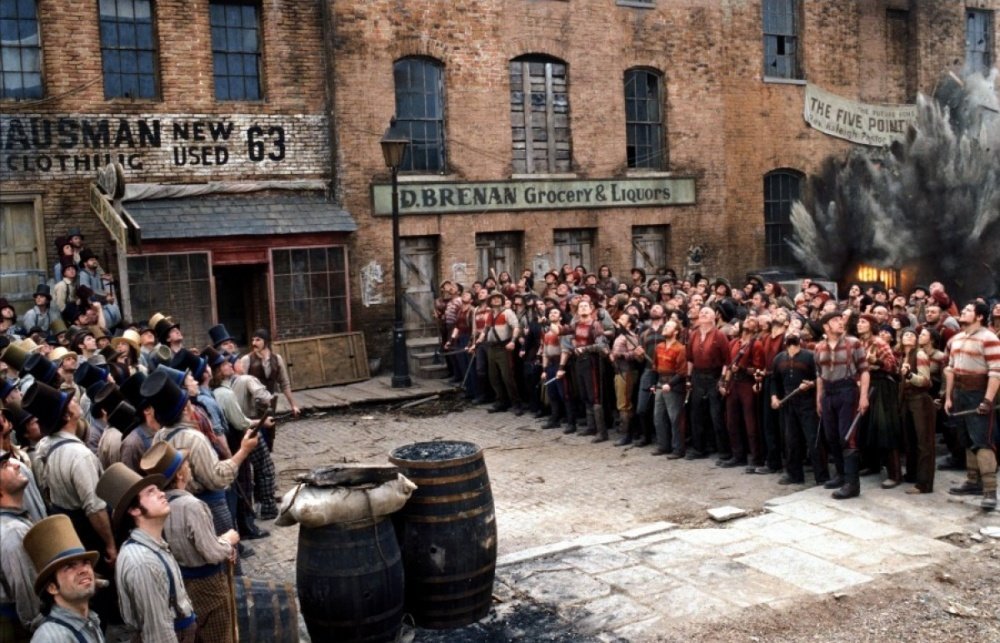
On the set, which was nearly a mile in size, the surroundings of the "Five Points" of Lower Manhattan were recreated as they appeared before the Civil War: a labyrinth of "rabbit holes," breweries, bars, workshops, churches, opium dens, underground saloons, and secret passages stretching in all directions as far as the eye could see. Scorsese zipped around the winding streets among hundreds of Italian extras on a golf cart, stopping only to explain to the costumed extras exactly how much dirt needed to be rubbed into a particular garment. Working at a snail's pace and shooting less than a page of script per day, he nevertheless very quickly drove the film's budget beyond the agreed $83 million.

Weinstein made at least 6 inspection trips to the set and spent about 16 weeks on them. Miramax continuously bombarded the film crew with notes containing detailed lists of questions that Weinstein had.
"And so all the time," Scorsese groaned. "One day he said I had too much oil in my hair," adds Day-Lewis. "And then I said, 'Oh really? Great, let's add more oil!' And when I ran into Harvey at the Cinecittà studio, who was walking up the stairs, I immediately cheered him up: 'Harvey, I heard you wanted more oil in my hair. Well, I hope it's okay now?' After the shoot, he cut off his hair altogether.
At least once, Scorsese threatened to walk off the set and let someone else finish the film. In the end, it came to the point that rearview mirrors were attached to the video monitors to warn Scorsese of Weinstein's approach.
Daniel Day-Lewis did not accept the role immediately. The actor was on a fairly long creative break, and in general, Daniel chose roles very carefully. The final decision was influenced by the fact that the actor already had experience working with Scorsese and the image of Bill the Butcher intrigued him. For the role, he spent a lot of time in a butcher shop in London, and it took him another couple of months after the end of filming to get rid of the accent he used in the film.
Gangs in the Fight for Recognition in Hollywood
In the director's cut, the film lasted 4 hours, and the producers did not dare to send such a film to theaters. In the end, the film was cut to 3 hours.
At the 2003 Academy Awards ceremony, "Gangs of New York" was nominated for ten awards, including Best Picture, Best Director, Best Actor (Day-Lewis), and Best Original Screenplay, but did not win a single Oscar. The film earned $200 million at the worldwide box office, but could not cover its own budget deficit and resulted in a debt for Scorsese that he was only able to pay off after the release of "The Departed."
But what did it matter? The main thing is that thanks to this film, Scorsese found a way out of the creative dead end he had found himself in at the end of the 1990s, survived a clash with one of the most influential Hollywood producers, and entered his fifth decade in the world of cinema.
For me, cinema is literally stepping into the ring and fighting. I am in the center, around me smoke and fire, people shooting and throwing grenades. And I'm about to climb out of the trench to give them a little gift. What will happen? Will I be shot? Will I be praised? I don't know. And is it already thirty years? Can't be! I look back and see a battlefield there.
Comments
0No comments yet.