
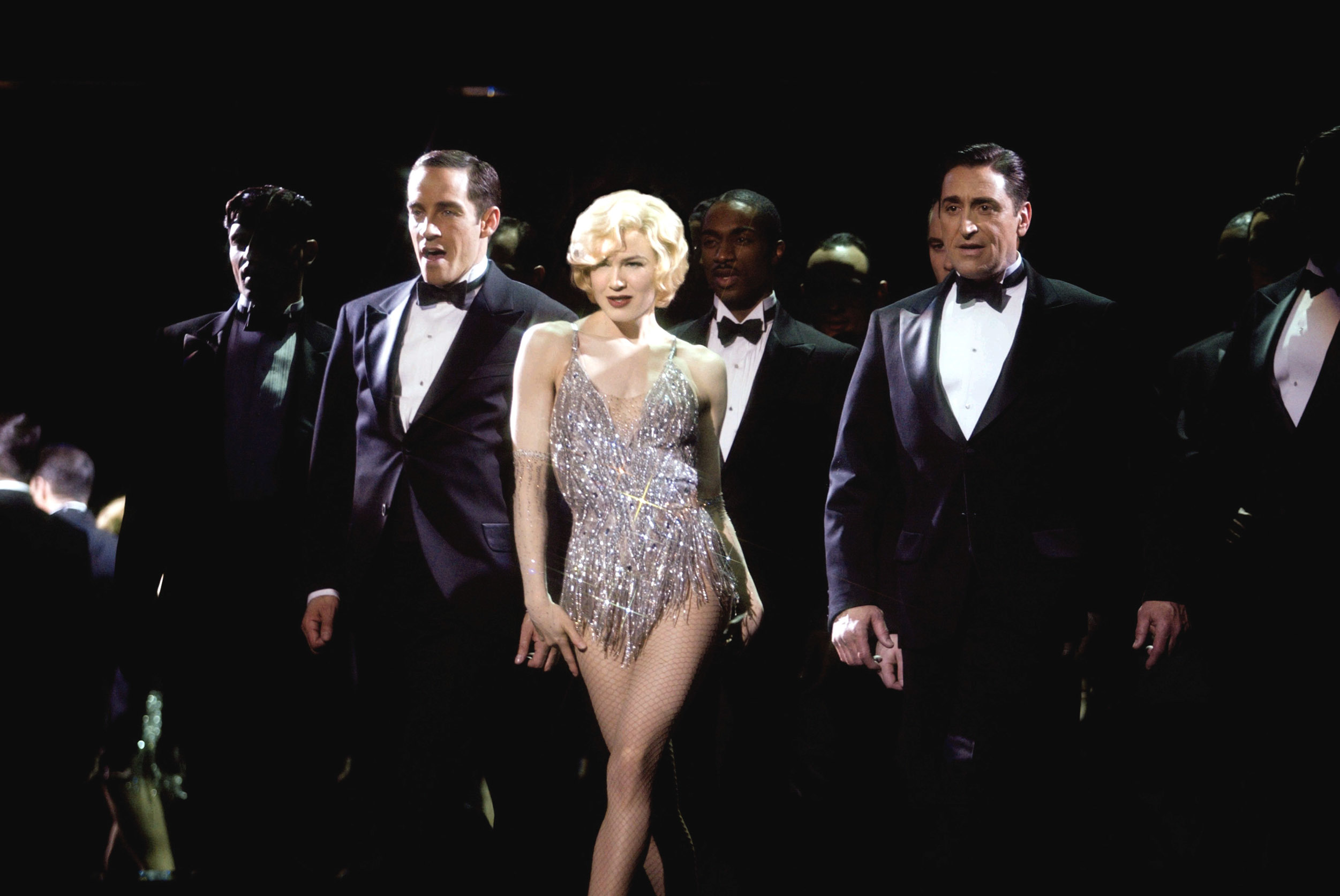
This year marks the 20th anniversary of Chicago – a film that reminded the world that musicals should be taken seriously. Get ready to fall in love from the first notes. After all, on our side is all that jazz.
On the Long Road of Chicago to the Theatrical Stage
The idea for Chicago was born to journalist Maureen Dallas Watkins back in 1924, when Maureen was covering two high-profile cases for the Chicago Tribune: a married beauty shot her lover during a heated argument, and a cabaret actress killed her boyfriend in a drunken rage. Thus a play was born in which one of the criminals transformed into Roxie Hart, and the second into Velma Kelly. Watkins did not forget to include herself under the name of journalist Mary Sunshine.
Chicago brought to the forefront a topic that was wildly risky by the standards of the time – women murderers who managed to escape justice. Critics were beside themselves with righteous indignation, seeing on the pages an astonishing ambiguity and an unheard-of level of depravity, yet they all had to agree that Chicago perfectly captured the spirit of the twenties.
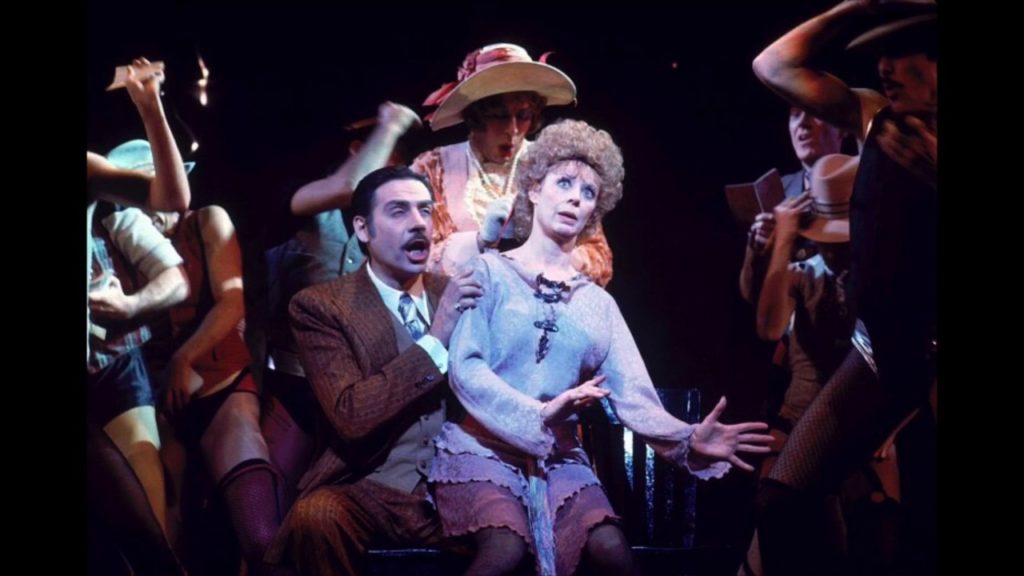
The play piqued the public’s interest – the production earned excellent box office returns, and the silent film adaptation was warmly received by audiences. In 1969, after Watkins’ death, the rights to Chicago were acquired by the legendary Bob Fosse, who enlisted the help of librettist Fred Ebb and composer John Kander – and the world received one of the longest-running musicals on Broadway (losing that title only to The Phantom of the Opera).
Without betraying the atmosphere of the original, the creation of Fosse, Ebb, and Kander saturated the material with jazz and vaudeville, while drawing parallels between the justice system and the world of show business. The cynical humor of Chicago now seeped from every detail. One of the songs mocked the stories that every aspiring actress told about her past: an orphan from Mississippi who ran away from home for love. In the 1920s, when a person’s past could only be uncovered through a private detective, such stories were no longer taken seriously and only provoked laughter.
The Film Adaptation and Main Roles
When Hollywood acquired the film rights in the 1970s, the initial plan was to have Fosse in the director’s chair and cast Goldie Hawn, Liza Minnelli, and Frank Sinatra in the lead roles. But Fosse’s death in 1987 threw the producers’ plans into disarray, and the waning interest in movie musicals overall made studios forget about Chicago for many years.
The unexpected worldwide success of Moulin Rouge! in 2001 revived interest in the genre, so Chicago was finally taken off the shelf.
The director’s position was originally sought by Nicholas Hytner, who approved Charlize Theron for the role of Roxie Hart. After some time, Hytner left the project, making way for Rob Marshall, who held new auditions for the role of Roxie. And Charlize lost out to the young and talented Renée Zellweger. Incidentally, it was Marshall who came up with the concept of ‘stage numbers inside Roxie’s head,’ which is one of the classic examples.
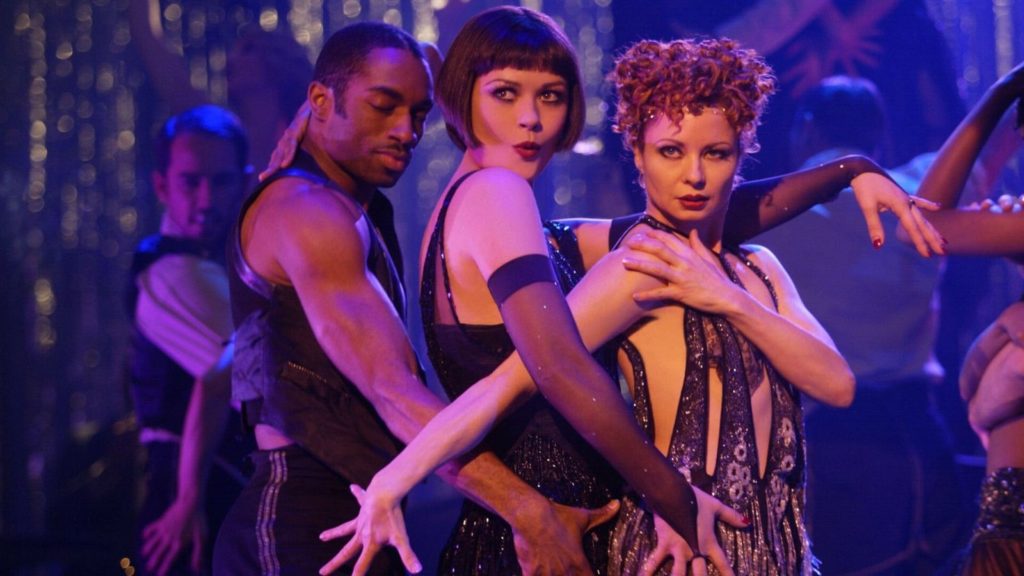
Renée’s on-screen partner was the sultry Catherine Zeta-Jones, who agreed to the role without even reviewing the material – simply because she desperately wanted to sing “All That Jazz.” Catherine also declined to appear in Chicago with her natural long hair, opting for a short haircut instead. The actress did not want long hair to obscure her face and raise doubts that Catherine was dancing herself.
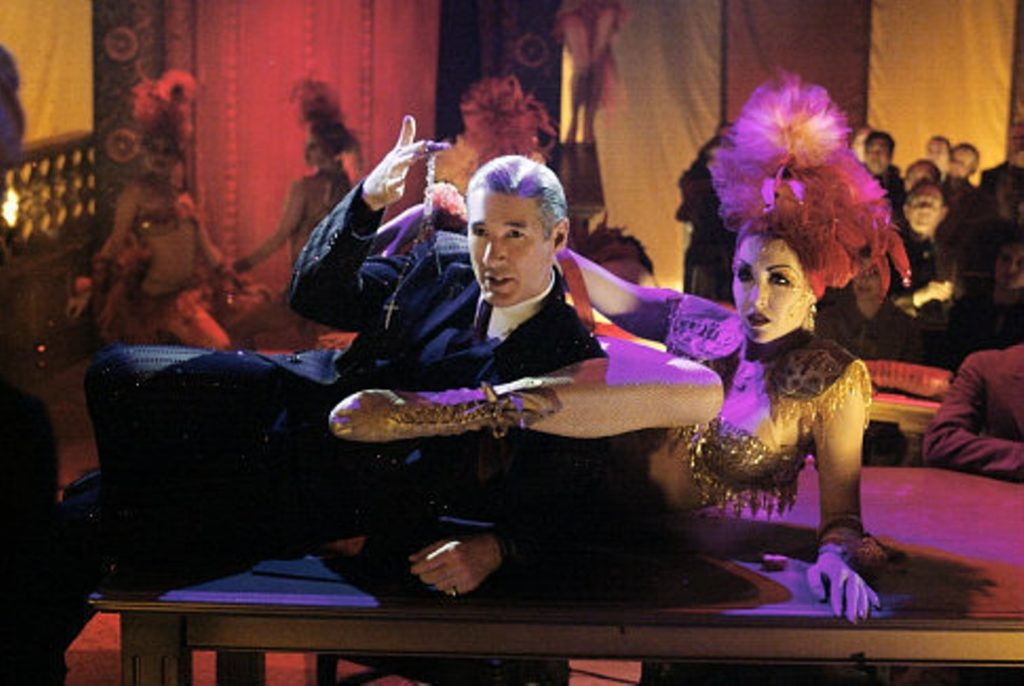
For the role of the lawyer for the two criminals, Billy Flynn, they planned to bring in Michael Jackson himself, but rightly reasoned that he would steal all the attention. After that, producers repeatedly tried to attract John Travolta to the project, who stubbornly refused, and subsequently greatly regretted it. Finally, Billy Flynn was assigned to Richard Gere, who approached the task very thoroughly and took tap dancing lessons for a full three months. The effort paid off – his dance scene was filmed in just half a day.
Chicago in Supporting Roles and Cameos
Fun fact: John C. Reilly, Renée Zellweger’s on-screen husband, is a surprisingly avid fan of clowning – he developed his own look for the song “Mister Cellophane.” Moreover, it was he who came up with the first half of the number, in which Mr. Hart applies clown makeup to himself.
For the role of the prison warden Matron Mama Morton, the director initially envisioned Kathy Bates, but she was busy filming About Schmidt, so the role went to Queen Latifah. Both actresses were nominated for Oscars for their performances in 2003.
Before Mama Morton’s number begins, you can spot one of the inmates talking to Roxie. This cameo features Chita Rivera – the actress who was the original Velma Kelly on the Broadway stage back in 1975.
The Hungarian prisoner was played by actress of Russian descent, Ekaterina Shchelkanova, which led to several curious situations. Her character utters some words in pure Russian, and her lengthy speech during the “Cell Block Tango” number is delivered with such a strong accent that even native Hungarian speakers cannot always make out the words.
Comments
0No comments yet.
Sign in to join the discussion.