
Star of Miguel's immersive show Ekaterina Zorina can cry at the snap of a finger, adores historical projects, and is ready to play any character. From the interview with the actress, you will also learn why she prefers drama to comedy and what she wi...
I am sitting in the small lobby of the 'Priyut Komedianta' theater in St. Petersburg. Today, they will show the touching play 'Warsaw Melody' directed by Vitaly Lyubsky, based on the play of the same name by Leonid Zorin. The heartfelt story of two lovers will be told by Ekaterina Zorina and Alexander Matveev.
Three hours before the performance, preparations are already underway in the theater, and a slight excitement is in the air. In a cozy dressing room, an interesting conversation awaits me with the open and incredibly charming actress Ekaterina Zorina.
About Cinema, Theater, and Miguel's Immersive Show
— One article wrote that you believe you need to be constantly tense in the theater, whereas in cinema you have the opportunity to do several takes. So, is it harder to act in the theater?
I don't remember saying that. But earlier in cinema, I had small episodic roles; in recent years, I've already had leading roles, meaning almost every day is a shooting day and, as they say, there is something to play. Perhaps I thought it was easier in cinema because I didn't have that experience.
But then I got into the series 'Filin' or 'Likhach'. There I worked around the clock, learned what it's like to have 21 shifts in a row, where a shift is 12 hours, plus overtime sometimes. Feature films can shoot a minute of screen time per day, but in series, they sometimes save money and shoot 17 minutes per day, which is 24 scenes. In this mode of shooting many days in a row, it's a heavy load, and in that sense, yes, it's much harder than in the theater.
In the theater, work consists of morning rehearsals and an evening performance, which starts some time before, about two hours. This is important, it's tuning. In the theater, I have powerful dramatic material, no supporting roles, and on stage it's a huge load. Playing a performance is hard, but in total it's about five hours. That is, purely in terms of duration, it's incomparable to the load in cinema.
Also, cinema is when you have to constantly wait. A scene is shot in several takes, the net result is a few minutes when you exist in the frame. But before that, you have to wait for the lights to be set, adjustments made, rehearsals. It helps when you know how to hold yourself together and not waste energy, using it only after the words 'Camera, action!'
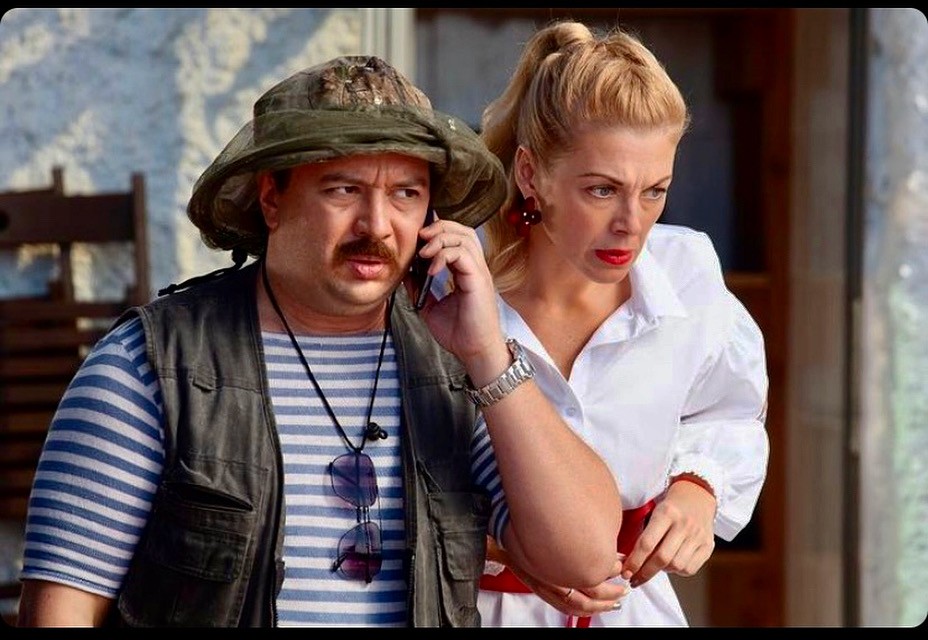
But the theater also has its own harshness. For example, in cinema, you can work feeling very unwell. I had that in winter during the filming of 'Notes of a Hotelier'; I suppressed my fever with TeraFlu and paracetamol for all 16 shifts. I gathered my strength only for the takes in front of the camera, and during breaks I was shaking. But if you are sick and you have a performance, it's death, it's terrible, impossible to play. In that sense, I agree, it's easier to be a film artist. In cinema, the tension is about endurance; in theater, it's psycho-physical.
If I were told to choose cinema or theater, I don't even know which is better. But in any case, at the end of the day, it's all happy work and a very happy tiredness.
— One article said you prefer dramatic roles to comedic ones. What attracts you to drama?
Yes, I have such a flaw. I understand that this is completely unfair to comedic roles. But I was first trained for comedic roles; back in the academy, I was more plump, a character actress. I was raised as an actress playing mothers and cheerful old women. And I myself considered myself an actress of the light comedic genre. It came easily to me, as if I was made for comedy.
Then I came to the Theater on Vasilyevsky to Vladimir Anatolyevich Tumanov, and apparently, from the delight of working with him, I lost many kilograms in two months. And suddenly I became a heroine. Perhaps this was part of Vladimir Anatolyevich's plans. It was he who gifted me with magnificent dramatic roles, and I acquired a taste for them. And these roles became dearer to me.
I have, perhaps, an unfair belief that playing a dramatic heroine is much harder than playing a cheerful giggler. I believe that not everyone can play drama, but existing in a light comedic role is much easier. In comedy, you also need to have a lot: freedom, lightness, and a sense of humor, yes, but drama is played from the gut. And Vladimir Anatolyevich uncovered this in me. I realized that when you invest in a role, pour out your soul to the audience, at that moment you begin to adore such a role because it has become confessional for you, your close person. And comedic roles are not so dear to me now; they seem like an easier path.
I need the role to come to me with difficulty, so that I suffer for it, pray for it. It's like love: it must be won. I have such a masculine principle. And when the role comes into my hands easily, everything is simple, then I think it's unfair to the profession. It seems to me that I haven't done anything.
Also, I don't like it when people laugh as if watching sitcoms. I understand, for many it's a way to relax. But I don't like that kind of laughter. I like it when people laugh at a good comedy, like Gogol's 'The Marriage,' that's wonderful material.
I love it when people think, cry, worry, when something deep beyond laughter is touched. I adore it when the audience is attentive and silent, so silent that there is a ringing silence. Only a dramatic role can give that.
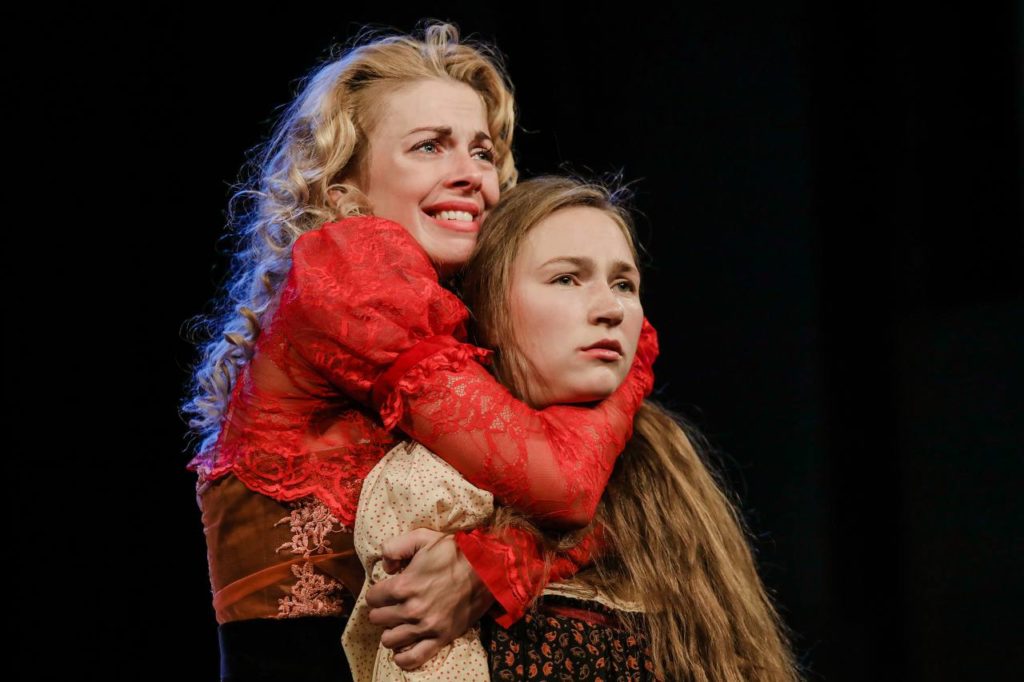
— 'Warsaw Melody' is a two-person play with two lead actors. Is it difficult to perform in a play where you two have to hold the audience's attention?
I don't know, I can't say it's difficult. 'Warsaw Melody' is so strongly born by me, it's so much me. I can't evaluate it as a product where it's difficult or easy, I can't look at it detachedly. My personal Katya's investment in 'Warsaw Melody' and in the Theater on Vasilyevsky is absolutely the same.
Perhaps, strangely enough, being on stage together is even easier because it's mutual engagement, trust, love between partners. When there are 20 people in a play, only a small thread depends on you alone, and that's it. We know this great law of theater: 'It's unclear why suddenly, out of the blue, a play doesn't work.' One person cannot lift a play if there are many other actors in it. It's always a collective effort. If 'Warsaw Melody' doesn't work, then we two can grab it; my partner and I are strongly connected and will feel if one of us is drifting and will pull the other up.
Also, 'Warsaw Melody' is a favorite and close material to me, so I don't experience difficulties while playing. But maybe I will have a two-person play where it will be hard for me. A lot depends on the material.
— Miguel's immersive show 'The Returned' recently closed, where you played one of the main heroines, Helen Alving. Was it difficult to perform there?
[Immersive show is an interactive theater where there is no fourth wall, the audience is directly involved in the action, being in the same space as the actors]
Miguel's immersive show is the happiest thing that can happen to an actor. It was something incomparable and incredible. The happiest experience in my life, even if it was hard and difficult somewhere.
The show had incredible castings; we were selected from an unimaginable number of people. Then we had many authorial special trainings according to Miguel's system specifically for actors of the immersive genre. Together with Miguel, they were developed by Americans Victor Karina and Mia Zanetti. The three of them created the first show 'The Faceless'. During the preparation of 'The Returned', for four months, from June to September, trainings were held daily, and then before each show, to bring you back to the right state.
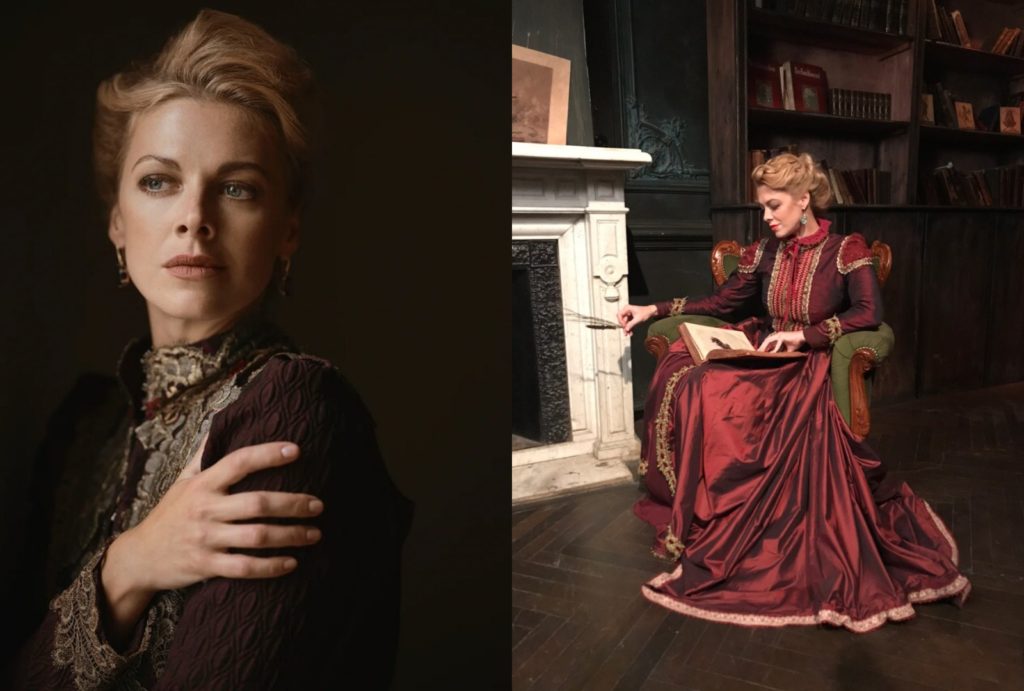
The trainings were very powerful, and some who were selected in the castings dropped out. Because it's difficult to be an artist who is not affected by anything, who can be in a crowd as if the crowd doesn't exist. Thanks to the preparation, we know how to exist in such a state; nothing external can throw us off; we are very focused.
Actors in the show interact with the audience in one way or another. Someone might block your way or sit in an actor's seat, for example.
In most cases, 90% of people, at the slightest contact, move away from your light spot or the chair where you need to sit, and we know how to work with the remaining 10%.
Sometimes a person doesn't leave. Once I sat on a young man like that. He wouldn't give me my seat. The guy had shown a special interest in me in the show before, and apparently wanted attention. Well, I sat on him for the whole scene because that was my light spot. And although I am slim, it was probably hard for him. Maybe he won't do that again; you have to give way to women [laughs]. But such things generally can't throw you off much thanks to the preparation and trainings.
About Stage Fright, Tears, and Rituals
— Do you still experience stage fright before going on stage?
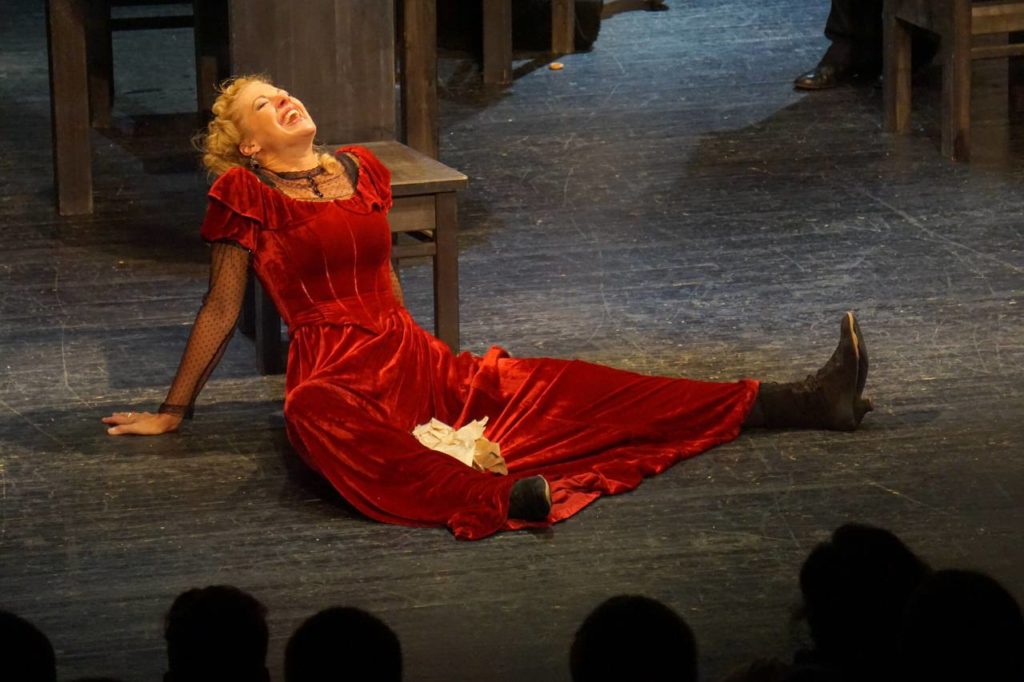
Yes, and it can be unbearable. It defies analysis, it's not connected to anything. I can feel perfectly fine in my soul and at home, without worry, and then 5 minutes before the performance, I start shaking violently. There is no connection between the stage fright and other circumstances. I don't know what it is. Probably, it's normal, because deep down we all don't want to completely bare ourselves in front of people.
I especially dislike the situation related to my play 'The Idiot'. I play Nastasya Filippovna and come out 40 minutes after the start. Her first line is: 'Finally, I managed to get in.' It quite accurately reflects my own feeling. And when I stand backstage, 3 minutes before my entrance, I start shaking. Maybe I immerse myself so deeply in the character, I don't know. And this happens almost every time for 10 years now. Honestly, I would be very glad if it stopped.
— Do you get stage fright before a take in cinema?
Actor's stage fright doesn't happen anymore because I understand that I can handle any task. There have been very difficult roles already. But I have human stage fright: when I go to the first shooting day and don't know anyone. I am psychosomatic, and sometimes I physically break down on the first day. Also, I really dislike intrigues, anger, scandals. And when you enter the makeup trailer, you can almost immediately understand everything about the set from the people. After a while, I gradually thaw and calm down if everything is fine. Here, the stage fright is more related to the human factor, and in this regard, I have even been thrown off balance several times, unfortunately. But with experience and time, I must note, I am getting stronger.
— Sometimes it's hard for actors to cry. Do you have problems with that?
I can cry in a second. In the theater, it's easy to cry: if it's a good play, you come to it. That's faith in the circumstances. In cinema, sometimes a shot starts with a scene where you are sobbing. And then I just sit down and sob, without tear pencils or drops.
But I'm not sure that's good. It's called a loosened psyche. On one hand, it's training. We are taught to enter circumstances instantly: fear, tears, panic, anything. But such exercises destabilize the psychophysics: we make the psyche respond instantly. And I can not only cry at the snap of a finger but also quickly scream or start worrying. These are all hypertrophied reactions. Maybe no one will tell you this, but it's not good. For the profession, it's very cool, but for life, it's a great misfortune. It's better for a person to be happy and calm.
— Is there any ritual before going on stage?
I really love during the performance, when the first chords of music or the first scene, if it's not mine, to go up and gently touch the curtain. As if to greet the stage, the energy, and the audience.
Also, I really love looking at the audience at the Theater on Vasilyevsky. There is a hole through which I peek; I do it almost always. Only in one play is it covered with fabrics, and I have no idea who is in the audience. I am always very interested in what the audience is like: young, elderly, girls, boys. Then I compare what reaction is in the hall, how they watch. I have such a sociological interest in them.
I don't know why, but when the audience is young, I immediately get a surge of energy. For some reason, it seems to me that young people need all this more; I believe they don't have a narrow perception yet; they look with a pure gaze. I am especially grateful to play for them, and it's very joyful when I see a young audience. But when I see elderly people in the audience, I also feel very responsible. It seems to me that they understand much more, and you can't lie; you have to be very honest. This elevates me, and my mood also improves.
About Acting Roles, Frankly
— What is your favorite role?
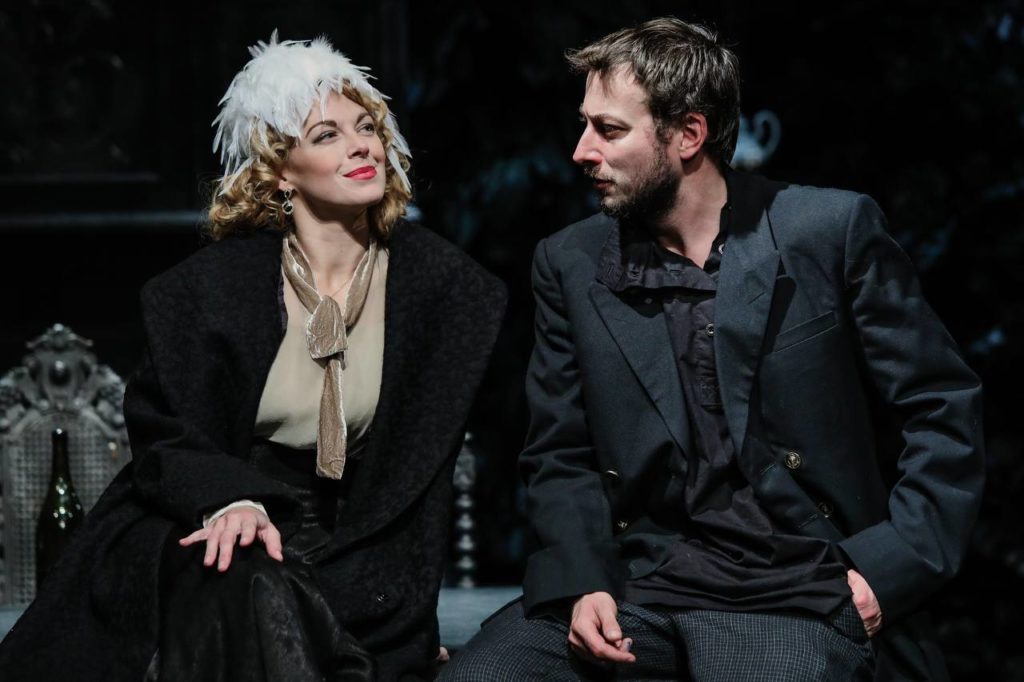
Among the plays, my favorite role is Gelya from 'Warsaw Melody'. The most precious to me, often morally saves me.
In cinema, I have two types of memorable roles: those that came with great effort, and those I would like to repeat. I have a role in the amazing historical series 'Casanova in Russia', which hasn't been released yet. There, they made curls with cast-iron curlers; we walked in corsets. I had a wonderful role, and what a Casanova there was — an amazingly handsome Serbian — mind-blowing. I played and thought how delightful it all was. Historical projects attract me; I would like to play such roles forever.
A very dear role is in the series 'Filin', a lot is connected with it, even to the point of trembling. It came to me with great effort; during filming, I was either sick or something else was wrong, but the role was actually bright, kind, and in love. I tried very hard in 'Filin', and after each season, I got very sick. Now I look at the screen and remember what I felt on each day of filming. This role is dear to me not only because I love it, but also because I survived and managed.
There was also a happy hit — the series 'Casanova', but that's about the 70s, with Svetlana Khodchenkova and Anton Khabarov. Now that was cinema! They shot slowly and in detail, everything was beautiful and perfectly stylised. It was some kind of aesthetic professional orgasm. There was no rush. There was special attention, attitude, and love in a professional sense to everything; it seemed I could play anything there! The role was episodic, but it was such happiness to be there.
My favorite roles are somehow connected with people, atmosphere, and impressions. But probably, I just haven't had a role yet that made me. Thanks to which the general public would learn about me. If Zvyagintsev had cast me or Nikita Sergeevich [Mikhalkov], then I might say: 'Now that's a role!' In the theater, I'm probably luckier in this regard so far.
— Which foreign directors would you like to work with?
With John Cassavetes. I would like to play everything his wife plays in his films. It seems to me it's just a dream. I even stole a little from her for the role of Helen [show 'The Returned']. I think she is an incredible actress with great depth. How he revealed her, how he saw and showed her. I would like that too. But she was already his, and it was all in the past, but I would like something like that.
— Are there any fears or prohibitions about what you won't do in front of the camera? For example, not everyone agrees to undress.
I wouldn't undress just like that. You need to understand the context, assess the situation. Absolutely, you should not squander your body if we are talking about physical undressing, just like that. For what? That's regarding cinema.
But if Miguel asked me to undress, I would undress immediately. In 'The Returned', there is an orgy scene, and I was worried, but Miguel said then that I was 'the only person who will not undress.' I thought then, thank God. And when the show happened, and my love for Miguel, for the project, and for the role, I thought: 'Damn, I would gladly play Anna' [the heroine who undresses]. I was ready because it was justified for me. And it was for a specific audience; it would never become something that would be replayed on a recording. But we are talking about Miguel's theater specifically.
Undressing for the sake of nudity is unacceptable for me. Miguel convinced me. In cinema, I would agree if it were some powerful important art film, so that it wasn't just to show my figure. But I don't see such cinema now.
This is a very high bar, and I am not ready to undress for any role. First of all, my husband wouldn't understand it, then my dad, my child, and myself.
I think you can always solve this issue kindly and easily. I've done it many times, for example, with kisses. You calmly explain to the director why you can just hug, or why you don't need to film me in the shower, but film my partner, for example, change the script a little [laughs]. It seems to me it's not a problem.
— Are there any taboos on roles? For example, are you not ready to play a drug addict heroine?
There is none at all, no taboos; on the contrary, I think it's very cool. If such stories exist about people who are socially unacceptable for some, they should be portrayed. It's necessary to further emphasize what a horror and disaster it is.
I love playing Helen Alving [show 'The Returned']. In my opinion, she is simply the devil incarnate. She is a very scary person in terms of her actions. Everything she did in her life is a mistake. I think it's cool to play such terrible, disgusting heroines. Thanks to this, someone will see what terrible consequences it leads to. I like playing something unacceptable from the point of view of good; I get a kick out of it. Because I myself disagree with it, and I seem to carry a flag, showing how not to act.
If we are talking about something that is not recognized or accepted, then I also have no taboos. Neither on LGBTQ+ communities, nor on psychophysical ailments, nor on changes in appearance, nor on anything. I am very tolerant and free about everything. I would gladly take on any role.
— What do you enjoy in life?
From SPA, a very feminine answer [laughs]. I enjoy swimming, manicures, pedicures, massages. From little feminine joys.
If we talk about the main thing — from family.
Also, I absolutely love watching a little series and eating chips at night. My little ritual of obesity and stress relief. You sit, watch, eat, and all the tiredness goes away.
— Can you choose one word that describes what theater and cinema mean to you?
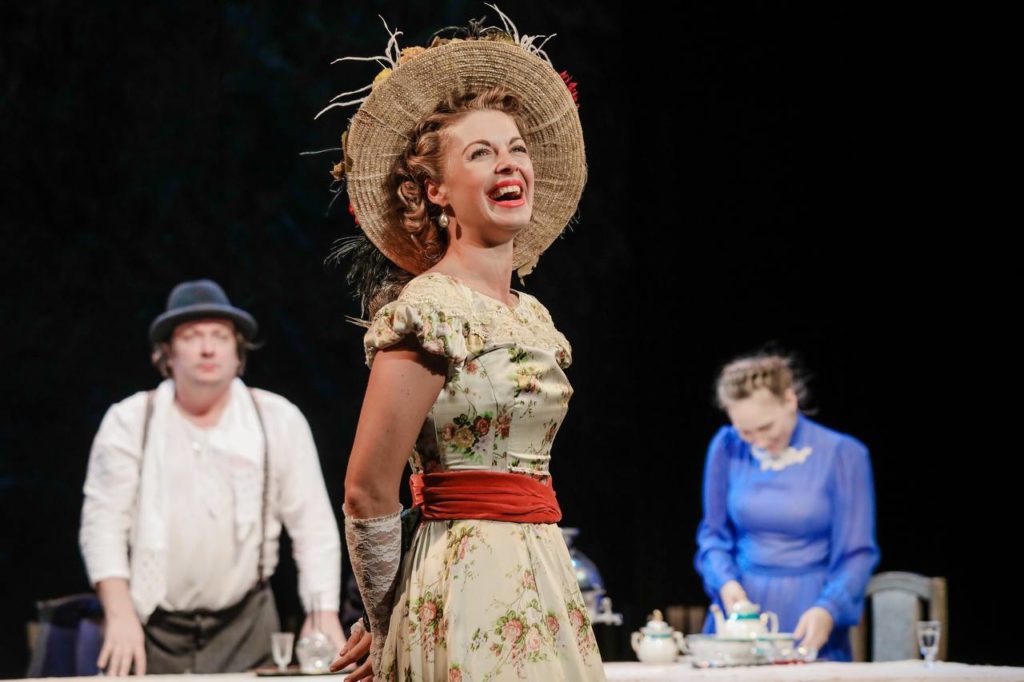
Theater – energy.
Cinema… I want to say overtime [laughs]. The first thing that came to mind, what I associate with cinema. I would say, cinema – picture.
Ekaterina Zorina recommends…
— What 3 films would you like to recommend to our readers?
My favorite film is 'A Woman Under the Influence' (dir. John Cassavetes).
Then 'Autumn Sonata' (dir. Ingmar Bergman).
And from Russian — 'An Unfinished Piece for Mechanical Piano' (dir. Nikita Mikhalkov). But if you delve into this topic, films from those years, there are many. But I love this one the most. And of course, 'Schindler's List' (dir. Steven Spielberg).
— What 3 plays would you like to recommend to our readers?
I'll be a bit cunning and combine several into one. I would recommend two plays by Rimas Tuminas: 'Uncle Vanya' and 'Eugene Onegin'.
Then 'Waiting for Godot' by Yuri Butusov, this is a play from my childhood. And also, for example, Butusov's 'The Marriage' or 'Macbeth', to see the range of the director.
I absolutely loved 'The Three Fat Men' by Andrei Moguchy. It's delightful, in my opinion. Such an emotional burn. My friends from Miguel's show also perform there; I admire them.
Also, 'The Cherry Orchard' by Lev Dodin really captivated me; I liked it immensely. I grew up on Dodin, although, to be honest, I would never want to work in that theater. I don't like what they've been staging in recent years, but it must be admitted that everything Dodin does is incredibly cool. He is a great master with great plays; it's truly a great school. His plays show a textbook line of life.
In our Theater on Vasilyevsky, I believe the best play is 'Uncle Vanya' by Vladimir Tumanov. It's amazing.
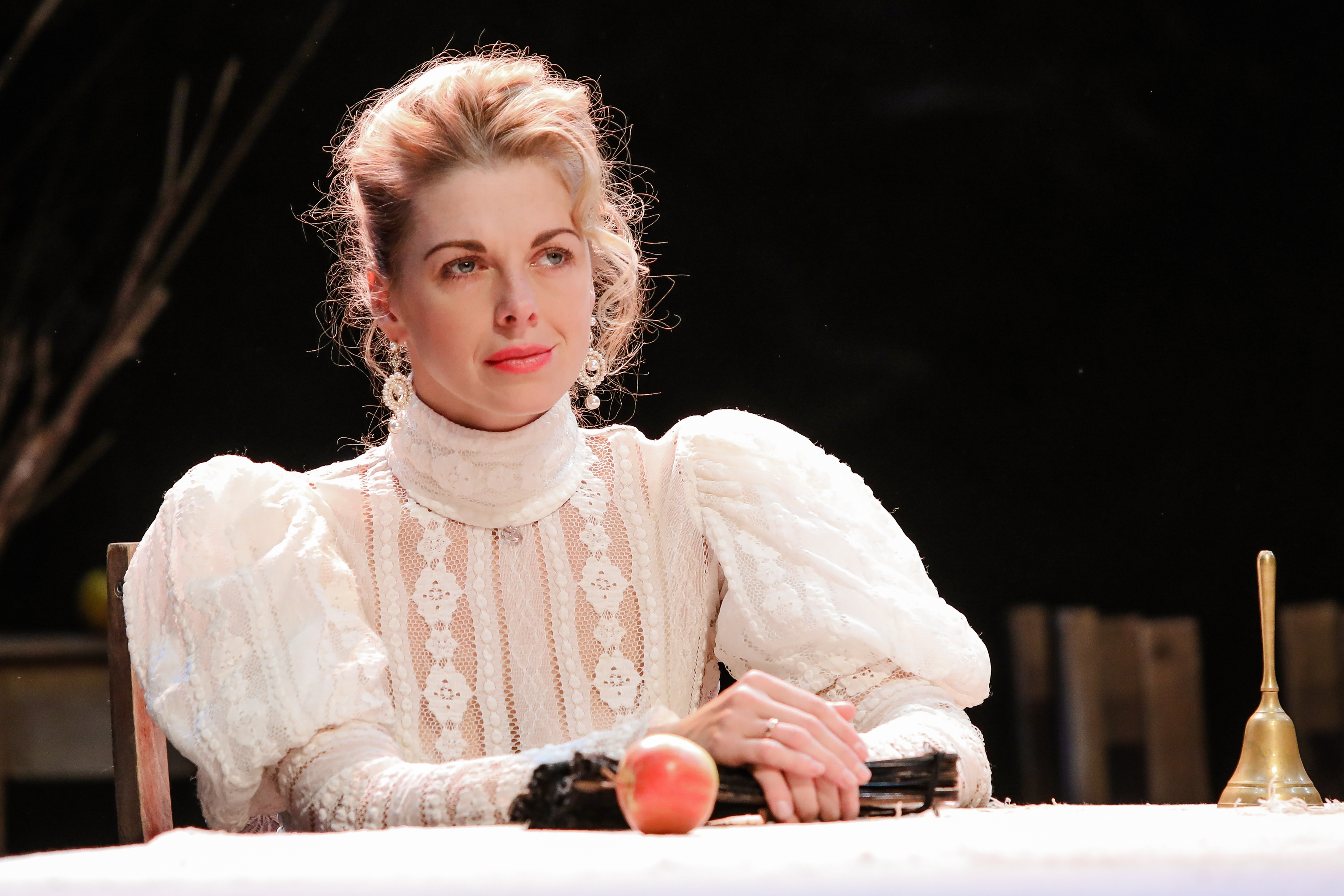
Main photo: Play 'Uncle Vanya', Theater on Vasilyevsky/Nadezhda Borisovskaya
Comments
0No comments yet.
Sign in to join the discussion.