

What if Mowgli was raised by wolves, and in the jungle he met a girl raised by cheetahs? Then it would be a touching love story, later told to children at bedtime. The film 'Wolf' allows adults to fantasize about such love and at the same time think...
Jacob (George MacKay) is different from other young people: instead of nighttime runs to girls, he howls at the moon and crawls barefoot through the forest. He considers himself a wolf, and with his parents' support, he goes to a clinic. There he meets a parrot, a squirrel, a German Shepherd, a horse, a panda, and a wildcat (Lily-Rose Depp). And he learns how treatment really works in the wild world, where everyone is their own beast.
In the scientific world, researchers continue to encounter peculiarities of the human psyche. Sometimes such discoveries sound like stories from science fiction, for example, in the case of species dysphoria. This is a condition in which a person considers themselves an animal. And the feature film 'Wolf' by Nathalie Biancheri, first shown at the Toronto festival in 2021, is precisely about this phenomenon.
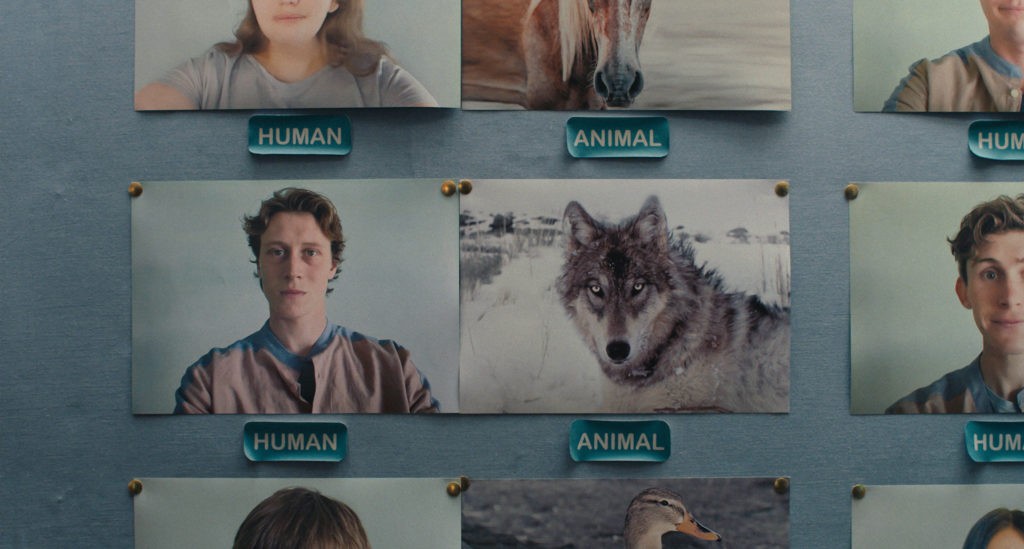
'Wolf' is a mix of genres. There is a social drama here, exploring what it means to be normal and where the line is, crossing which turns a person into an outcast. The main character explores the boundaries of what is allowed in the closed society of the clinic, while trying to learn to accept himself as he is, not as his parents or doctors want him to be.
And if we consider the world of the clinic as a metaphor for our society, it becomes clear that we are all sick in one way or another, and the concept of normality is very abstract. Adults impose on children the idea of who they should become, what they should achieve, and they, now grown up, repeat this mantra to the new generation. Therefore, here the child patients with animal personalities look like rebels, unwilling to live by the rules of the surrounding world.
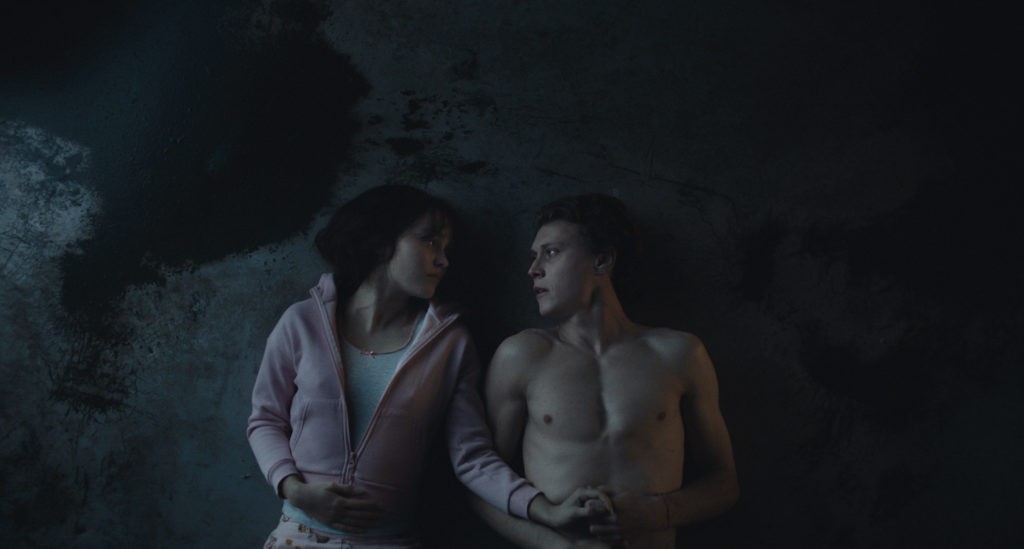
The relationship between MacKay's and Depp's characters is already a melodrama, developing according to all the traditional canons of the genre. Boy meets girl, at first she doesn't acknowledge him, but while helping him, she begins to feel sympathy. Then comes the first conflict, difficulties in mutual understanding, a new attempt, and an almost successful escape from reality. Using the example of psychologically unstable children, the film reflects on a hackneyed but always relevant topic — what are you willing to do for love? Will you go all the way to be together, or are you not destined to ride off into the sunset together?
And, of course, 'Wolf' is a psychological thriller. This genre is felt in every scene: when they heal and at the same time maim, when they praise and humiliate, when they smile and scold. The pressure exerted on the clinic's patients seeps through the screen, because everyone in life has encountered bullying, misunderstanding, and violence, just in different doses.
We are shown how the treatment, which seems progressive at first glance, gradually turns into a torture chamber, where patients are forced to climb trees or jump out of windows. Watching the therapy become harsher, tension unconsciously grows inside, because it's unclear what awaits these children. And does anything or anyone await them at all? Gradually, in the patients who consider themselves animals, you see more humanity than in the people themselves.
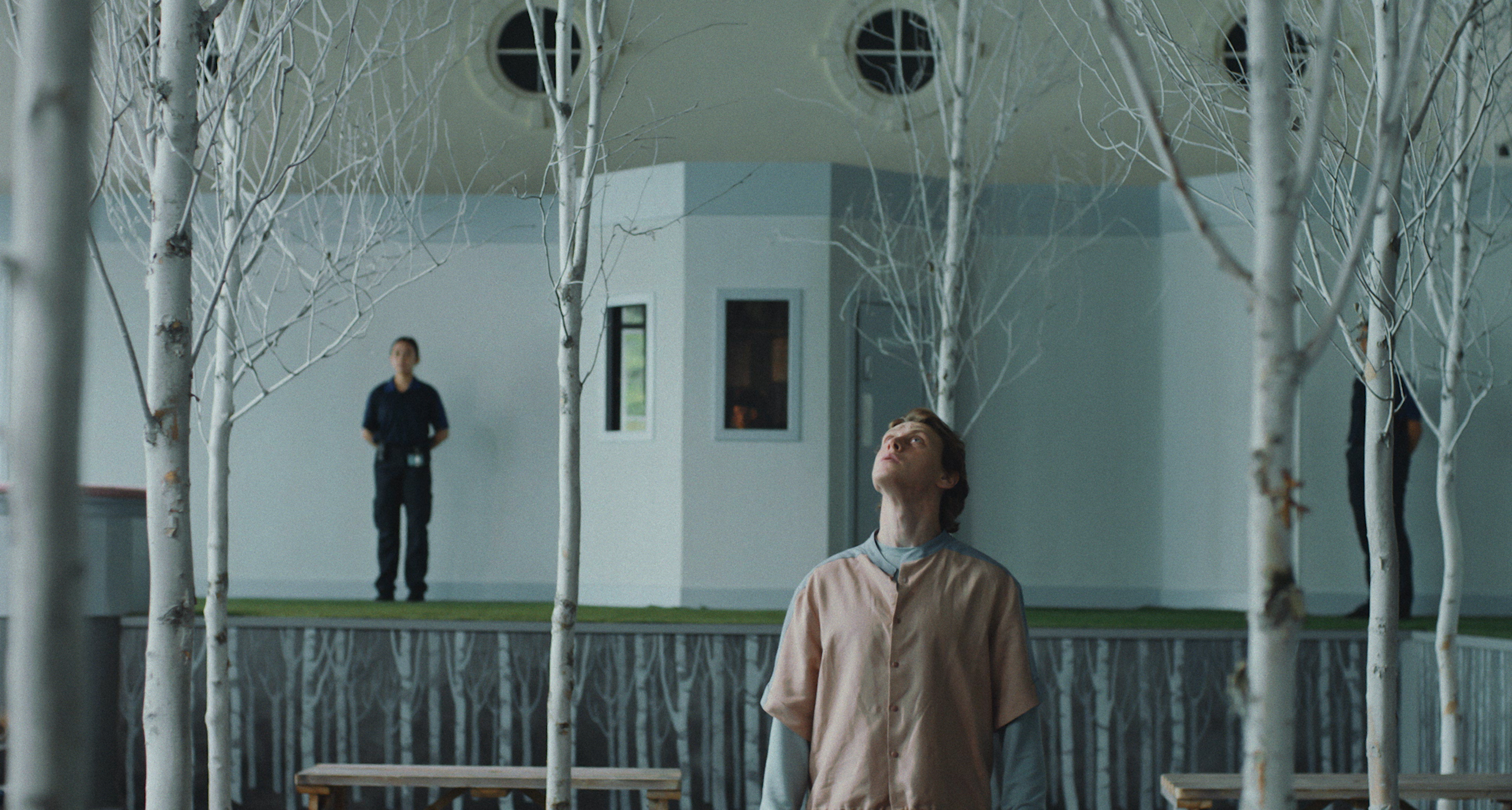
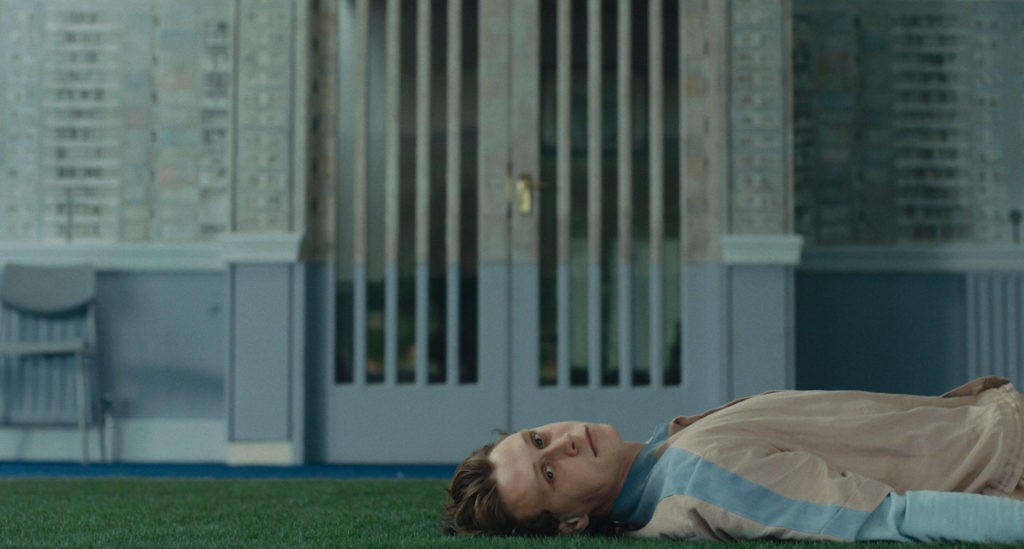
The psychological pressure is also intensified through the visuals: the closed nature of the clinic and the geometry in its design cause claustrophobia. And the minimalism and sterility seem to erase individuality, declaring that the main thing here is facelessness. You came here different, but we will make you all the same — normal by generally accepted standards.
The subtexts and ideas in the film are conveyed through the actors and the language of physicality. Nathalie Biancheri focused on close-ups. Through the work with facial expressions, gaze, and voice, all the pain and confusion of the patients is felt. But the acting deserves special recognition for its excellent physicality, thanks to which the transformation into an animal looks natural, not cringey.
Lily-Rose Depp and especially George MacKay literally became one with their beast, making us believe in the internal struggle between animal and human natures. The scenes where MacKay sneaks through the clinic at night are a particular delight — a visual and aesthetic pleasure. The cinematographer captured the actor's wolf-like gait as if we were seeing an animal, not a human.
Experts say that a wild beast lives inside each of us, but social norms force us to hide it, control it, and train it. But what would happen if we released it and let it decide? Is there empathy in the animal nature, or is that a merit and privilege of society? And will we preserve our human part, or are these two mutually exclusive sides? Nathalie Biancheri subtly, beautifully, and ambiguously reflects on this and much more in this film.
'Wolf' is in Russian theaters from June 2, courtesy of the Arthouse film company.
Comments
0No comments yet.