
Adriano Celentano is not the first name that comes to mind when talking about Italian cinema. But Italian cinema is impossible to imagine without Adriano Celentano. A biography of the great entertainer, “My Uncle Adriano,” is being published in Russi...
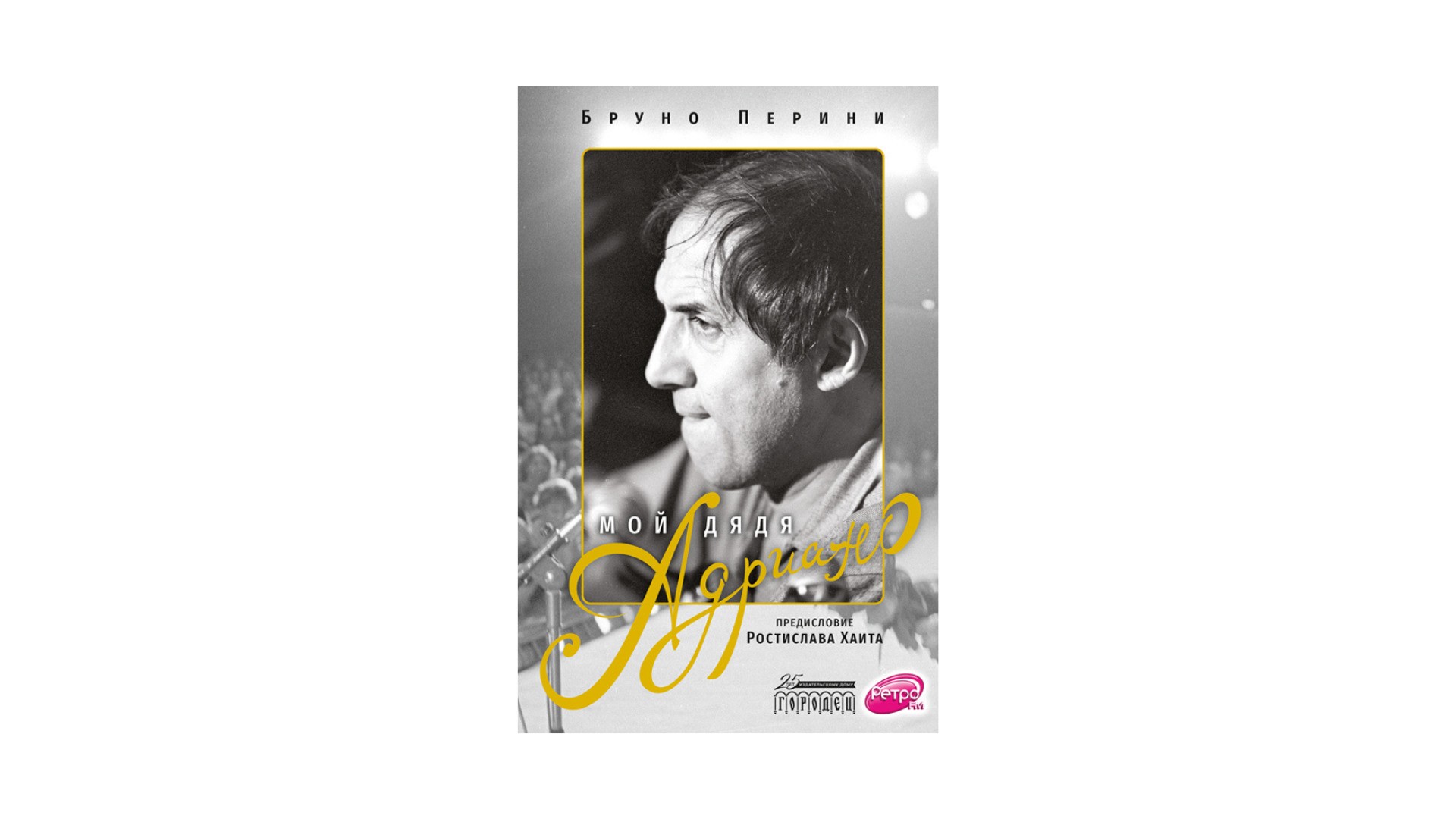
Thanks to the publishing house “Gorodets”, the sensational Italian book “My Uncle Adriano” by Bruno Perini has been published in Russian for the first time. “My Uncle Adriano” is dedicated to the life and work of the “talented idiot” Adriano Celentano. The book became scandalous largely due to what the subject himself considered a subjective portrait of the singer, actor, director, TV host, and public figure. The author, on the other hand, tried to present his famous relative as objectively as possible, placing his life and phenomenon in the context of Italy’s political and economic development (from regular jabs at Milan’s mass construction to his “cold war” with media magnate Silvio Berlusconi).
It is all the more interesting for us, ordinary readers and fans of the great Italian, to learn about him through the prism of his nephew’s memories and compare them with our own observations and impressions.
A Standard Biography of a Non-Standard Hero
The book “My Uncle Adriano” is structured as a classic chronological biography, starting with Celentano’s birth during the heyday of Italian fascism and ending in our time. What makes this story unique and captivating is the hero himself — a singer who couldn’t sing, an actor who played by instinct, a public figure who acted on his own principles, a man who earned the nickname “talented idiot” and accepted it.
From a very young age, if Perini is to be believed, Celentano had a spirit of rebellion that prevented him from staying in one place and ignoring events he disliked. This allowed the boy from Via Gluck, against all odds, to achieve such fame that his autographs were coveted far beyond his native Milan, even in the Soviet Union, which was closed to most foreign stars.
When I was a teenager and Uncle Adriano was already a famous singer, my mother Maria, his sister, helped him sort through fan letters, hundreds of which arrived every day — requests for an autograph or a photo. Mom often asked me to help her put the photos signed by Adriano into envelopes.
Among the letters that filled our mailbox to the brim, at least half came from Eastern Europe. We didn’t understand a word because they were written in Russian or Czech. It was only clear that these people were asking my uncle to send his photo. Often there was a lipstick mark on the paper or a portrait of Adriano with the word Amore, “Love.” One day, my mother took the trouble to translate a letter from a group of fans, and then I realized how much my uncle was adored in those countries. However, echoes of this adoration can still be heard today — Adriano and Claudia have repeatedly received offers from Russian billionaires to participate in TV shows or give concerts in Putin’s Russia.
From Memories to Criticism
Journalist Bruno Perini mixes his own memories and fragments of family gatherings with formal “interviews” of relatives, excerpts from reviews of Adriano Celentano’s work (both musical and directorial), and sketches of Italian political life. It’s not that he identifies the country with his uncle, but he tries to compare the magnitude of his figure with life on the Apennine Peninsula over different decades: from the times when Celentano was a simple musician (though he was probably never simple) to the moment when Adriano became a TV star and almost ruled the minds of Italians.
Much to the regret of fans of Celentano the actor (or even director), the book “My Uncle Adriano” does not pay much attention to his film career. For example, you won’t learn anything new about “The Taming of the Scoundrel” and the iconic tandem with Ornella Muti. But there is something for movie fans too. For instance, the book mentions the failed collaboration with Pier Paolo Pasolini and also tells about the filming of the movie “Yuppi Du”.
“My Uncle Adriano” is the first truly comprehensive biography of Adriano Celentano in Russian. And even though it primarily portrays him as a musician, activist, and caring relative, you absolutely cannot skip it if you want to get a little closer to understanding the phenomenon of this charismatic and outstanding man who influenced the life of Italy and world culture as a whole.
Comments
0No comments yet.
Sign in to join the discussion.