

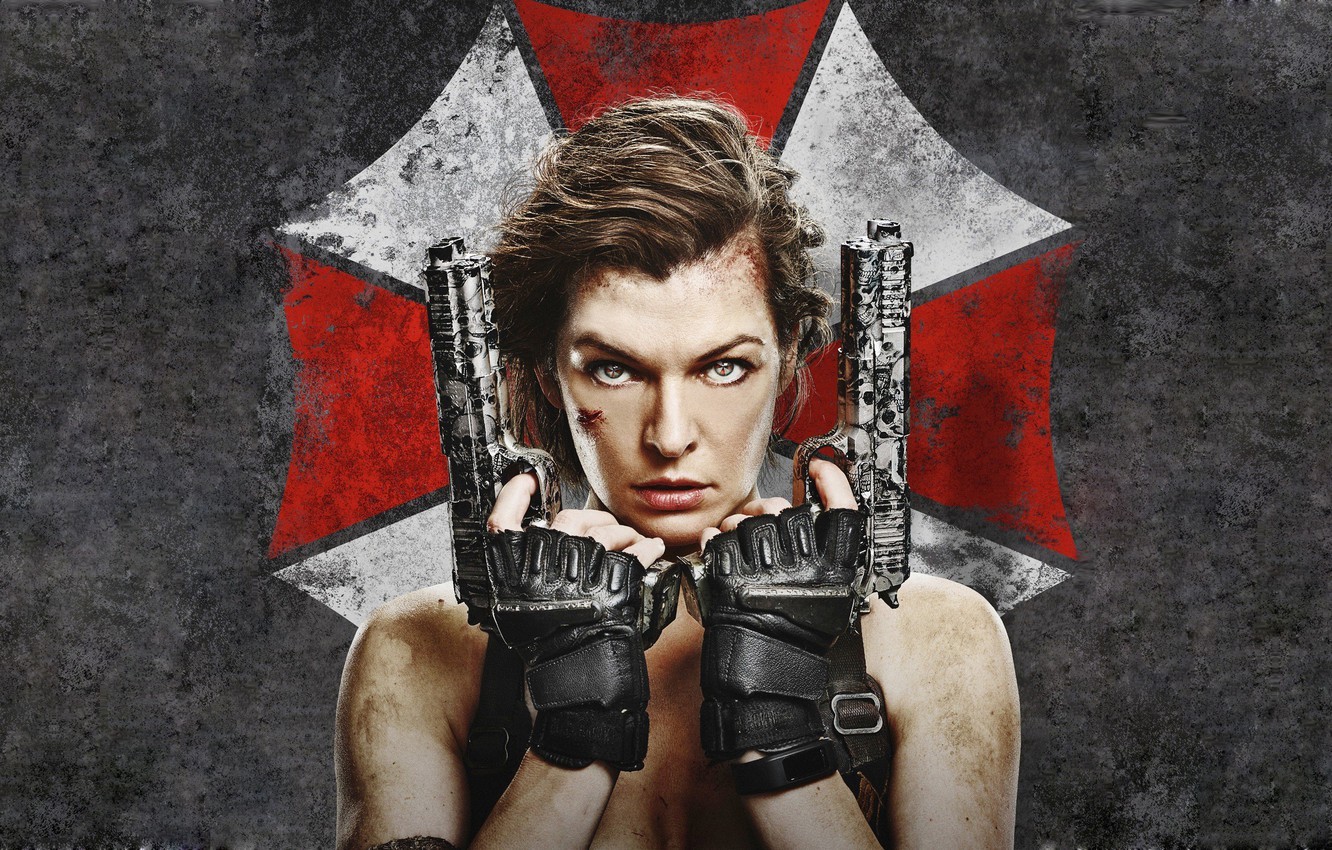
This year, the 'Resident Evil' cinematic universe celebrates its 20th anniversary: in 2002, the first film adaptation based on the popular game Resident Evil was released, starring Milla Jovovich. We recall where it all began and where it ended up.
A Bit of Backstory
Zombies first appeared in cinema in 1932 in Victor Halperin's film 'White Zombie', where Haitian magicians revived the dead. This spawned a trend of demon-possessed beings. Later, in Dan O'Bannon's 'The Return of the Living Dead' (1985), the resurrected were presented as aliens. But a surge of intense public interest in the zombie apocalypse theme emerged after the release of George A. Romero's independent, low-budget 'Night of the Living Dead' in 1968.
His monsters (he didn't call them zombies) were otherworldly beings, appearing from nowhere with a terrible penchant for eating human flesh. For Romero, the nature of zombies in his films was closely tied to the fear of nuclear war, which is why he called them 'living dead.' Furthermore, Romero's bloodless monsters were a metaphor for social issues existing in society, such as racial division, rejection of counterculture, and fear of the abnormal.
The next stage in the evolution of zombies came with the films 'Resident Evil' by Paul W.S. Anderson and '28 Days Later' (which also turns 20, by the way) by Danny Boyle. A key difference from previous horrors was that here, the monsters were people infected with a virus — they were no longer the resurrected dead. Therefore, these zombies aren't decrepit; they are fast, aggressive, and sometimes even possess incredible strength, though with their own weaknesses. These films conveyed a fear of science, government experiments, and secret research centers (which everyone remembered during the 2019 pandemic). The idea of zombies originating from a failed experiment was later developed in the commercially successful films 'Zombieland' and 'World War Z'.
Not Romero, but Anderson
In 1996, Capcom released the game Resident Evil. No one considered the project potentially successful, rather a run-of-the-mill title, but it ultimately became a cult classic. And that's partly understandable, because game designer Shinji Mikami drew inspiration for Resident Evil from classic horrors like 'The Texas Chain Saw Massacre' and 'Dawn of the Dead'.
Concurrently, the theme of the zombie apocalypse was gaining momentum in popular culture. The first ideas about the walking dead had been germinating in society since World War II, inspired by the horrors of war. But it was in the early 2000s that the zombie phenomenon began to spread actively in the West: articles and survival guides were published, where authors entertained the possibility of a mass transformation of people into the walking dead.
Given the love for conspiracy theories in the US, as well as the popularity of the Resident Evil game, the success of the film adaptation was assured. It could be said that Paul W.S. Anderson caught his wave, which gave him the most famous franchise of his career. And the world got the longest-running film series based on video games.
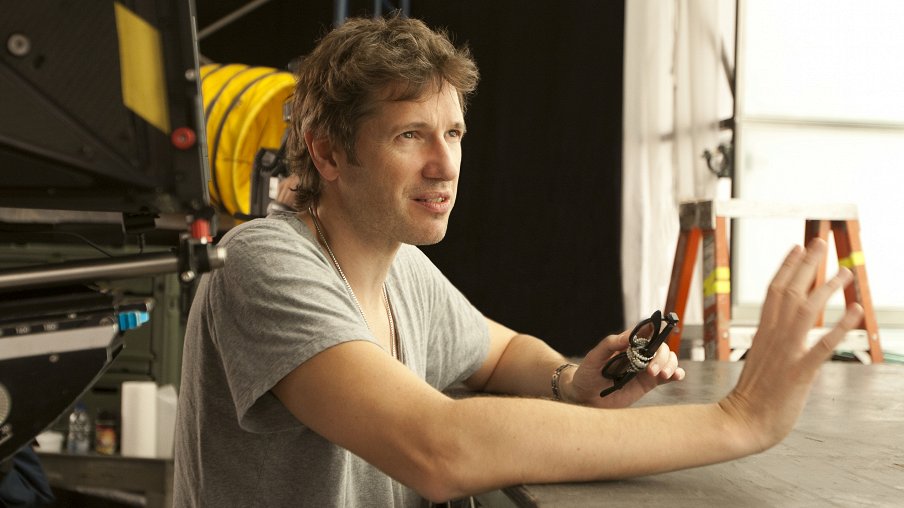
Initially, 'Resident Evil' was to be handled by George Sluizer, with the script prepared by Alan McElroy, who worked on 'Spawn' and the less successful 'Halloween 4'. Although his script met the game's standards, McElroy was ultimately dropped, and George A. Romero became involved in the film. In 1998, he directed a commercial for the game Resident Evil 2. Romero followed the source material in detail, adding all the main mutants, but his script also failed to please Constantin Film. Romero's vision for the 'Resident Evil' world was more brutal and grim than even the game, which didn't sit well with the film executives. A pity, as rumors suggest Sarah Michelle Gellar could have played one of the roles.
Andrew Kevin Walker, who worked on David Fincher's 'Se7en', and Kevin Williamson, known for the horror 'Scream', also tried to get involved in the project. Rumor has it that the latter took a risk and deviated from the original plot, but that didn't help him either. In the end, the choice fell on Paul W.S. Anderson.
Nowadays, this director's films are viewed skeptically, but there was a different time. In 1995, he showed his debut film 'Shopping' at the Sundance Festival, where he was noticed by film executives. This allowed him to work on 'Mortal Kombat' with Christopher Lambert, which garnered excellent box office returns and a fan base. But his successes ended there; his subsequent films were coldly received, and then the hour of 'Resident Evil' arrived.
The First 'Resident Evil'
Anderson didn't just want to make a film version of the game; he wanted to send viewers on a new adventure, but within a familiar universe. He intended to create almost a separate game, only in film format. So he initially planned not to make a direct adaptation. This was the trump card of the first film's creators: the viewer didn't need to know the game to understand the plot.
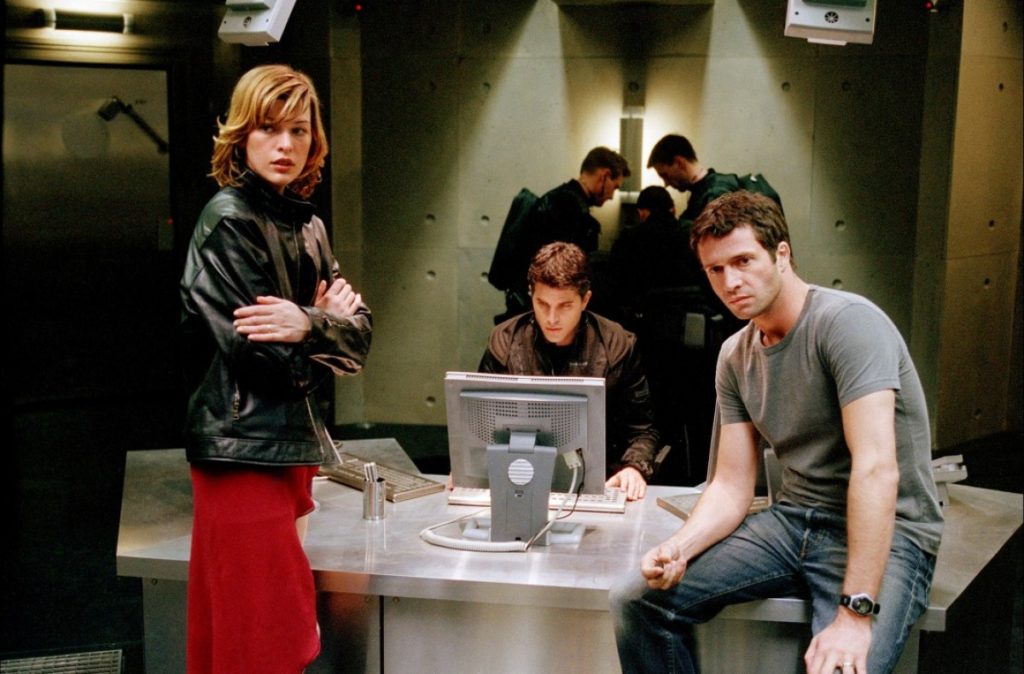
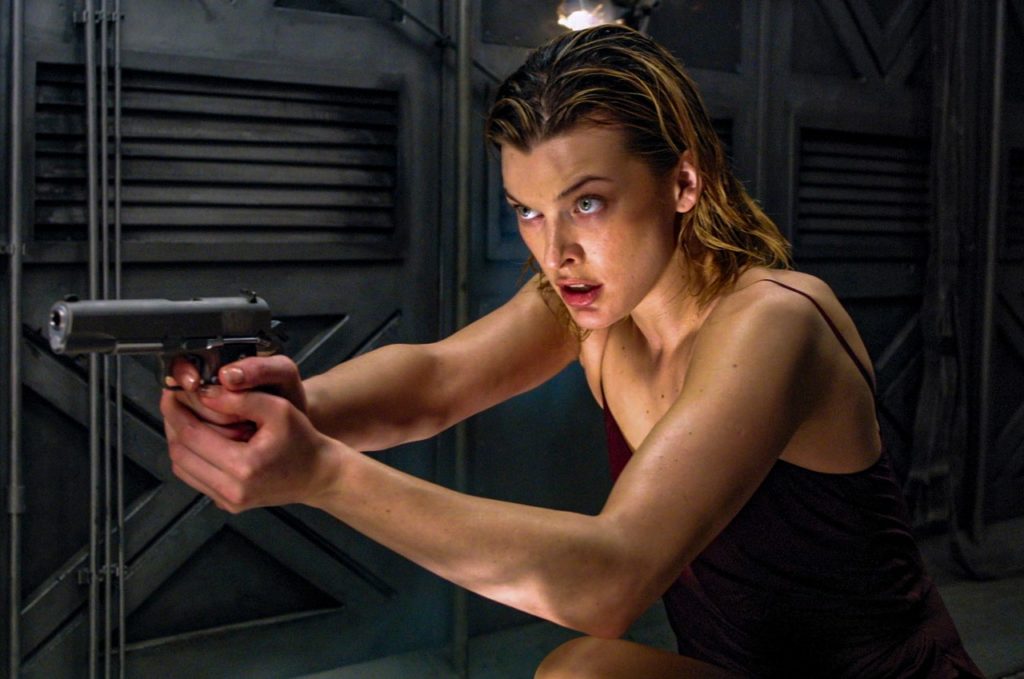
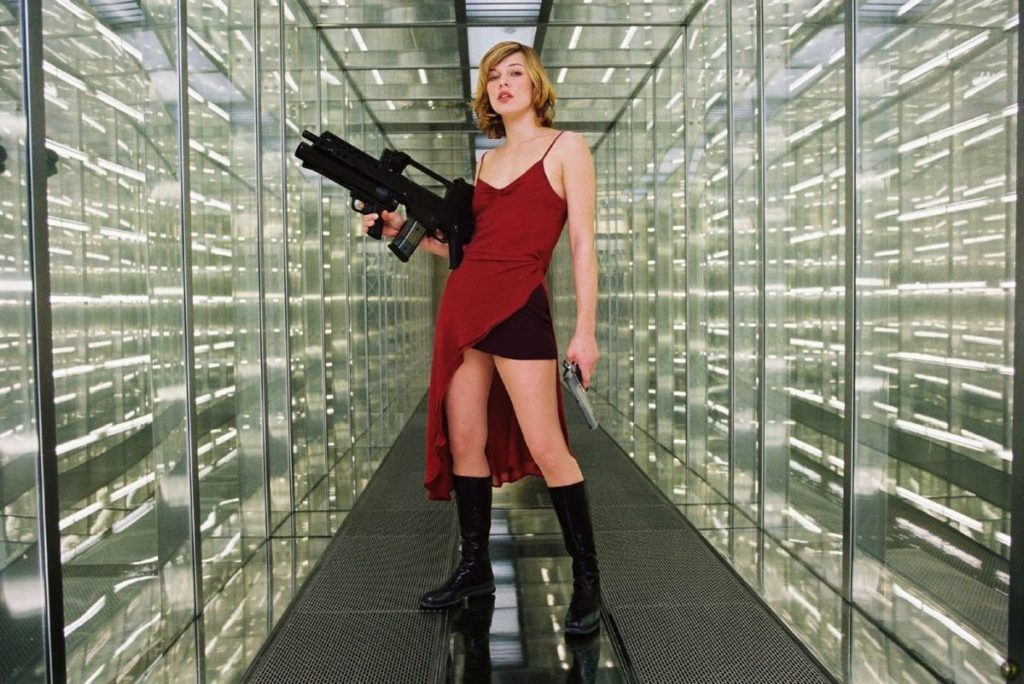
Furthermore, long before it became a ubiquitous trend of the 21st century, Paul W.S. Anderson decided to make a woman the protagonist in 'Resident Evil'. In the scripts of other candidates, by the way, the main character was a man. For the role of Alice, the director almost immediately saw Milla Jovovich — at that time known for the cult classic 'The Fifth Element' and a fan of the Resident Evil game. The film was physically demanding, and the actress understood this. So upon getting the role, she trained extensively and tried to perform most of the stunts herself.
Another fan of the game turned out to be Michelle Rodriguez. In one interview, she admitted she wanted to be in the Resident Evil film adaptation so badly that she was willing to play even a janitor. The other actors had to play the game (or watch a walkthrough video) — it was Anderson's condition for filming.
Most of the scenes for the first part were filmed in unfinished Berlin subway stations, while the interiors of the Umbrella Corporation were created to resemble European nuclear fallout shelters.
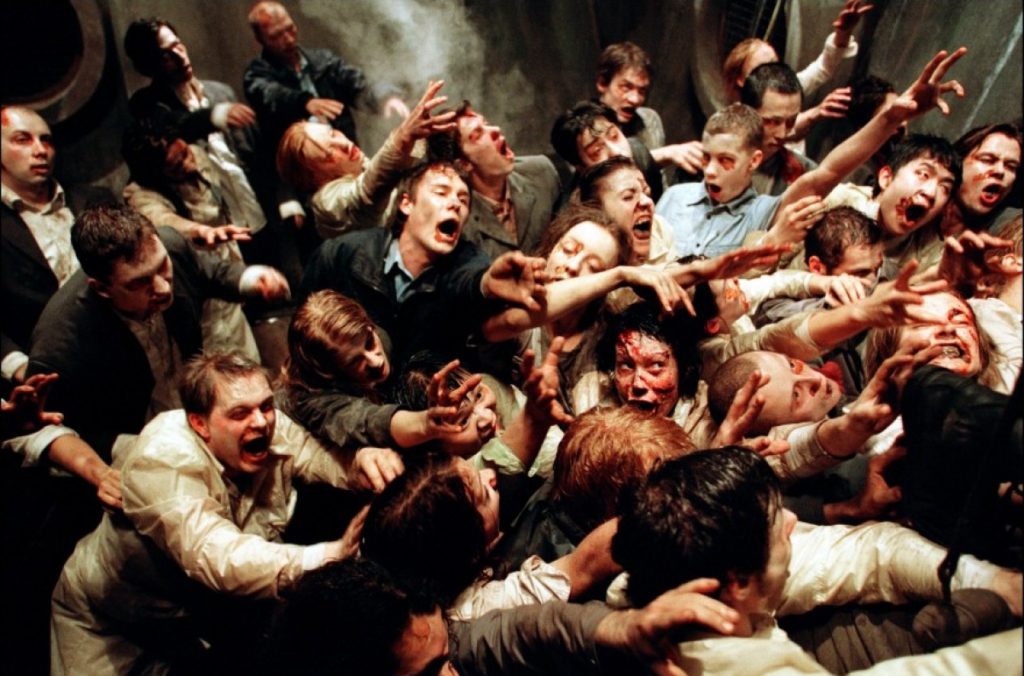
To ensure the zombies didn't look like second-rate puppets, gelatin makeup was applied to the extras, creating an illusion of realism. And for the scene in the locked room with the laser, a full-scale model of actor Colin Salmon was made.
Special attention was also paid to the musical accompaniment in 'Resident Evil'. The soundtrack for the first part was written by Marilyn Manson together with Marco Beltrami. They aimed to create an atmospheric ambient sound.
In 'Resident Evil', allusions to Lewis Carroll's story 'Alice in Wonderland' are clearly noticeable. Thus, Umbrella becomes a kind of Looking-Glass world from which Milla Jovovich/Alice needs to escape. It was also symbolic that the corporation was located underground.
Furthermore, in the image of the new zombie from 'Resident Evil', one can see allegories for social issues. Some considered it a critique of consumer society (where zombies are all of us in shopping malls on sale days), a satire on office culture, a metaphor for resistance to capitalism (where corporations with the T-virus antidote are the ultimate capitalists), or a struggle for minority rights (where the survivors are the minority). Everyone could see in 'Resident Evil' what was important to them (or see nothing at all).
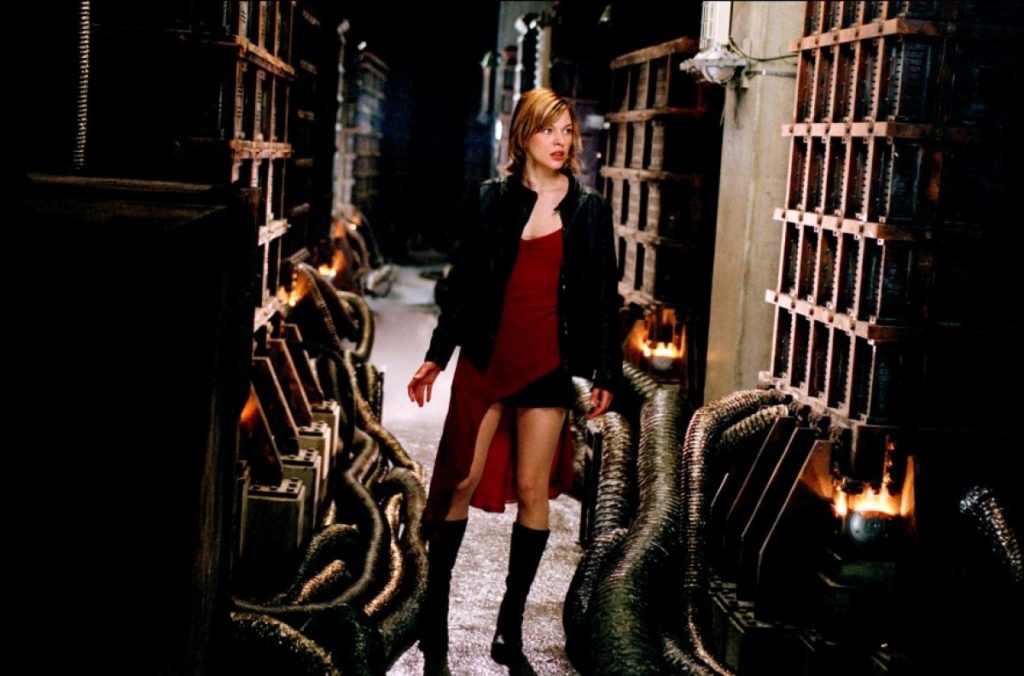
In the end, the first part, with a budget of $30 million, grossed almost $100 million worldwide. Critics naturally didn't favor the film, accusing it of the typical mistakes of video game adaptations: superficial dialogue, flat secondary characters, and lots of action with minimal meaning. Nevertheless, audiences liked it, even though game fans reproached the director for deviating from the original. Ultimately, Paul W.S. Anderson created an intimate horror film with a decent script, special effects, likable actors, and potential for the future. However, it was precisely that future that ruined it.
Why Did It Go So Wrong?
The Resident Evil video game was released over 23 years and accumulated many spin-offs, turning the Capcom project into a significant piece of pop culture. Therefore, it was crucial to adhere to at least the minimum norms of the canon. Despite the abundance of references to the original game and fan service, Paul W.S. Anderson created a film merely based on the game.
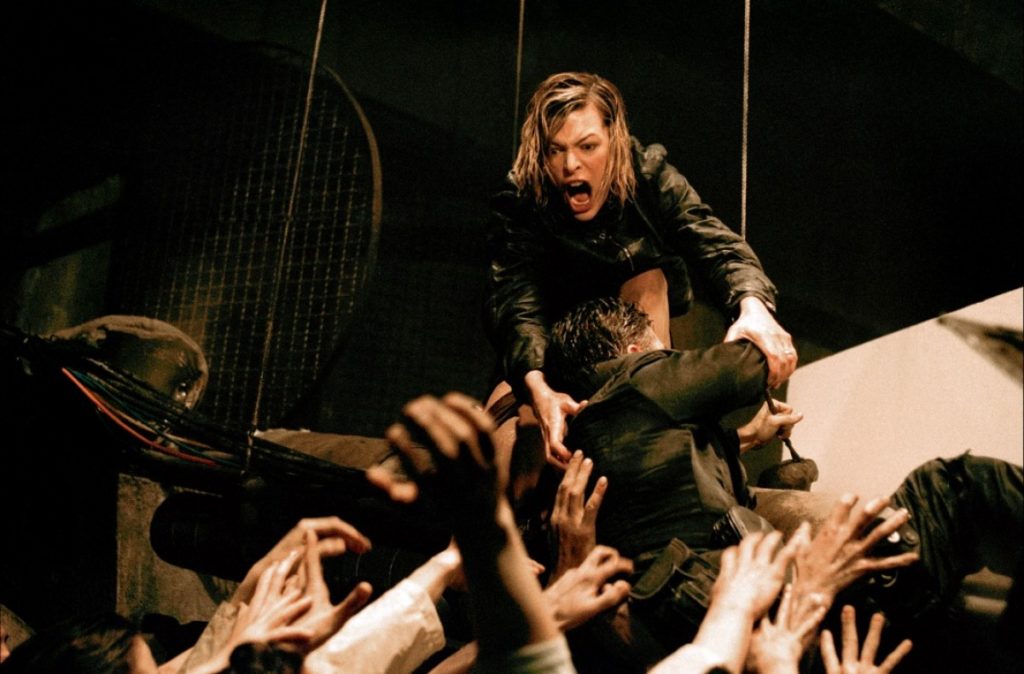
First and foremost, this concerns the main character — the super-clone Alice — who seemed created solely so that Milla Jovovich could spectacularly dispatch zombies over six films in the franchise. The invincible warrior woman has little in common with the source material, and characters from the game, such as Claire and Chris Redfield, were used more as bait for Resident Evil fans. Moreover, no character besides Milla Jovovich's heroine was properly developed, and even Alice's own story has to be pieced together.
To maintain audience interest, Anderson, who wrote the scripts for all six films, constantly devised elaborate locations, expanding the scale of chaos on screen. But fighting the dead in a godforsaken prison or a deserted desert lost its appeal due to the lack of any character development. Alice endlessly wanted to destroy Umbrella, and the remaining survivors helped her. Ultimately, this one-sided, repetitive motivation became tiresome, despite the dead's attempts to take a bite out of Milla Jovovich.
Another shortcoming was the very sparse story about the behind-the-scenes life of Umbrella, especially since the theme of unethical corporations could have been actively exploited. In the end, the company turned into a boring symbol of global evil, existing simply 'because it had to'. The video games' backstory was much richer, including plans for world domination, terrorism, and creating a utopia on the bones of test subjects.
It was with 'Resident Evil' that the term 'survival horror' came into common use. Furthermore, the first part was distinguished by its intimate suspense, oppressive atmosphere, sudden attacks by quite terrifying monsters, and interesting action (for example, the scene in the laser maze). But as the cinematic universe developed, the new parts delved into the realm of a standard action movie, losing the original spirit. And the characters only remembered they were survivors in the final sixth part.
What's the Verdict?
'Resident Evil' became a new stage in the representation of zombies in cinema, where they were already mutated monsters. The franchise became the longest-running film series based on video games, and compared to some in this genre, it was quite decently put together.
For many, Anderson's 'Resident Evil' was pure escapism. Ignoring life's troubles and the uncertainty of the future, they immersed themselves in a world of monsters, where the rules of survival were clear and understandable. Perhaps this was the secret to the success of Capcom's Resident Evil game itself, and subsequently, the growth of interest in films on similar themes.
Paul W.S. Anderson admitted even during the filming of the first part that he wanted to create a kind of 'The Matrix' from the world of horror. The director had many interesting ideas, references to cult cinema and genres. However, in the end, the 'Resident Evil' franchise turned into a series of popcorn action movies, without deep drama, but with excellent action and the ever-present Milla Jovovich. Perhaps it was precisely the abundance of stunts and solid special effects that drew audiences to the cinema for each new installment. The 'Resident Evil' franchise became a kind of guilty pleasure.
It seems failure is the fate of all films based on video games. And despite the fact that Paul W.S. Anderson's directorial career is largely tied to game adaptations, he should probably leave this genre. This thought is confirmed by his latest project, 'Monster Hunter' — yet another game adaptation.
In attempts to cram in as much as possible and create a masterpiece, directors of video game adaptations ultimately present a mishmash, oversaturated with action and lacking a coherent plot. Such films receive no positive feedback from either critics or game fans. After all, game creators develop their world and characters over a long period, not in two and a half hours. But on the other hand, Paul W.S. Anderson couldn't develop and deepen the 'Resident Evil' universe even over six films. Perhaps there really is a curse on the genre of video game adaptations.
Comments
0No comments yet.