

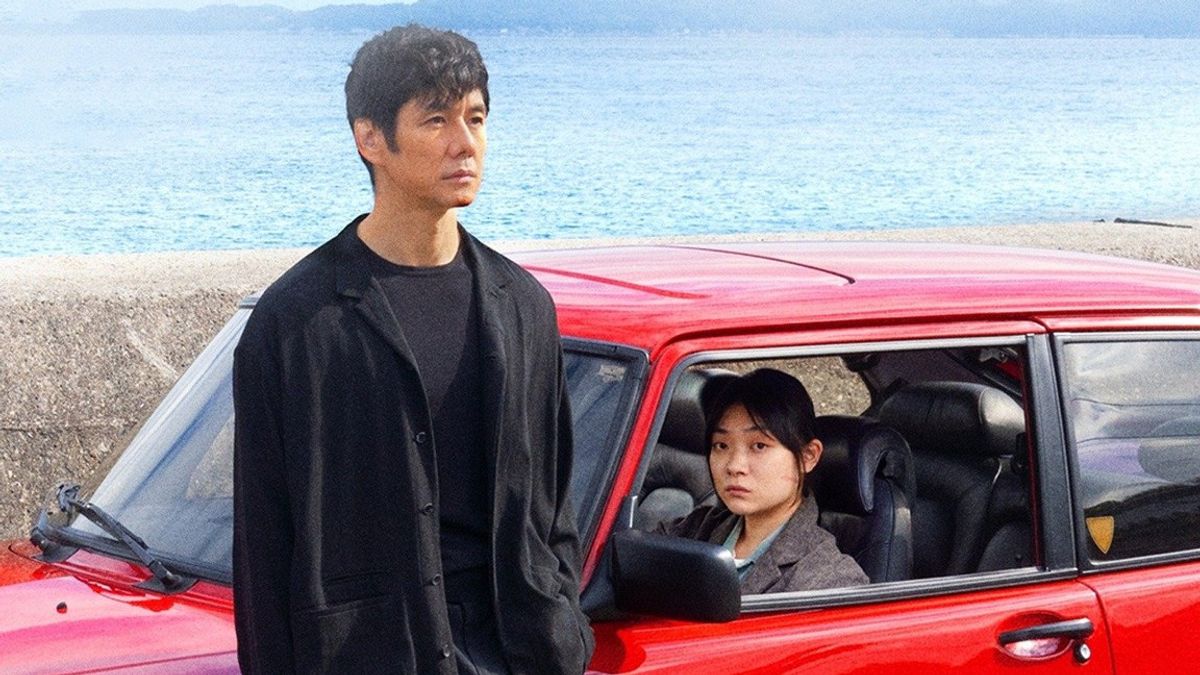
“Drive My Car,” based on Haruki Murakami’s story, matched the record for Japanese films at the Oscars, receiving four nominations (previously, A. Kurosawa’s film “Ran” held sole leadership). This once again highlighted the brilliance and demand for t...
“Norwegian Wood,” which participated in the main program of the Venice Film Festival, was directed by the promising Vietnamese filmmaker Tran Anh Hung, for whom this was a debut in Japanese cinema.
In the plot, student Toru (Ken’ichi Matsuyama) is deeply grieving the loss of his best friend, who committed suicide, and simultaneously finds himself entangled in a love triangle with the deceased boy’s girlfriend Naoko (Rinko Kikuchi) and classmate Midori (Kiko Mizuhara).
“Poetry,” “Secret Sunshine”), whose works are dominated by emotional engagement of the viewer and conveying the subjective feelings of a life-beaten hero (these can be both physical injuries and emotional traumas). “Burning” was no exception. In it, the author reflects on the nature of anger and violence, as well as the subsequent remorse. And, just a little bit, on pyromania.
Although this film is based on Murakami’s story, it is also connected to the world of William Faulkner’s works. It is a story about a man and his rage against life and the world, vividly depicting a sense of guilt.
Drive My Car (Doraibu mai ka, 2022)
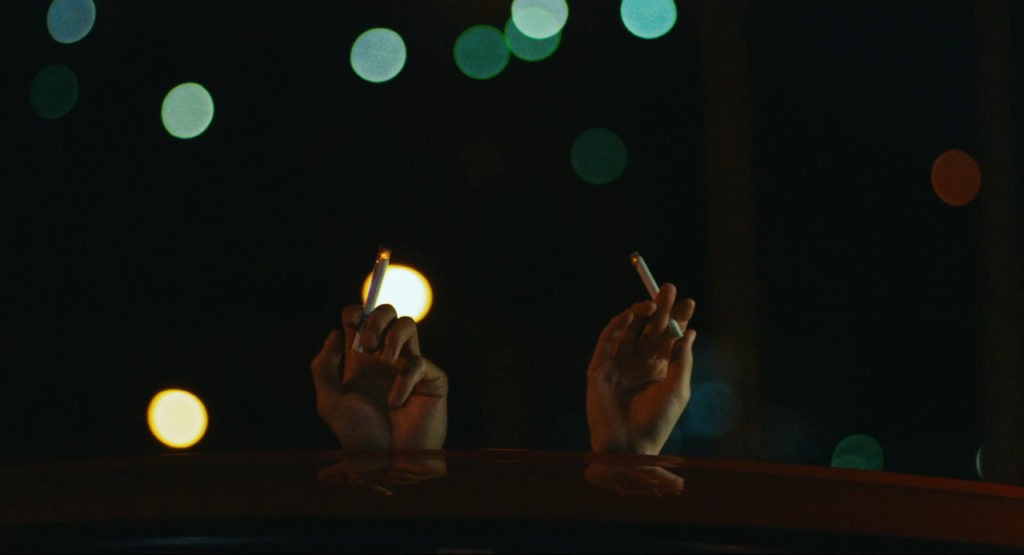
“Drive My Car” by director Ryusuke Hamaguchi is the most recent and, at the time of writing, the most successful screen adaptation of Haruki Murakami. The Academy Award winner for “Best International Feature Film” is a loose adaptation of three stories from the collection “Men Without Women”:
- Drive My Car — the actual basis of the film “Drive My Car,” a story about a theater director and his driver;
- Kino — a story about a guy who for a long time does not try to hide from his feelings but cannot accept the loss of his beloved wife;
- Scheherazade — a story about strange and mysterious tales a woman shares with a man after sex.
At the center of the film’s plot is theater director Yusuke (Hidetoshi Nishijima), who is struggling with the loss of his wife and child while simultaneously staging Chekhov’s “Uncle Vanya”, and his new personal driver Misaki (Toko Miura), who blames herself for her mother’s death.
This nearly three-hour meditative film tells of quiet despair and attempts to overcome that despair. Through references to Chekhov, through conversations about nothing, through sentimental thoughts. Hamaguchi, echoing Haruki Murakami, pays important attention to details, to what we usually don’t notice in everyday life. Confessions over a glass of whiskey, nighttime drives to nowhere, fragmentary phrases, monotonous work — all of this is elevated to an absolute here, because, by and large, without seeing all this, you risk missing your own existence. Especially when you’re trying to cope with the bitterness of loss.
Based on subjective observations, successful screen adaptations of Haruki Murakami are distinguished by their independence. As can be seen from the text, it works best when directors take only the basis of the source material, whether it’s a short story or a full-fledged novel, and then create their own story, but with the mood of the Japanese author.
If filmmakers manage to convey the writer’s melancholic quality and musicality, his love for details and character traits, then the result is wonderful films. One can only hope that in the foreseeable future we will see more adaptations of the best works of the “outcast of the Japanese literary world.”
Comments
0No comments yet.
Sign in to join the discussion.