

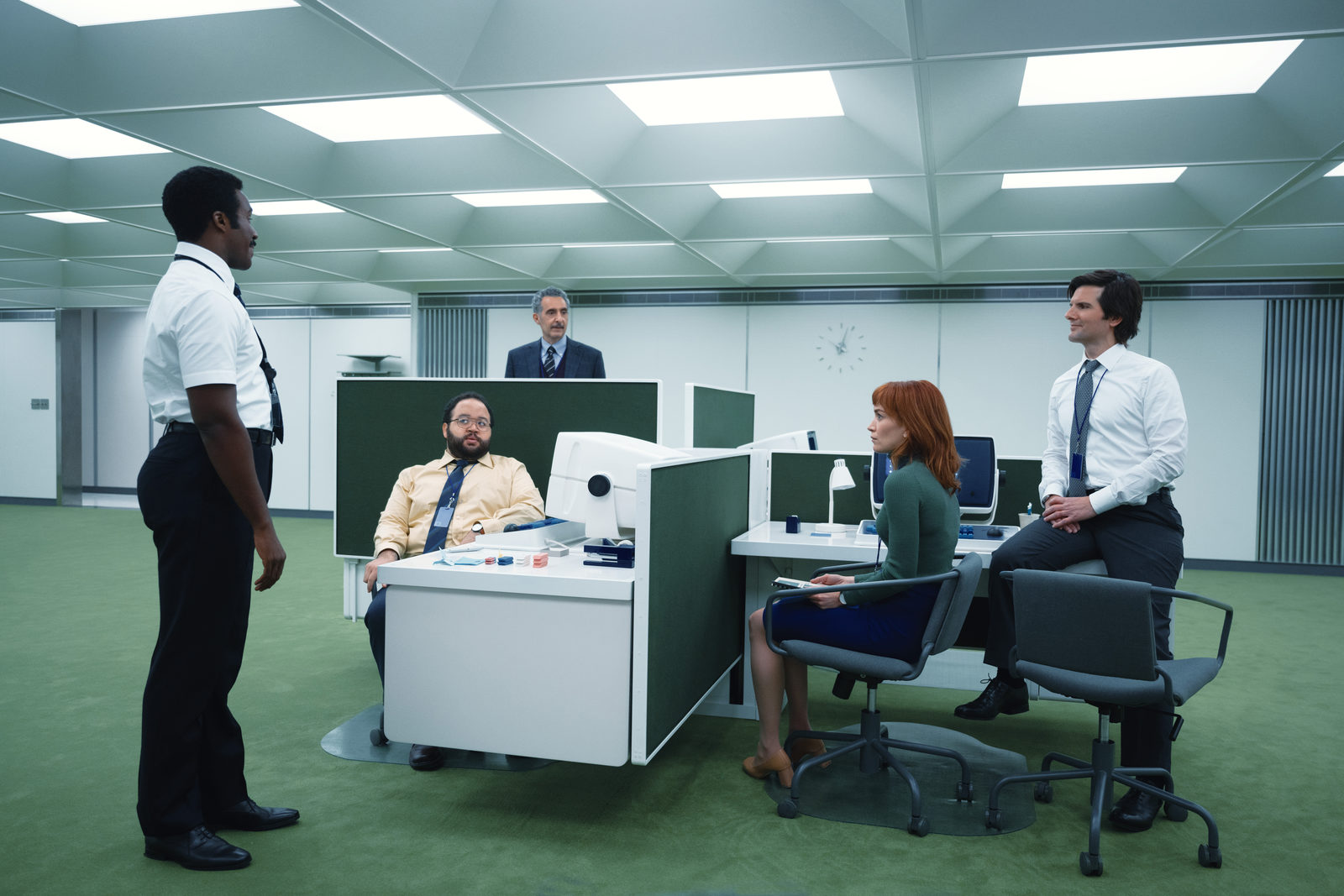
People fight work burnout in different ways: some learn meditation, some take up sports, and some simply quit. But Apple TV has shown that there is another way — not remembering work outside the office. The pros and cons of such amnesia are told in t...
An ordinary office employee named Mark works in the macrodata refinement department of the huge corporation 'Lumon'. He has undergone a surgical procedure called 'severance', and now at home he (the outie) remembers nothing about his workdays, while at work (the innie) he remembers nothing about what happens outside the office. In both worlds, Mark maintained relative calm, even boredom, until a new employee, Helly, joined his department, unwilling to accept Lumon's strict rules and voluntary amnesia.
The screenwriter of the new project from Apple TV is debutant Dan Erickson, supported by directors Ben Stiller and Ifa McArdle. Together, they managed to create a hybrid of thriller, sci-fi, drama, and biting satire about technology and corporate culture. The result is a high-quality slow-burner where tension builds gradually and reaches its peak in the finale, making you jump out of your seat with anticipation.
'Severance' is a thematically multi-layered and diverse product. First and foremost, it mocks boring corporate culture with its impersonal workspaces, silly incentive systems, and dumbing down of employees. The creators reflect on how capitalism has turned a person's life into an insignificant thing, a cog in an experiment to achieve some greater good. And the 'severance' procedure, presented as a scientific breakthrough, essentially resembles a way to create ideal office employees — isn't this what every employer secretly dreams of?
Moreover, corporate culture here is presented as a religious cult with all the accompanying attributes. In the center of the office is a statue of the founder (a deity), inside there is a museum of the founder's family (a temple), and books with his rules and sayings (holy books) are scattered everywhere. And in their free moments, employees sing hymns to the creator of 'Lumon'.
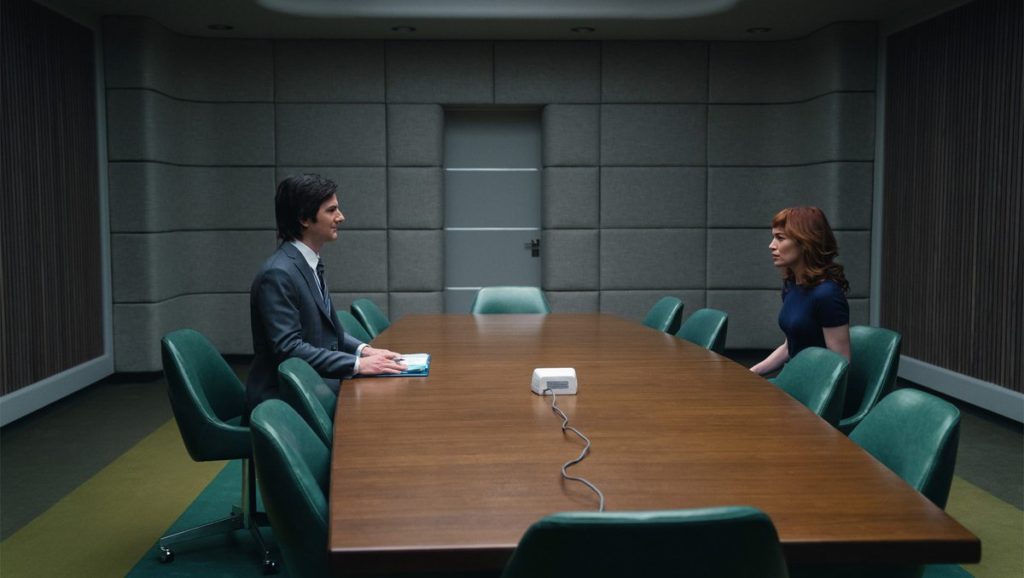
The second thematic layer is the personal dramas of the characters. This includes reflections on what people do to cope with the pain of loss. What secrets does their past hold, from which they flee into the sterile office world. The characters themselves are an endless personal tragedy, because the outie and innie are essentially two different people within one body. And while some have some freedom, others are hostages to someone else's desires. How ethical is the voluntary amnesia called 'severance'?
Playing with contrasts is of great importance in the series. First, there is a futuristic world where 'severance' is practiced, but employees work on computers that resemble old ones and use analog technology. Second, the bright, light (lots of white) and sterile world of 'Lumon' is replaced by the cold, unfriendly evening outside world, filled with chaos. And the third contrast is the characters' stories. Inside the office, their life is complete absurdity (sometimes laughable), while outside the corporation, it is tragedy and sorrow.
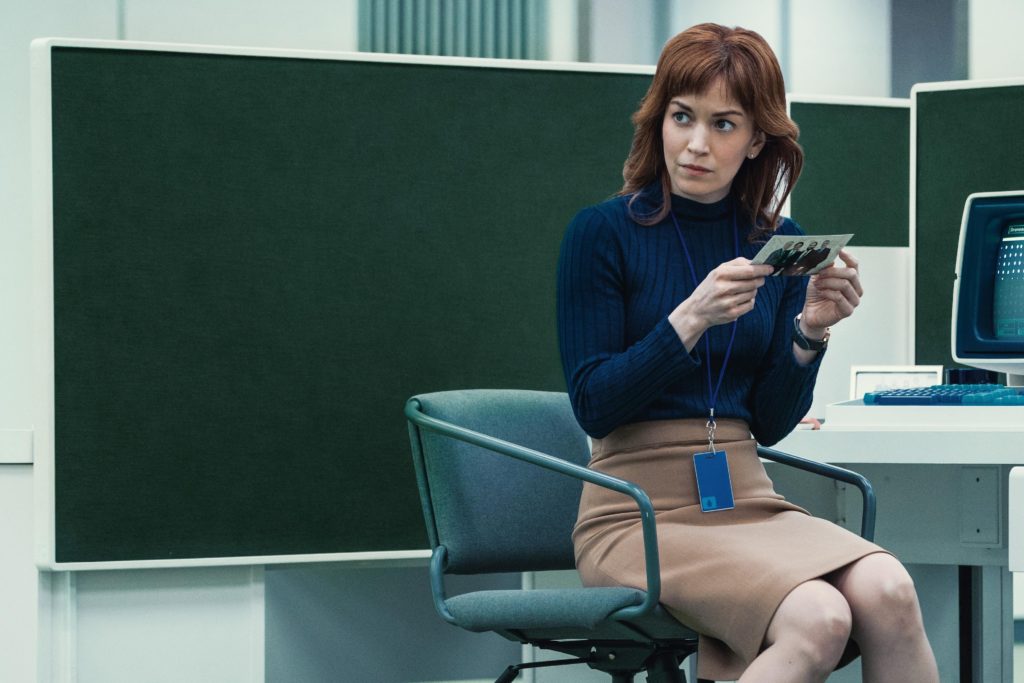
But in any story, who tells it matters. And in the series 'Severance', the acting performances are a separate pleasure. Adam Scott, John Turturro, Zach Cherry, and Britt Lower — they managed to create the feeling of a fine line between two different personalities, internally conflicting with each other. Psychologism and internal tension are expressed through the play of eyes, facial expressions, gestures, and even posture. Therefore, the actors focus on working with the body, which conveys pain, joy, and emotions, and the only weapon in the fight against distrust and pretense here is an honest, sincere look. And Adam Scott once again proves that comedians are the best dramatic actors. And there is also Christopher Walken and Patricia Arquette.
A separate merit of the series 'Severance' is its visuals, without which the plot twists would not be so impressive. Before us is, literally, an ideal office world: impeccably clean endless labyrinths of corridors, perfect room composition, and symmetry in everything — from the arrangement of furniture to the placement of the employees themselves in the office. By the way, the 'Lumon' office is a real-life complex, Bell Labs in New Jersey, an example of modernist architecture consisting of glass, concrete, and strict lines. The geometric nature and minimalism of the frame create a depersonalization of the place and attract the eye with its curves and angles. The space in the series is like a separate character, no less important for the development of the plot than the characters themselves.
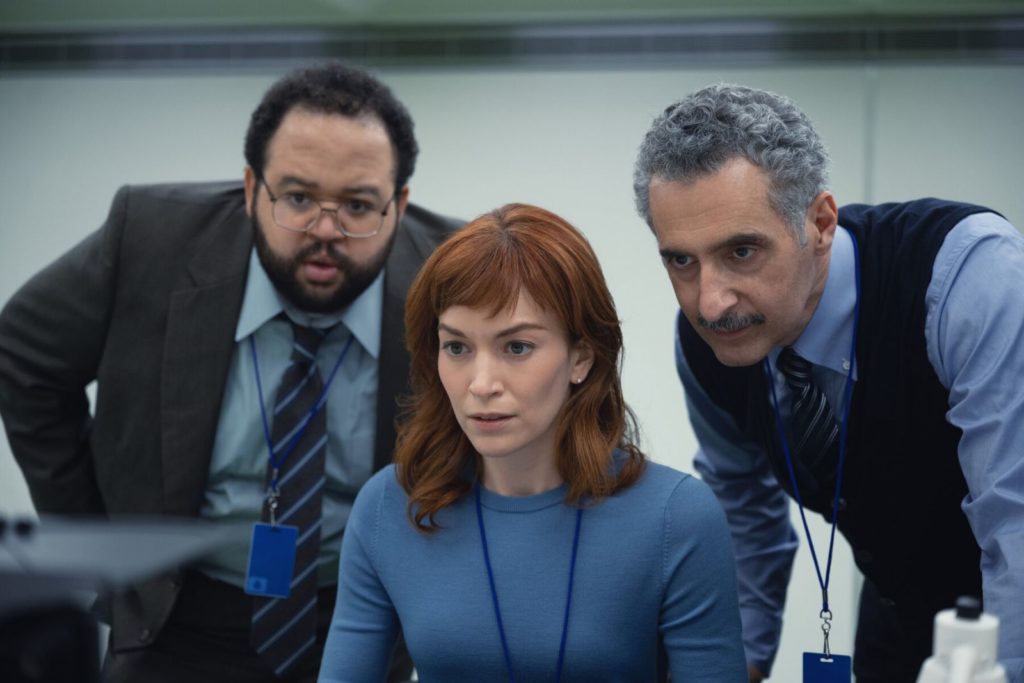
Thanks to the slow-burn effect, 'Severance' allows you to feel like part of this strange geometric world, appreciate all the compositionally precise scenes, immerse yourself in the atmosphere of 'Lumon', and most importantly, feel the depth and drama of the characters. This is a series for reflection on human rights and freedoms: which of the two personalities ultimately has the right to exist, and is it even ethical to pose such a question.
'Severance' from Apple TV is a serious bid for a very beautiful and intelligent project. It is the theme of interpenetration (and collision) of two worlds: the internal office world, striving outward, and the external one, wanting to know the truth about 'Lumon', that became one of the foundations of the intrigue in the first season. Many of Ben Stiller and company's Chekhov's guns have already fired here, creating new question holes that you really want to fill in the future season. The main thing is that in the end, these are not blank shots.
Comments
0No comments yet.
Sign in to join the discussion.