

Today, a new film by Paolo Genovese, “Superheroes,” hits the screens—a romantic drama about how differently people can understand happiness—and still not be afraid to be together. Especially when life puts such relationships to the test of time.
Brief Synopsis
Cheerful Anna (Jasmine Trinca) is a modern, talented woman who can interpret events in her life as funny comics. Charming Marco (Alessandro Borghi) believes that time does not exist and teaches physics to young minds.
Once, they both sacrificed something very important to be together: she—her independence, he—his previous relationship. They will have to rethink themselves and their values, observe those around them, and compare with their own experience. After all, it’s no joke—spending 10 years together!
Modern “Superheroes”
Very often, melodramas that focus on relationships suffer from cardboard main characters. All stories have already been told, all plot twists have been played out, so why bother extra?
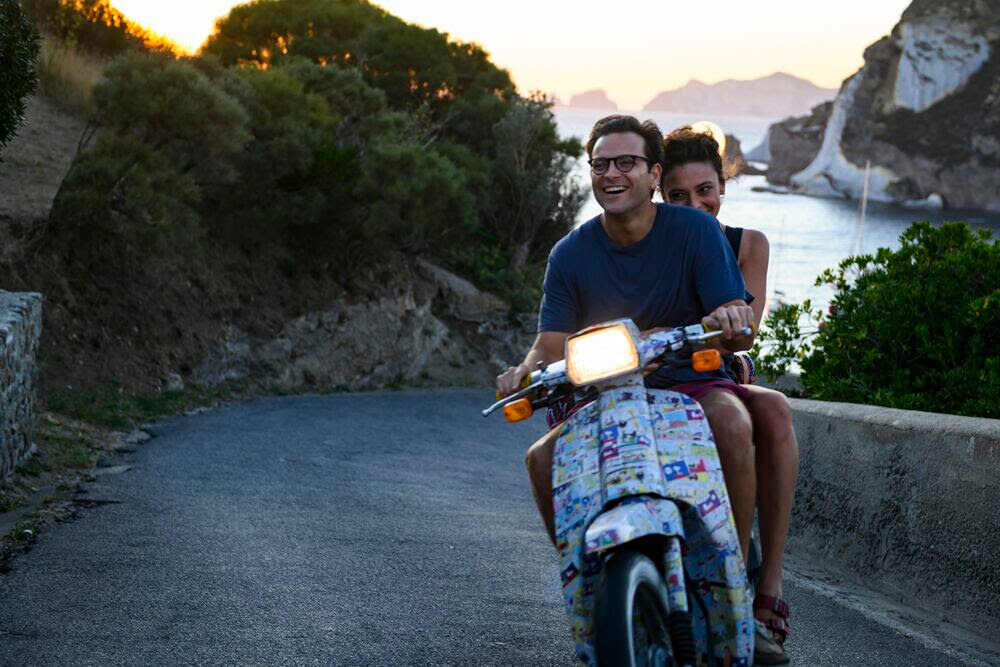
This is not a problem for the film “Superheroes” at all. We are presented with real, living people who have their own interests and goals that do not revolve only around their significant other. This allows us to truly empathize with their stories and want to know where it all leads.
We spend just as much time with charismatic Anna and her successes in the field of comics (one of which gave the film its name)—and with rational Marco, whose lectures often depend on personal experiences. And we are interested. Because both characters are interesting to us as individuals. If your melodrama or your [film] cannot achieve this, then you shouldn’t even start.
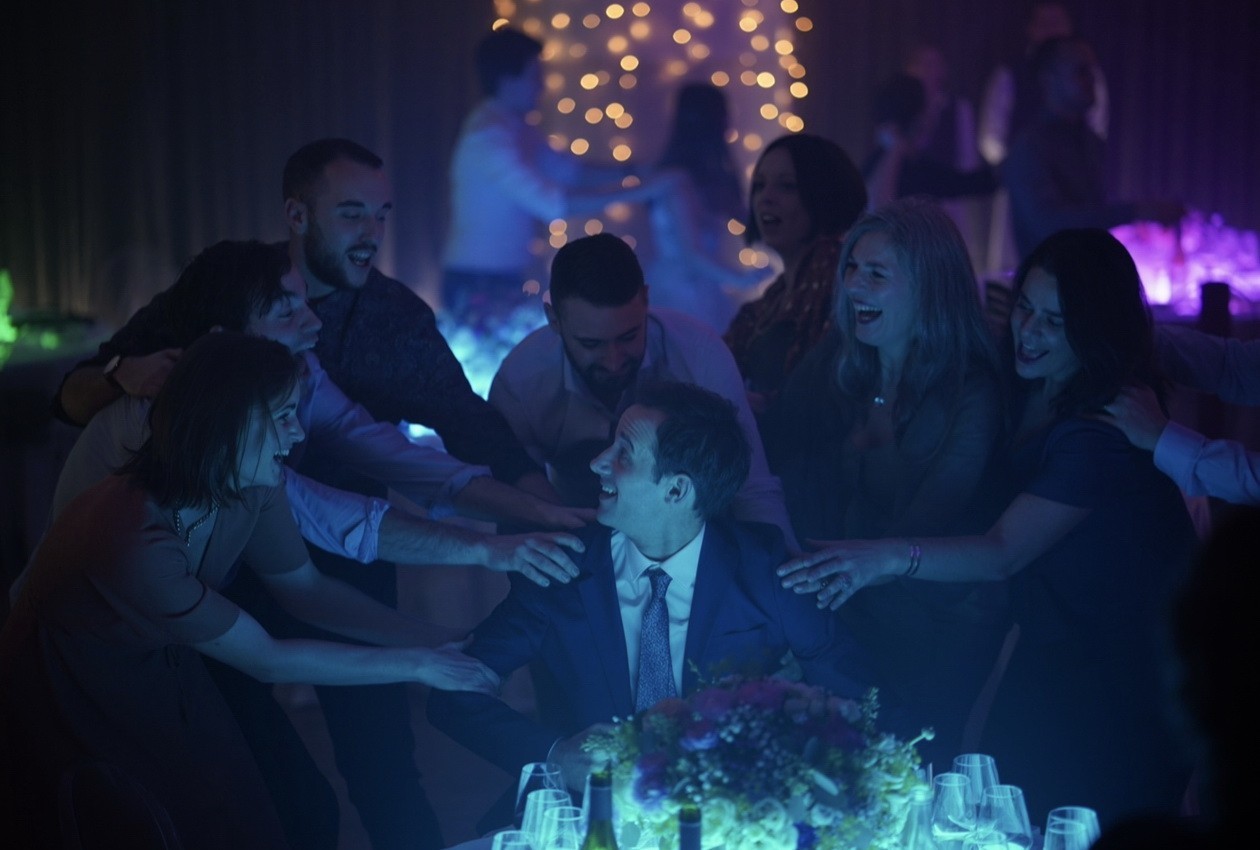
At the same time, the story of people who postpone family and marriage for later is more relevant than ever. The average age of marriage is increasing, so many will see themselves in Anna and Marco. Everyday life in such couples becomes a real test, which, as the main character believes, only true superheroes can overcome.
Nonlinear Narrative
Genovese took a rather risky step by dividing the narrative into two parts, which he tells simultaneously. “Superheroes” often jumps along the timeline so that the contrast between a newly emerging feeling and the crisis of a ten-year anniversary is especially noticeable. On the one hand, this move works, and we can clearly see how seeds of disagreement planted long ago bear fruit. On the other hand…

Yes, the constant work of the viewer to fit what is happening into the correct chronological order somewhat distracts from what is really important. A scene begins, characters talk—and you are intently looking to see if the main character has stubble on his face or not, and because of this, you miss a line or two. If the difference were a bit more specific (for example, in slightly more contrasting color palettes), then perhaps “Superheroes” would be a bit easier to perceive.
And Again, the Problematic Third Act
The author of the article concludes that the third act is a real scourge of modern cinema about relationships. How many films have there been in the last couple of years that can boast an excellent setup and development, but disappoint in the climax?
Because all the shown scenes, slices of life, excerpts, and sketches lead to us becoming captivated by the characters, believing in what is happening, wanting to see how conflicts will be resolved. Only for the film to follow one of the most beaten clichés that can be found.
In its defense, I will say that “Superheroes” even presents this cliché with an interesting dilemma, for which special thanks to Genovese. But how frustrating it is when a film that could have been something more and breathed new life into the melodrama genre stumbles at the finish line.
Conclusion

Alas, to explain my indignation, I would have to spoil things, which I absolutely do not want to do. So I will proceed to brief conclusions.
Whatever the case, “Superheroes” is a good melodrama. It has excellent acting performances, a wonderful directorial vision (Genovese proves that his previous successes were not accidental), and many recognizable references (special thanks for the cover of “Crazy Little Thing Called Love” and the recreation of the dance from “Love Actually”). If it had been pushed just a little further, we could have had a film that would have aspired to be a modern classic. But there is just a good film about relationships. Too bad.
Comments
0No comments yet.
Sign in to join the discussion.