

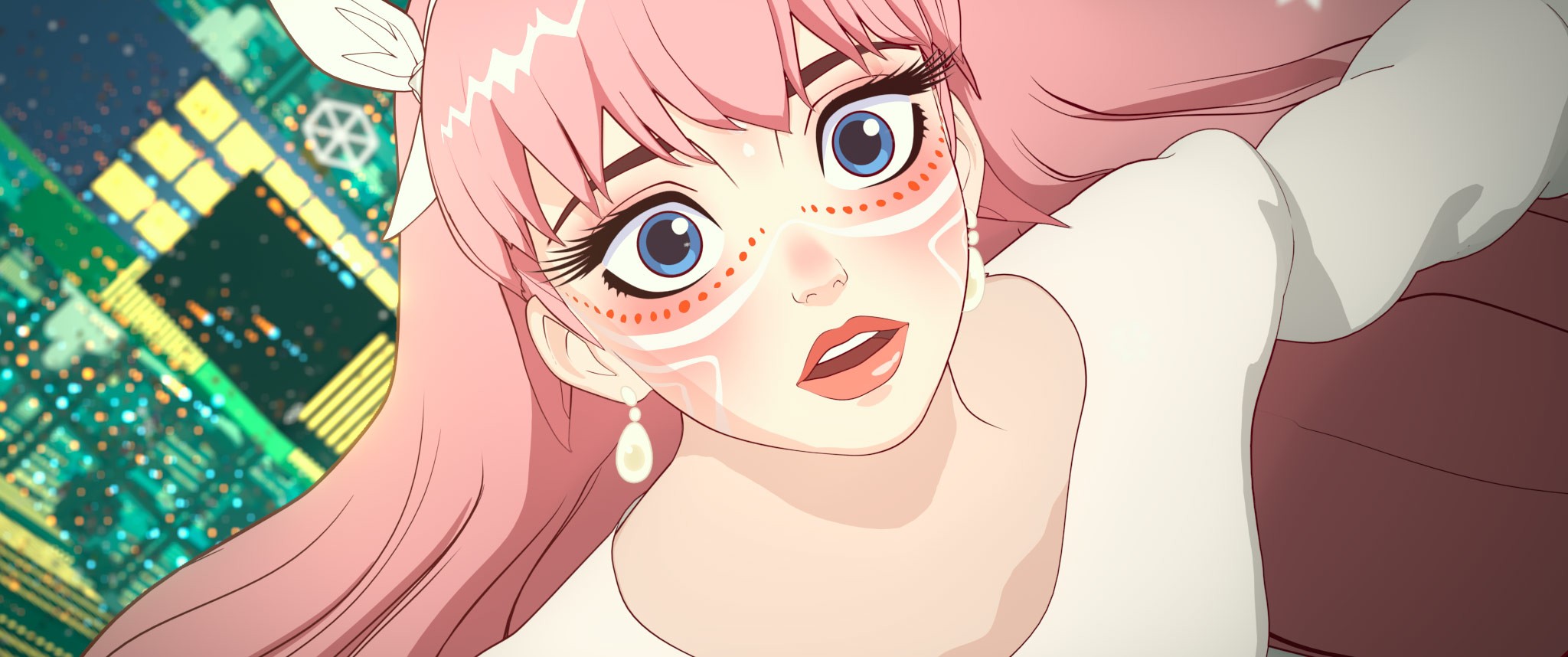
What if we modernize “Beauty and the Beast” and move this story online, or more precisely, into the metaverse? The result is the colorful anime “Belle and the Dragon,” which blends motifs from the classic fairy tale and “The Matrix,” raises issues of...
On April 14, “Belle and the Dragon” (Ryu to Sobakasu) will be released in Russian theaters — a new anime by Mamoru Hosoda, one of the genre’s leading auteurs and the creator of the famous “The Boy and the Beast,” “The Girl Who Leapt Through Time,” and “Mirai.” This time, the master has taken the well-worn story of “Beauty and the Beast” as his foundation and spiced it up with a fresh wrapping in the form of a metaverse, where both titular characters intentionally hide. Along with the new form come different dynamics in the relationships between the characters, which may both delight and disappoint with their ambiguity.
The article contains minor spoilers (they will be marked)
Welcome to the World of U
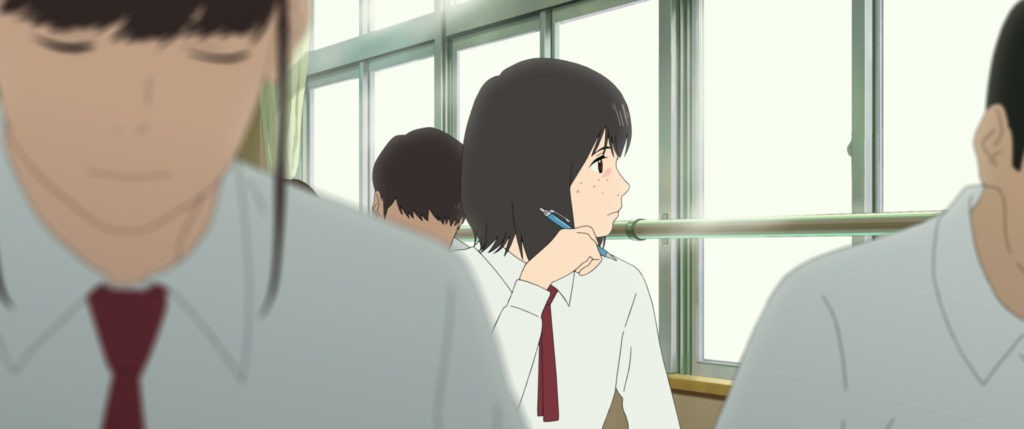
A schoolgirl named Suzu is withdrawn and shy in the real world – she cannot confess her feelings, nor can she sing in public, despite her great desire. For people like Suzu, there exists the virtual space U, where everyone can create an avatar with a unique appearance and become who they always dreamed of. And so, the protagonist creates a new self — a big-eyed, pink-haired beauty named Belle, who instantly becomes a sensation in U thanks to her angelic singing and the appearance of a Disney princess.
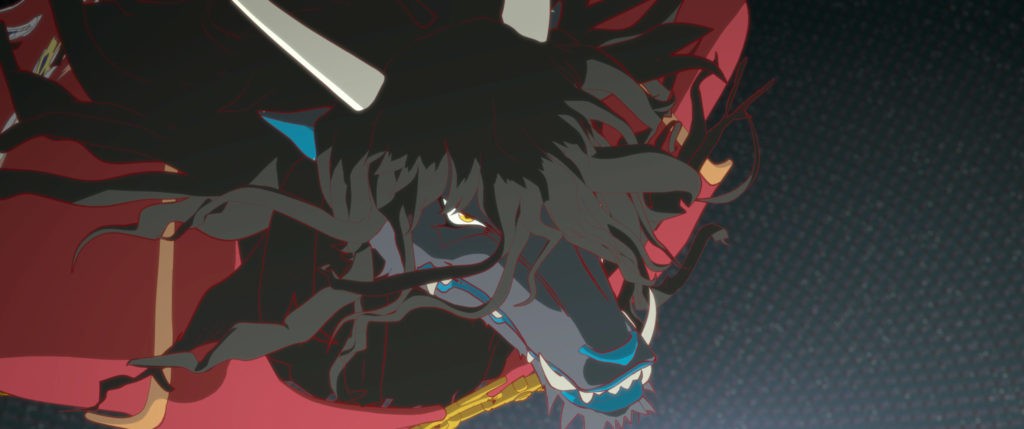
The world of U is created as a safe space for everyone. Therefore, the appearance of the pugnacious and aloof Dragon, who disrupts the order of the local guardians, is perceived as an invasion of the personal boundaries of U’s visitors. That is what everyone thinks, except Belle, who develops an unexpected sympathy for the universal outcast.
Don’t Judge a Book by Its Cover
“Belle and the Dragon,” echoing the source material, articulates the long-obvious but still relevant idea that appearance isn’t everything. But, while in the original this mainly concerned the Beast, in Hosoda’s version the same can be said about the beauty. Here, it’s less about appearance in the literal sense and more about the image and labels society tags us with. Everyone thinks Suzu is an introvert and an oddball, and even she herself begins to believe it. But behind this image lies much more. And her true self is fully revealed precisely in the virtual space. Perhaps this, rather than the relationship between the main characters, can even be called the central narrative thread of the anime.
At the same time, the paradigm of the relationship between the characters has changed in Hosoda’s story. Here, the “beauty” is required not only to have all-consuming love, empathy, and the ability to see beyond the facade, but also a mutual demonstration of vulnerability. And this point may seem contradictory and ambiguous to some viewers.
SPOILER BELOW
The author forces the heroine to abandon that very “self” from online due to its “unreality.” And just when the viewer begins to believe that the internet and metaverse according to Hosoda are a positive future where one can be oneself, they are inadvertently told that one must live in the real world.
There is no excessive moralizing in this, but contradictions arise because people go online not just due to complexes, but also due to external influences. And for many, it is a real salvation (as for the Dragon himself, for example). Therefore, viewers who agree with this may be turned off by such an approach.
END SPOILER
Audiovisual Perfection
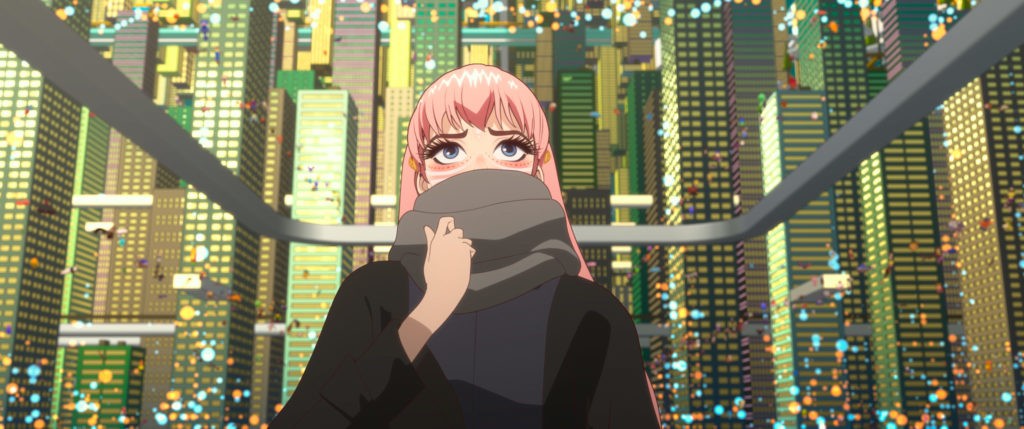
The plot of the anime “Belle and the Dragon” invites debate and reflection on the nature of cyberbullying, and finding motifs similar to “The Matrix,” but even greater emotions are evoked by its visual and musical framework. Since Suzu-Belle acts as a singer here, the film has many musical episodes, each resembling an incredibly colorful music video.
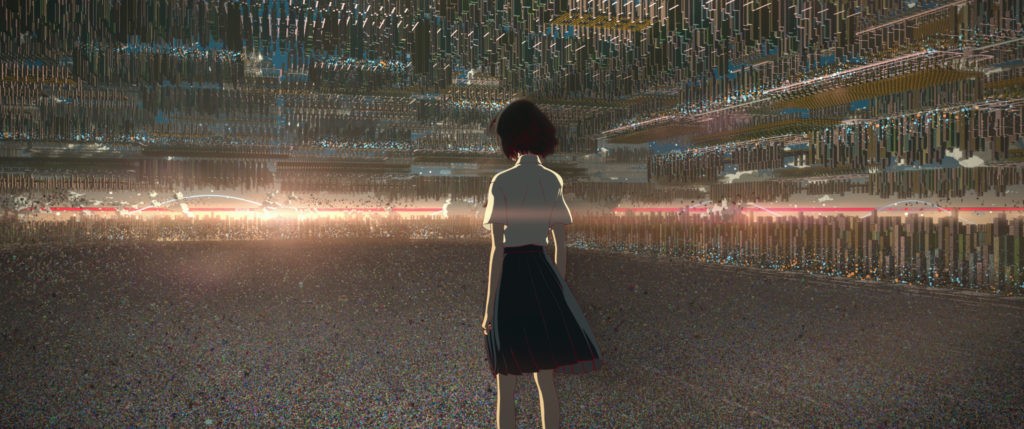
Each performance is accompanied by a riot of colors and spectacular camera swoops across the “Inception”-like world of U, whose design was overseen by British architect Eric Wong. Through this, Hosoda manages to achieve the feeling of the birth of an online idol with millions of fans on the web. Therefore, the culminating moment, also executed as a musical number, evokes genuine emotions. And besides, it’s just damn beautiful!
In summary, “Belle and the Dragon” is an interesting, albeit ambiguously successful, reinterpretation of the motifs of “Beauty and the Beast” that caresses the ears and eyes, and peers into the foreseeable future where everyone can create an avatar and become an online star. Or, a Dragon, at the very least.
“Belle and the Dragon” in theaters from April 14.
Trailer:
Comments
0No comments yet.
Sign in to join the discussion.