
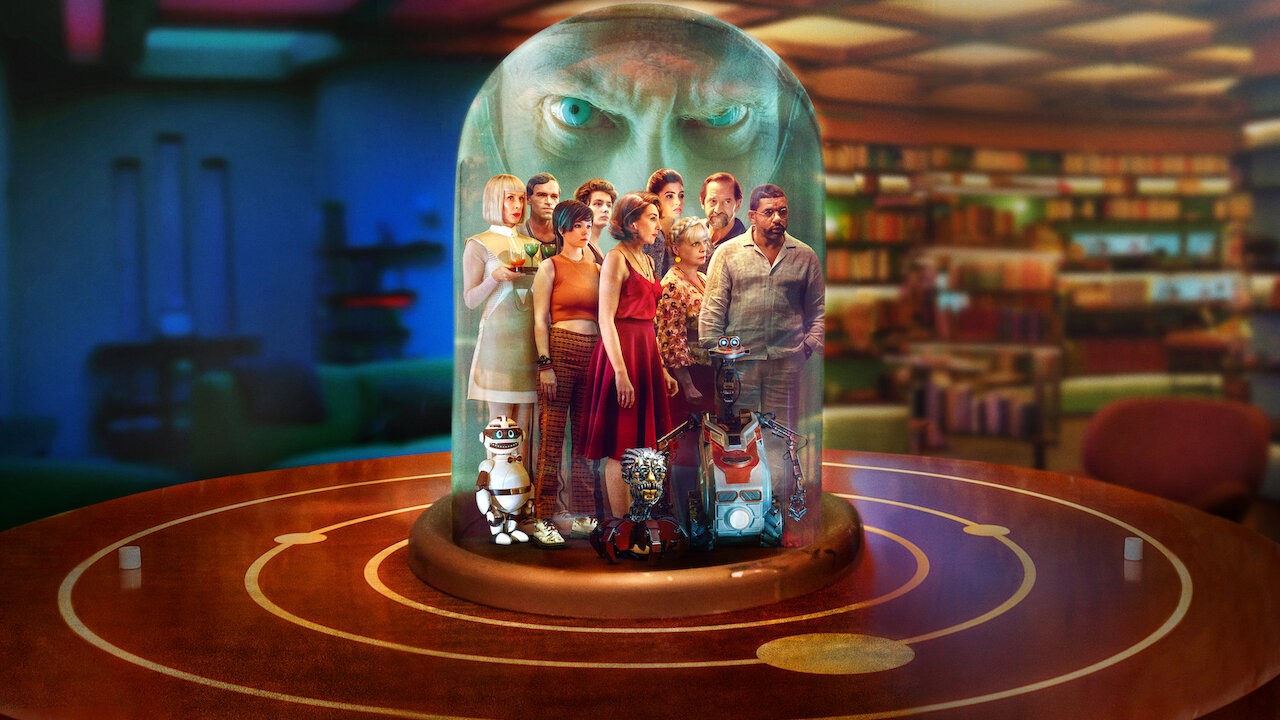
After a nine-year hiatus, Jean-Pierre Jeunet returned with a new feature film "Big Bug," released on Netflix on February 11. Another biting satire on modern society has joined the streaming library.
The filmography of Jean-Pierre Jeunet includes only five films (not counting two films co-directed with Marc Caro and "Big Bug"), but many know the director's name from the hit "Amélie" or the incredibly strange and crazy "Alien: Resurrection." With such a modest portfolio, the Frenchman managed to create his own recognizable style, and the new film is no exception. The film is full of bright colors, detailed details, and strange close-ups (and in the credits, as usual, the actor's name is accompanied by their face), but contrary to the declared genre of "comedy," Jeunet has made a truly scary movie.
What's the plot?
The year is 2045. Cities look like something out of a cyberpunk world, but completely tasteless and identical. Every home has robots with artificial intelligence that make life easier. Cooking, cleaning, opening doors, and reminders about unpaid neighborly "borrowings" — humans no longer have to perform unnecessary actions. Even writing texts by hand has become "retro" or "past-ism," as one character puts it.
One sunny warm morning (judging by the fact that the Netherlands is flooded and it's 43 degrees Celsius outside, the planet is experiencing global warming, so every morning is incredibly warm), a new acquaintance Max (Stéphane De Groodt) and his zoomer son Léo (Élie Tonna) visit the gentle and sensitive divorced Alice (Elsa Zylberstein). The analytical abilities of the robot maid Monique (Claude Perron) show how insincere the man is in his words, but a 100% erection indicator explains the sycophancy.
The advances gradually work, but the pickup school is interrupted by unexpected guests: Alice's ex-husband Victor (Youssef Hajdi) with his "secretary" Jennifer (Claire Chust) and adopted daughter Nina (Marisol Fertar). Later, neighbor Françoise (Isabelle Nanty) drops by looking for her dog Toby-6 (or Toby-7). And this whole group of people, by chance, finds themselves locked in the smart home by four domestic robots, who justify their actions by protecting the owners from the dangers of the outside world.
The new world is not so wonderful
The detailing of the futuristic world in Jean-Pierre Jeunet's film is striking (although you can nitpick about slightly uneven special effects at times). Many things in the film evoke a sense of disgust towards a possible future. Is humanity really striving for something like this? In cyberpunk, at least there is a neon aesthetic and a romanticization of decadence before machines, but "Big Bug" burns away the romance with napalm. It's as if the setting of "Suburbicon" or the music video for Stromae's "Papaoutai" were transported into the future. Houses, cars, interiors — everything looks so tasteless, unnatural, and identical, as if a rainbow had been splattered across a black-and-white monotonous city, or a giant oil slick had crashed onto the planet.

On February 6, the serial spin-off of "Blade Runner" with the subtitle "Black Lotus" ended. The 3D anime-style project from [adult swim] and Crunchyroll filled a small gap in the
Open material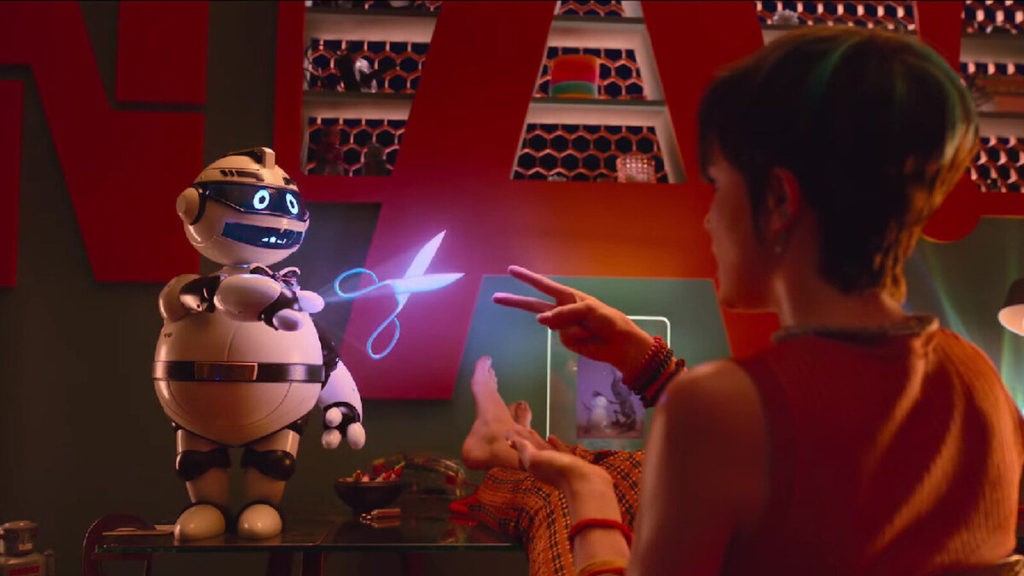
In addition to the style of the future, Jeunet's creation has other things to amaze the viewer. For example, why did humanity allow artificial intelligence to even come close to state governance? Androids did not seize power by force, as is commonly thought, but legally participate in political debates with humans. Many accept this fact not with resignation, but with enthusiasm and full support. It's sad to think that society could become so stupid as to voluntarily hand over control of the world to robots.
Yonix (android politicians with the face of a smiling, white-toothed bald grandfather with a QR code on their forehead) govern the state, and no one particularly objects. People voluntarily agree (or are they forced?) to participate in the show "Homo Ridiculus," where they are treated like animals in a circus or zoo. Jeunet and his "Big Bug," like Adam McKay, use biting satire to expose modern problems. Cruelty to animals, the relationship of the upper class to the lower class, climate and ecology, robotization, and much more. It turns out that in our crazy world, all that's left is to laugh at everything (including ourselves) to keep from going insane.

On December 24, Netflix premiered Adam McKay's new comedy "Don't Look Up" with a star-studded cast. Opinions about the film are divided, but it definitely has
Open materialHorror hidden behind a robo-smile mask
Despite the harsh satire and abundance of jokes, "Big Bug" will seem like a horror movie more than once. The time is the very near future (23 years is a blip in history), and people are already eating fried crickets, worm pie, and (a chef's compliment) foie gras made from human flesh. Humans are no longer considered unique in their creation; society has a ton of fines for anything (exceeding dust levels, storing unauthorized antiques, even for attempting to harm robots, and the story of the hero — Dominique Pinon (Jeunet's favorite), who appears as a cameo, is even sadder), and knowledge just a hundred years old has fallen into oblivion (zoomer Léo has no idea who Adolf Hitler is).
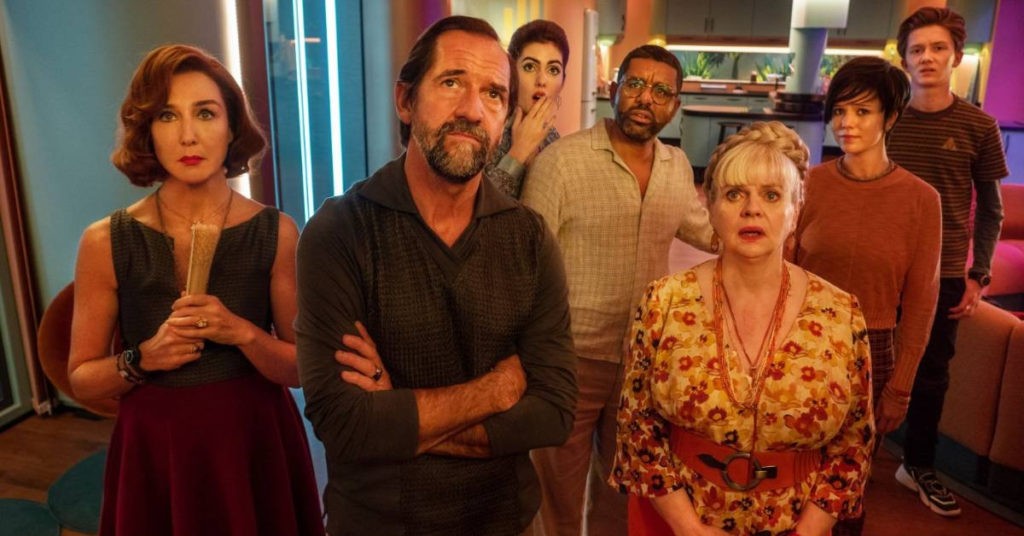
The robo-world has consumed people, become an integral part of life, and it's scary to watch how the characters behave in such conditions. You don't want to empathize with the characters, almost all of them, throughout the entire duration of the film. The overly nostalgic and maddeningly naive Alice, the cowardly and dishonest Max, the stupid and mercenary Jennifer, the android-loving Françoise, the rebellious and annoying Léo, and the smug Victor.
Who to worry about? The couple who just can't have sex, or the couple who can't leave for a luxury resort and can't live without Wi-Fi? Against their background, the heroine of the incredible Marisol Fertar — the slightly unreal Nina — looks like an innocent angel. But the domestic robots (besides the maid Monique, the house also has a walking head named Einstein, voiced by André Dussollier, Nina's very first primitive robot that can play Rock-Paper-Scissors, and a fancy vacuum cleaner that somewhat resembles WALL-E), who want to understand the depth of the soul and learn to joke, look more human, albeit a bit cringey. But you really want to empathize with them much more than with the "prisoners." Especially since they sincerely try, even make mistakes, just like people.
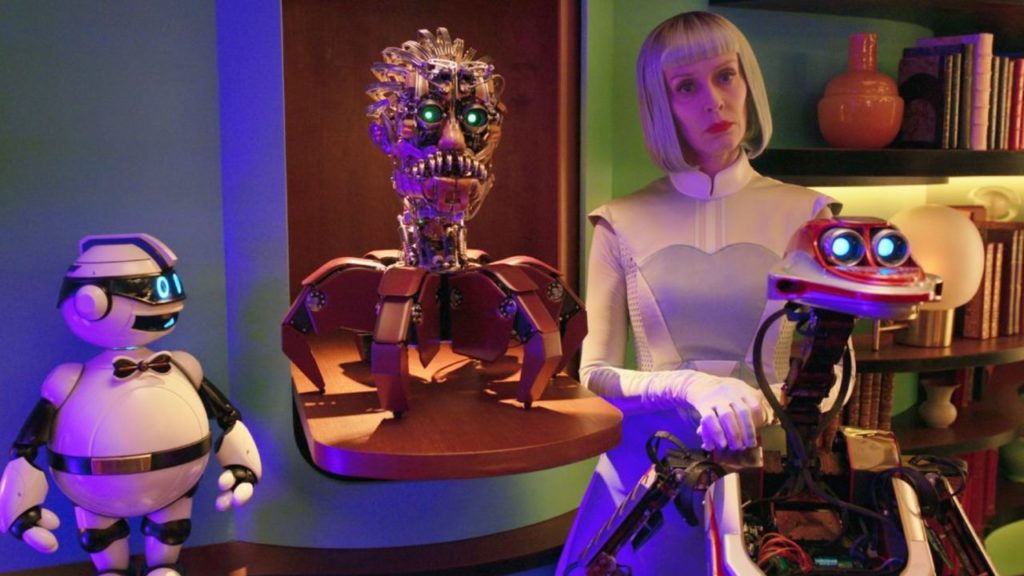
I note that Claude Perron, Alban Lenoir, and François Levantal performed the roles of androids excellently and frighteningly accurately. Cold faces with smiles devoid of emotion in the eyes, sharp and precise body movements are incredibly convincing and evoke viewer fear. Once again, you become convinced that global robotization is a bad idea. Although maybe "Big Bug" takes on the function of Grigory Oster's "Bad Advice," only more broadly? Like, do whatever you want, people, and here's where it will lead you: household appliances will comprehend human emotions, quote Shakespeare, and harshly prank people, while you play at insincerity, degrade, and meekly accept what is happening.
What's the bottom line?
Returning after 9 years to a completely changed cinema landscape, Jean-Pierre Jeunet fits in incredibly organically with all his techniques. "Big Bug" looks relevant, funny, and biting. Yes, sometimes the film looks visually uneven, and at times the same thing is joked about several times, but the farce, action, and madness happening on screen are stunning.
The French satire on modernity turned out to be lively, but the film looks scarier than James Cameron's "Terminator," because there humanity at least fought, while in this domestic uprising of machines, we, like forgotten Nazi Germany, unconditionally surrendered.
Comments
0No comments yet.
Sign in to join the discussion.