
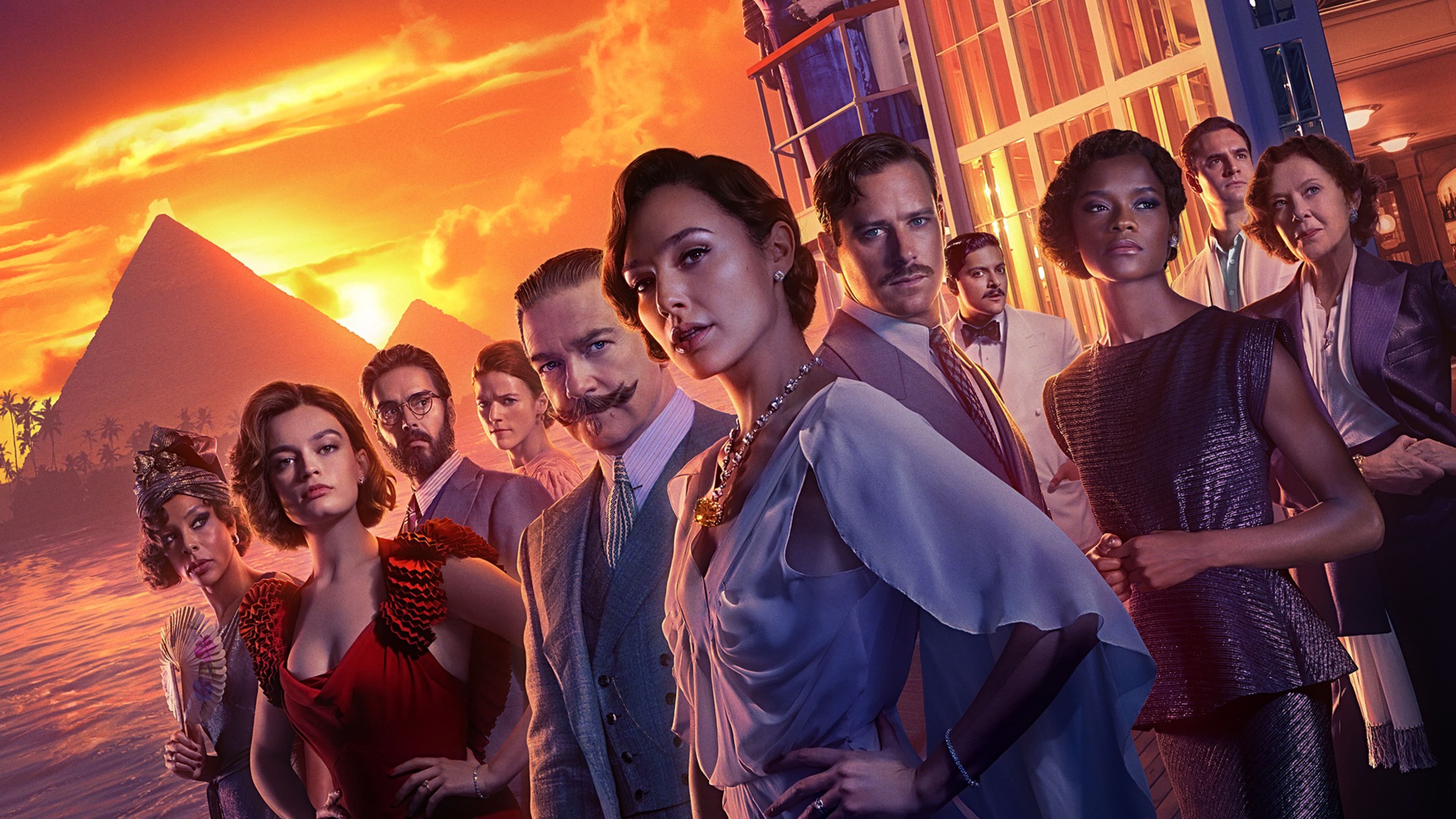
We've been waiting for this since 2017, since the very last scene of Murder on the Orient Express – and now, finally, it's here. After numerous delays, Death on the Nile hits the big screen, but alas, it doesn't bring the feelings we hoped for. The train has left. Only the ship remains.
Synopsis
The famous Belgian detective Hercule Poirot (Kenneth Branagh) seems to attract criminals anywhere in the world. Now, a peaceful vacation turns into a whirlwind of events aboard a steamer sailing down the Nile.
Around him gathers a motley crew, each of whom could become the victim of an "accident" or even a cold-blooded murder, and each has reasons to get their hands dirty themselves…
Death on the Nile – Direct Sequel or Standalone Story?
Murder on the Orient Express was released back in 2017, already raising questions: was there really a need to film the famous Agatha Christie detective story again after the brilliant 1974 version? And despite its flaws (a dragged-out second act, excessive drama, added strange chase scenes), Kenneth Branagh's new version absolutely proved its worth. The final scene of the unmasking alone is worth the price of admission.

Unfortunately, the same cannot be said for Death on the Nile, which desperately lacks such an emotional outburst. Branagh as a director is wonderful; he knows how to properly present the cards he has in his hand, and the issue here lies with the cards themselves. Moreover, the time that has passed since the last film hinders its reception. Perhaps if it had been released in 2019, as originally planned, the flaws would have been perceived more leniently. But we've burned out and forgotten, and that also slightly taints the film.
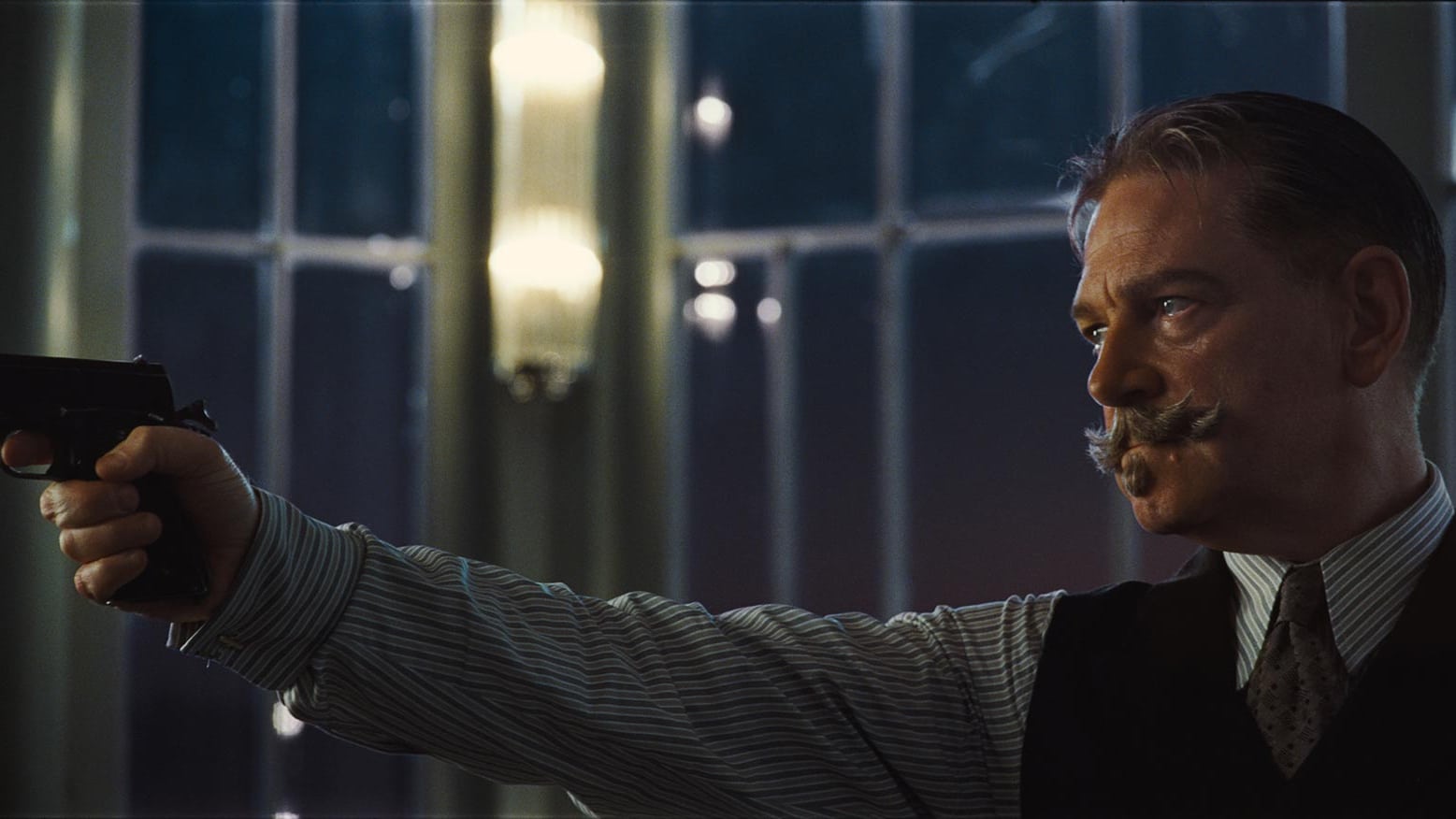
Instead of telling the story well, the creators inexplicably decided to significantly alter the composition of the ship's passengers and their motivations, as well as place a strong emphasis on Poirot's personality and backstory. Most likely, this decision was made to distinguish this version from previous ones (especially the 1978 film Death on the Nile starring Peter Ustinov), which ultimately results in a strange mishmash.
Well, at least now we know the secret of why Poirot is so particular about his mustache, at least in this non-canonical version. And the mustache itself looks a bit more presentable, for which special thanks.
Neither Fish nor Fowl
There's a lack of balance in everything, making such a vibrant and lush film seem a bit faded and dull. Take the production, for example – everything related to studio interior shots is top-notch. But when the camera captures wide landscapes or views outside buildings/the ship, the terrible green screen, against which the characters stand out so much, ruins everything.
Or take the story itself. The detective plot of Death on the Nile is executed perfectly; every detail is thought out, and the changes in the character lineup help even those who already know the resolution to remain surprised until the end. Yet there are so many strange distractions – whether focusing on Poirot, the relationships of secondary characters, or "ominous portents" – that the excellent detective story gets blurred and doesn't leave much of an impression.
Death on the Nile also continues to be a fine flag-bearer of modern wokeness in all its endeavors. We again see characters of color traveling alongside wealthy white snobs in expensive cruises, right in the middle of the 1920s. And if no one had emphasized this anti-historical aspect, it would have been fine, but the black characters directly speak about the oppression they face from society. Make up your mind, film: are they oppressed or not?
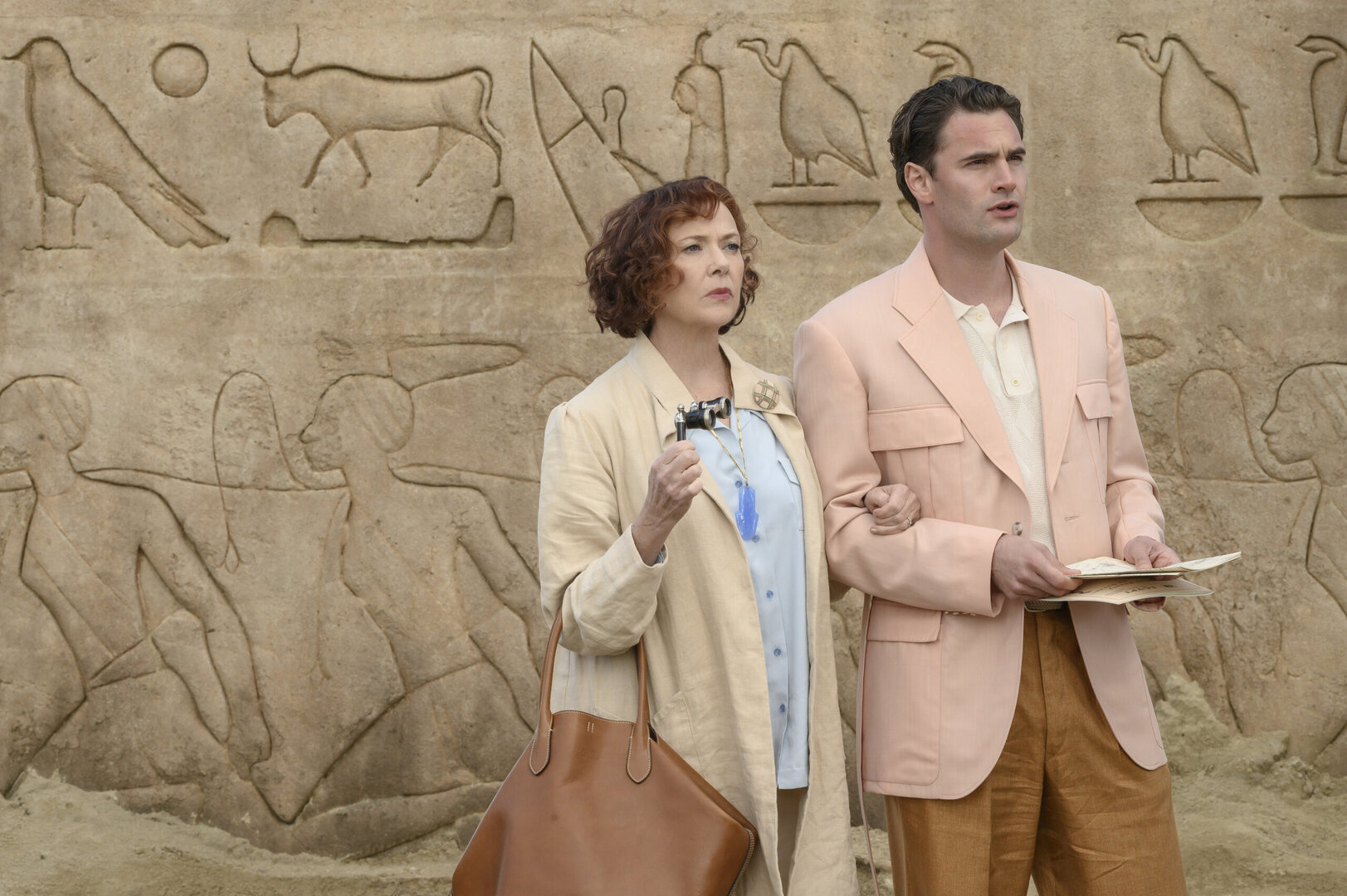
The strongest aspect of the film is the cast. Two actors particularly stood out: Russell Brand, who appears wildly unlike himself, and Emma Mackey, who outshone all her colleagues. In fact, Emma is a true discovery with a bright future ahead (Brana initially wanted Jodie Comer for her role, which would have been a minus for the film).
Verdict
Death on the Nile once again joins the ranks of films that could have been magnificent but ruined themselves. Branagh is a director whose work is hard to pin down. He loves everything bright and flashy, but the result is a cloying candy without filling. Still, he tries (he succeeded with Murder), and we hope that the adventures of his Hercule will continue. This time, in a more convincing direction.
Comments
0No comments yet.
Sign in to join the discussion.