
On February 1, the digital premiere of the film almanac 'Yt', shot in the Republic of Sakha (Yakutia), took place on the Premier, KION, and Wink services. The low-budget film is yet another proof that films from the Russian hinterland have something...
Lately, more and more films from Russia are being sent to festivals (including international ones). Some manage to return with awards, but the most amusing thing is that most of these films are made by authors from regions that seem completely non-obvious from a cinematic point of view. Sokurov's workshop in Nalchik gave us Kira Kovalenko (), Kantemir Balagov ('Beanpole', 'Closeness') and Vladimir Bitokov ('Mama, I'm Home'), and in cold Yakutia, cinema has recently been experiencing a kind of boom. 'Nuucha', 'Private Chaerin', 'The Sun Doesn't Set Above Me', 'Bonfire in the Wind' (it even got a mention in one of the novellas) — just a few examples of the wave of new Yakut films.
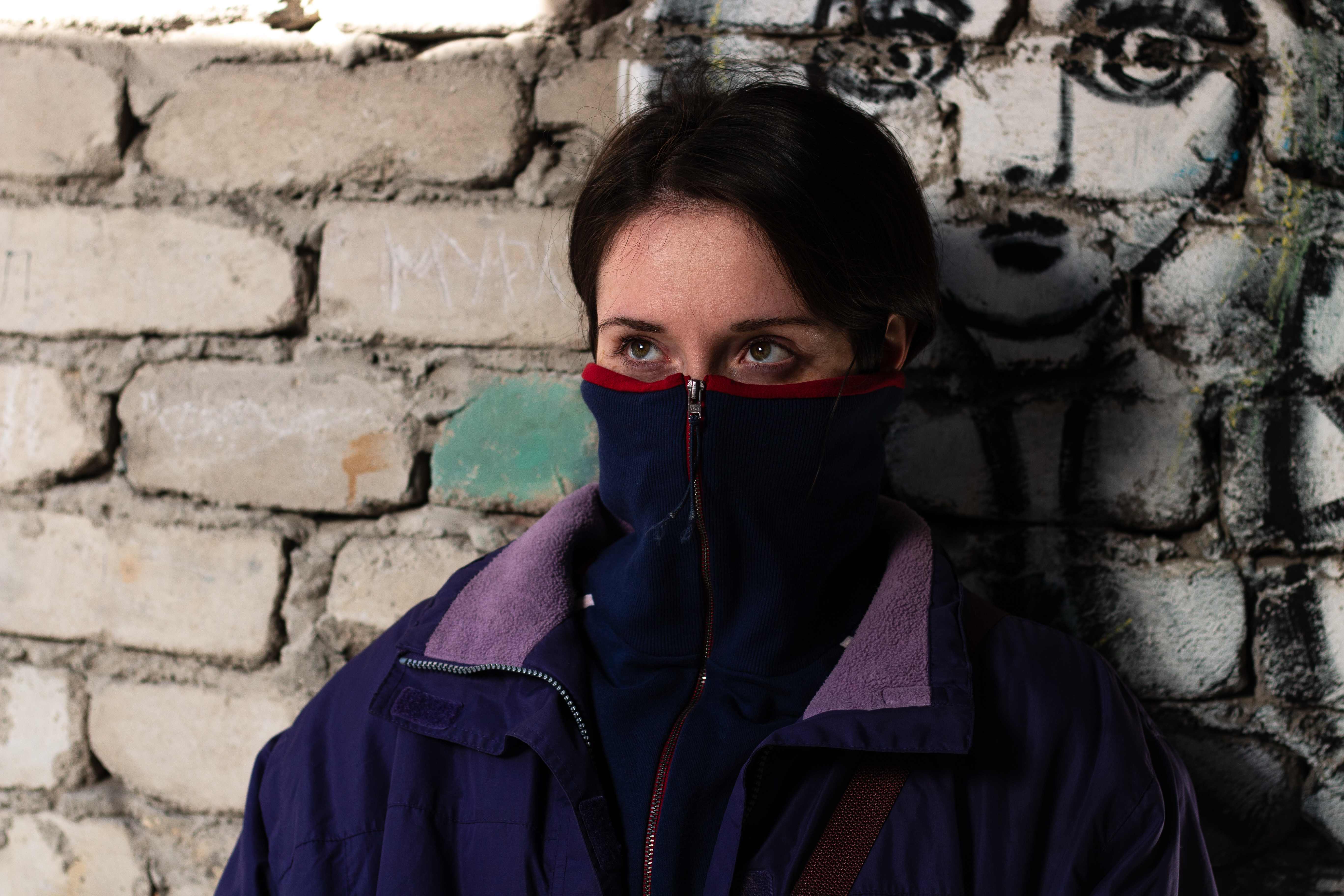
On October 30, the premiere of the film 'Unclenching the Fists' by Kira Kovalenko, a graduate of Alexander Sokurov's workshop, took place on digital platforms.
Open material'Yt' is a joint film almanac by directors Stepan Burnashev ('Black Snow') and Dmitry Davydov ('Scarecrow'). The film's budget was a mere 750,000 rubles, and filming lasted only two weeks in the Amginsky District. Many will think: 'What can you shoot for such a small amount of money? These days, many people need several million for an ordinary drama, but here, in some village, for less than a million? Fairy tales.' But not for those who truly care about cinema. As a result, the film entered the main competition of the 37th Warsaw International Film Festival and returned home with a special jury prize. So what is so remarkable about such an inexpensive authorial collection of stories?
What's the Plot?
The almanac consists of seven stories, completely different in their degree of absurdity, drama, and comedy. Each novella deals with problems that concern the republic and its ordinary residents. Even if the scale is not global and is sometimes limited to neighborly relations, their importance should not be underestimated. At first glance, 'Yt' embodies unusual and strange plots, but the situations are quite real for small, remote corners of Russia.
A boy borrows his father's gun for a friend without permission. A husband and wife get into a political argument over tea on the day of the election for the new village head. A neighbor who does boxing decides to move his toilet close to someone else's garden. The head of the village is forced to go alone to calm down a drunk brawler who is pointing a gun at his entire family. Funny and at the same time sad stories that immerse you in the everyday life of a small village. It is unknown whether the events take place within one locality, but in each novella, the characters face a difficult choice...
Biting from a Dog's Life
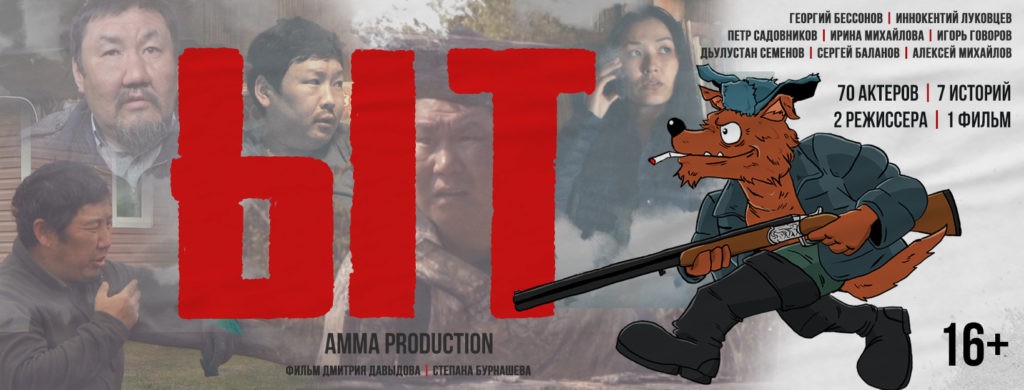
If you translate 'Yt' from the Yakut language, the word can mean 'dog' or 'to shoot'. Of course, viewers will see both a dog and a shot on screen, but the title of the almanac is hardly that straightforward (although the poster and banner feature an image of a bipedal dog with a gun in its paws). The film by Burnashev and Davydov tells about people, the simplest village people.
Life does not shine with wealth and luxury; all around is drunkenness, fights, everyday problems, difficulties with paperwork for hay or a plot of land, terrible rural roads, and thieving officials. The everyday life amidst agriculture is not as rosy as many are used to thinking. People live in such conditions not only in Yakutia but also in other regions outside of big cities. What questions of feminism and gender equality can be raised in places where buying a foreign car is an event discussed by an entire village as something out of the ordinary? The news, like word of mouth, spreads through the settlement, and every resident wonders where the person got the money if 'he drove a Zhiguli all his life and still pays alimony'?
Naturally, in such conditions, the authors put the characters before a difficult choice. Or rather, it is not so much the screenwriters who put them there, but life itself, because if you think about it, 'Yt' conveys modern village reality with documentary accuracy. And in the face of the prevailing circumstances, the characters of each novella enter into an internal struggle: to turn into animals (I think dogs, as a group of people are directly called in one of the stories) or to maintain a human face.
The authors look at situations with gusto and find a reason to smile in the most dramatic cases. This kind of view of the Russian 'khton' (gloom) personally reminds me of the stand-up routines of Sergei Orlov, who laughs even at the strangest and darkest sides of life in the hinterland. Especially since the comedian himself is from the Yakut hinterland, about whose life he has repeatedly spoken in his own performances. And if you compare the situations told by Orlov with the novellas of 'Yt', you can easily find similarities in the problems addressed.
The Team Knows Their Stuff
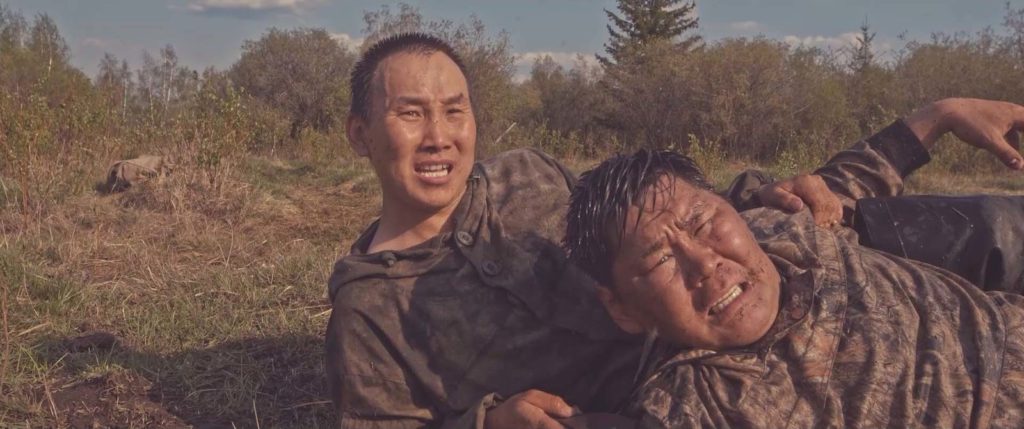
As mentioned above, the producers shot 'Yt' for only 750,000 rubles ('they chipped in half and half,' as they themselves say) and two weeks. There is no gloss in every frame. I don't know if it was by the authors' design or due to the modest budget, but the film looks extremely realistic. There are no effects or color correction. It gives the impression that during editing, Stepan Burnashev (yes, he also edited it) simply took the source files and glued them together in their original form. The point is that this move is far from a minus for the film; the picture looks very authentic. It creates a direct effect of being involved in what is happening. The viewer seems to be peeping at village life: sometimes hiding behind a window, sometimes acting as a passerby observing the situation from a distance.
The cinematography of Nikolai Petrov is evident throughout the film's runtime. Take, for example, the scene with drunk friends heading to settle a score with a neighbor, shot in one take. The viewer immediately understands how small the village is. Or the camera's flights from room to room in the novella with the family political argument, and at a certain point, the husband's and wife's sides are even separated by color, emphasizing the differences in their choices.
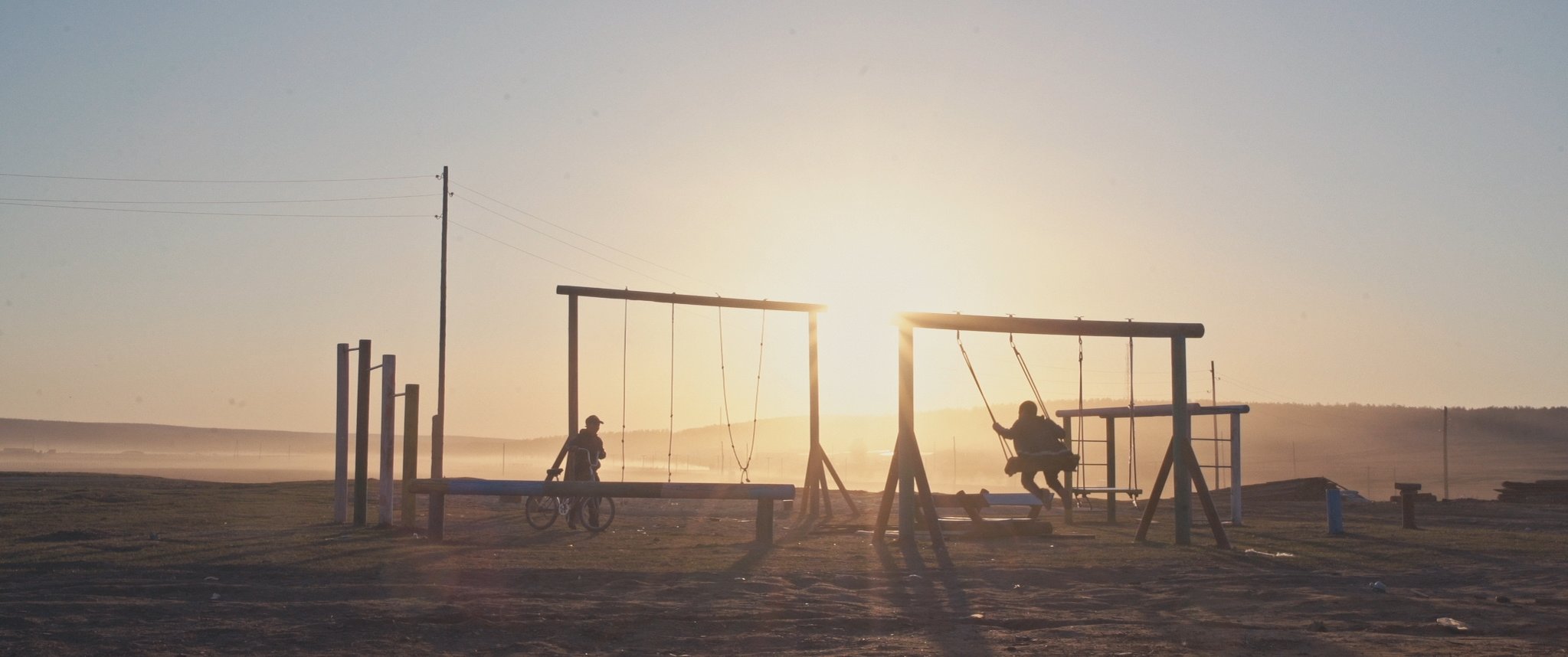
The film is filled with static shots of panoramas of Yakut nature and details of village life: tires half-buried in the ground, old kitchen utensils, a worn-out bag from the GJ store hanging on a nail, and so on. The camera either hides around a corner or in the grass and peeps at the actors, or gets so close to their faces that it becomes uncomfortable for the viewers. Yes, maybe the staging of the fights doesn't look so convincing, and at times the lack of funds is noticeable in the filming, but even without a bloated budget, real cinema by talented authors is visible to the naked eye.
The only downside of 'Yt' in my opinion is the characters' dialogues. They lacked liveliness and, as strange as it may sound, swear words, because we all know how ordinary men in villages talk to each other, especially when emotional. Although I do not rule out that this drawback will disappear when watching the film in the original, and not in the Russian dubbing, which ate up the feelings and intonations of the Yakut speech, but here either I didn't find the original soundtrack on Premier, or it's not there at all (if so, it would be worth adding, because the same 'Unclenching the Fists' was important to watch in the original in Ossetian mixed with Russian words).
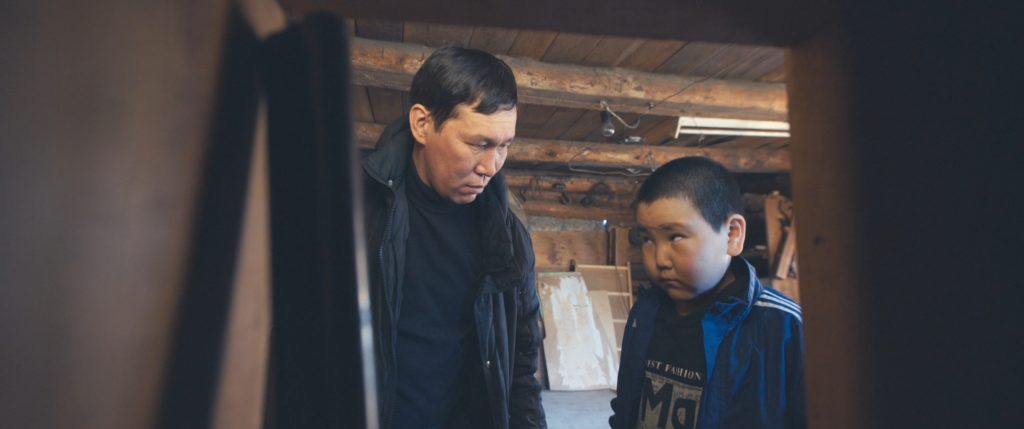
Otherwise, all the possibilities of the budget were realized by the team of creators to the maximum: starting from the amateur actors, ending with the directors, producers, and screenwriters Stepan Burnashev and Dmitry Davydov, who also handled their duties incredibly well and gave the republic and the country another festival hit. It's not for nothing that 'Yt' received a special jury prize with the wording 'For a pure cinematic view of simple everyday life'.
What's the Verdict?
The Yakut film almanac, which traveled to a European 'A' category film festival, is definitely worth the audience's attention. The Burnashev-Davydov duo exposes problems that concern not just one particular village or republic, but our entire vast country outside the megacities and, perhaps, even the entire globe. Even if some stories seem absurd and unreal, life is unpredictable, and the problems of the hinterlands are also our problems.
You don't have to travel several kilometers from your locality for drunkenness, fights, theft, and other human vices to become noticeable; you just need to look more closely. That is why it is important to pay attention to the surrounding reality, and that is why the choice of each person in the struggle between the animal instinct and human nature is so important.
Comments
0No comments yet.
Sign in to join the discussion.