

The spectacular ‘Nightmare Alley’ became another immersion of Guillermo del Toro into the world of fantasies, but not mystical or frightening enough. Mythical creatures are no longer so monstrous, and the film entices with its visuals, but not its su...
Evil in the films of the famous monster lover, director Guillermo del Toro, is never something irrational; it always comes from humans. In his new film ‘Nightmare Alley’, the director has perhaps focused all attention on this very message. A cunning and resourceful swindler — the protagonist named Stan Carlisle — is ready to make any deal with his conscience for money. By chance, he ends up in a traveling carnival, where he quickly learns various tricks and schemes. Eventually, he starts his own business as a skilled mentalist, deceiving not ordinary Americans, but people of status and wealth.
Guillermo del Toro, fleeing from reality, immerses us in a world of illusions, lifting the veil of magic’s mystery, but unfortunately, what we see behind the scenes is not surprising. His films have always been distinguished by a unique atmosphere of mysticism, which is precisely what ‘Nightmare Alley’ lacks — the trick has failed. Alas, by the middle of the film, the viewer, almost like a professional medium, understands what fate awaits the main character, so the climax and denouement could not shock in the tragic finale.

The playground in the new film is a place where society’s outcasts, the rejected and misunderstood, dwell — just as the director likes. This world is presented in the first part — the most interesting in the film — but then the traveling carnival leaves, and the hero stays. And then a dark thriller with elements of noir and psychologism unfolds before us. ‘Nightmare Alley’ is the second attempt to adapt the novel of the same name by writer William Lindsay Gresham, the first being in 1947. The black-and-white version by Edmund Goulding lasted an hour and a half, and it seems that would have been enough for the remake as well, since the two-and-a-half-hour runtime does not pay off in either events or the director’s ideas.
Guillermo del Toro’s films attract with their mythical creatures and monsters, but here there are almost none, except for the performers of the burnt-down theater. And even then, their monstrosity lies in things familiar to the 21st century: cruelty, calculation, and the exploitation of the circus audience’s fantasies. If in ‘The Shape of Water’ or ‘Hellboy’ del Toro sought an answer to whether one can love a monster on the outside who is more humane and kind than a human, then in ‘Nightmare Alley’ he placed at the forefront the idea of what demons may lurk inside those who are outwardly attractive and sweet. And despite Bradley Cooper’s excellent performance, this classic parable about retribution seems unconvincing and predictable, as if we have heard it so often that we are tired of it.
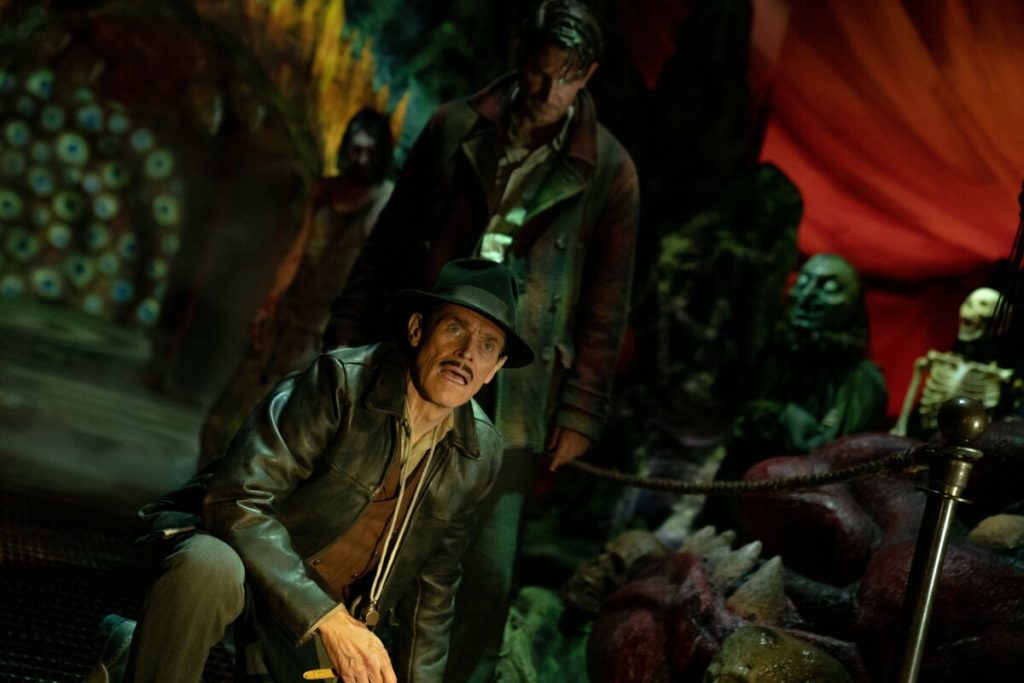
The plot turned out to be the weak point of ‘Nightmare Alley’, but the film compensates for this with its cast. The director used a substantial budget of $60 million and assembled an incredible cast. Cynical Bradley Cooper, fatal Kate Blanchett, touching Rooney Mara, the director’s favorite Ron Perlman, sinister Willem Dafoe, and incomparable Toni Collette — even Denis Villeneuve, whose star-studded cast was no less impressive, might envy this. The actors create vivid, bright, three-dimensional characters; watching them perform is a pleasure.

The long-awaited 'Dune' by Denis Villeneuve has finally hit the big screens. This interstellar slow-burner was awaited by fans of the source material (the film is based on the novel of the same name by F
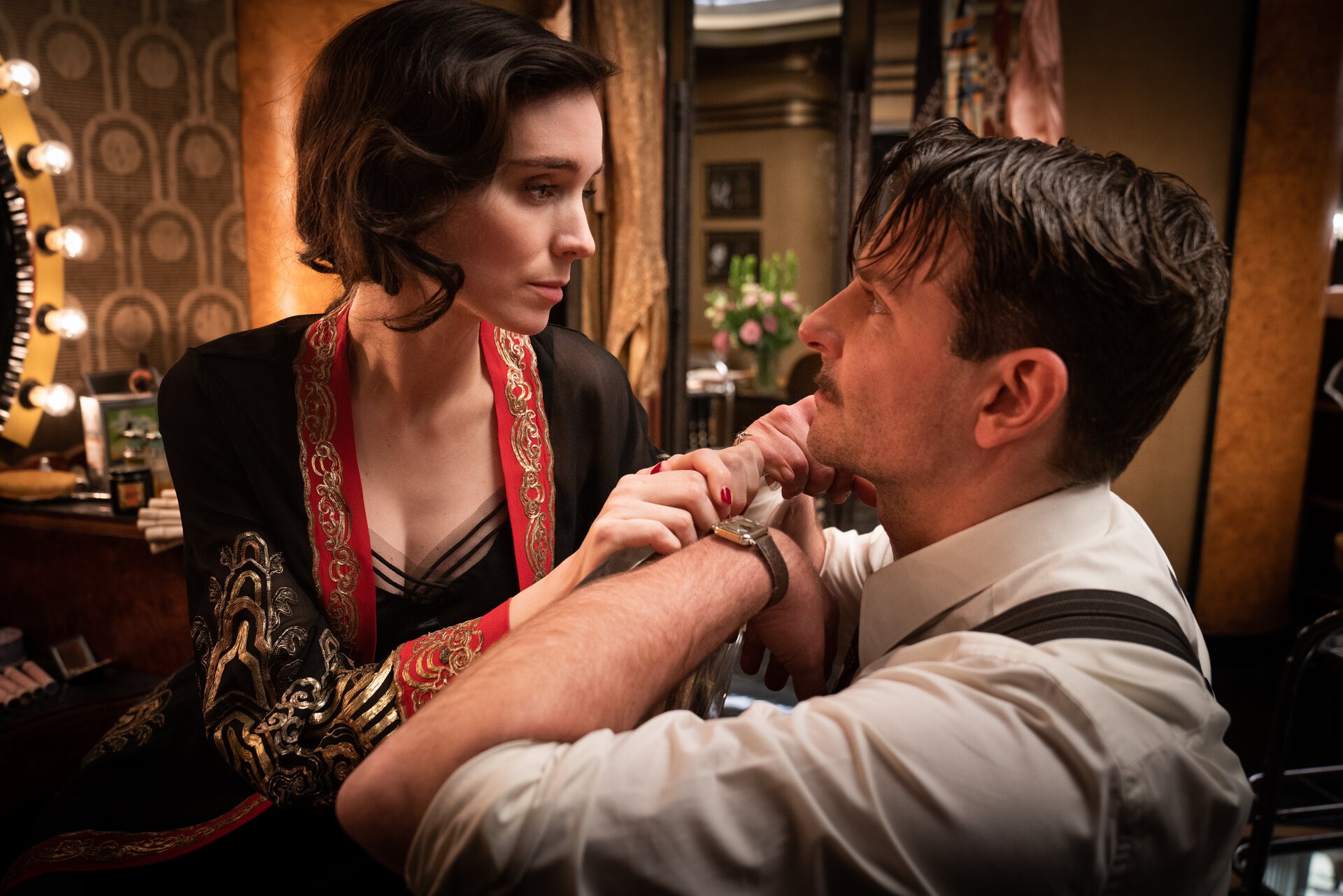
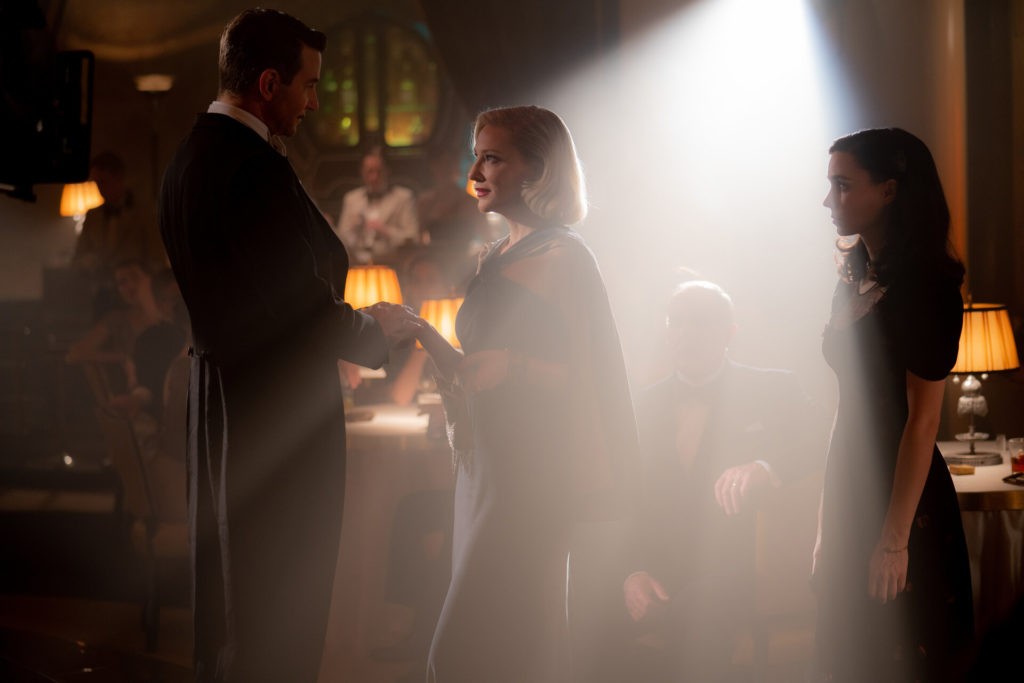
Open materialThe visual component of the film also deserves praise. Guillermo del Toro once again demonstrated his talent as an artist. The glints of neon signs, dramatic scenes in the rain, the impenetrable darkness cut by the faint light of a match, the play on contrasts of warm yellow and cold blue, the work with chiaroscuro — every scene makes you want to analyze it frame by frame. Expressive portraits, well-composed mise-en-scènes, balanced frame composition, and camera acrobatics during the fair scenes — all of this creates a beautiful picture. Del Toro also paid great attention to the spirit of the 1940s, bringing to the screen stylish Art Deco interiors, vintage cars, and the vibrant world of charlatans.
‘Nightmare Alley’ is far from the most successful film by the Mexican director in terms of plot development and atmosphere building. It is still Guillermo del Toro’s beloved story about the weak and oppressed, but it is detached and seemingly too stylized to the spirit of the times. The film turned out to be drawn-out, more grounded, without the pronounced mysticism and fantasy compared to the author’s previous works. Yet, the film has its own charm thanks to the visual solutions and acting, and ‘Nightmare Alley’ may be enjoyable if you don’t set high expectations. After all, we were given a colorful circus carnival, which has been absent from the big screen for a long time.
Comments
0No comments yet.