
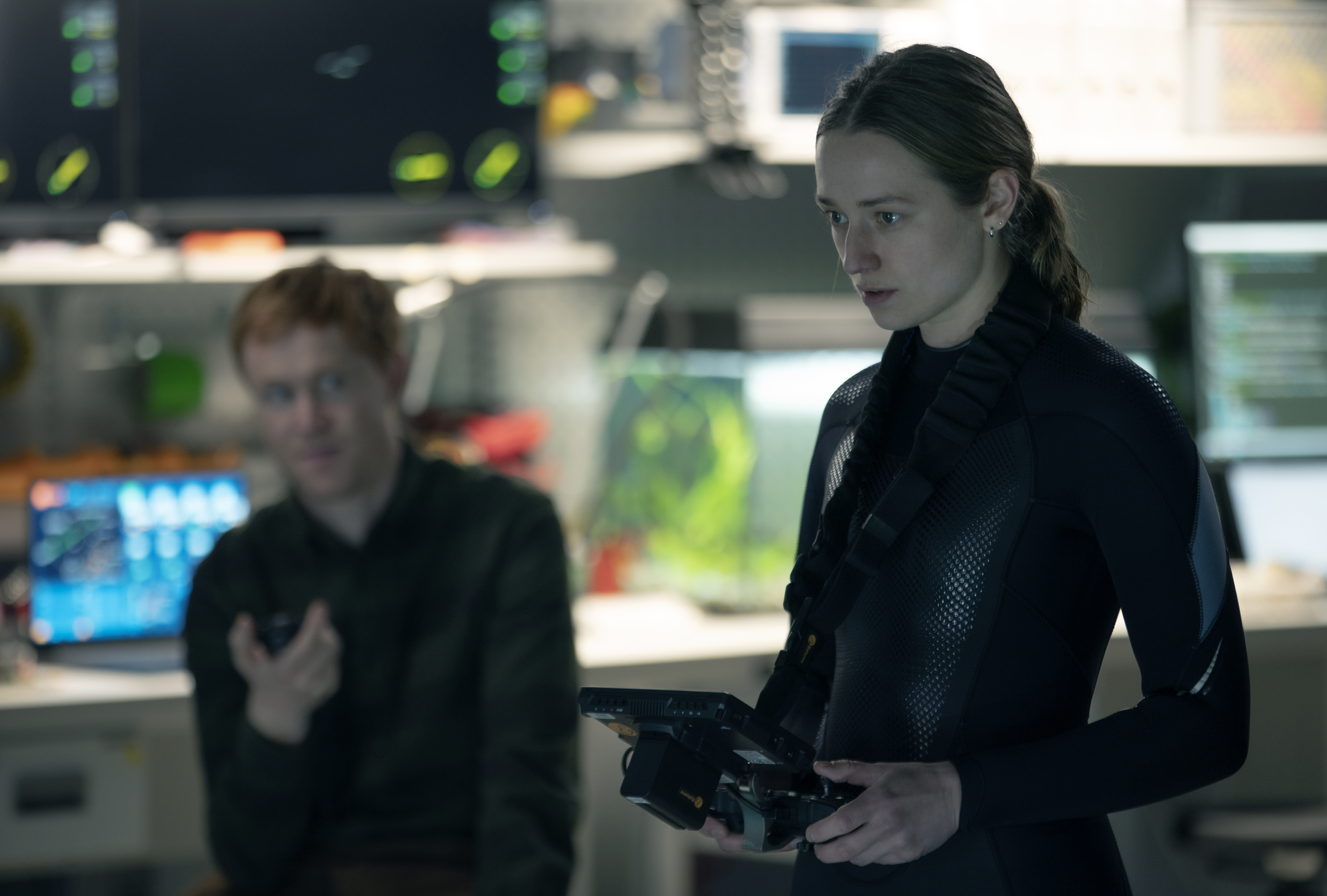
“The Burning Sea” takes the standard disaster movie formula and turns it into such a treat that even those indifferent to the genre will enjoy it.
Synopsis
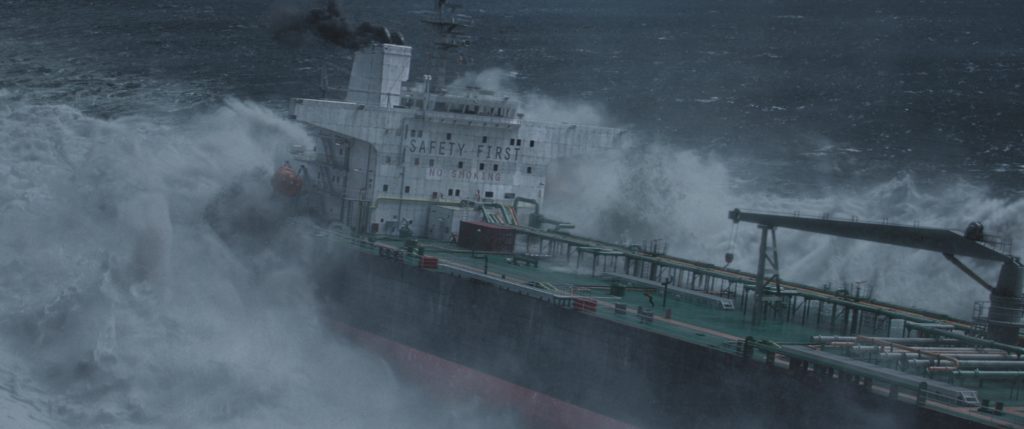
A major accident occurs on a large oil platform. After receiving footage from the scene, scientists realize this is just the beginning and all platforms in the area are at risk of collapse, leading to colossal environmental damage.
At the same time, Sofia (Kristine Kujath Thorp) receives terrible news – her beloved Stian (Henrik Bjelland) is at the epicenter of the disaster and is likely dead. She must make a difficult decision – to trust the experts or, against all safety protocols, set out to search for Stian.
A Big Story Through the Eyes of Little People
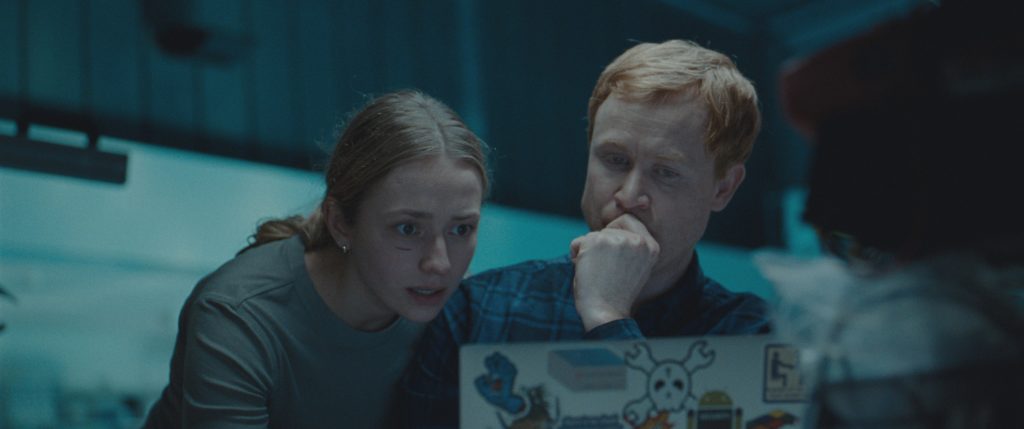
The technique of depicting large-scale events through the lens of a small group of people is not new. This gives the viewer a specific avatar through which they feel the gravity of the situation. The challenge lies in making the characters likable enough to empathize with and vulnerable enough to ensure high engagement.
An example of poor execution is the recent “Chernobyl” by Danila Kozlovsky, where the main character, in an attempt to “humanize” him, was portrayed as an extremely unpleasant person. Moreover, his superhero ability to escape unscathed from any situation kills any tension.
“The Burning Sea,” however, takes a slightly different approach to the story. Classic, yet interesting. The main characters here fall into stupors and hysterics, get injured, and lose heart from helplessness, but always find a way to keep their spirits up and continue fighting. This makes them simultaneously so fragile and human that you root for them from the first minute to the last.
A Good Start is the Key to Success
The film benefits greatly from the unhurried way it shows us snippets of the characters' daily lives and work. They have desires, aspirations, and simply live like real people, not cardboard cutouts. In the short time we see ordinary human relationships, you inevitably develop sympathy for Stian, Sofia, and her partner Arthur (brilliantly played by Rolf Kristian Larsen).
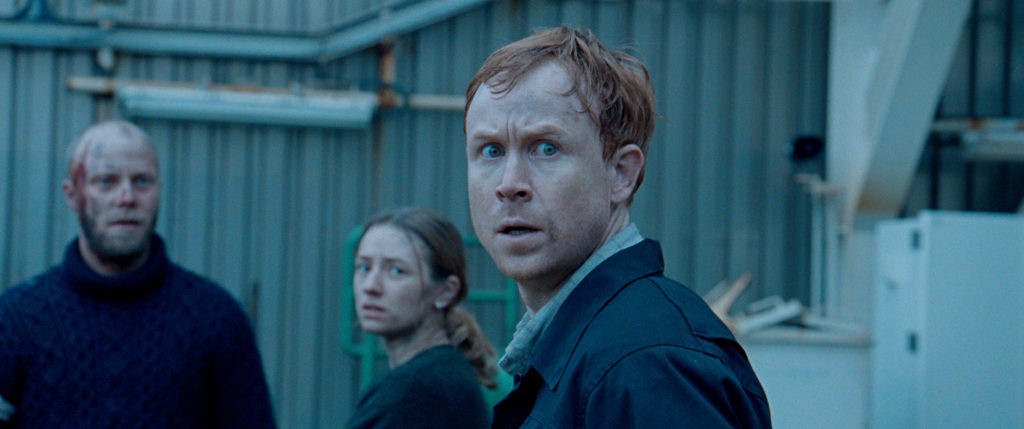
There is no drama or strain in their relationships, yet it evokes no less emotion in the viewer than a narrative à la “spark, storm, madness.” This calmness and tenderness are undoubtedly endearing – and work perfectly as a contrast to the subsequent plot. We need more of this beautifully balanced approach in cinema.
The Visuals of “The Burning Sea”
It’s quite difficult to evaluate European cinema in terms of visuals when Hollywood pits against them the Nolans, Villeneuves, Marvels, and other behemoths. Perhaps we, as viewers, already have a distorted perception of the criteria by which we judge the quality of imagery and computer graphics.
And that makes it all the more pleasing that “The Burning Sea” does not disappoint. Despite the focus being on the disaster, director John Andreas Andersen, backed by the cinematographers, shows us just enough to grasp the scale, but not so much that we want to nitpick the depiction of the catastrophe.
Overall, the film is not as action-packed as we are used to within the genre, but it is shown and told much better than many of its US counterparts.
Drawbacks?
At this point, I should discuss the film's drawbacks, but… I can’t think of any. If I really had to nitpick, I could say the film’s structure is quite standard – it’s a classic three-act film without any “twists” or attempts to rely purely on shock value. And those who go to the movies for explosions and noise might not be too impressed, because their concentration per second of screen time is not that high.
And yet… The film is missing something. As someone who likes to analyze, I often try to find a logical reason why something didn’t appeal to me, but here I can’t explain why, despite all the apparent ingredients for success, “The Burning Sea” evoked not delight, but only great pleasure. Perhaps it’s due to the limitations of the genre, which is still not close to me – or perhaps because the film completely lacks humor, making it seem a bit one-sided.
Conclusion
Despite the above, the film is definitely very good. It is moderately meditative, moderately active, and moderately dramatic. We can appreciate the picture from the side, through the eyes of the bigwigs making tough decisions, and from the inside, through the intimate story of two loving people. In short, if anything in this review piqued your interest – be sure to watch the film.
VOLGA will release the film THE BURNING SEA / NORTH SEA in online cinemas on January 31.
Comments
0No comments yet.
Sign in to join the discussion.