
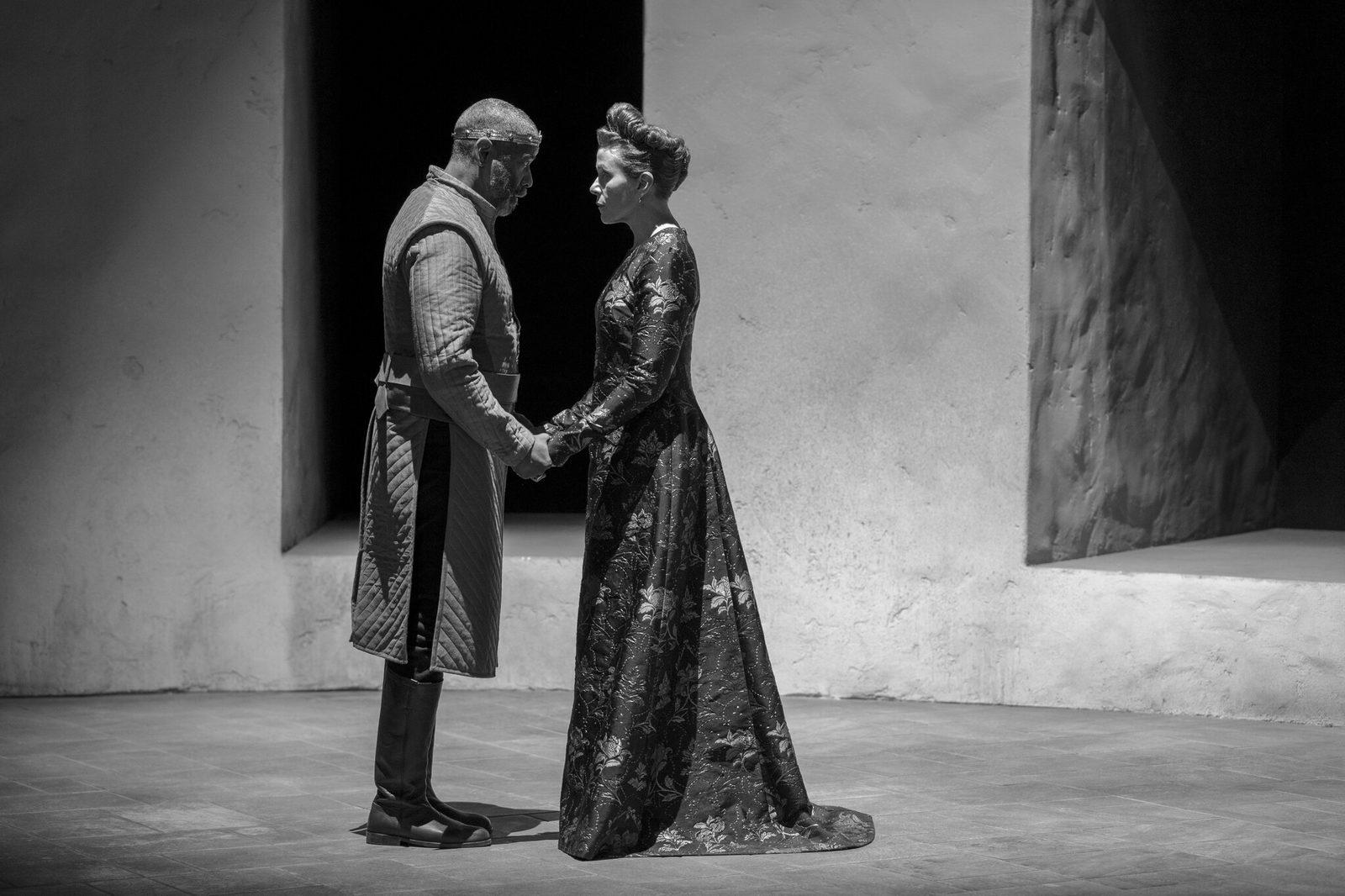
From loyalty to murder is one step, if you believe Shakespeare. Joel Coen's black-and-white geometric world in 'The Tragedy of Macbeth' simultaneously impresses and disappoints, and even Denzel Washington with Frances McDormand do not save it.
Visually stunning, actorly unique, plot-wise captivating, but not gripping. This, perhaps, is how one can describe another, and likely not the last, adaptation of the famous play by William Shakespeare "Macbeth" about power that drives even the noblest mad. Studio A24 gave Joel Coen complete freedom of action and imagination, and the director, also screenwriter, presented an incredible but lifeless black-and-white world with talented actors.
Joel tells, without changes, the tragic story written centuries ago about the military commander Macbeth. On the way home from one of the battles, he and his comrade-in-arms meet three witches who predict that he will become King of Scotland. And then, the more the prophecies come true, the more Macbeth transforms from a loyal comrade into a cruel tyrant, all under the canopy of Coen's monochrome sky in his solo debut "The Tragedy of Macbeth".
Andrei Tarkovsky believed that bright color distracts the viewer from the meaning of the film. Therefore, as a means of expression, he preferred black-and-white cinema or used muted shades. In the 21st century, when every year technology takes another step forward, including in the film industry, black-and-white films are difficult for the mass audience to perceive. So now it is necessary to explain the reasons for choosing such a color palette, otherwise the film may repel rather than attract.
In "The Lighthouse" director Robert Eggers used black-and-white, among other things, to create an atmosphere of gloom, a certain psychedelia and heaviness that was felt in every frame. In "The French Dispatch" Wes Anderson used this color tool to demarcate the past and present, while the change of time occurred very easily, harmoniously and almost imperceptibly. Perhaps, in "The Tragedy of Macbeth" Joel Coen uses the black-and-white palette to emphasize the antiquity and timelessness of the story, imparting a certain psychological depth and gloom to the events. But the effect here is not as strong as, for example, in "The Lighthouse".
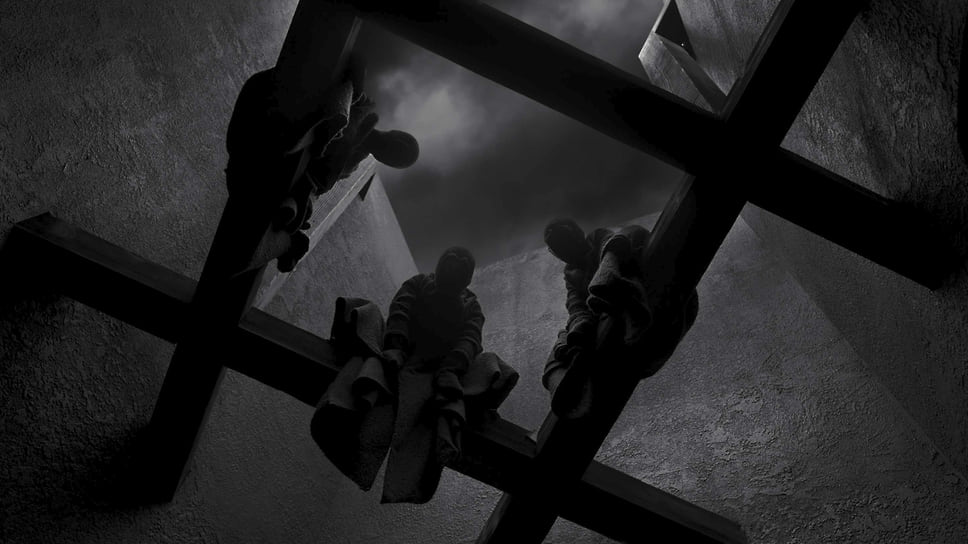
Much more impressive are the precisely calibrated and millimeter-perfect mise-en-scènes that you want to pause to study the geometry of the frame. Such imagery deserves a big screen, not the window of the Apple TV+ streaming service. But this is both a strength and a weakness of "The Tragedy of Macbeth", in which, behind the deceptive perspective of fields or sky, life is not felt. There is too much theatricality and artificiality in the hour-and-a-half film: it seems that the castle vaults, royal halls, soaring hoods and long arched corridors are beautiful but artificial sets, limited by the boundaries of space.
The geometric nature of the image is compensated by the soft elegance of the transitions between scenes. The excellent work of cinematographer Bruno Delbonnel, a five-time Oscar nominee who has worked with the Coens before, is evident in how smoothly the story of Macbeth's tragedy flows between frames, like a river from one channel to another, sometimes calm, sometimes turbulent.
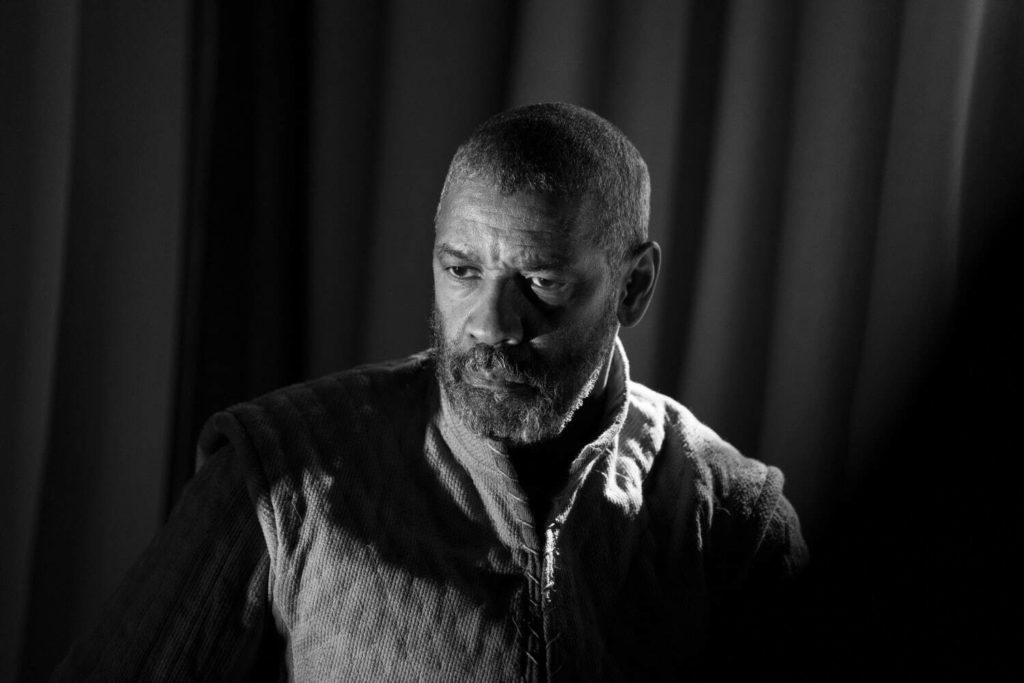
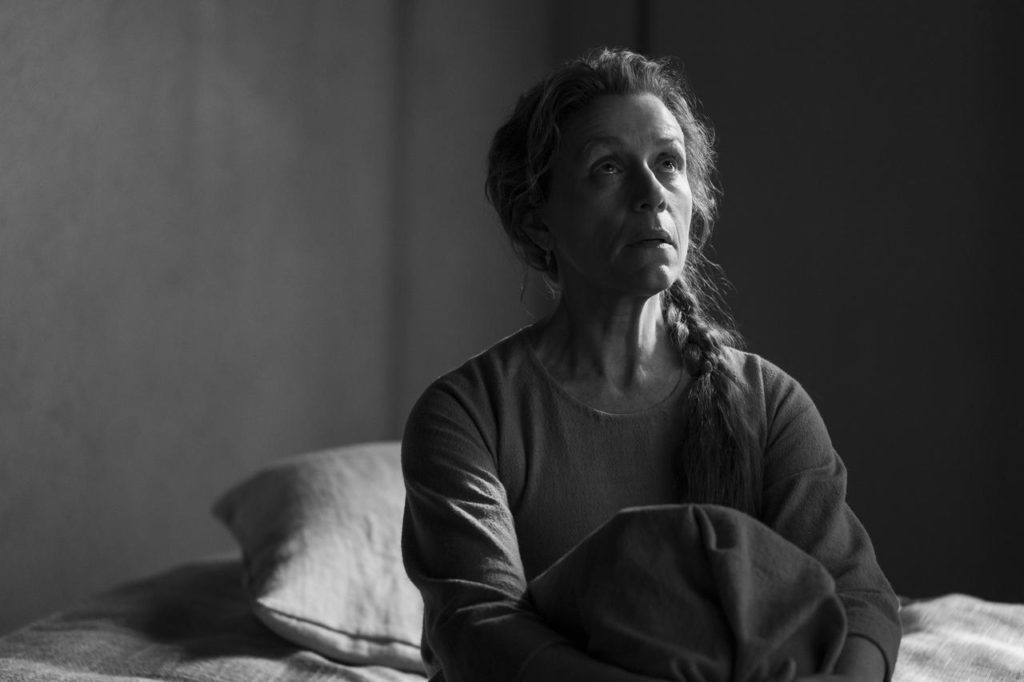
One cannot fail to note the outstanding acting performances of Denzel Washington, gradually turning into an inhuman despot, and Frances McDormand, losing her mind from pangs of conscience. Coen has Kathryn Hunter play all three witches at once, impressing with her plasticity and vocal performance. Therefore, it is so important to watch "The Tragedy of Macbeth" in its original sound, to at least hear the life force in this film.
Who are you, visions, or are you indeed what you appear to be? — says Macbeth's comrade-in-arms, the military commander Banquo, upon meeting the witches. And this phrase can describe "The Tragedy of Macbeth" itself, which is neither a film nor a theatrical production, but something in between, resembling a mirage of these two worlds. This feels like a novelty in the reading of the famous play, which ultimately becomes the main weakness of Coen's adaptation, lacking naturalness and freedom.
Comments
0No comments yet.
Sign in to join the discussion.