
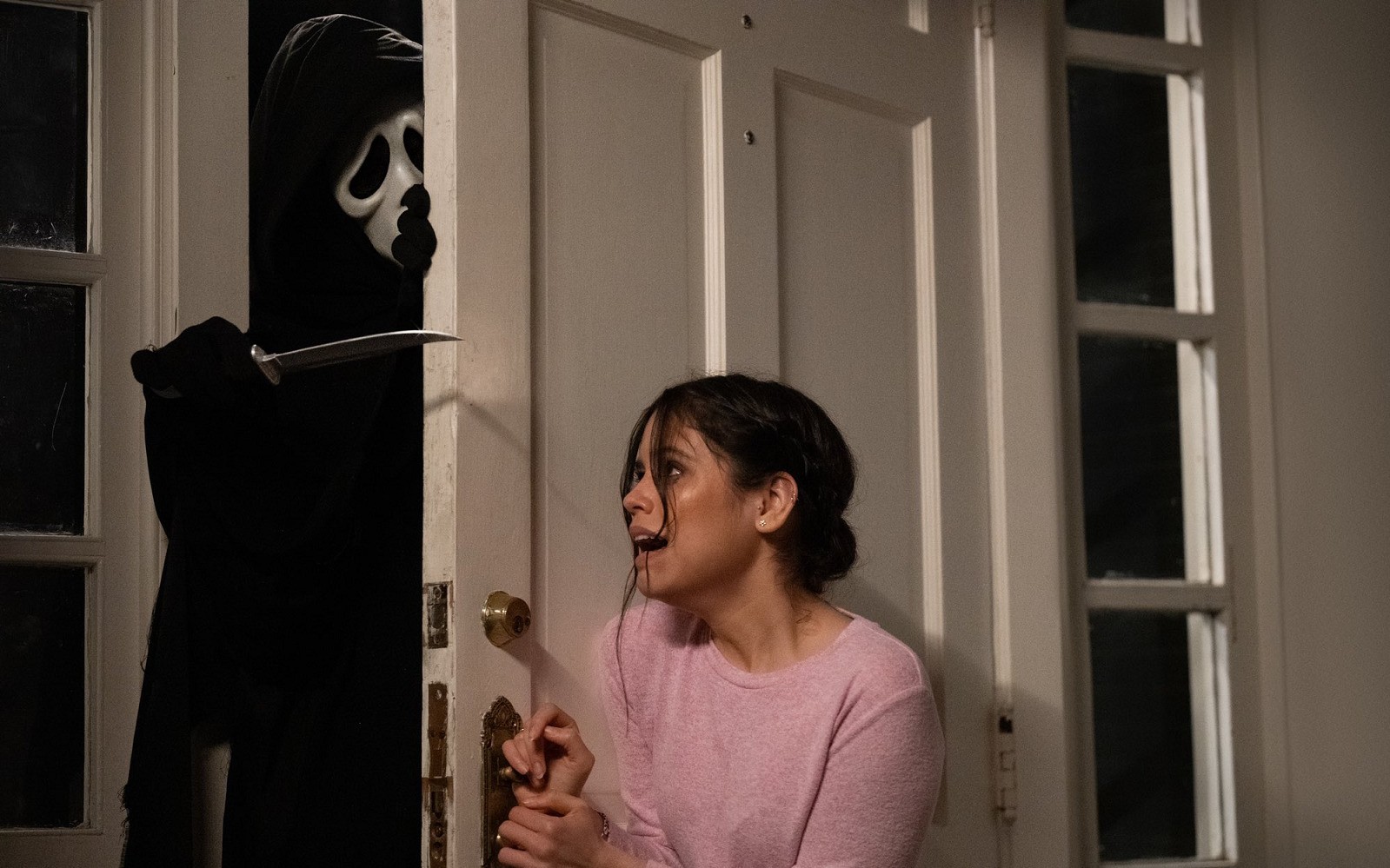
Can you resurrect the dead? In life—no, but in cinema—yes, or rather revive and renew a franchise. The psychopath in a mask with a knife returned to the screen to find out how much fans love the slasher 'Scream'.
"I've seen this movie before," says Sidney Prescott, climbing the stairs with a gun, determined to kill another maniac. The Scream franchise, started back in 1996 by the inimitable Wes Craven, returned to screens after 10 years. In 2011, the fourth film was made—the last in Craven's career, who passed away in 2015. But the legacy of the great master of horror continues to live.
Before us is a requel—a hybrid of reboot, remake, and sequel. The creators of this latest installment of what was once a postmodern, and now a meta-horror, are the directing duo Matt Bettinelli-Olpin and Tyler Gillett, who rose to fame with the black comedy "Ready or Not". They were given both the honor and the curse—to direct a continuation of the cult franchise. Craven's early films were sarcastic parodies of the horror genre, turning it upside down and exposing all its sore points. These slashers were known for pools of blood, extraordinary murders, tense detective lines, and subtexts about the social responsibility of cinema.
"Scream" was an authorial Rubik's Cube, filled with references to genre classics and their analysis. The new part, while remaining faithful to the canon, added freshness and relevance to the franchise, including through mentions of modern cinema, but without parasitizing on mass culture creations.
We are again in the town of Woodsboro, where ruthless murders committed by a masked person begin to occur. Young people fall under the knife one after another, while the main heroine Sam, along with her boyfriend Richie (Jack Quaid from "The Boys"), tries to uncover the maniac's identity. Of course, they turn to the old guard for help—Sidney Prescott, Gale Weathers, and Dewey Riley (their roles reprised by Neve Campbell, Courteney Cox, and David Arquette). But the legends of the great battle between good and evil are not eager to get involved again in a terrifying bloody adventure where the price of the game is your life.
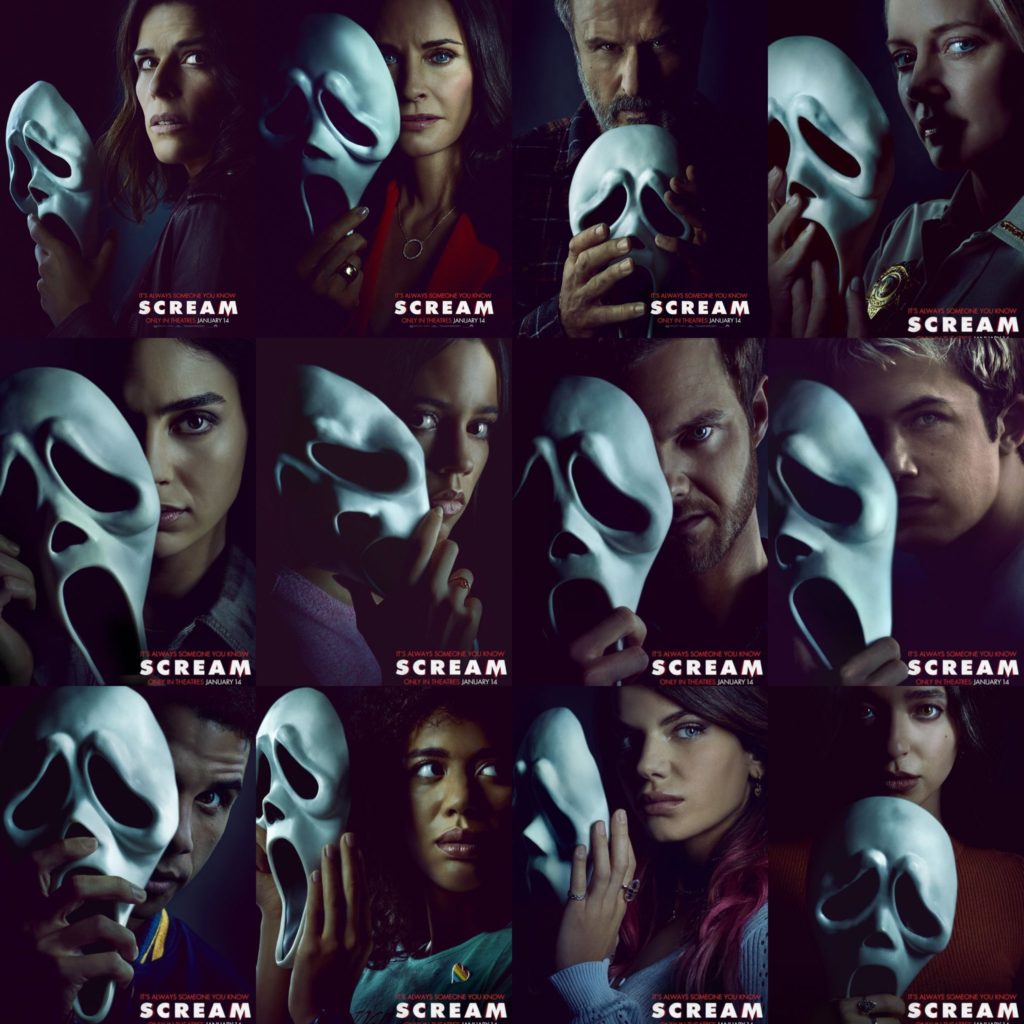
Overall, the plot is almost no different from previous installments of the franchise, and the abundance of blood and violence is also similar. The original dissected the horror film genre and the love for sequels, and the new part echoes established traditions, discussing how to properly continue stories. Additionally, it touches on the controversial modern trend of creating films outside the canon, which, for example, was heavily criticized in "The Matrix."
The directors of the fifth "Scream" needed to introduce new characters and also skillfully bring back the beloved "old-timers." Though briefly and in fragments, they quite clearly explain how the fates of Sidney, Gale, and Dewey turned out, and also show a few unexpected cameos. If we recall that Courteney Cox and David Arquette's marriage was born on the set of "Scream" and fell apart two years after the fourth part, the film drama of their characters gains additional subtext. Perhaps due to the return of the trio, there was a bit of a lack of time for the newcomers, so many characters were not developed, and only the names of the survivors and the killer are memorable. But you can't fit everything into a limited runtime.
The creators of the requel ingeniously build atmosphere, heighten tension in scenes, shamelessly flirting with the viewer. At times, they deliberately stretch old horror techniques to the max to evoke laughter rather than fear. Until the very end, it's hard to predict who the killer is. The authors managed to brilliantly reimagine the iconic shower scene, quoting "Psycho" by Alfred Hitchcock in a modern way. In the new "Scream," female characters are still strong and resilient—just as the renowned horror maker intended. And the final scene, perhaps, becomes a sincere declaration of love for Craven's creation and a homage to where it all began in 1996. It seems to close the circle of the franchise (though there are weightless hints of sequels).
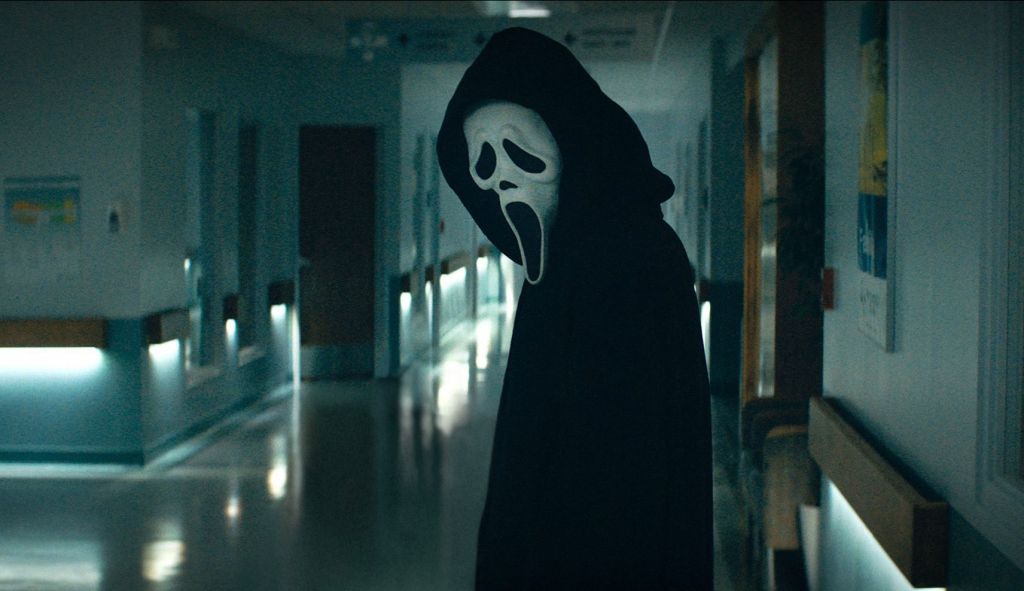
If in the 90s and early 2000s the master of horror sought an answer to whether the horror genre bears moral responsibility for the emergence of psychopaths and criminals, then the cinematic descendants of the genius explore a different plane of influence on 21st-century minds—social networks and forums. And even though in the youthful maximalism, recklessness of new heroes, and pompous speeches of the killer, there is a certain naivety of Bettinelli-Olpin and Gillett's slasher, it still feels original and the directors' enjoyment of their work is palpable.
"Don't rush, they're coming back," the heroines say at the end, making the final shot at the maniac. In the last few years, the film world has proven to us that the same can be said about films whose roots grow from the 90s. But such a reunion as in the new "Scream," perhaps, the great and mighty Wes Craven would have approved. About the iconic horror maker and his creations—you can read in .
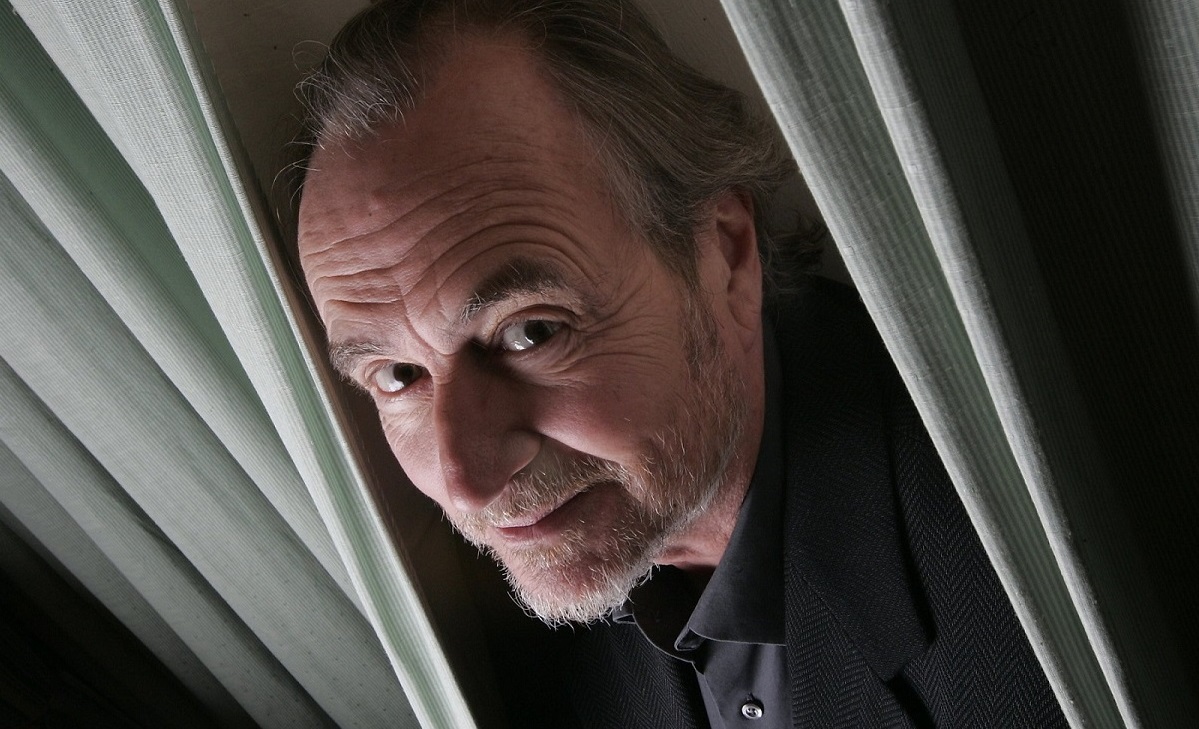
Evil has never felt so close, and horror movies themselves have never looked so smart. And all thanks to the master of horror Wes Craven, who made the horror revolution three times. Remem
Open material
Comments
0No comments yet.
Sign in to join the discussion.