

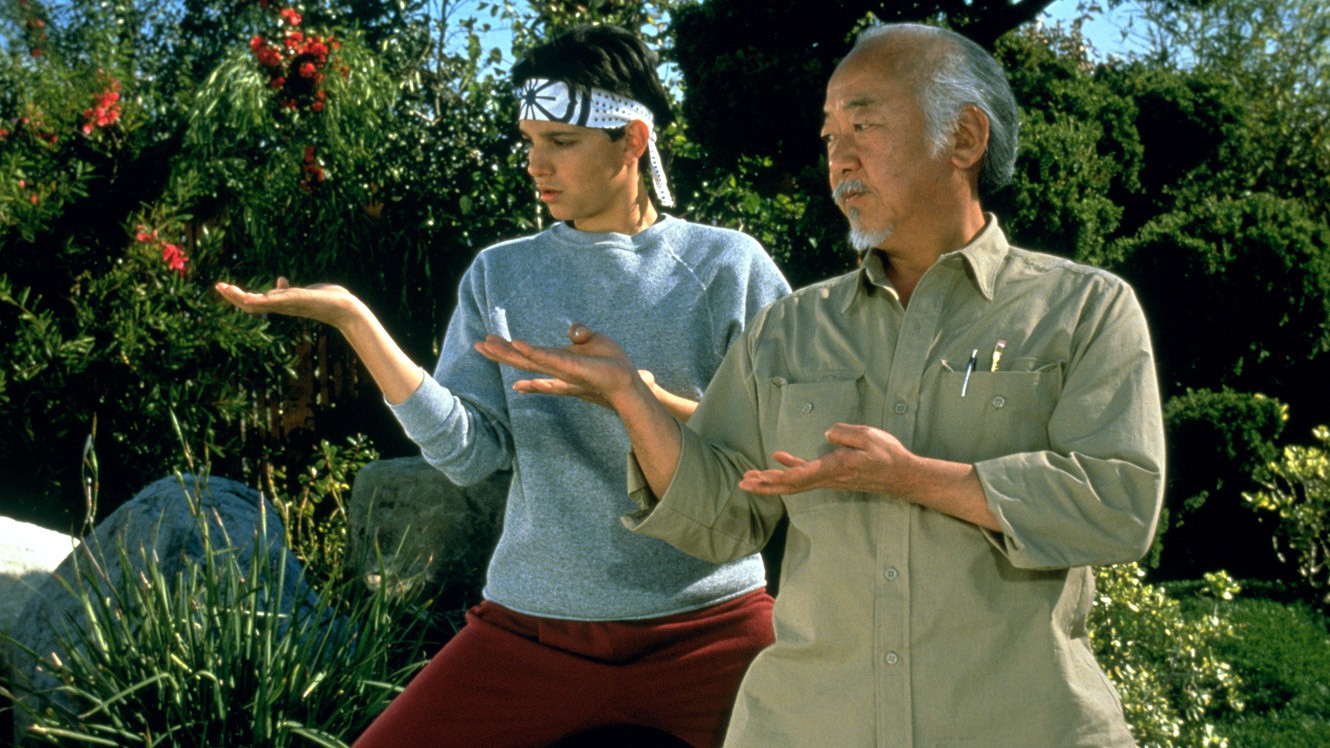
How can cleaning the house be related to karate? The answer was given by the creators of the cult teen drama The Karate Kid back in the 80s. Their secret code of success was cracked in the sequel Cobra Kai, and we find out what the essence of this se...
"Wax on, wax off" — that's the phrase that begins the journey of young fighter Daniel LaRusso in the 1984 film The Karate Kid. Before knocking out real opponents, the hero has to wash many cars, following his mentor's instruction: "Wax on with the right hand, wax off with the left." He also scrubs floors, paints fences, and catches flies with chopsticks — all to practice combat techniques. Such is the teaching method of karate and the philosophy of sensei Mr. Miyagi.
Director John G. Avildsen jokingly called his teen sports drama "Rocky in high school," which is symbolic, as he was the creator of the original Rocky with Sylvester Stallone, for which he won an Oscar. The screenwriter of the future hit was Robert Mark Kamen, for whom this project was largely autobiographical. He himself was a victim of bullying at school and fought it with Okinawan Goju-ryu, a defensive style of martial arts.
The first Karate Kid film appeared during the heyday of John Hughes' teen cinema; youth was at the forefront: they were both the main characters and the most important movie audience. The story of a scrawny boy learning to fight back against bullies and stand up for what's right required young actors — Ralph Macchio, William Zabka, and others — to make unexpected sacrifices in the form of constant training and injuries. According to the cast's recollections, their life during filming was like a summer camp with a strict daily schedule. Their training was conducted by consultants and stuntmen with experience in martial arts, selected by Chuck Norris himself. Thanks to professionals in their field, The Karate Kid created a believable imitation of fights.
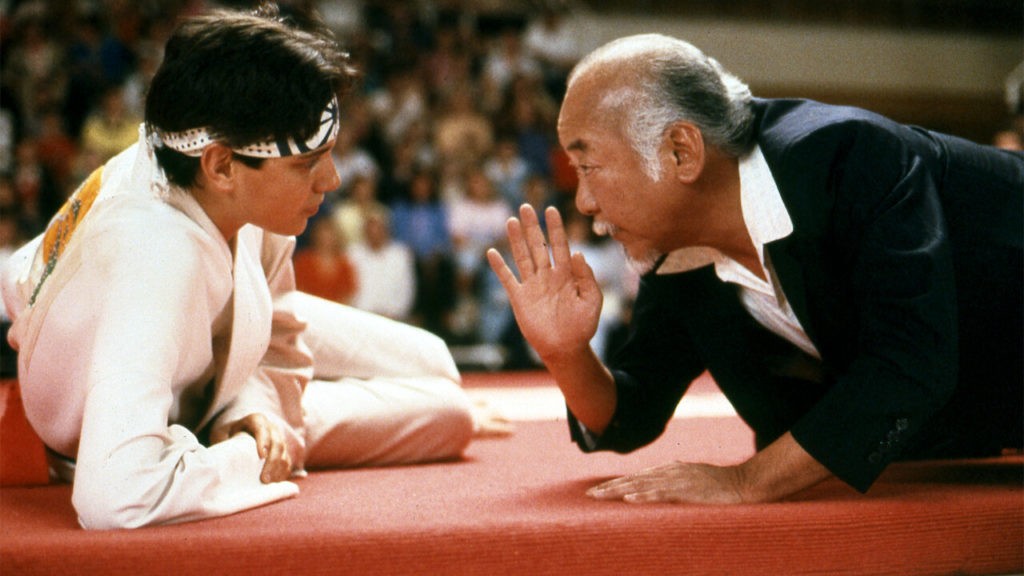
One of the riskiest decisions, as the creators of The Karate Kid believed, was casting Pat Morita as the mentor Mr. Miyagi. Until then, the Japanese-American actor was known for his comedic role in Happy Days and his stand-up performances. However, Morita so deeply transformed into a character with a difficult past that he was nominated for an Oscar in 1985 for this role.
Sudden Success
By modern standards, The Karate Kid is a fairly simple and unremarkable film in its genre. The main conflict was between a bully asserting himself at others' expense and a newcomer unfamiliar with the local jungle laws. There was always a school dance, the sensei-teacher had a tragic past that made him reclusive, and the entire climax was resolved at a tournament. Essentially, it's a moralizing, uplifting film where, for some reason, no one calls the police to complain about thugs and violence.
However, in the 80s, The Karate Kid became a kind of manual for finding motivation and inspiration among young people. They tried to speak to them in an adult language, showing how they could solve problems and take responsibility for their actions. The scrawniness and external weakness of Daniel LaRusso were understandable and relatable to teenagers, as were the bullies' attacks on the hero. The almost non-English-speaking Mr. Miyagi charmed with his spontaneity and sincerity. The filmmakers used themes understandable to audiences under 18, mixed with sports during the heyday of teen cinema — that was the recipe for success.
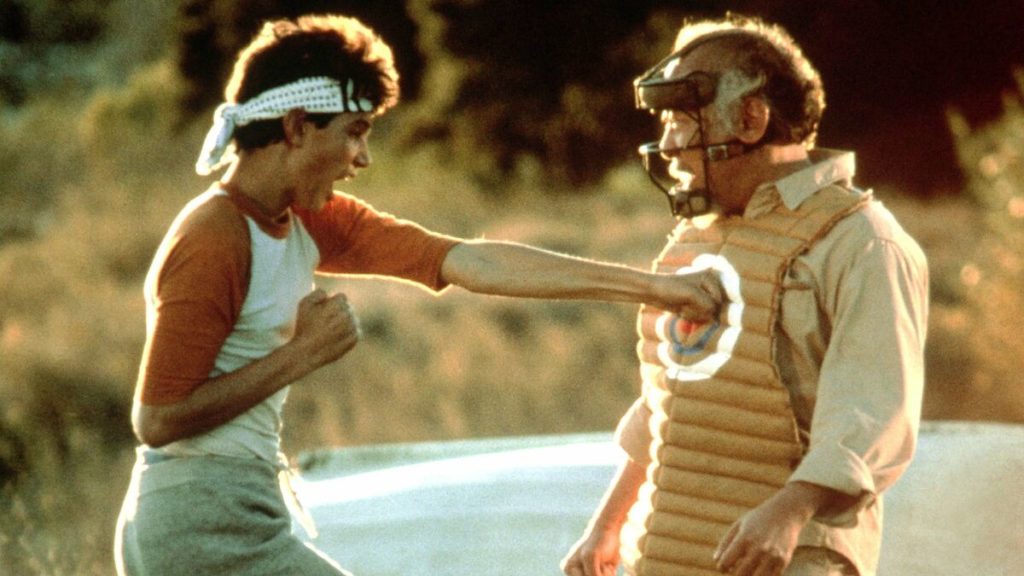
No one on the film crew, except John Avildsen, believed in the triumph of the $8 million budget film, but to everyone's surprise, The Karate Kid grossed $90 million and earned the honorary status of "cult classic." This happened despite the fact that its premiere coincided with the same summer when Ghostbusters, Indiana Jones and the Temple of Doom, and Gremlins were released.
You guys have no idea what you're doing. This is going to be a classic, Avildsen said about The Karate Kid.
At the premiere screening, there was even a "Rocky moment": in the finale, when the hero landed the winning blow, a guy in the front row jumped up and thrust his fist into the air.
The young minds of America were suddenly captivated by a love for martial arts. Everyone was especially interested in the "crane technique," invented specifically for spectacle in the film. Alongside this rise of the teen drama, Columbia Pictures was already actively planning sequels and threequels of The Karate Kid.
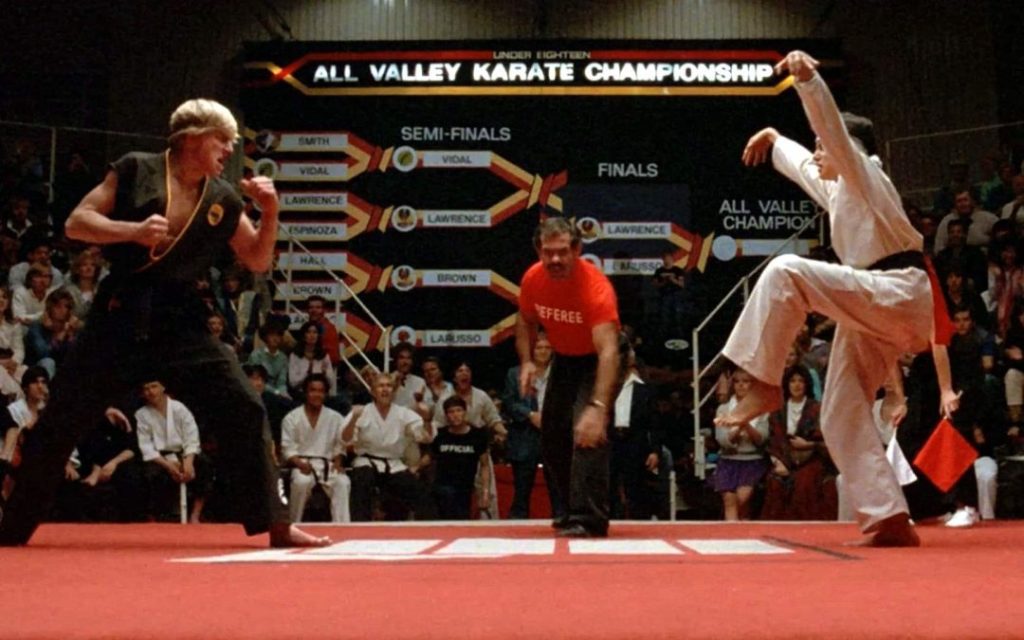
Sequels and Reboots
The attempt to capitalize on a story beloved by audiences is a trick not invented in the 21st century. With rare exceptions, second, third, and other parts usually become a complete disappointment. Such a fate befell, for example, the numerous sequels of Terminator, Rambo, Predator, or Fast & Furious. So what happened to the "Miyagi-verse" after the success of John Avildsen's 1984 sports drama?
After the first Karate Kid, three more followed: two weak sequels with Pat Morita and Ralph Macchio, and then a pointless installment with Morita and a young Hilary Swank, future two-time Oscar winner. In 1989, an absurd 13-episode animated series was released, which people try not to remember.
In 2010, Will Smith tried to revive this franchise and simultaneously help his son Jaden Smith break into acting. The remake The Karate Kid with Jackie Chan turned out quite beautiful, but overly pompous and at times clumsy. Despite Will's intentions to continue the story, a second part never came out.
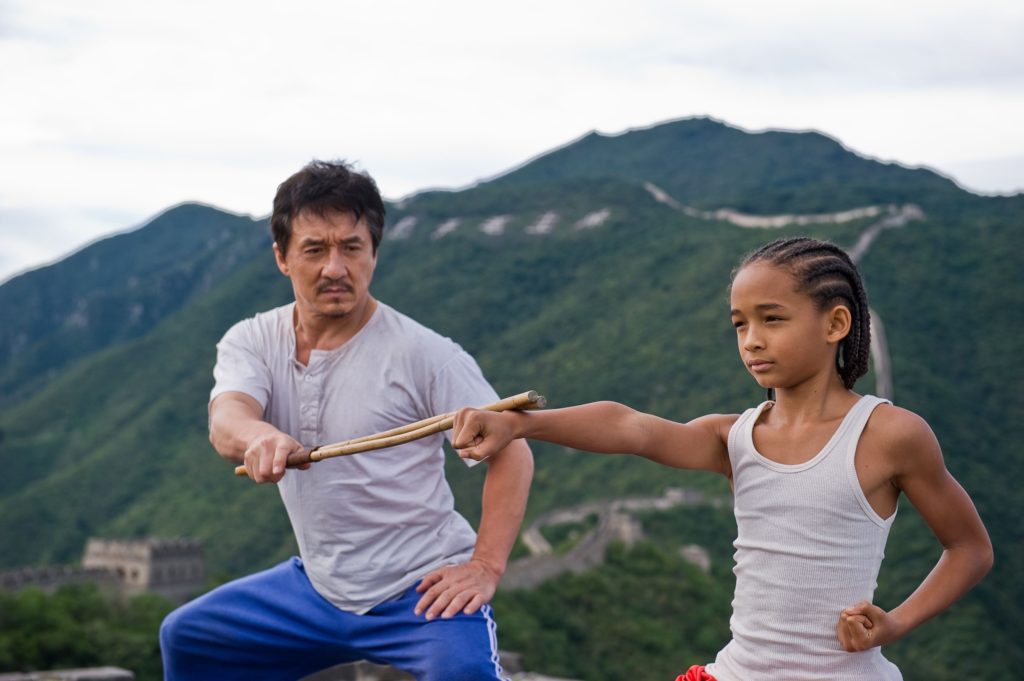
Although the first Karate Kid came out in 1984, the story did not let go of the main stars Ralph Macchio and William Zabka. They appeared in the music video for No More Kings' song "Sweep the Leg" as parodic versions of themselves, and in 2010 they had a cameo in an episode of How I Met Your Mother.
The actors agreed to star in a continuation of The Karate Kid only when screenwriters Jon Hurwitz, Hayden Schlossberg, and Josh Heald offered them an original plot. They managed to bring something new and fresh, creating a relevant story with modern problems while returning viewers to the classic. Now the focus is on the aged "bad guy" Johnny Lawrence from the first film, and Daniel LaRusso is the second fiddle in the orchestra. But the main characters became their children, living in a world that is no longer divided only into black and white. The creators moved away from the traditional morality of 80s films, adding ambiguity and depth to the characters. Thus, the series Cobra Kai was born.
The Karate Kid as Inspiration
But long before Cobra Kai, the sports drama about a scrawny boy and a poorly English-speaking mentor from the 80s inspired authors of other genre projects with similar concepts. However, The Karate Kid of 1984 was one of the first of its kind, which brought success, while subsequent attempts to achieve fame and recognition by exploiting the plot of a teenage fighter turned out unsuccessful.
The film No Retreat, No Surrender (1986) also rode the wave of motivational teen cinema; moreover, it featured a young Jean-Claude Van Damme — all of which ensured the film temporary popularity. However, in terms of plot, character personalities, and story development, it repeats all the genre clichés, seasoned with the appearance of a Russian mercenary. The only joy is well-staged fights. The film had sequels, but on different themes.
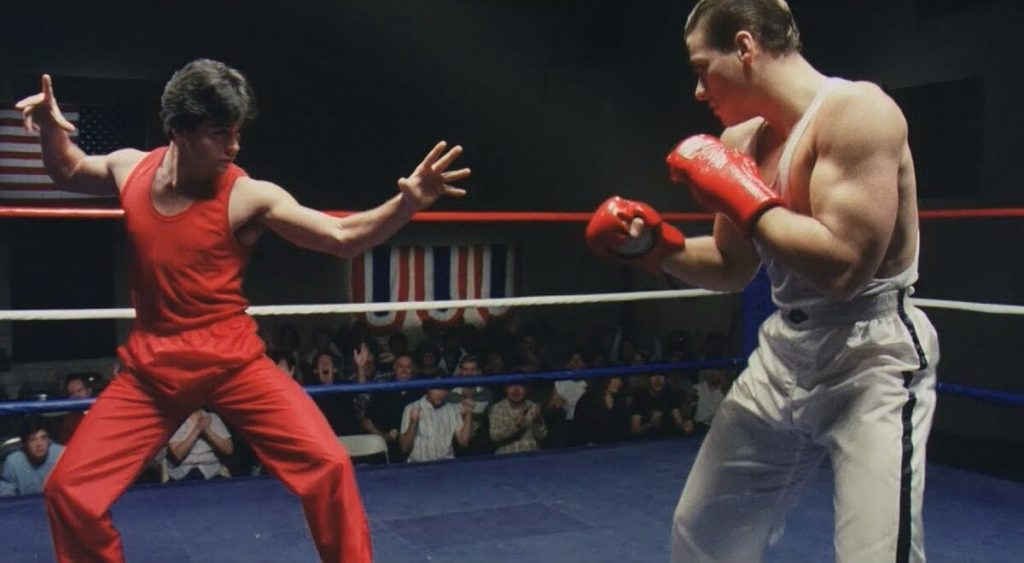
Another attempt was the drama Showdown (1993), which essentially repeats 80% of The Karate Kid's plot. The usual clichés for such films were accompanied by weak realism in fights and a boring development of events.
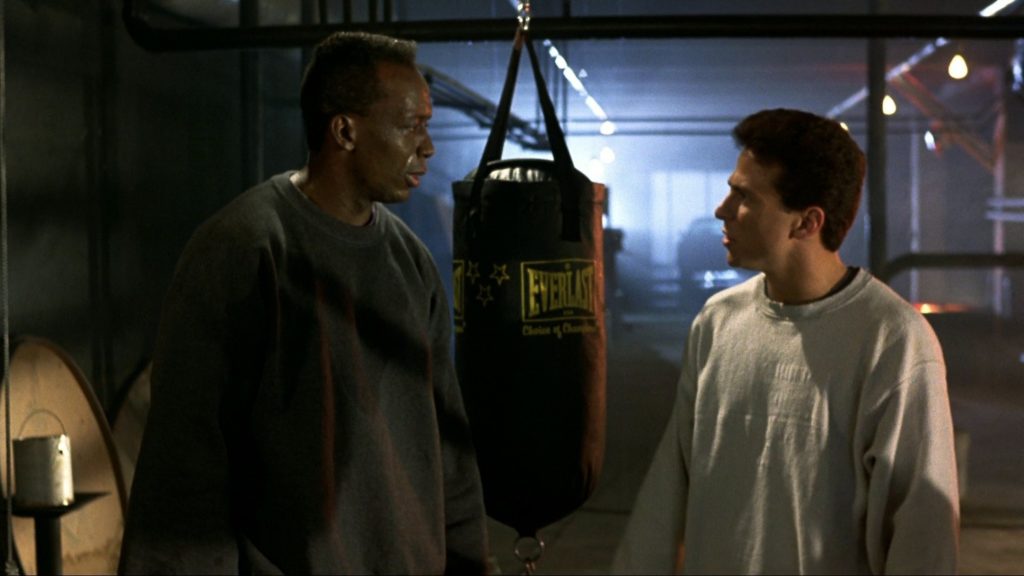
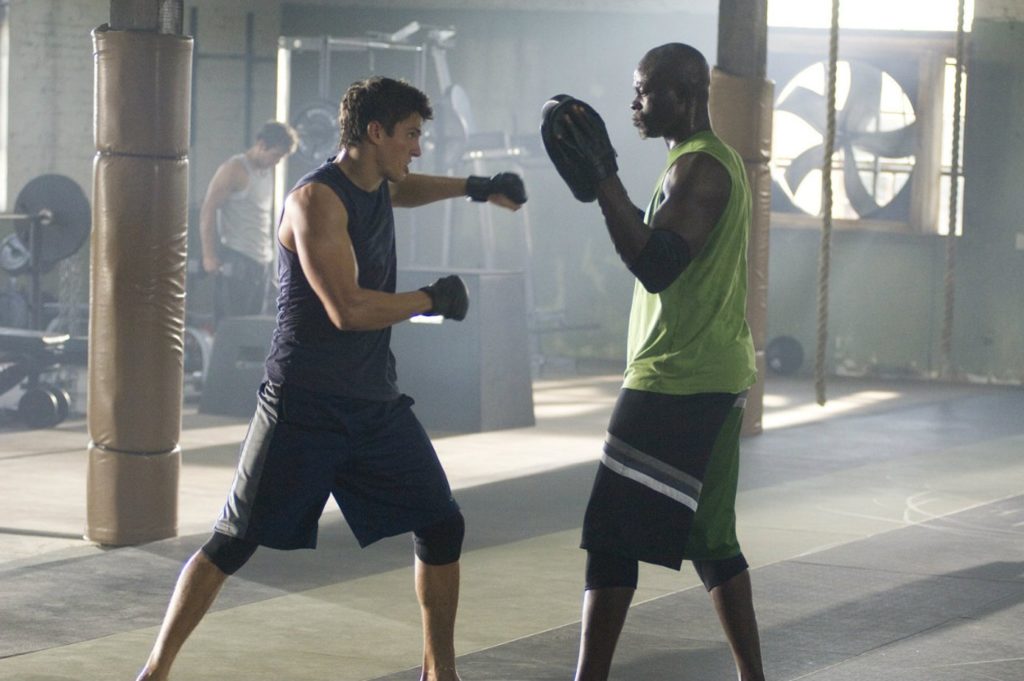
Perhaps one of the most promising among the "underdogs" was the film Never Back Down (2008) with a not-yet-scandalized Amber Heard and Cam Gigandet. The film touched on the then-trendy topic of MMA fights and again attracted interest in action films with hand-to-hand combat accompanied by music fitting the film's spirit. This time, the authors tried to distance themselves from The Karate Kid: the hero is not a loser, and the film is for youth, but with scenes in the style of the early Fast & Furious movies. The main thing is that the heroes have excellent physical fitness, which the viewer is convinced of several times in the film. Nevertheless, the drama turned out quite simple and unimpressive both visually and plot-wise. Everything develops according to the standard canons of the genre, without any highlights, so it is rather a one-time watch.
Why Cobra Kai?
Why did so many films in the sports drama genre fail to replicate the success of The Karate Kid? How did the creators of Cobra Kai accomplish the impossible, managing to attract the attention not only of fans of the 80s film but also of the young, jaded cinema generation of the 21st century? They skillfully and with a pinch of good humor united two worlds, showing respect both to fans who grew up on the original and to modern youth.
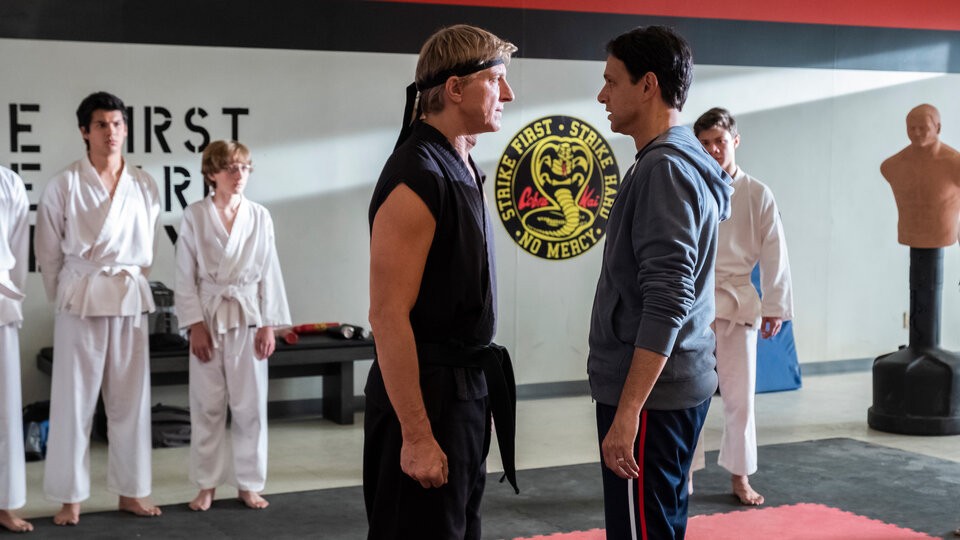
Cobra Kai is a nostalgic project, a continuation of the "Miyagi-verse," and still a story about teenagers who are finding their place, learning to overcome difficulties, make choices, and accept their consequences. But with a balanced mix of old and new ideas, so that exploiting fans' feelings does not seem off-putting. This series became a worthy continuation of The Karate Kid — like Creed: Legacy of Rocky with Michael B. Jordan for the Rocky film series, and both originals were directed by the same filmmaker.
Currently, the fourth season of Cobra Kai has premiered on Netflix. Why this series is worth watching can be read in the article.
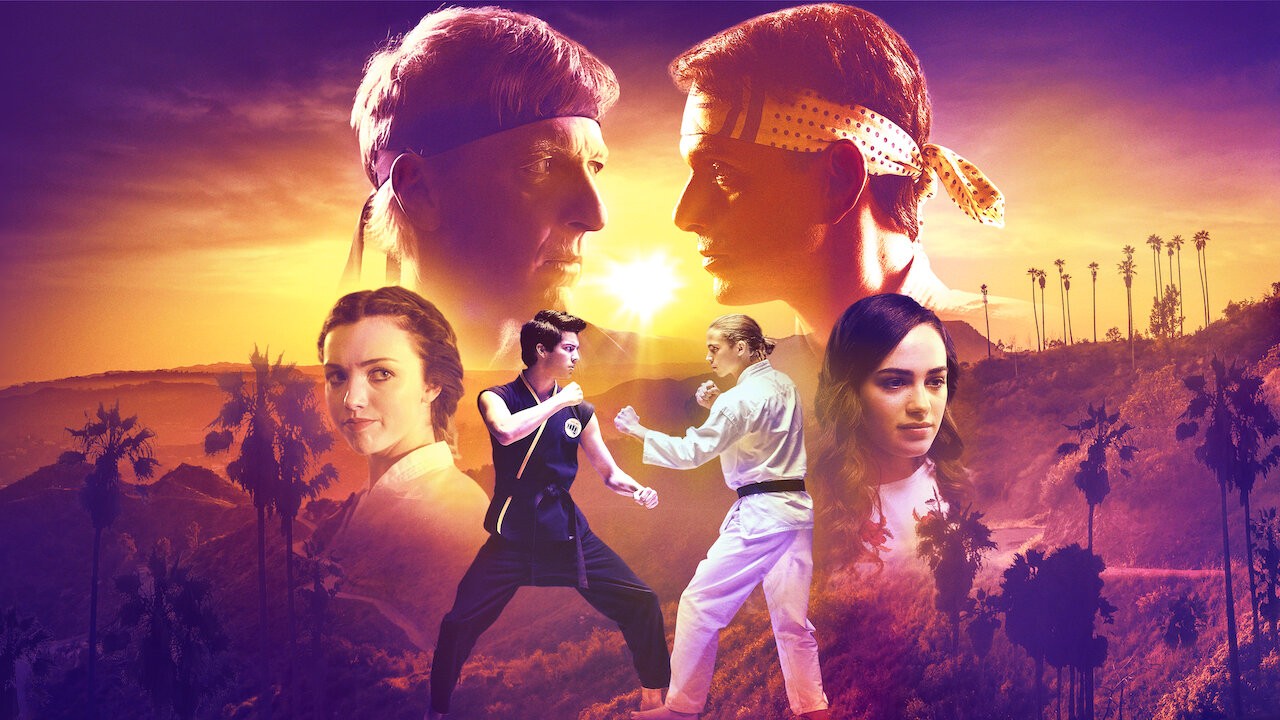
Cobra Kai is one of Netflix's hits, and the audience's love for it is absolutely deserved, and there are several compelling reasons for that.
Open material
Comments
0No comments yet.
Sign in to join the discussion.