
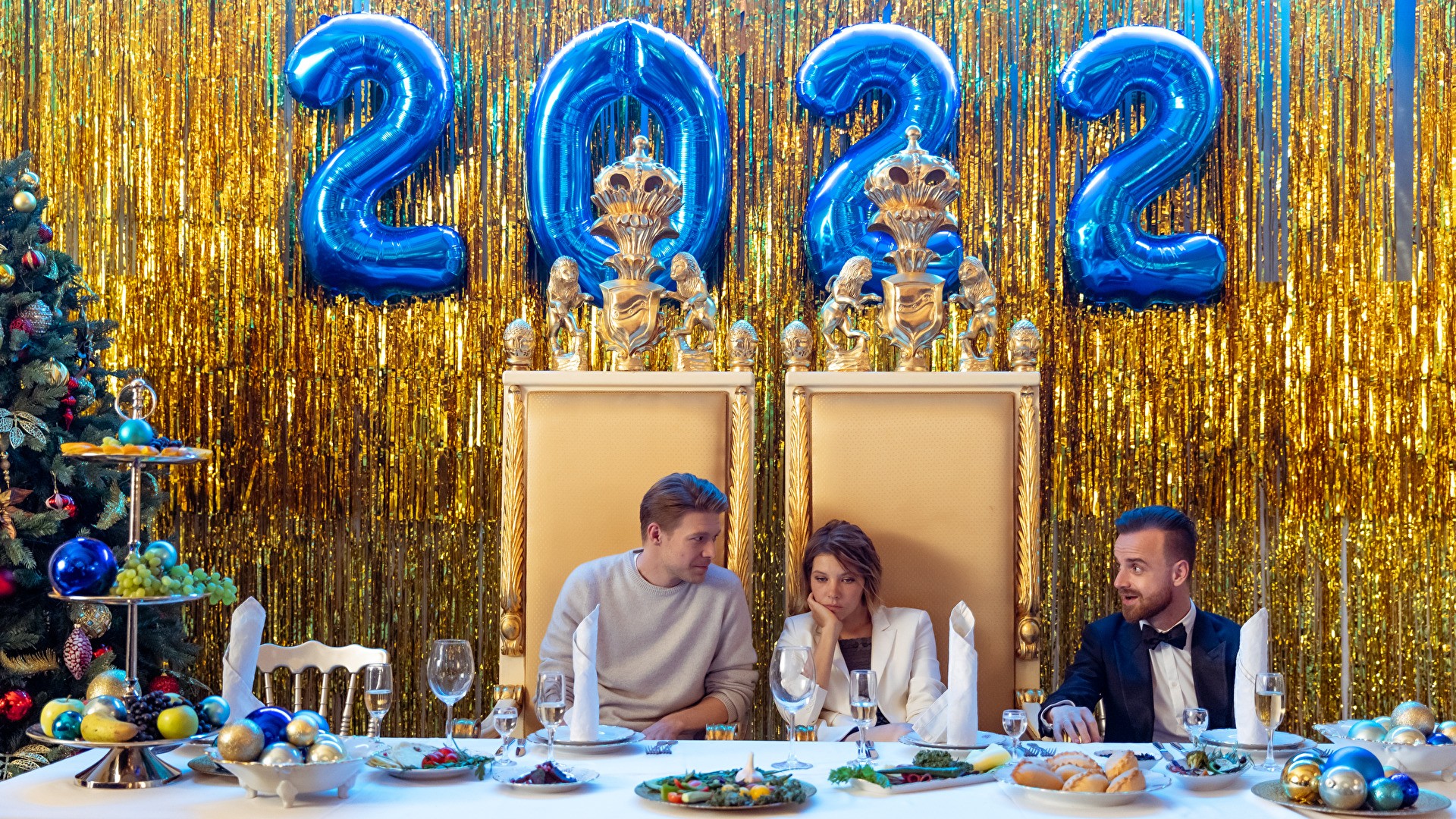
A satirical statement about the influence of the main Russian New Year's franchise 'Yolki' on the unformed body of a teenager.
Over the long eleven years, the 'Yolki' franchise has already become a folk meme, dictating its own laws for celebrating winter holidays. No matter how much new installments are criticized by professionals and repeatedly mocked by the audience itself, they still find their viewers. Moreover, surprisingly, of very different ages: both drunk adults who decided to artificially create a festive atmosphere for themselves, and children whom their parents did not dare to leave home alone, and there simply was no other holiday film.
The author of this text found himself in the role of a child a few years ago, when he asked his grandmother to take him to a Christmas film, which turned out to be the comedy 'Yolki 3'. And it was a truly interesting movie-going experience: the adventure of a little dog trying to find its way home amazed with its sincerity and honesty. Therefore, overwhelmed with emotions, I asked my parents to take me to a new installment the following year. 'Yolki 1914' still seemed to me something curious and unusual: old characters put on new 'masks', and the action took place in a completely different era than in the third film.
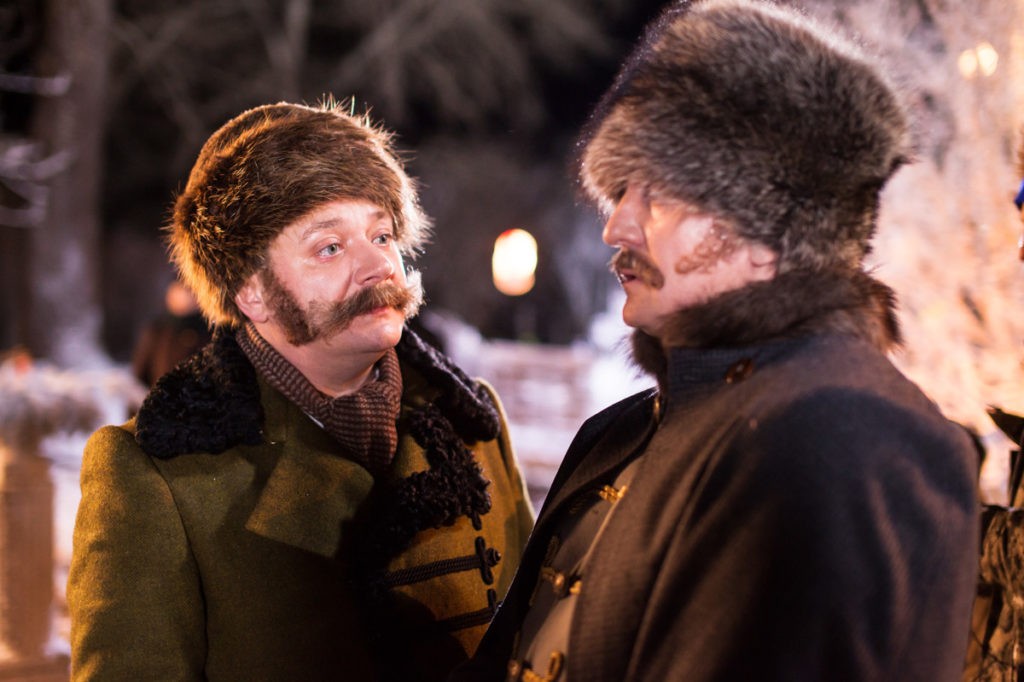
Gradually, going to see 'Yolki' became a New Year's tradition for our family, because despite the quality, the films gave a feeling that everything would be fine and captivated with their stories. In general, 'Yolki', no matter how disposable they were, were able to hold attention, starting the countdown to the chimes and the arrival of the new year. I clearly understood that my parents considered this film empty, but still went to meet friends and start the holiday evening.
The key year for me was 2017. Then, together with my dad, I went to see two delightful films that became the reason to start studying cinema in depth. Two trips to the cinema showed me that art can go far beyond the quality of 'Yolki' (at that time I really considered this film something more) — it was a summer visit to 'Dunkirk' by Christopher Nolan and an autumn trip to 'Blade Runner 2049'.
However, that year the continuation of 'Yolki' also surprised the inexperienced viewer. A small rethinking of the franchise (new actors were added to the narrative, including Dmitry Nagiev) set a new bar, giving hope for a good end to this New Year's carnival. And imagine my joy when I learned that the next 'Yolki' would be the finale of the franchise and end the story. This was stated by the subtitle of the new film — 'the last ones'.
Before watching the seventh 'Yolki', I arranged a personal marathon of watching the main Russian franchise, which affected the perception of the new installment. Curious details of the franchise from childhood upset me at a more conscious age, and some parts even left me in a state of some awkwardness. A certain rethinking of the franchise in the form of 'Yolki: Shaggy' left no effect at all, except for the feeling that I had watched a copy of the legendary film 'Home Alone'.
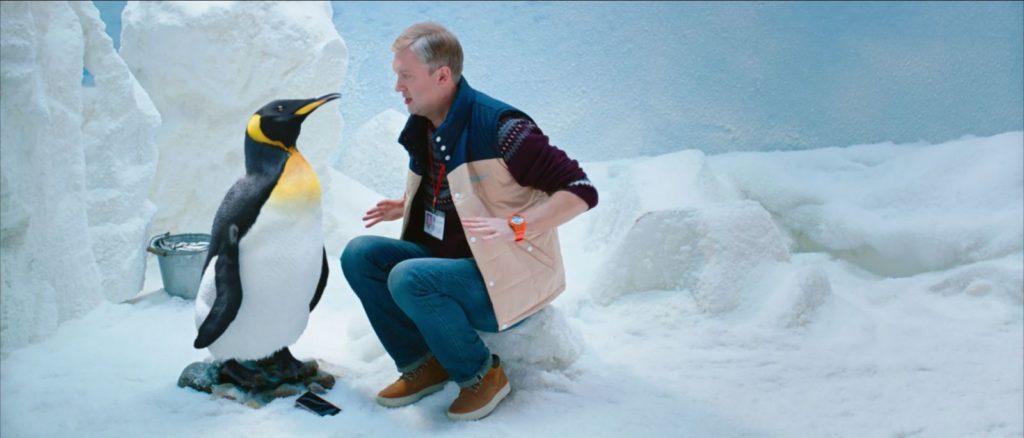
Some decisions of this series were also frightening. Thus, 'Yolki 5' was built on the search for an escaped penguin, while ignoring all previous films. The film did not have strong overarching stories that previous installments could boast of, so it lagged far behind in quality. This film became the weakest in the franchise for most viewers, which can be seen from the ratings on Kinopoisk, where the film is in the red zone. The plot was an indicator that without interesting additional stories, the franchise could completely die, even despite the presence of stars.
The first parts of the franchise also surprised me, which look completely separate from the subsequent sequels. The first part was a decent comedy for one evening, which lacked a strong dramatic structure: at the center was the plot about the theory of six handshakes, which helps a lonely girl Varya not become a liar in the eyes of her peers. And the second was about the power of love, which is able to bind the characters together, even despite the fact that someone lost their memory, and someone had not seen each other for 40 years.
In the context of rewatching the previous parts, 'Yolki: The Last Ones' was for me a statement not only about the end of the era of the legendary franchise (the effect was created, as when watching the ninth 'Star Wars'), but also created the illusion of the end of childhood, because I spent several New Year's evenings with the film series. The scene where the heroes of most of the films gather at one table is one of the strongest in the history of all 'Yolki'. It speaks not only about the end of the series, but also about the unity of all those who created the effect of the New Year holiday, even in the most difficult times.
Our New Year's tradition — going to the cinema on New Year's Eve — continued even when 'Yolki' was not released. In 2015, we ended up at one of the most large-scale (and at the same time terrible) films by Zhora Kryzhovnikov, the karaoke comedy 'The Very Best Day', which is difficult to perceive in a sober state. And last year, we went to 'Feedback' — the sequel to 'Loud Connection', which, in turn, was our version of 'Perfect Strangers'. However, unlike the first part, this film by 'Kvartet I' did not surprise with anything new, and therefore did not create the effect that the chimes were already close.
The release of new 'Yolki' was necessary for viewers like our family, who understood that they were in for a terrible hour and a half that would create an illusory effect of a miracle. And the new 'Yolki' copes with this task, even despite the fact that they are significantly inferior to previous installments in quality. The debut of the young Anton Bogdanov (an actor who starred in previous parts) was created to return the 'Yolki' that few needed to the big screen, and not to create a worthy New Year's film. And this is quite interestingly perceived in the context of the film itself, which can indeed be accepted.
At the very beginning of the film 'Yolki 8', we see the native Earth, on which the already familiar cities of the Yolki franchise are marked: Saransk, Tyumen, Yekaterinburg, Ufa and Perm. Against the background of our planet, the title of the film appears with an inverted eight, thus the creators are ironic, speaking about the inevitable infinity of the entire franchise.
Then the new film introduces the viewer to its main characters. As in the first part, they are children trying to catch a signal from their father who went into space. The initial image turns out to be deceptive. The search for the father turns out to be a children's game under a blanket, and the dad himself disappeared due to a quarrel with his mother, and not because he is in distant space. A little later, we learn that the father will be played by the film's director himself, Anton Bogdanov, which will actually find similarity with the viewers who came to the screening. For both children and viewers, meeting this person will become a pre-New Year miracle that everyone has been waiting for so long.
Then we see the familiar characters Zhenya and Borya, who again gathered with their families to celebrate the New Year. And while Zhenya tries to entertain the children with his small stand-up, which he fails at, Santa Claus comes to the house. After a few scenes, we see that he fell in Zhenya's garage, so the holiday will not come until they understand what happened to him. Here we meet the first ambiguous image of the film, which hints at one of the terrible events of the past year. Could Zhenya's awkward stand-up, which his family does not appreciate, be a hint at the story of last year, when a young comedian Idrak Mirzalizade was sent to prison for an unsuccessful joke?!
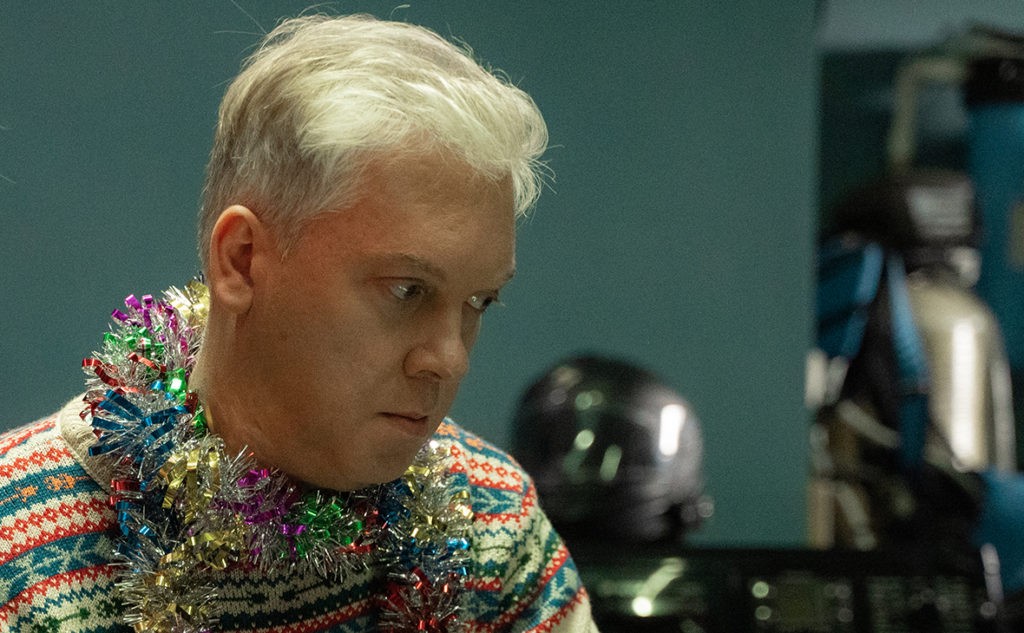
Another ambiguous image of the film 'Yolki 8' is the very moment of saving Santa Claus, when Zhenya calls psychics to his home and meets the drunk Tolik, who claims to have unique abilities. Later, 'Battle of Psychics' is mentioned in the frame — another attempt to capture the realities of this year. This year I accidentally watched several episodes of the 'Battle' itself, accidentally stumbling upon it on TNT. One of the project participants was the warlock Vlad Cherevaty, who claimed that a demon named Tolik lives in his head, who swears at other participants of the season.
Then the new 'Yolki' gives out another brilliant reference to our reality — when at the end Santa Claus stands up to the national anthem, and then the credits follow to a rap about the events of the entire film. Isn't this a hint at one of the most important Russian films of this year, at the end of which Husky rose from the coffin and performed his new song over the credits?!
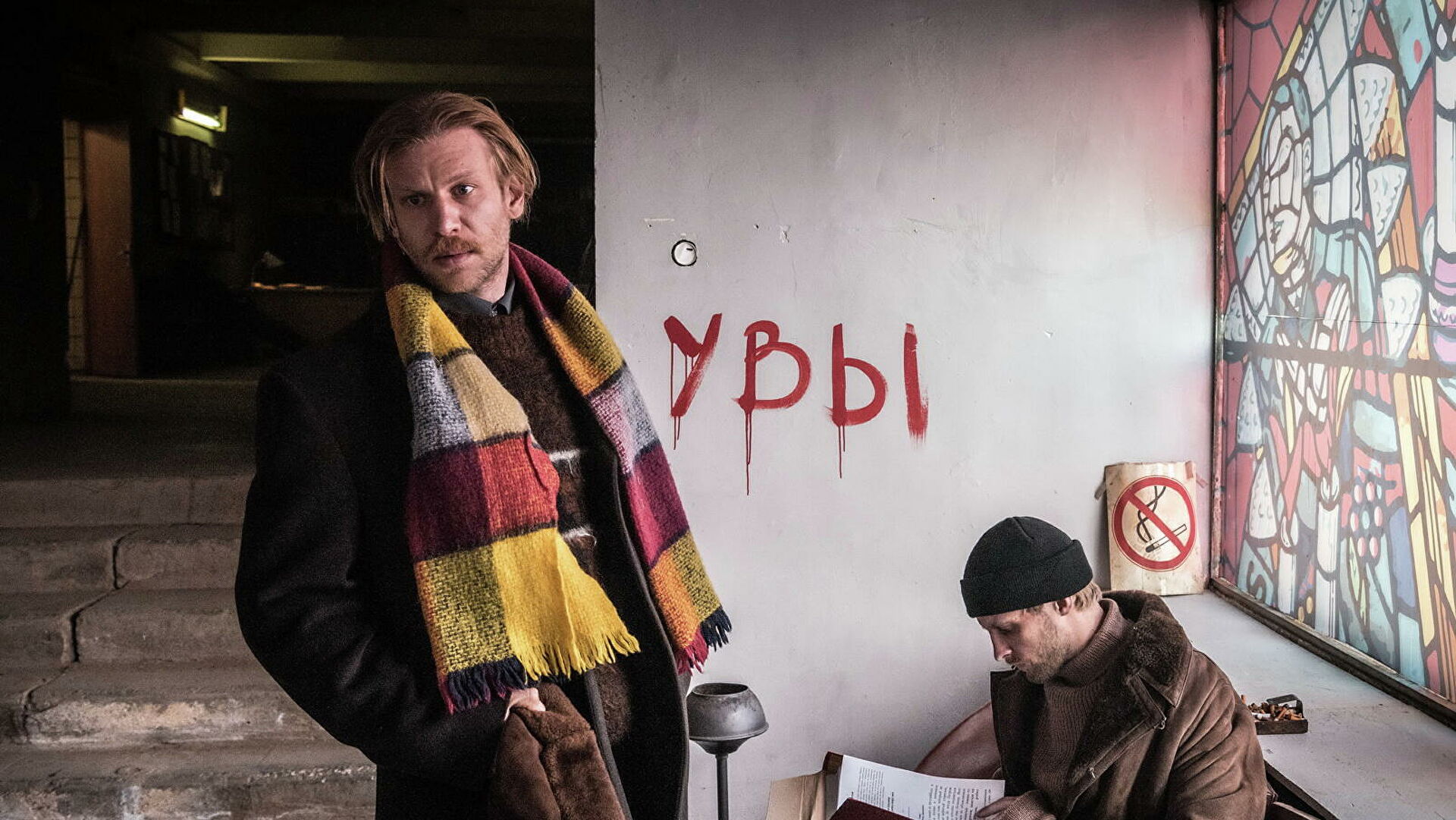
Kirill Serebrennikov in the film 'Petrovs in the Flu' managed to combine Russian chthonic, vampires and New Year trees, making a fascinating and surprisingly funny movie.
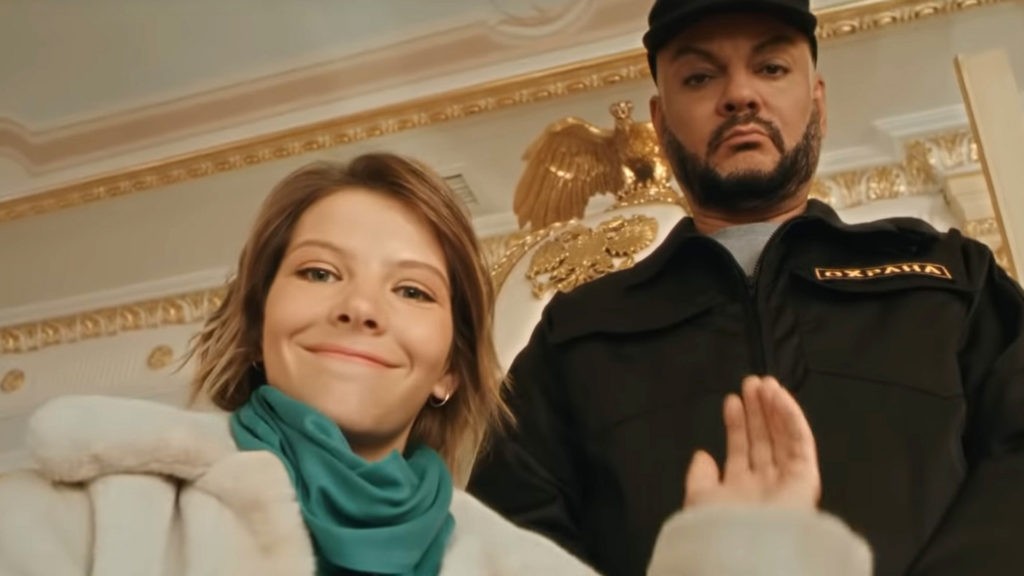
Open materialThe new 'Yolki' is an attempt to update the franchise, using the skeleton of the first part: the images remained the same, only the characters changed. So instead of Vera Brezhneva, Olga Buzova came to the fore, who performs her hit 'Dance to Buzova' in front of people in the pool. And also Philip Kirkorov, who recently also starred in the last part of 'The Last Hero'. The theory of six handshakes familiar from the first film was replaced by the theory of six 'button presses', and some of the characters' dreams are now fulfilled using the TikTok app.

'Yolki 8' is an empty film, which, however, fulfills its task. It clearly captures all the trashy events of the outgoing year. At the same time, there is no false hope for a better future in the new 'Yolki', even the meeting of the father with his own child in the finale of the film is perceived as a moment that cannot last forever.
At the same time, the new 'Yolki' emphasizes the meaning of the entire franchise: no matter how bad you feel watching everything that happens on the screen, it is an excellent mirror of what is happening in our world. The further it goes, the worse it gets, so all that remains is to understand and forgive.
Trailer:
Comments
0No comments yet.
Sign in to join the discussion.