
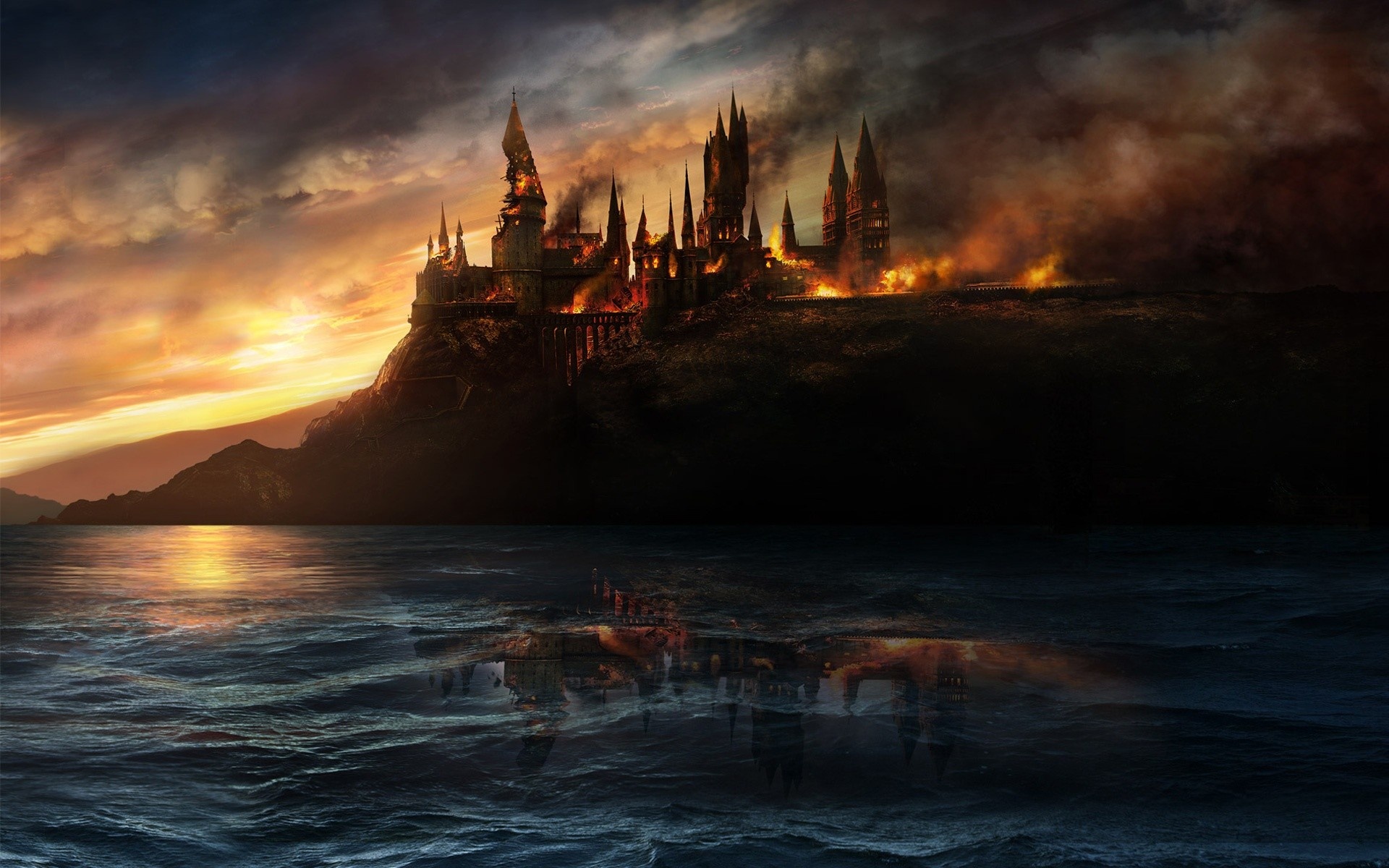
The third part of the materials about the Harry Potter universe. We talk about four films directed by David Yates and conclude the narrative about the main films of the saga.
This is the third part of the material. Find out what happened earlier via the links to part one and part two.
"He likes to play... A cunning, quick little tyke": Harry Potter and the Order of the Phoenix
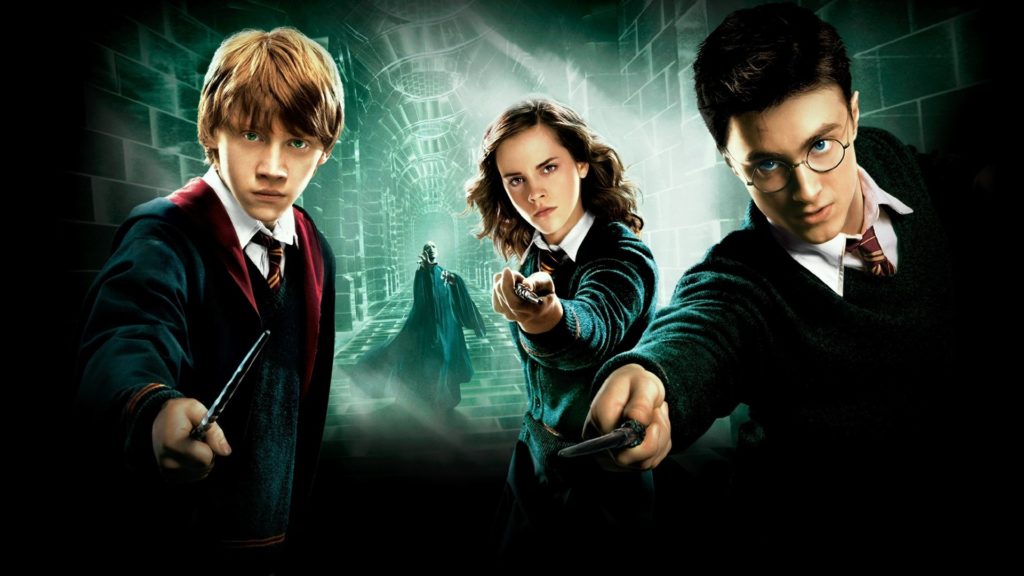
The adult period of the Harry Potter franchise began again with a change of director (as if it weren't the position of Defense Against the Dark Arts professor). Mike Newell, like Alfonso Cuarón, was offered to continue, but the director declined. The reason was the constraints and rules imposed by Warner Bros., which, according to Newell himself, did not allow creative freedom. The filmmaker couldn't make a move without the 'Warner' knowledge and their control. Over the entire franchise, only the Mexican Cuarón managed to push through his own ideas. Perhaps because 'Prisoner of Azkaban' had the lowest box office among the main series films, further liberties were curtailed. Who knows?
The position of the new director once again went to a Briton. David Yates was responsible for the film adaptation of the fifth book. By 2007, the filmmaker was not widely known to the public. His portfolio consisted of a couple of comedies, several TV series, and short films, but the studio was not at all bothered by his limited track record. The bet was made, and today Yates is known to the world as the permanent director of the universe's films, starting with 'Order of the Phoenix'.
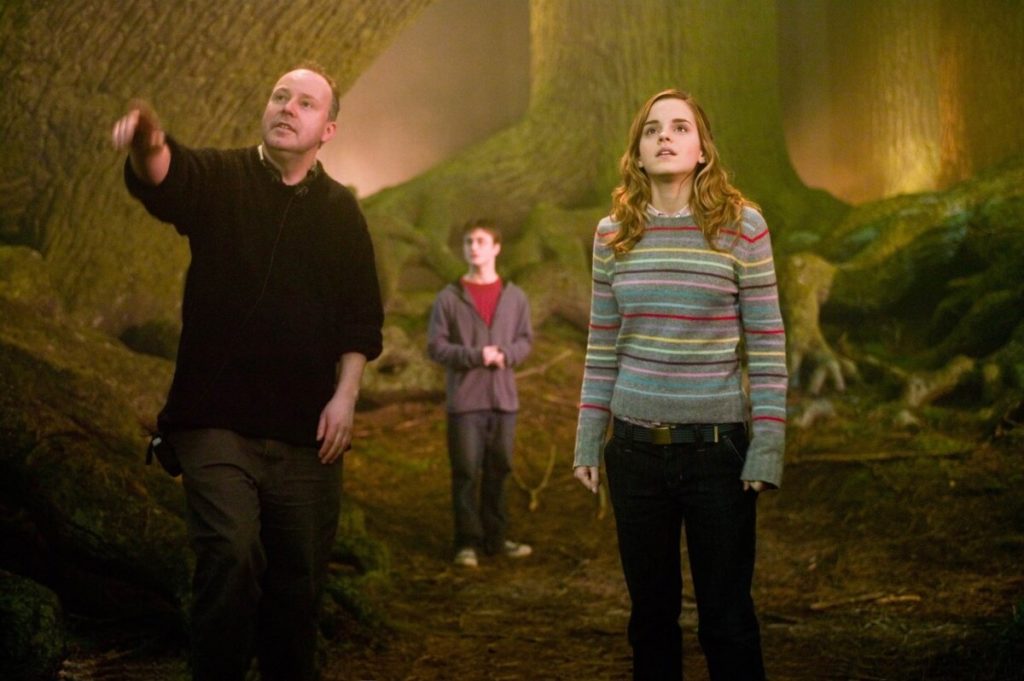
The change of director was not the only change in the creative team. The fifth installment about the Boy Who Lived was the only film for which Steve Kloves did not adapt the screenplay. The regular screenwriter struggled with adapting the novel, so Kloves was replaced by Michael Goldenberg. How the new face, in a duo with J.K. Rowling, managed to handle the work is a matter of debate, but for me personally, the paradox created by the fifth part remains unthinkable to this day. Stupefy me, but I don't understand how the longest book in the series could turn into the shortest film in the franchise.
An incredible amount of material fell under the scissors, from which the film clearly lost rather than gained. It is said that the reason was the box office failure of Quentin Tarantino and Robert Rodriguez's 'Grindhouse'. Like, the audience is not ready to go to films lasting three hours or so. If such rumors are true, then this is an extremely stupid cause-and-effect relationship on the part of WB. One thing is an auteur three-hour film, specially stylized as a B-movie from the seventies, and another is a highly anticipated commercial project, adapting a novel with millions of fans around the globe and initially set for box office success. The pursuit of money alone has never played a good joke, and with the 'Warners' and their control, even more so (remember the magnificent 'DC' cinematic universe). So, another minus in the piggy bank.
But let's return to 'Order of the Phoenix'. The films of the adult period become darker. The viewer understands that evil is only gaining strength. Danger is only approaching, but not at its peak. More serious themes are touched upon. For example, the loss of loved ones, media propaganda, politics. Of course, the film is not without reason criticized for its overly cut screenplay. The authors faced the task of conveying the skeleton of the main plot, revealing it, and not losing the film's atmosphere, while the secondary plan (pardon the tautology) took a back seat. The mission was accomplished, but at what cost?
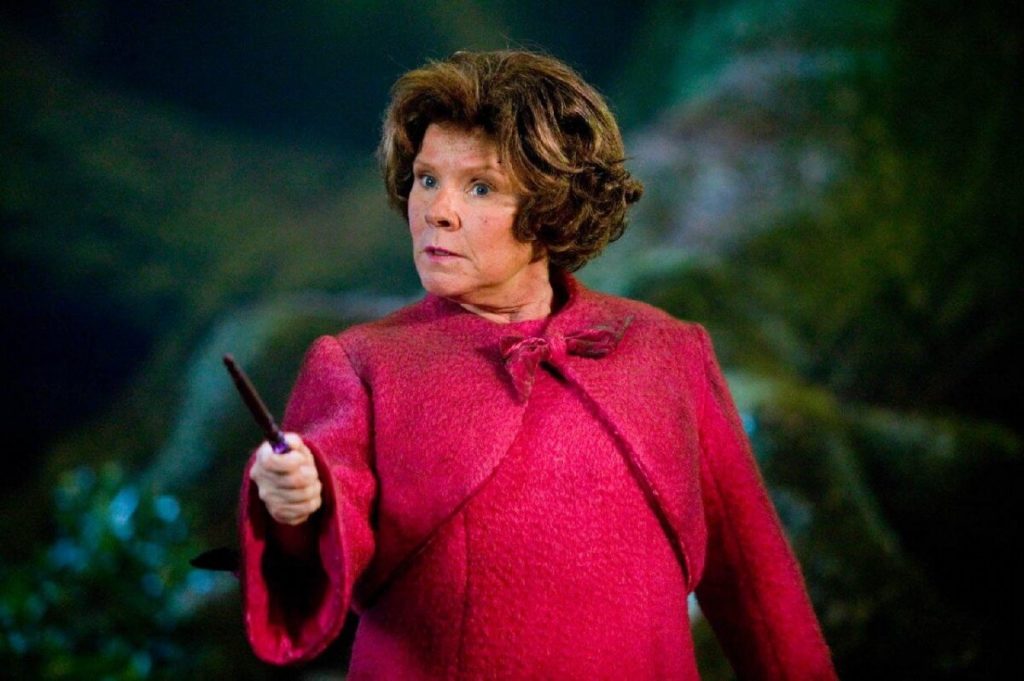
The traditional addition to the cast in the fifth part is impressive. David Yates cast Imelda Staunton as Dolores Umbridge, which caused a storm of positive emotions among fans. According to many, the actress is simply perfect for her character. It is, of course, difficult to take such statements as a compliment (Imelda was actually bothered by this), but it's impossible to disagree. Staunton on screen evokes exactly the emotions that reveal Umbridge. Truly, it turned out magnificently.
The cast was also joined by the simply incredible and much-loved Helena Bonham Carter. Her transformation into Bellatrix Lestrange is close to one hundred percent. Tim Burton's favorite, along with Imelda Staunton, fit the role almost perfectly. I think few would dare to argue with this fact. Initially, the mad witch was to be played by Helen McCrory, but she couldn't and only appeared in the next part, taking on the role of Narcissa Malfoy, Draco's mother.
'Order of the Phoenix' is not only a new age stage for the franchise but also a new stage in terms of production. Computer technology is rapidly developing in Hollywood. Live-action filming is much more often replaced by green screen. Previously, the creators carefully prepared locations, props, and sets, but in the fifth part, graphics replace almost everything. If thestrals were still created in full size using animatronics, then the scene in the Department of Mysteries of the British Ministry of Magic was entirely done on a computer.
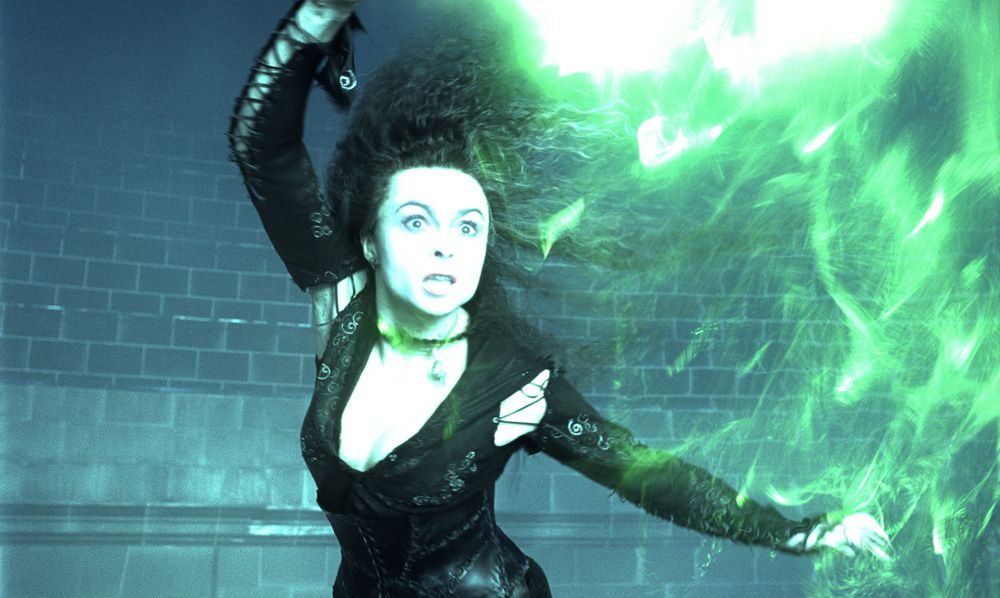
David Yates takes the reins and prefers the latest technology over creating a cozy atmosphere with sets, props, and location shooting. This computerization is also reflected in the music. The new composer Nicholas Hooper, when creating the soundtrack, used the computer more than recording live instruments with an orchestra. On the one hand, the film benefits from digitalization, because we got a magnificent battle between two greatest wizards, but on the other hand, a certain piece of the universe's atmosphere is lost. The viewer understands that not only the childhood of the heroes is ending, but also the fairy-tale fantasy of the early parts will no longer appear on screen. From now on, dark times are coming, and there is no place in the films for the carefreeness of Chris Columbus. They have been replaced by action, drama, and, at times, an action movie in the magical world through spells.
"You dare use my own spells against me, Potter?": Harry Potter and the Half-Blood Prince
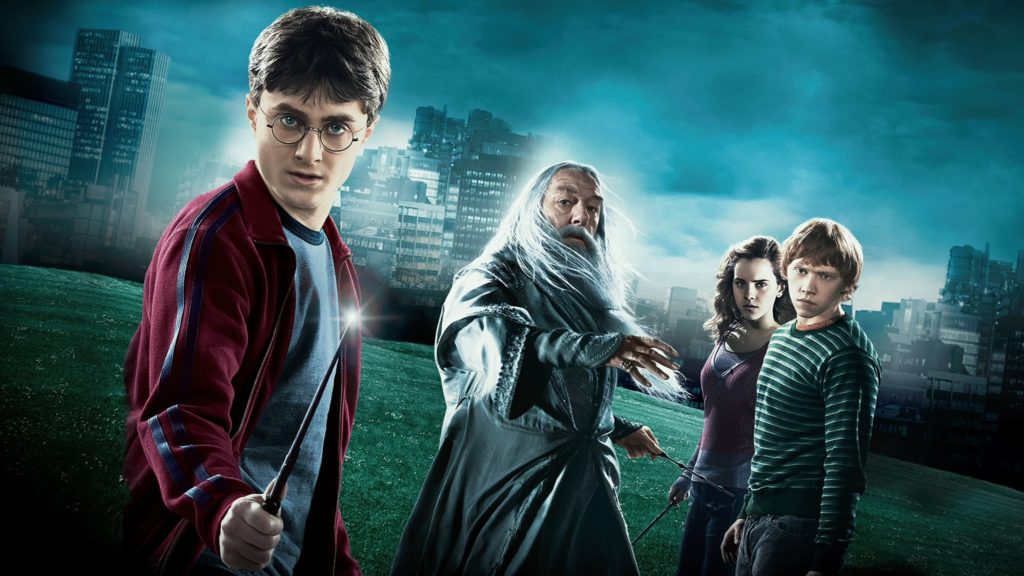
The penultimate book of the series was adapted a full two years after the release of 'Order of the Phoenix'. The longest time gap is between the fifth and sixth parts. David Yates gladly agreed to take on the sequel. At this point, the 'curse of the director's position' ended. True, the film also had a second director, who covered for Yates and shot some scenes.
Also, Steve Kloves returned to writing the screenplay, which helped the film return to its previous level in terms of adaptation. Although some chapters and moments from the book inevitably ended up in the bin, during viewing you still feel that the screenwriting duo is trying to preserve the secondary plot as much as possible without damaging or blurring the main storyline.
The cast was joined by the aforementioned Helen McCrory and Jim Broadbent as the new Potions professor, Horace Slughorn. Among the actors of the sixth part, Maggie Smith (Professor Minerva McGonagall) deserves special admiration, as she was diagnosed with cancer during filming. The actress was offered to stop working and take care of her health, but she bravely completed her scenes and only then began treatment.
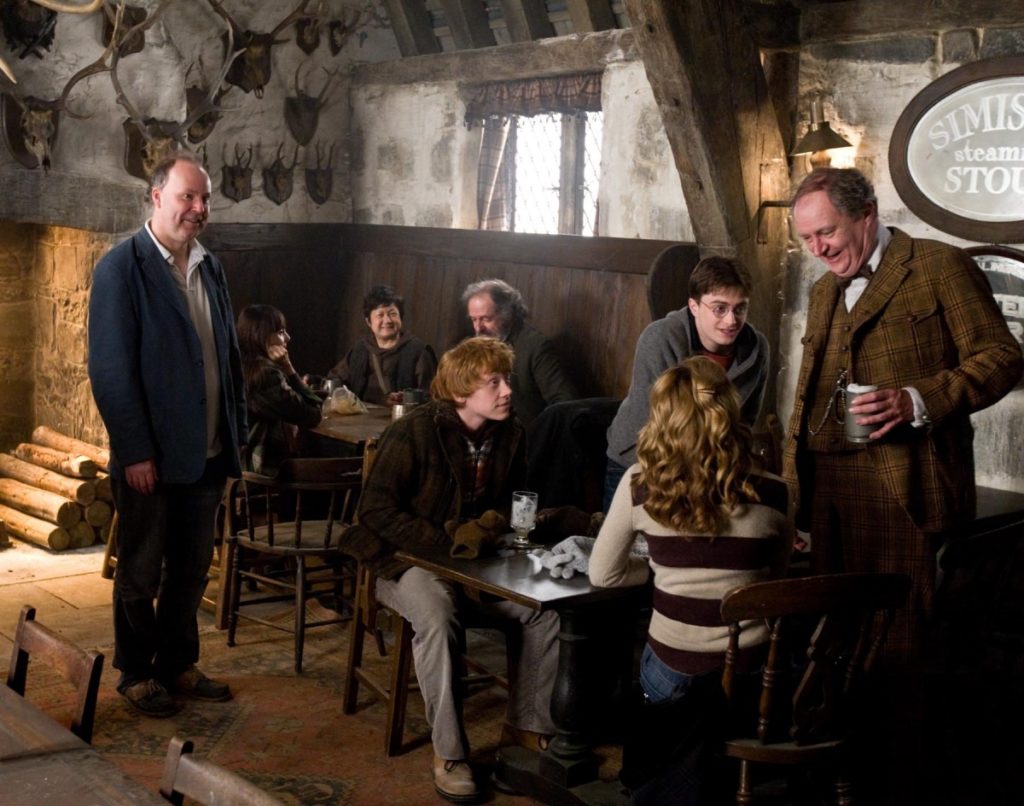
David Yates decided to steadfastly follow his style, so 'Half-Blood Prince' is even more filled with action, running around, and dynamics. The film's editing no longer accepts scenes without cuts, a la Cuarón. The franchise is inevitably nearing its end, as the cold and gloomy tones dominating the screen tell the viewer. We are slowly being prepared for the final step. Tongues of flame engulf the Burrow at the beginning of the film, showing viewers that the Dark Lord is ready to destroy everything dear to Harry. The Weasley family home was a second home for Potter, which adds drama to the scene.
The second moment showing how powerful the dark forces are at this point is, of course, Dumbledore's death. The scene is incredibly powerful. It is etched into memory for a long time. The fall from the tower and the unanimous raising of wands to the sky to drive away the Dark Mark to the only memorable melody from the film. In two parts, Nicholas Hooper created only one catchy motif, and even then, the picture plays an important role. The moment is extremely dramatic, which is why the soundtrack sticks in the memory. One without the other would not have worked so successfully.
Between the two dramatic scenes, the film is filled with many gags. I don't know if any other part had as much humor (appropriate or not). It's interesting why only the penultimate part was given such a treatment. Sometimes it seems like it's hysterical laughter in the face of inevitable dark times.
'Half-Blood Prince' did not leave the viewer without amazing moments. For example, a very valuable part of the film is Voldemort's memories and Harry's additional lessons with Dumbledore. The headmaster's meetings with Potter reveal their mentor-mentee relationship. The professor reveals secrets to Harry and places a serious mission on his shoulders to destroy the Horcruxes. The only chance for the forces of good to win. The Boy Who Lived learns why he is the Chosen One.
Parallel to this, Dumbledore shows young Potter memories that once belonged to the Dark Lord. The viewer learns a completely different side of He-Who-Must-Not-Be-Named. On screen is just an unusual child. Yes, there is something dark in him, but the professor sees an unusual young man whose abilities need to be directed in the right direction. The character of Voldemort is finally revealed, but not completely. The fact is that again, many memories from the book fell under the harsh editorial scissors.
David Yates' film presents not as many memories and additional lessons as in the source material. It's a shame, but nothing can be done. If you wish, you can find deleted scenes from the film (there are an incredible number of such scenes across the eight parts, as at least an hour (!!!) of runtime would be collected if you put them in one video) and get a slightly better look at the relationship between Harry and Dumbledore. Unfortunately, scenes with Voldemort's memories were simply not filmed. In any case, by the finale of 'Half-Blood Prince', viewers understand that there is very little left until the denouement. Darkness has consumed the franchise, meaning war is not far off.
"I have seen your heart, and it is mine!": Harry Potter and the Deathly Hallows: Part 1
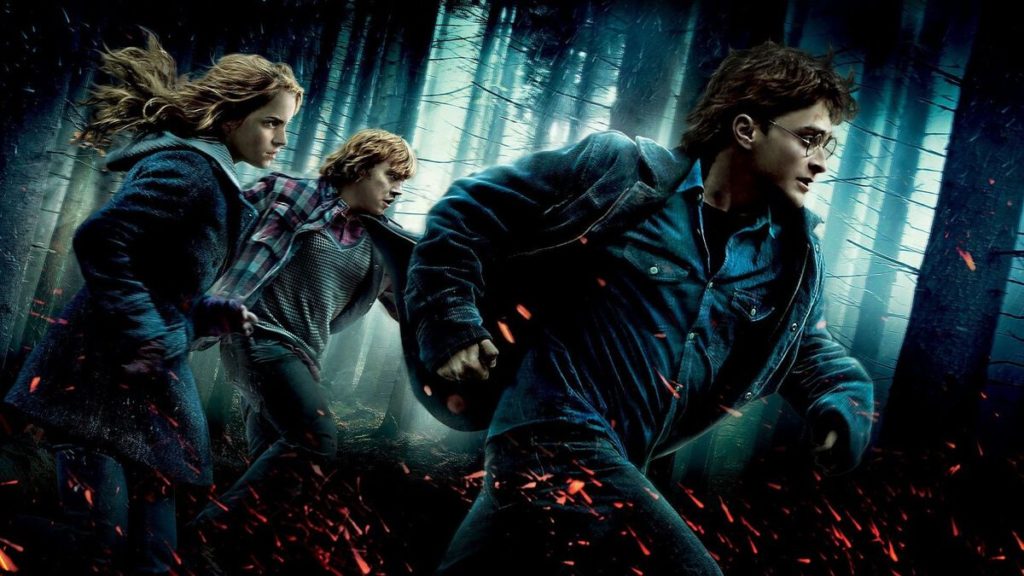
The studio split the finale of the saga into two parts, justifying the choice by saying that, starting with 'Goblet of Fire', the films were very heavily cut and rushed, with a lot of material thrown into the bin. Due to such circumstances, the conclusion should be cohesive and not leave viewers with a feeling of incompleteness and understatement. Well, and of course the financial component, where would we be without it? The creative team understood the epicness of the cinematic universe's finale. Rowling did not approve of the idea, but the arguments about the benefit for both sides convinced the writer. Fans get two full parts and slightly prolong the moment of the inevitable end of their beloved franchise, while Warner Bros. (and Rowling, accordingly) get more money from the box office and work on the screenplay more humanely than with the previous three films.
David Yates begins filming both parts of 'Deathly Hallows' simultaneously, refusing the second director from 'Half-Blood Prince'. The director had proven himself to the studio, and the 'Warners' decided that there was no need to change directors anymore, although initially, the work on the finale of the saga was to be offered to M. Night Shyamalan and Guillermo del Toro.
Working on two films simultaneously made it possible to release them in theaters with a completely insignificant break. 'Deathly Hallows: Part 1' was released in November 2010, and the second film could be seen a few months later, namely in the summer of 2011. By splitting the book into two films, it became much easier for David Yates to shoot. The screenplay, written once again by the Kloves-Rowling duo, threw little out of the film, so there was a greater chance that fans would receive the finale more warmly than the previous Yates-helmed adaptations.
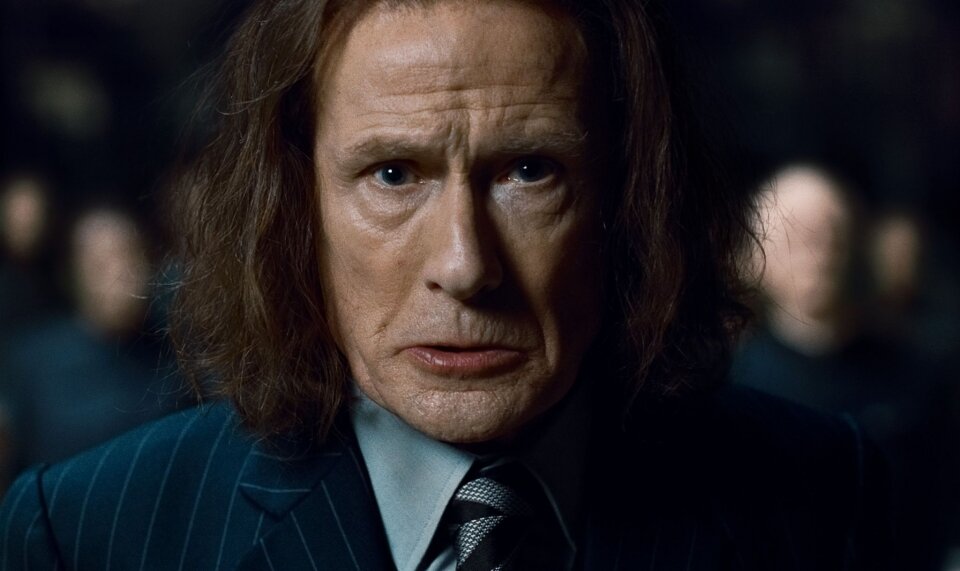
The cast of 'Deathly Hallows' did not expand much. Newcomers appeared mainly in small roles. Bill Nighy briefly headed the Ministry of Magic as Minister Rufus Scrimgeour, the son of Brendan Gleeson (Alastor 'Mad-Eye' Moody) Domhnall Gleeson joined the Weasley family as Bill, who had not appeared on screen before, and Rhys Ifans played a slightly more significant role as Xenophilius Lovegood, Luna's father.
Although the additions are not as impressive as before, many familiar characters appear in the film. Fleur Delacour, Madame Maxime, Remus Lupin, Nymphadora Tonks, Dolores Umbridge, and others. Even Dobby again attracts the viewers' attention (although in the books, the house-elf did not disappear after 'Chamber of Secrets' for so long). It is in this part that the viewer understands that the characters are not forgotten, because they are all part of the magical world of 'Harry Potter'.
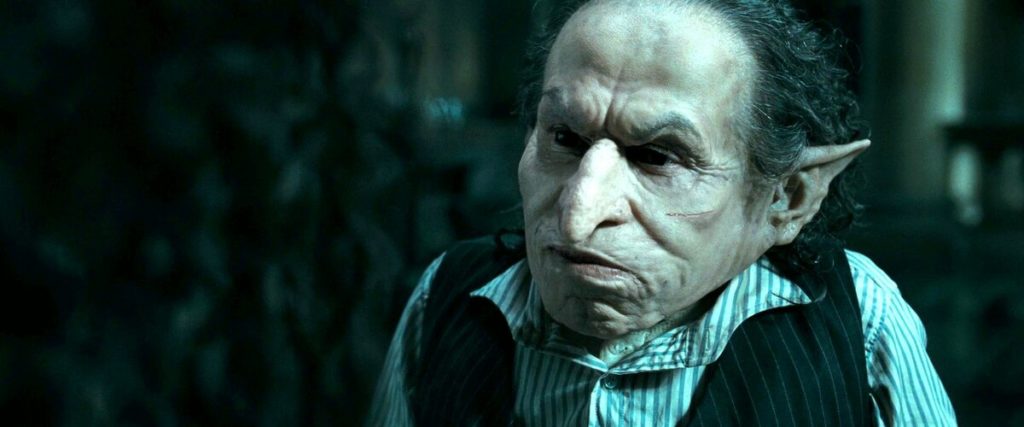
I think Warwick Davis deserves a special mention. It's no wonder Alfonso Cuarón wanted to work with him, as he is a very versatile actor. In essence, Davis portrayed as many as four different characters on screen. True, it turns out that there are only two characters, each simply underwent a reinterpretation of the image. Initially, Warwick Davis lent his voice to Griphook, the chief goblin of Gringotts bank (the role in 'Philosopher's Stone' was played by Verne Troyer), and portrayed Ravenclaw house head Filius Flitwick in the first film, but by 'Deathly Hallows', the actor himself transformed into Griphook and, after 'Prisoner of Azkaban', consistently appeared in the reworked image of Flitwick.
It is noticeable that David Yates approached the filming of the finale more seriously than his previous films. Everyone was aware of the scale and responsibility, so the preparation was reflected in many details. Starting from the fact that for the scene of the Horcrux destruction, 40 versions of Salazar Slytherin's locket were made, and ending with the architectural sets of the Ministry of Magic, inspired by the Stalinist era. Dark times had come, and during the reign of a tyrant leader, life was exactly the same. The parallels with the fear of the name, the cult of personality, denunciations, political persecution, exiles, and repressions, I think, are so transparent and obvious that it is not worth dwelling on them too much.
So, the sets of the main governing body of wizards reek of the Soviet Union. The letter 'M' resembles the metro logo, and the ministry is located underground (production designer Stuart Craig admitted that he drew inspiration from our Motherland). The high relief sculpture in the hall is inspired by Ivan Shadr's work 'Struggle with the Earth', and atop the monument rises a reworked statue of 'Worker and Kolkhoz Woman'. You see how fortunate it is that our ancestors endured such terrible times under Stalin, so that in the future, a cross-section of that era would be reflected in 'Harry Potter' as the purest and most genuine evil. A victory, no less.
Among other things, David Yates and the team spent a week filming the 'Seven Potters' operation. Incredibly complex work was done by Daniel Radcliffe during the transformation of other characters into Harry. The actor had to study and copy each character who turned into him to make the scene look as realistic and natural as possible. First, Radcliffe played Potter, then each one in turn, and the rest was done with computer graphics. An amazing scene.
Overall, 'Deathly Hallows: Part 1' is a true road movie with running around and spell shootouts (David Yates sure loves them), but the film does not cease to follow the ideals laid down from the very beginning. It is still a movie about friendship, love, and the struggle of good versus evil. The mix of digital technology, a sensible screenplay, excellent preparation for the work on the film (for example, to shoot the scene with Nagini in Godric's Hollow, the creators spent a long time studying the behavior of snakes), and the appropriate split into two parts turned the film into a good first chapter of the main saga's finale.
"Harry Potter... The boy who lived, come to die": Harry Potter and the Deathly Hallows: Part 2
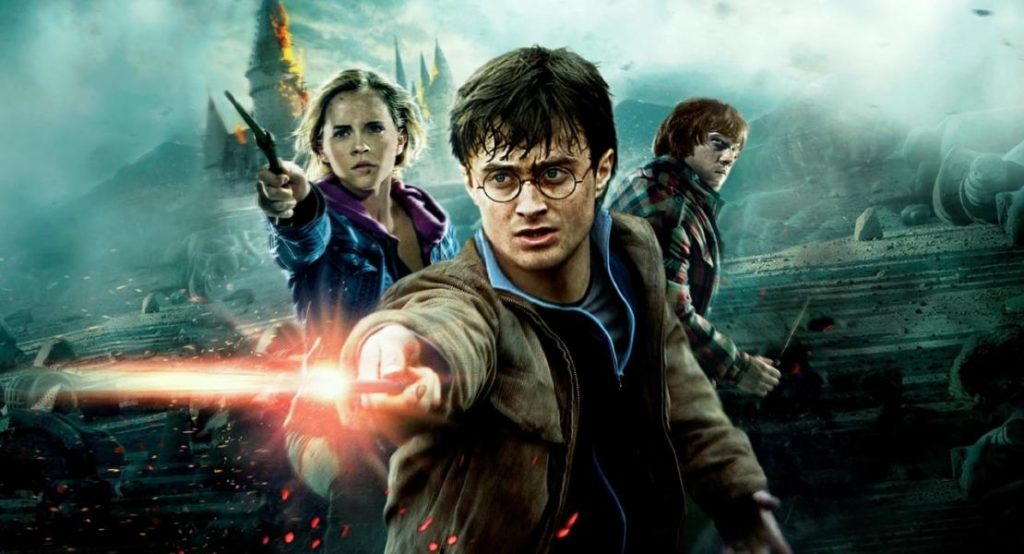
A few months before the tenth anniversary of 'Philosopher's Stone', the world saw the grand finale of the beloved saga about the young (no longer quite so) wizard. David Yates gave a real celebration to the fans. Some viewers grew up with the trio of heroes, but nothing can last forever (even Voldemort's life). The film's box office perfectly reflects how much people were waiting for the story's conclusion ('Deathly Hallows: Part 2' is the first film in the saga to cross the billion-dollar mark). It's funny that 'Deathly Hallows' was split into different time periods. The events of the first part cover almost the entire school year, starting from the summer, while the second film tells only about a few days.
There was almost no need to add to the cast for the last part. On screen are mostly faces already familiar to viewers. Except that Ciarán Hinds was added to the Dumbledore family, becoming Albus's brother, Aberforth, and Kelly Macdonald played the ghostly daughter of the Ravenclaw founder, Helena Ravenclaw. True, initially Kate Winslet was considered for the role of the Grey Lady, but it didn't work out.
Also, a very small role as Draco Malfoy's wife in the epilogue was played by actress Jade Gordon, who was Tom Felton's girlfriend at the time of working on 'Deathly Hallows'. The actor insisted on this decision by the studio. By the way, the cast saw not only additions but also losses. Jamie Waylett, who played Crabbe, did not participate in the filming. Honestly, it's hard to film when you've been sentenced to two years for drug possession and participation in street riots.
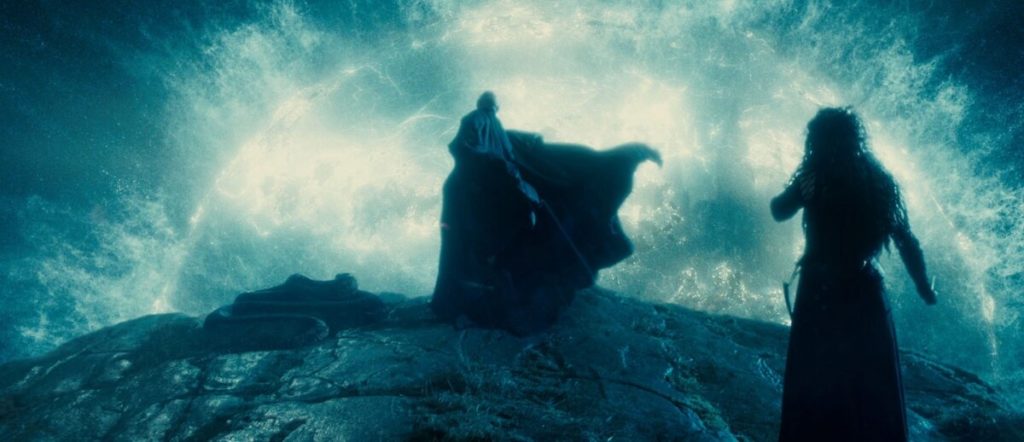
The finale of the saga is filled with events. Over a few screen days, the climax unfolds, towards which everything had been building for 10 years (7 book-film installments). The Battle of Hogwarts involved 400 Death Eaters and Snatchers. Such a scale in the saga can only be matched by the scene in the Great Hall of the same film, where 400 children and teachers are present. In general, the final battle is teeming with characters. Many fantastic beasts were mercilessly removed from it, but cameos of some characters were added, for example, Oliver Wood, who appears briefly in the frame, or students who graduated from Hogwarts in previous years. It's a shame, of course, about the cut allied creatures, because in the book, the final battle involved Buckbeak, house-elves led by Kreacher, centaurs, thestrals, and even Grawp with Peeves. It would have been something to see.
For the sake of the film, David Yates and the team distributed many of Harry's ideas to other characters in the film (this was done before, but usually ideas moved from secondary characters to main ones, not the other way around). For example, Luna prompts Potter about the Grey Lady, and after talking with the ghost, the Chosen One doesn't even have to strain to remember that he marked the mannequin with the ill-fated diadem containing the Half-Blood Prince's textbook. In 'Deathly Hallows: Part 2', the wizard has a Horcrux (spider) sense that helps him find the diadem of Rowena Ravenclaw.
Another change befell the final conversation between Snape and the Dark Lord. In the book, the dialogue took place within the walls of the Shrieking Shack inside the Whomping Willow, whereas in the film, David Yates, with Rowling's permission, changed the location to a boathouse. Having set the snake Nagini on Snape, Voldemort leaves the crime scene, and the professor passes his memories to Potter so that Harry can see the true face of Dumbledore's murderer.
In the memory scene, the last of the three memorable melodies plays, after Williams' departure from the composer position. Again, I think the picture played a decisive role. It's hard not to remember the motif when such heartbreaking events are on screen. Before Patrick Doyle ('Goblet of Fire'), Nicholas Hooper ('Order of the Phoenix' and 'Half-Blood Prince'), and Alexandre Desplat (both parts of 'Deathly Hallows') faced a choice: make their own music or try to stylize it after John Williams, who created the recognizable leitmotifs in the first three films. Of course, everyone chose the first option, which is why the soundtrack of each pales in comparison to the 'master of leitmotifs'. As a result, the three composers who worked on the franchise at different times managed to scrape together a total of three memorable melodies. Pretty sparse. It's interesting why the 'Warners' preferred the services of Alexandre Desplat if Williams wanted to return to work on 'Deathly Hallows'?
After the grand finale of the film epic by David Yates, viewers forgot about the magical world of Harry Potter for several years, but Warner Bros. understood the potential of the magical universe, so with 'Deathly Hallows', only the main story ended. The thirst to make money on the audience's interest in the beloved world forced the 'Warners' and J.K. Rowling to open a new page in the cinematic universe.
Comments
0No comments yet.
Sign in to join the discussion.