

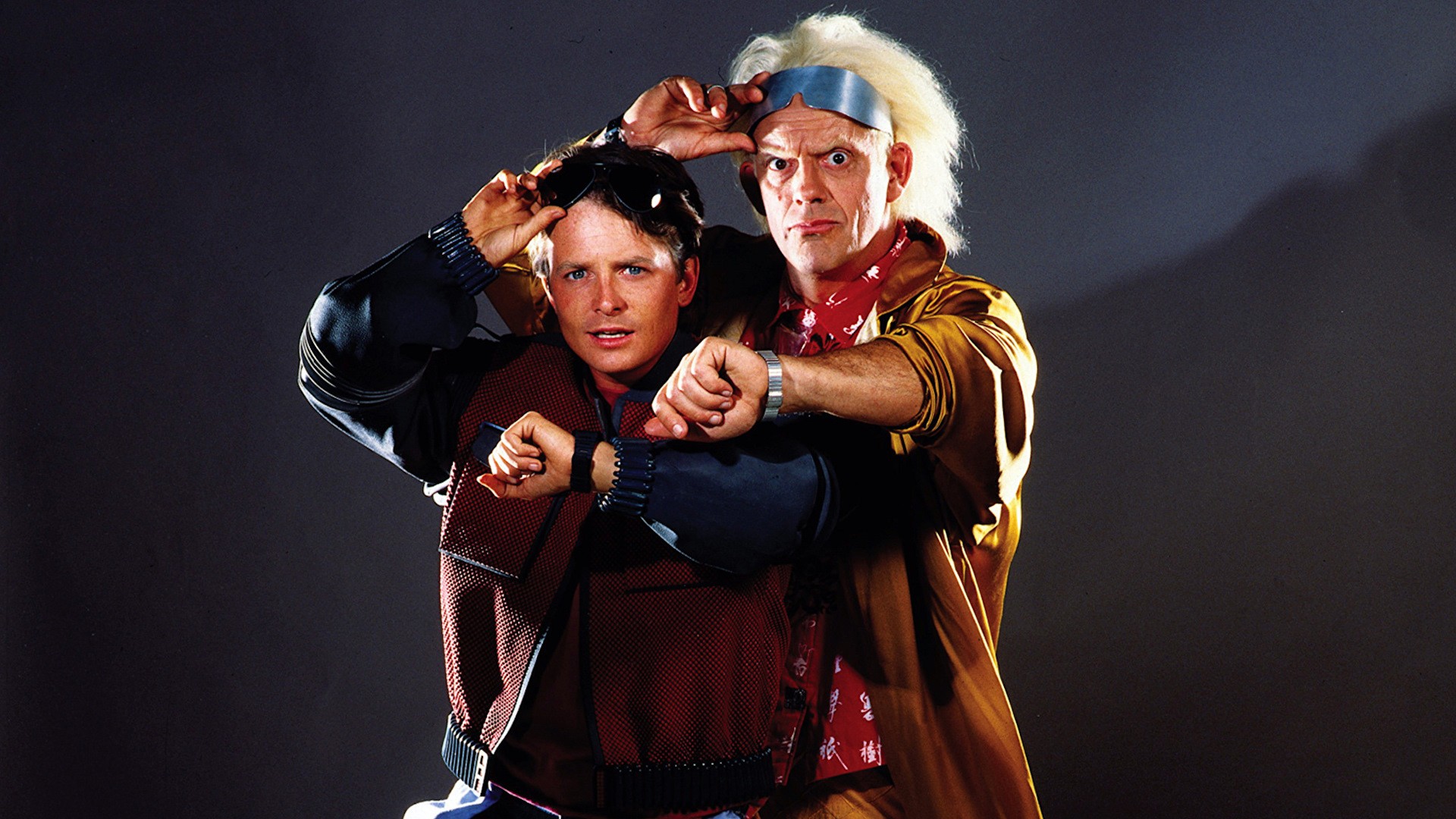
Familiar films sound new if you know how to notice filmmakers' Easter eggs. We invite you to recall the references in one of the most exciting franchises of the 80s — 'Back to the Future'.
Director Robert Zemeckis managed to create a truly futuristic universe that several generations lived and breathed. And even if the predictions didn't come true, the acute sense of nostalgia remained. The Back to the Future film series (1985, 1989, and 1990) is, in a sense, an almanac of American 80s and a nostalgic nod to the 50s: each installment is packed with references to pop culture symbols from the worlds of music, film, and show business. Unlike many projects of that time, Zemeckis doesn't mock, but rather fondly recalls the era of active market development, Reagan's presidency, and the commercialization of society.
For its time, the Back to the Future trilogy was ultra-modern, tackling the most pressing issues: from the dependence of happiness on money to the problems of schoolchildren (a theme that never lost popularity after the films of John Hughes). Even the segregation of the black population in the US is touched upon in snippets. 1985 was a time of technological optimism in America: the first phones, game consoles, and portable players appeared. People didn't yet know about the 1986 Chernobyl technogenic disaster that would change this attitude.
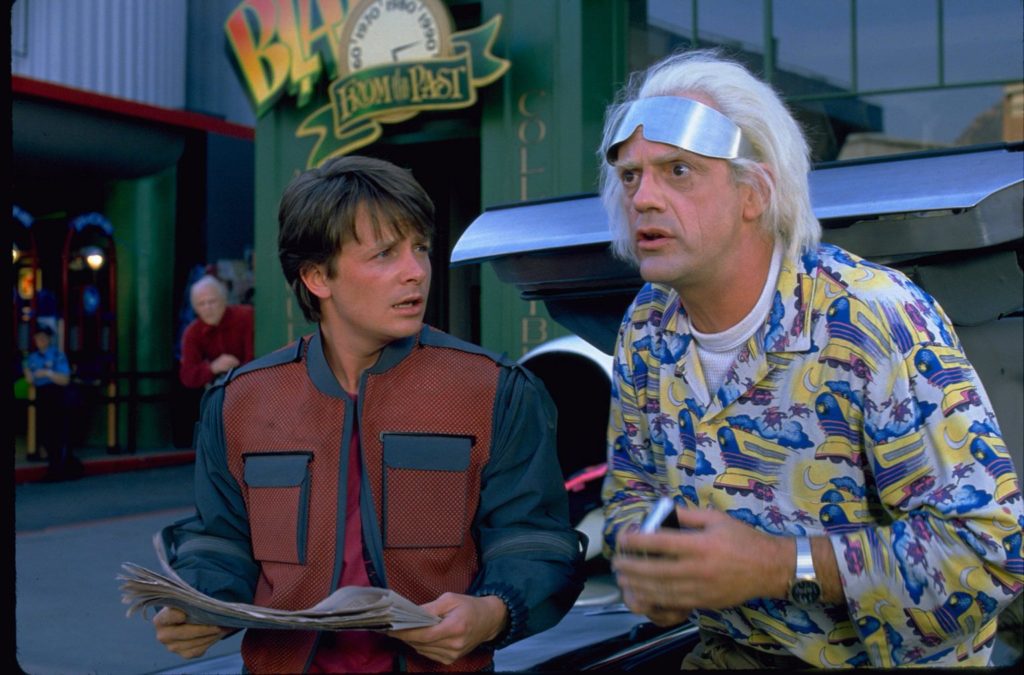
Perhaps Back to the Future by screenwriters Robert Zemeckis and Bob Gale is a glorified textbook on the 80s, but that doesn't stop it from tugging at nostalgic heartstrings even for those who didn't live in the US but always fantasized about it.
What pop culture references can be found in the famous trilogy?
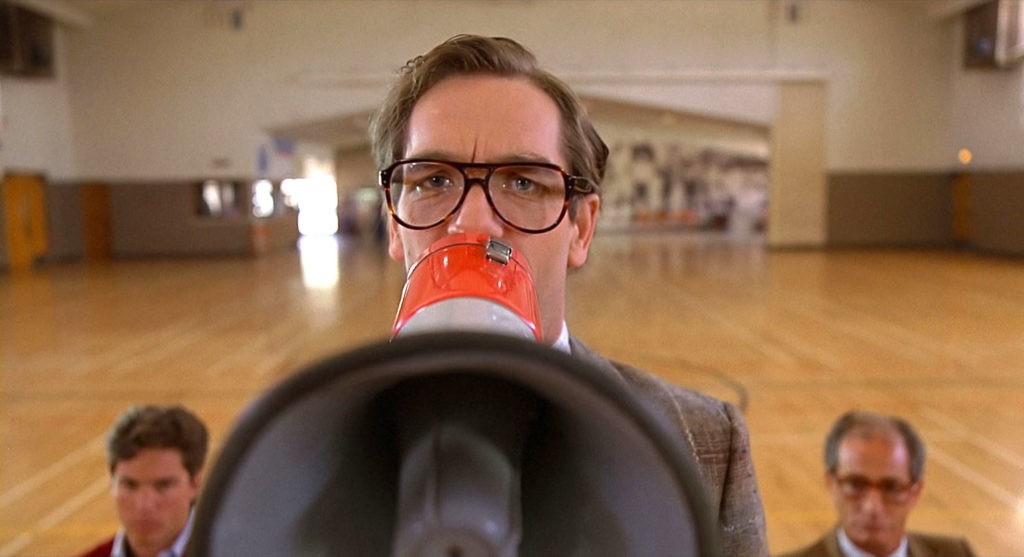
1) At the beginning of the first part, hero Marty McFly participates in a school audition to perform with the band at the dance. He performs the same song that played earlier when he was getting to school on his skateboard, hitching a ride on a truck, namely The Power of Love. Its author in real life was Huey Lewis and the band The News.
It is Lewis who is the man on the audition jury shouting through a megaphone that Marty's band is playing too loud.
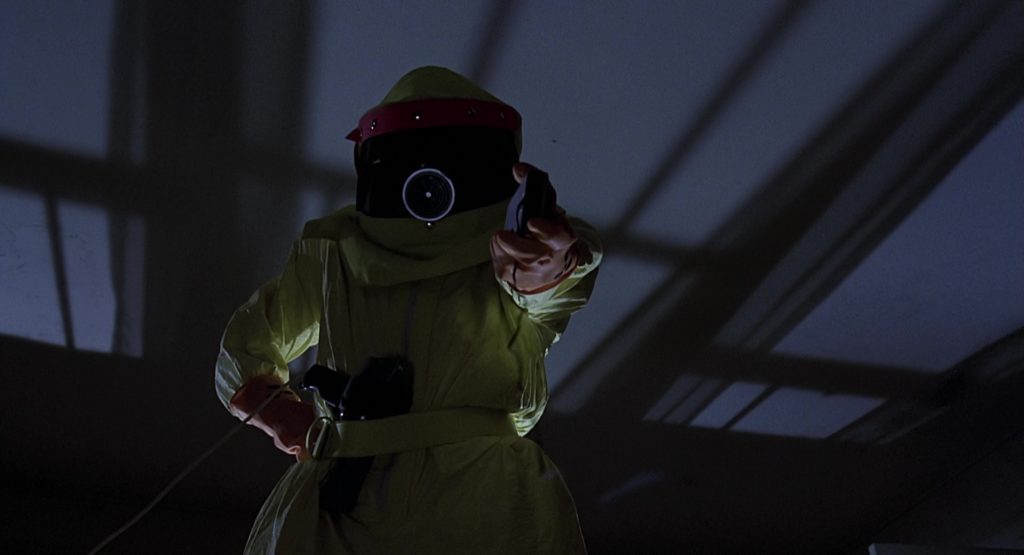
2) George McFly's (Marty's father) favorite TV show really existed — it was a sci-fi anthology. It aired on November 12, 1955. George complains that he missed one episode of the show because he went to the dance and kissed Lorraine Baines (Marty's mother). It is known that this episode in reality is called 'The Secret of Hastings,' which tells about termites capable of feeding on minerals instead of wood, according to Wikipedia.
3) In the first film, you can notice a 1950s comic book depicting someone resembling Marty and something like the DeLorean car. This is not a real comic, but merely a reproduction created for the film. However, it combined the cover design of real comics from the 50s — 'The Vault of Horror' and 'Tales from the Crypt.' Based on the latter, by the way, a seven-season series of the same name was created, which became one of the favorite horror shows of that time.
4) Zemeckis's films contain references to the main sci-fi universes of the 60s and 80s, namely 'Star Trek' and 'Star Wars.' Marty, in a suit resembling a spacesuit, introduces himself to George as Darth Vader. And in a deleted version of one of their conversations, Marty says he 'caused a rupture in the space-time continuum.' The 'Supreme Klingon' is also mentioned.
5) The music in the film 'Back to the Future' sounds clearly in accordance with the time, so at Marty's parents' school prom, the ballad Earth Angel (1954) by Penguins and Johnny B. Goode (1958) by Chuck Berry are played. By the way, it is the latter that one of the musicians named Marvin calls (supposedly his cousin) when McFly asks them for help.
Interestingly, the action in the first film takes place in 1955, meaning Chuck Berry would write his hit three years after 'hearing' it performed by Marty. Michael J. Fox himself only lip-synced; for Zemeckis's film, it was actually sung by Mark Campbell.
In the episode where the hero sings Johnny B. Goode, there are also other references to famous musicians, but already contemporary for Marty himself. The hero borrows moves from Pete Townshend (kicking the amplifier), Angus Young of AC/DC (jumping and playing lying on his back), Jimi Hendrix (guitar behind the head), and the previously mentioned Eddie Van Halen (tapping). The five-minute scene at the school prom turned into a collection of references to the main symbols of the music industry of the 70s.
6) In the third film about adventures in the Wild West, musicians play at a local festival. The members of this band are actually the real famous blues-rock band ZZ Top. At one point, they spin their instruments 360 degrees — a signature move of this particular band.
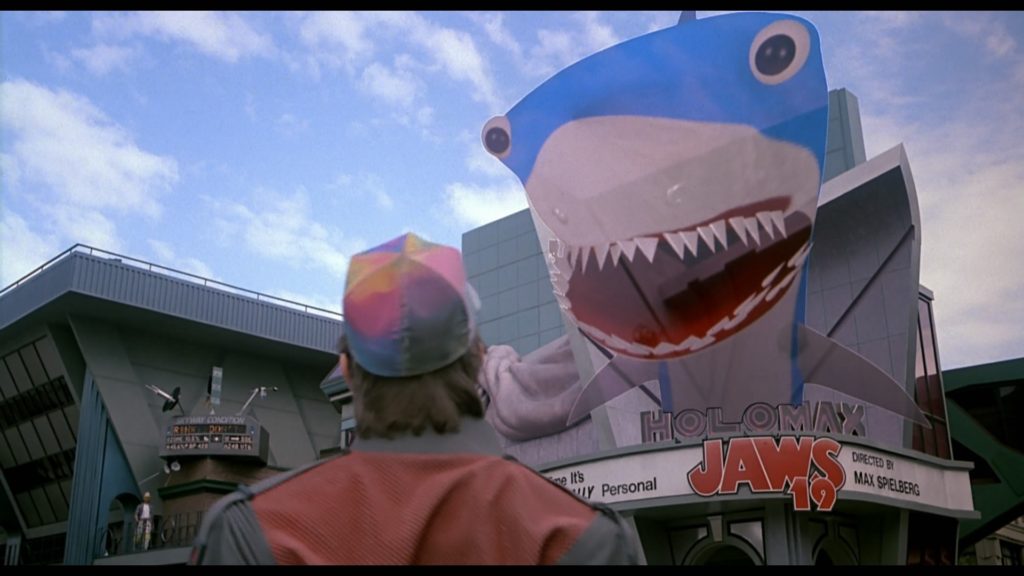
7) In the second part of 'Back to the Future,' when Marty leaves the cafe, he sees an advertisement for the film 'Jaws 19,' directed by Max Spielberg — the eldest son of Steven Spielberg, who directed the first 'Jaws' and produced the entire 'Back to the Future' trilogy. Unfortunately, the joke didn't become reality; the son of the legend didn't work in Hollywood.
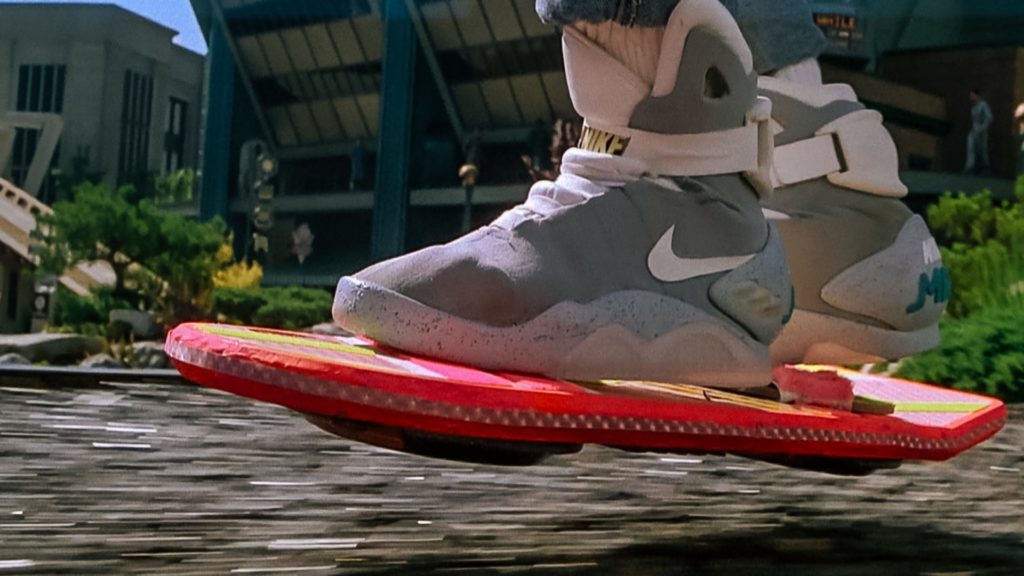
8) In the 80s, the American world was unimaginable without the Nike sports shoe brand. The company tried to spread its advertising as widely as possible in society, so their sneakers often appeared in movies.
The 'Back to the Future' trilogy was no exception in this regard. Marty's stylish futuristic sneakers in the second part are a creation of Nike, which had a whole product placement in each of Zemeckis's installments. The shoes turned out impressive: every fan of this franchise remembers the self-lacing sneakers with Velcro.
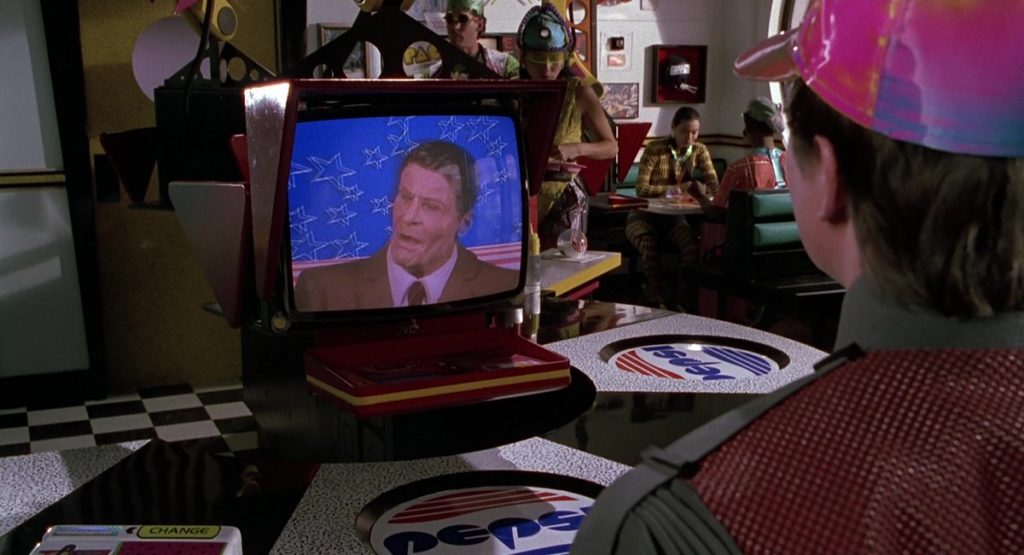
9) An important element of American pop culture from the 60s to the 90s (and even now) is the Pepsi brand. The most striking appearance of this drink probably occurs in the second film, when Marty comes to the cafe and a bottle appears right out of the table.
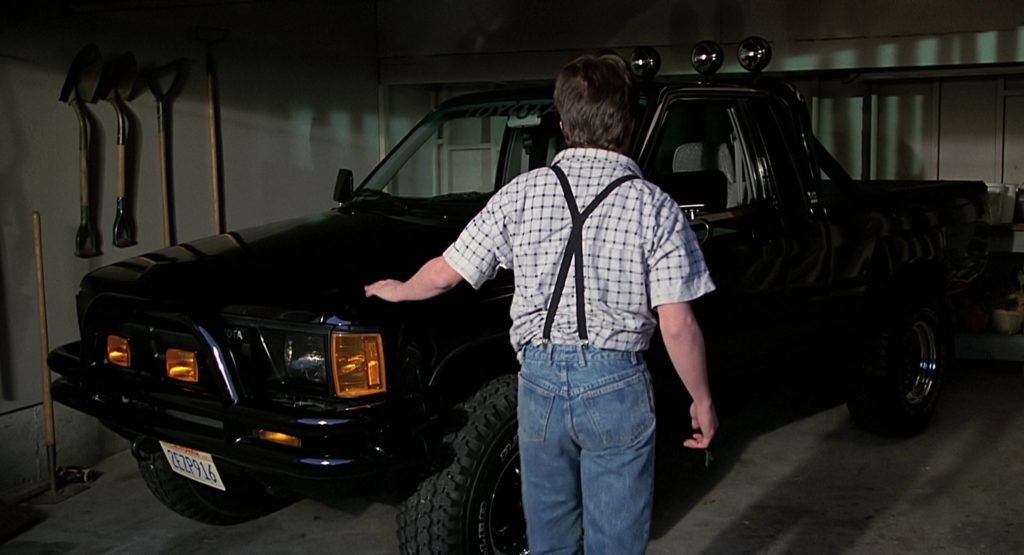
10) Another brand found in the first film is Toyota. In the opening scene, we hear an advertisement for 'Statler Toyota,' and in the finale, Marty finds a gift from his parents in the garage — a new Toyota car.
11) Michael Jackson is a symbol of the music industry of the 80s and an idol for many generations. It was at that time that his song Billie Jean was released, which exploded all the charts. Around the same period, the well-known MTV channel was launched — a pioneer in the culture of creating music videos. And Jackson was an important part of this, because each of his videos is like a separate work of art that is still quoted by other artists. In 1988, the channel even created an award named after Michael Jackson.
So it's no surprise that in the second film, in the cafe where Marty goes, all screens are playing the video for the song Beat It by the popular pop culture icon. And in the scene where the hero climbs into his room at night and finds out another family lives there, a poster of Jackson hangs on the wall.
In addition, in the third film about the Wild West, Zemeckis pays tribute to the singer when Marty McFly dances like Michael Jackson, trying to copy his moonwalk. This happens in the scene where the hero confronts local bandits in a bar.
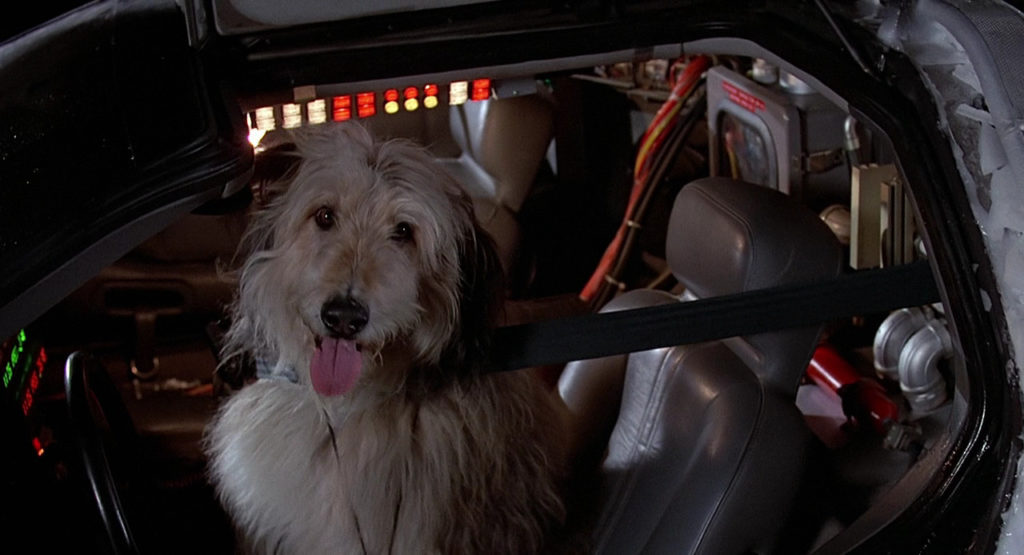
12) Initially, the creators of the films wanted Doc to have a monkey, not a dog (possibly due to stereotypes about science that everything is first tested on primates). But as a result, Christopher Lloyd's character was given a Catalan sheepdog named Einstein. This dog is very reminiscent of the one in the famous 60s film 'The Shaggy Dog' (1959). In 2006, 'The Shaggy Dog' was released. Guess what breed the dog was there?
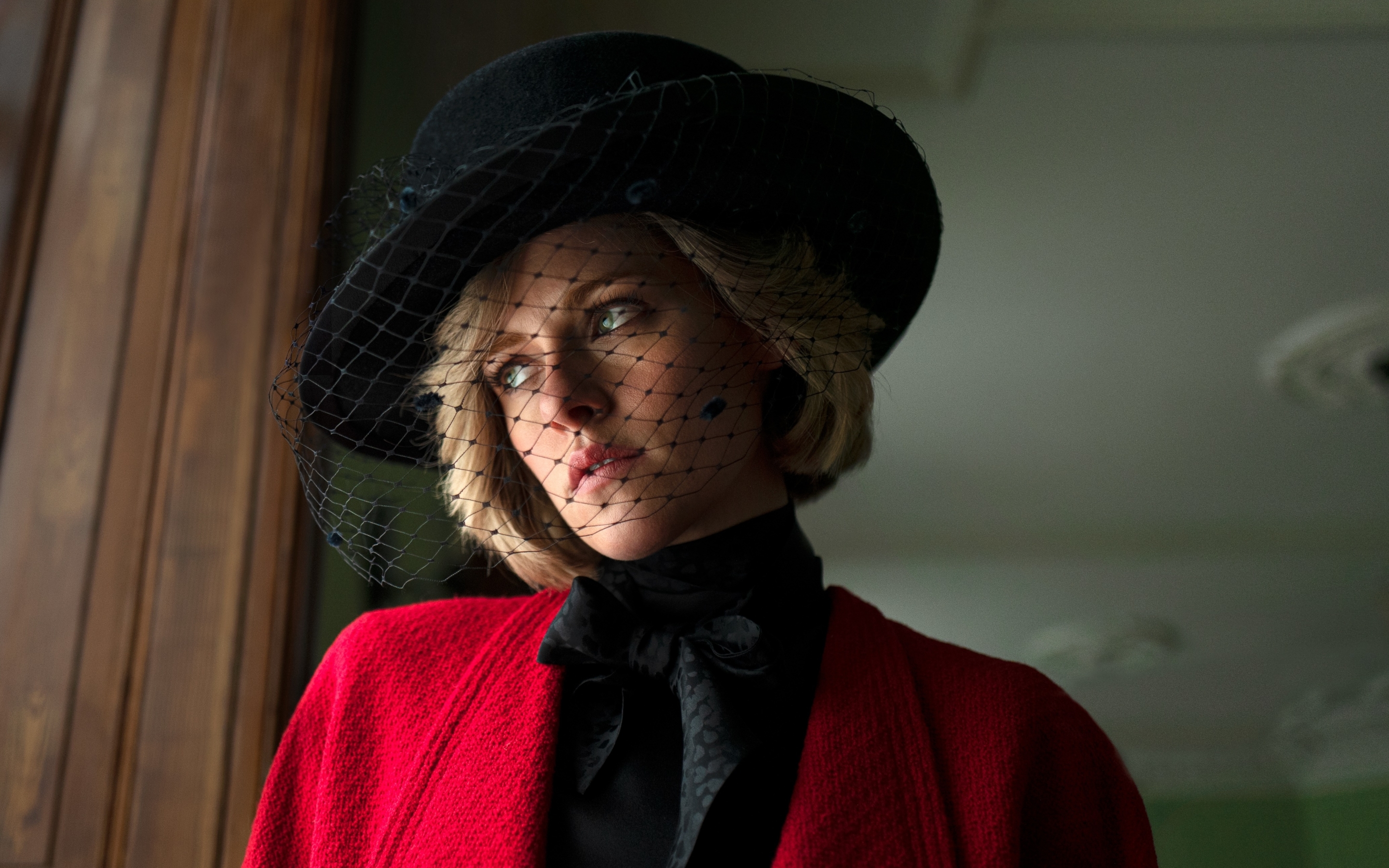
13) In the second part, we are shown a 2015 newspaper that talks about a female US president. The article uses the pronoun 'she' and mentions 'Queen Diana.' Neither came true in real life.
not only divorced the heir to the British throne in 1996, but also died in a car accident on August 31, 1997. However, in her time, Diana was a symbol for youth in the world of fashion and beauty both in the United Kingdom and the USA.
14) The film 'Back to the Future' is filled with Easter eggs pointing to other iconic films. For example, in the third part, there is a scene where Marty says the phrase 'You talkin' to me?' in front of a mirror — a clear reference to the film 'Taxi Driver' by Martin Scorsese (1976).
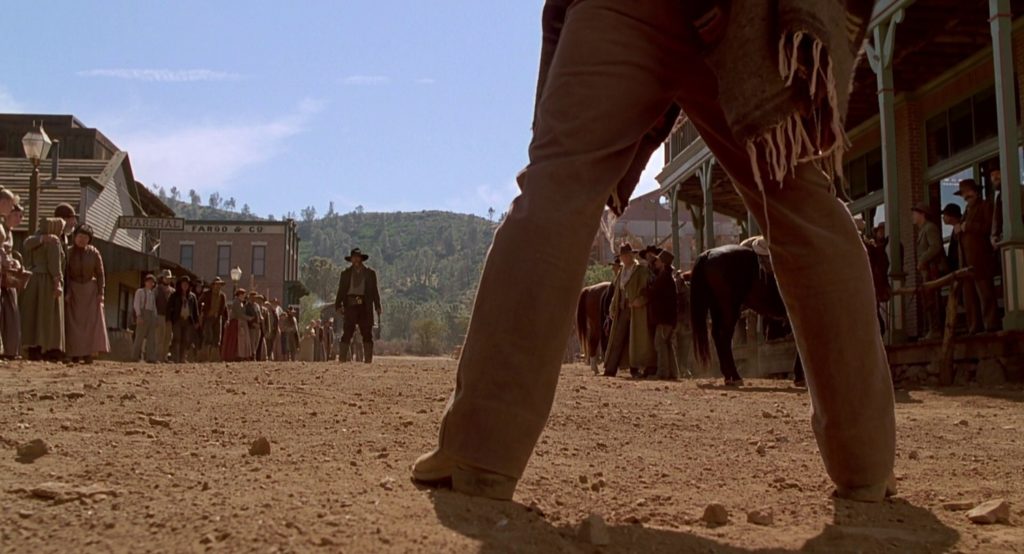
In addition, in the Wild West, Marty McFly takes the name Clint Eastwood (legendary actor, director, screenwriter, and producer, whose peak of fame came in the 1960s-1980s). It's no surprise that in the third film of the franchise, you can notice several scenes referencing the western 'The Good, the Bad and the Ugly' (1966) starring Eastwood.
15) Ronald Reagan is considered one of the most controversial and unsuccessful US presidents. Robert Zemeckis was very worried about mentioning the 40th President of America in his films, but in vain. In one scene, Doc tells Marty that Reagan will become the leader of the country in the future, to which Jay Fox's hero exclaims in shock, 'An actor will become president?'
In another scene, Ronald Reagan is shown on a TV program in a cafe. It later turned out that the president liked 'Back to the Future' so much that he asked to replay the moment with his 'participation' several times while at the cinema. And during an address to the youth of the USA in 1986, he even quoted the film, saying, 'Where we're going, we don't need roads.'
The creators of 'Back to the Future' actively referenced iconic elements of American pop culture, and as a result, their creation itself became an object of nostalgia and part of mass culture. Now at auctions, items created based on the trilogy sell for millions, and projects inspired by Robert Zemeckis's story appear on screens: 'Rick and Morty,' 'Stranger Things,' and 'Ready Player One'. It's not just that 'Back to the Future' is a distillation of the best of America's golden age of the 20th century. These futuristic films discuss timeless things: growing up, responsibility for actions, the conflict between fathers and children, and the search for love and one's place. That's probably why they will always be relevant.
Comments
0No comments yet.
Sign in to join the discussion.