

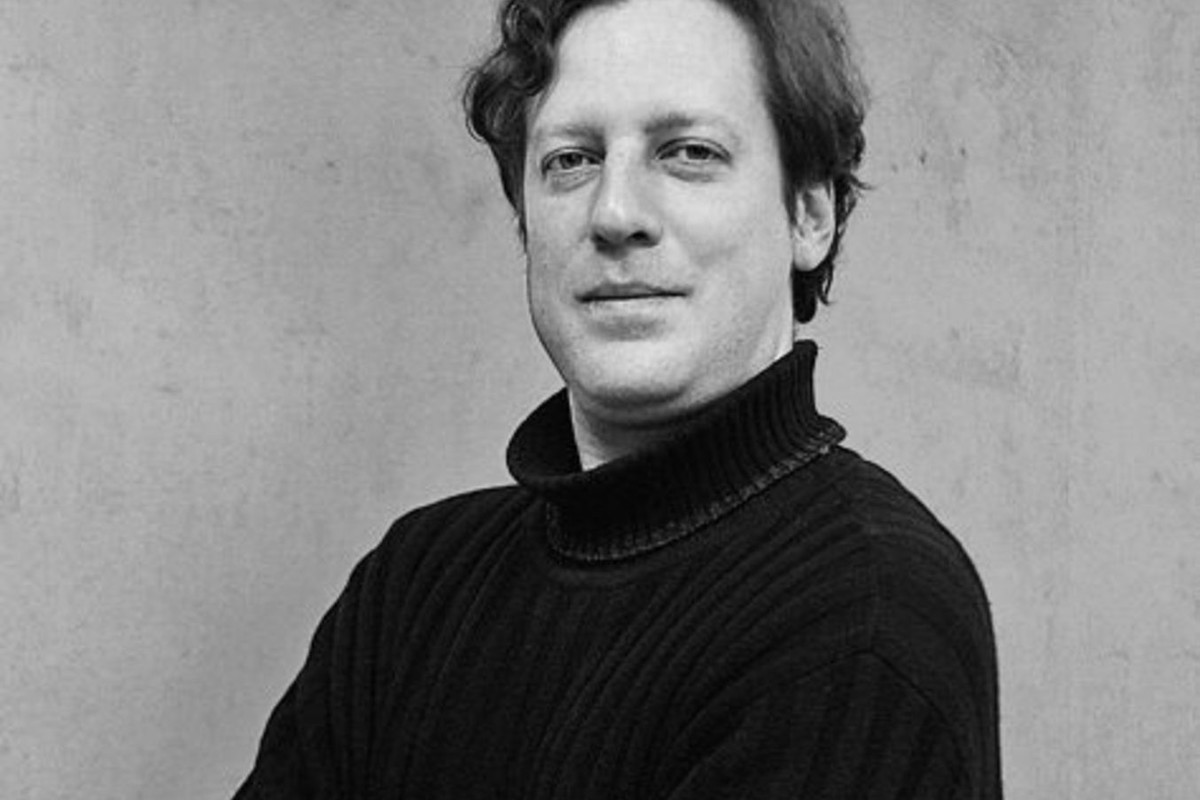
We talk about 'The 20th Century Presents. Selected', a new book about cinema from the Gorodets publishing house, which presents essays on the fates of iconic filmmakers of the past.
Imagine that during a social gathering, you are suddenly asked who defined 20th-century cinema. Whose name would first come to mind?
Maybe Ingmar Bergman? Why not? He is a symbol of European auteurism and 'modernist' cinema.
Or would you remember Sergei Bondarchuk, who directed arguably the best screen adaptation of Leo Tolstoy?
Alfred Hitchcock and his passion for on-screen torment of stunning blondes?
Or maybe Yevgeny Yufit with his obsession with death?
There is no single answer to this question. Or rather, that's not quite right. There is an answer, but everyone has their own. Historian and film critic Mikhail Trofimenkov, in his new book 'The 20th Century Presents. Selected', has gathered over 100 portrait sketches of people who defined an era in cinema. Titans of the production world and brilliant actors, rebels going against the system, and cowards who accepted their roles as a given — this work has room for many worthy and vivid representatives of the last century's cinema.

People Chosen by Time Itself
In the preface to the book, Mikhail Trofimenkov explains the 'chosenness' of his heroes not by their contribution to world culture, but by the fact that the era itself was reflected in them. And by how they influenced it.
The author set himself a fascinating task — to debunk the ossified public perception of a given hero's persona and to look at their work, but more importantly, their fate, from a different angle.
Viewers in the 1960s argued about who Mastroianni was: the ideal of the latin lover or a hero of modernism, a suffering intellectual. Both sides were right: he had the mystical ability to appear exactly as the viewer wanted to see him — both in cinema and in life. In other words, he, as it were, did not exist.
Did Trofimenkov manage to meet this challenge? More likely yes. But one should not expect these essays, sketches, and sometimes even improbable anecdotes to provide full portraits of actors, screenwriters, and directors. Some of them are given barely 2 pages. But often that is enough to understand what a person was like and how they existed within the framework of their own work. This is especially felt in the descriptions of individuals with whom the author was personally acquainted.
Name-Dropping and Film Criticism
Interestingly, 'The 20th Century Presents. Selected' sometimes acts not only as a kaleidoscope of destinies but also as a guide for those who want to better understand Soviet, European, and, less frequently, American cinema. In the descriptions of the heroes, one can catch interesting assessments of films. As, for example, in the case of 'July Rain' by Marlen Khutsiev:
'July Rain' is a curtain-dropping film, lowered over the Thaw era, not so much transitioning into a freeze as tired of its own game of sincerity. A film drawing a bitter and premature conclusion on the life of a generation of romantics and posers, who considered themselves more honest and purer than their parents, but turned out to be incomparably smaller.
At the same time, for an unprepared reader, the book may cause dizziness due to the endless number of names, titles, and dates. Sometimes there is a feeling that the frantic name-dropping amuses the author. This slightly raises the reading threshold, as if, to fully appreciate the charm of what is written, one must oneself be 'chosen'.
Is It Worth Reading the Book 'The 20th Century Presents. Selected'?
Mikhail Trofimenkov's work — is a portrait of the tragic and majestic 20th century with its political and ideological contradictions and heroes who changed cinematic art and its perception. It is full of interesting stories, both mundane and otherwise. It contains external analysis and personal judgments, memories.
This book is worth reading, if only to take a fresh look at long-known creators. Or to learn on whose work many modern films are based. And perhaps even to discover for the first time the people who shaped our beloved art.
Comments
0No comments yet.