
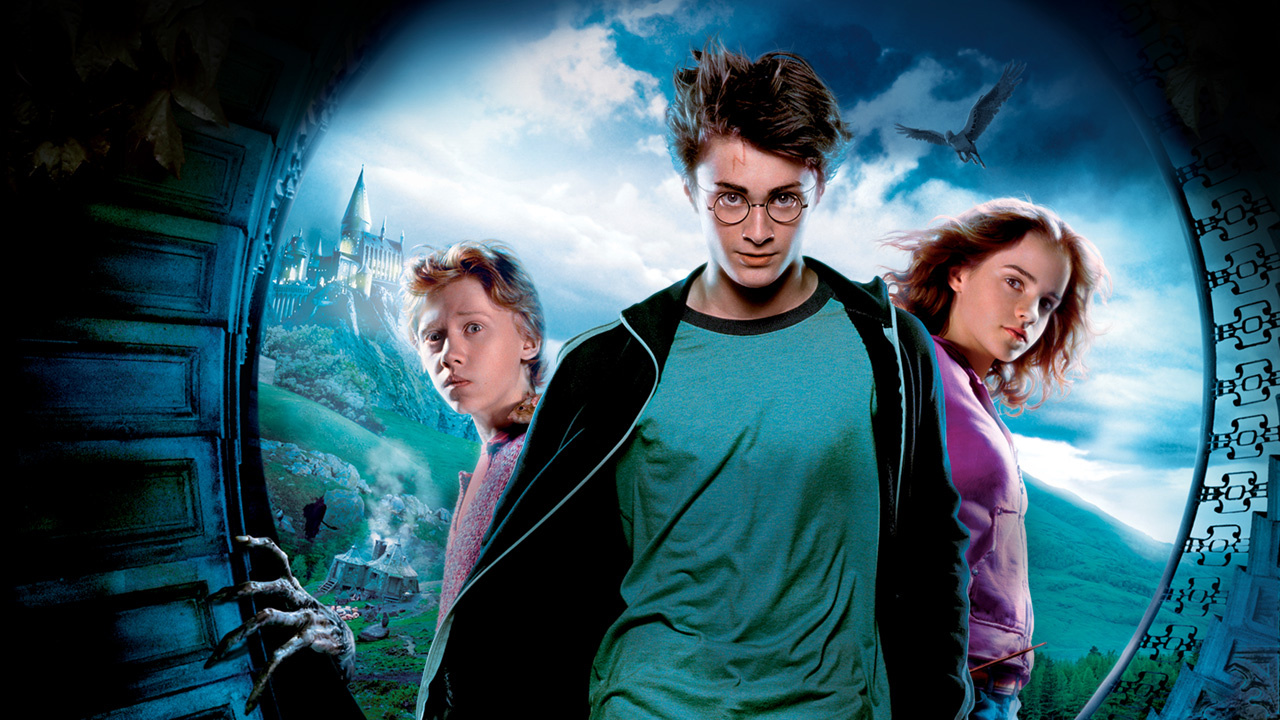
Continuing the marathon of articles dedicated to the 'Harry Potter' franchise. On the agenda are the films of Alfonso Cuarón and Mike Newell.
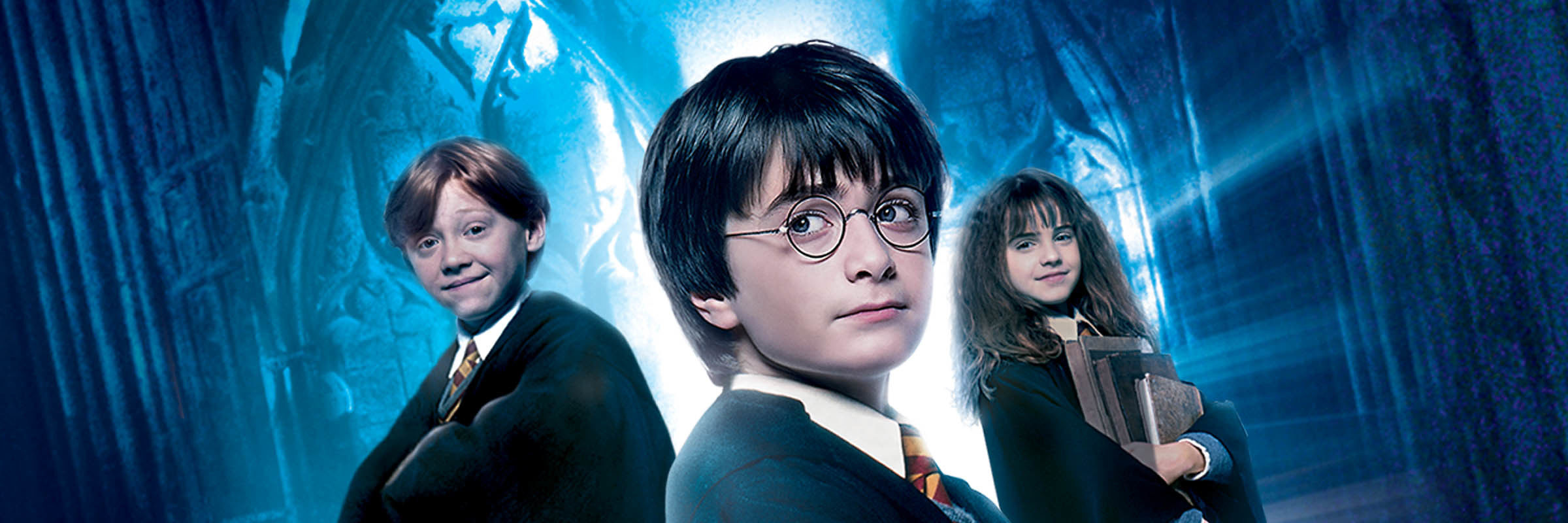
“I’m tired of waiting! I’ve waited 13 years! In Azkaban!”: Harry Potter and the Prisoner of Azkaban
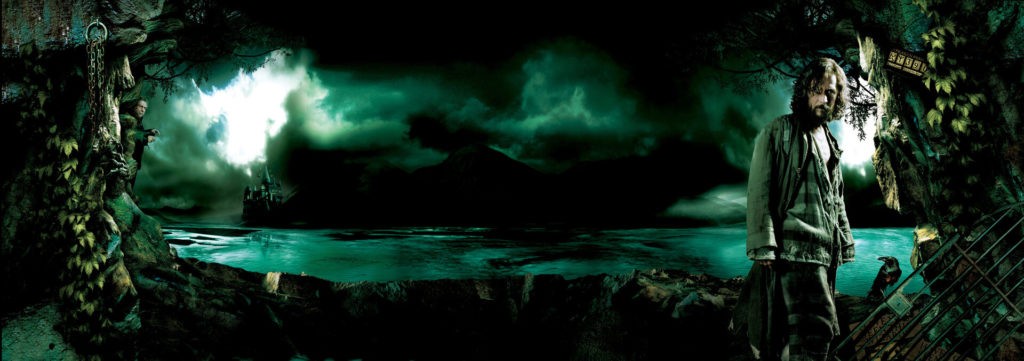
After completing work on 'Harry Potter and the Chamber of Secrets', the franchise was about to enter a completely new phase. An attentive viewer would likely notice that starting with the second film, Warner Bros. began stylizing its logo to match the franchise. This wasn't done in the first part, but from 'Chamber of Secrets' onwards, the logos would correspond to the film's tone.
In 'Prisoner of Azkaban', even the WB icon hints at what this new stage of the story entails. Dark times are approaching. The films will no longer be as carefree and fairy-tale-like as they were under Chris Columbus. The time has come for the next step.
Alfonso Cuarón was appointed director of the third film about the young wizard. Following an established tradition, the Mexican filmmaker initially wanted to turn down the offered position, but his decision was influenced by none other than Guillermo del Toro. Notably, before Cuarón, the studio had considered del Toro for 'Prisoner of Azkaban', but he chose 'Hellboy' instead, advising Warner Bros. to approach his Mexican colleague.
In a conversation with the hesitant Cuarón, del Toro advised him to read the author's novels and quickly take on the offered job. Alfonso heeded his friend's advice and became the director who managed to transition the franchise from childhood fairy-tale to teenage maximalism. To this day, cinematically, 'Prisoner of Azkaban' is considered the best part of the universe, but more on that later.
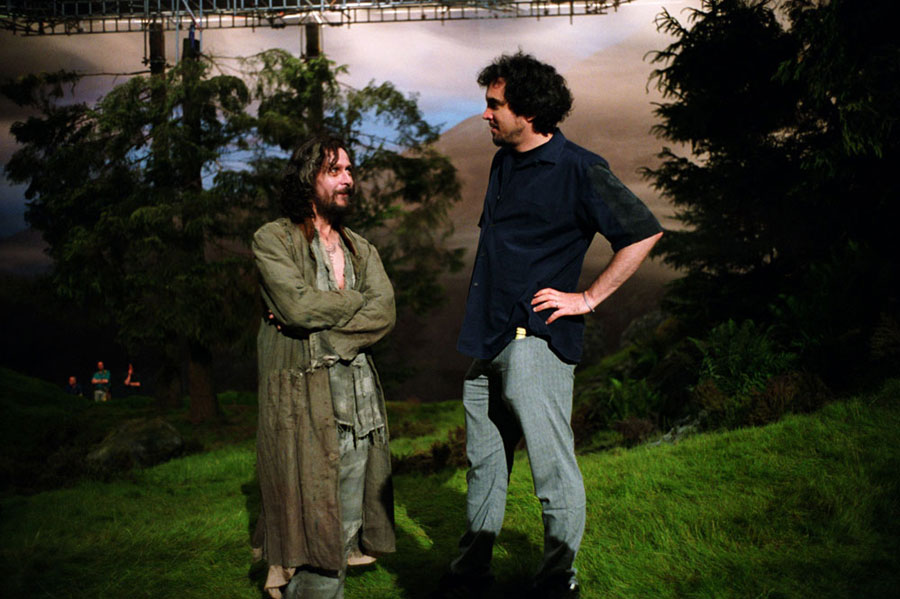
During the production phase, the film underwent some changes. Richard Harris, who played Hogwarts headmaster Albus Dumbledore, passed away at the age of 73 before he could take part in the filming. Warner Bros. had to urgently find a replacement for the late actor, as no one had been considered for the role in advance since Harris had assured them he would participate in the filming after recovering. Unfortunately, he never recovered.
When searching for actors to play the headmaster, Christopher Lee and Ian McKellen, who had recently finished filming another fantasy franchise, 'The Lord of the Rings', were considered, but both actors declined. Lee refused to play Dumbledore due to preparations for filming a new 'Star Wars' episode, while McKellen no longer wanted to appear before audiences as an old and wise wizard, and he also had a conflict with the late Harris. The former Dumbledore considered his colleague a poor actor, which is why Ian McKellen refused to take over Richard Harris's role.
Ultimately, the new headmaster of Hogwarts became the Irishman Michael Gambon. Dumbledore's image was changed, as was his costume. Looking ahead, I must say that fans were not entirely pleased with the studio's choice. Gambon, like many others, had not read Rowling's novels, so he created the image of Harry's mentor himself. In the books, Dumbledore was like a grandfather to Potter. Harris managed to embody this image perfectly, but with Michael Gambon's arrival in the film version, everything changed.
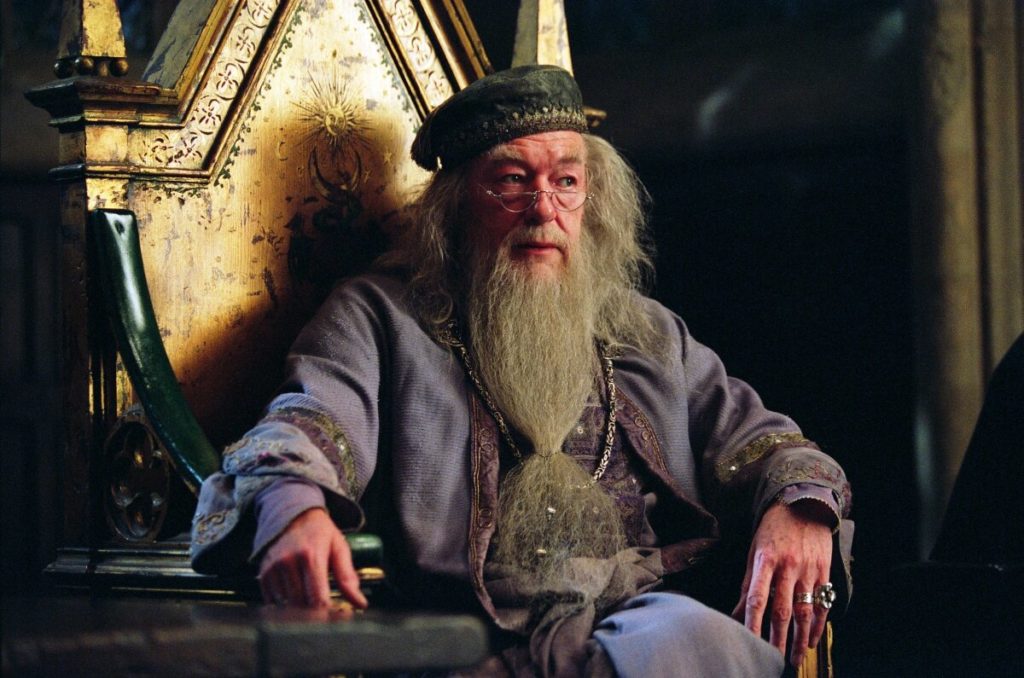
For example, fans were thrown off by the scene in 'Goblet of Fire' where Dumbledore loses his temper, runs over, and grabs Harry after the Goblet spews out his name. Such actions are completely uncharacteristic of such a wise wizard, but Gambon thought otherwise.
In addition to the new Hogwarts headmaster, the cast was joined by masters of British and world cinema. The incomparable Gary Oldman appeared as Sirius Black, the unrecognizable Emma Thompson transformed into Professor Sybill Trelawney, and David Thewlis and Timothy Spall became Remus Lupin and Peter Pettigrew on screen, respectively.
With Alfonso Cuarón's appointment as director, Chris Columbus did not immediately leave the ship. He took the producer's chair and oversaw the production. Nevertheless, the third part underwent many changes compared to the fairy-tale first two. It all started with Cuarón assigning the three main actors to write essays about their characters.
At this stage, it became clear how perfectly the trio fit the roles of Harry, Ron, and Hermione. The point is that Emma Watson wrote 16 pages of deep analysis of her character, Daniel Radcliffe brought a modest one page of text, while Rupert Grint didn't even bother to do the assignment. In my opinion, this situation perfectly describes the main characters of the novel.
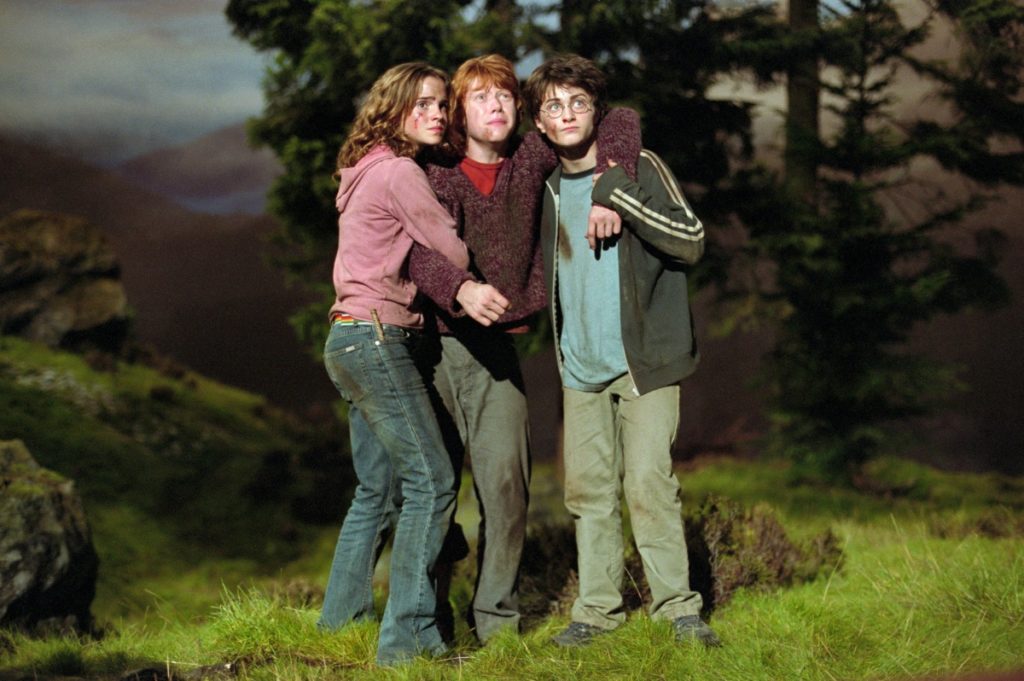
It was decided to shoot most of the film on location rather than on a studio set with subsequent CGI overlay. Thanks to this decision, Hogwarts became more three-dimensional. This would be reflected in all subsequent parts of the franchise.
You can notice that in the first two parts, the castle is presented to the viewer as a set of separate locations, torn from the whole. In 'Prisoner of Azkaban', Alfonso Cuarón completely reworked the approach to filming. Previously, J.K. Rowling had only sketched a rough layout of the castle's locations for the director so that Columbus and the film crew would understand what was where. That piece of paper with the sketch became a map for the creators.
Alfonso Cuarón's version is completely different. It's immediately noticeable that Hagrid's hut and the Whomping Willow are located in different places than in 'Chamber of Secrets'. Shooting on location helped give the castle a natural feel, and the new sets refreshed the picture. Camera fly-throughs without editing cuts from one location to another clearly showed viewers what was where.
The naturalness of the castle wasn't the only thing Cuarón pushed for in the film. The choir performing at the main ceremony wasn't in the book; the director persuaded Rowling to add the scene to the film. Similarly, Alfonso wanted to work with actor Warwick Davis, but there was no place for Professor Flitwick in the script, so the Mexican created the role of conductor specifically for Davis. As it turned out, in subsequent films, Flitwick's image was reimagined and kept as it appeared in Cuarón's film.
The unique choir scene gave the audience a very memorable song, 'Double Trouble', written by John Williams specifically for this segment. Incidentally, this was the composer's last work for the 'Harry Potter' universe.
After 'Prisoner of Azkaban', Williams would leave his post, which would greatly affect the franchise's music. Even in the third part, the melodies undergo changes in tone towards growing up, but for now, they are still as bright and memorable as they will be in the future.
What makes the film the best part from a cinematic language perspective are the long takes without any cuts, smooth camera fly-throughs through mirrors and windows. Alfonso Cuarón is very attentive to details in his film, to the surrounding world. Just look at the giraffe traveling through the paintings in the background.
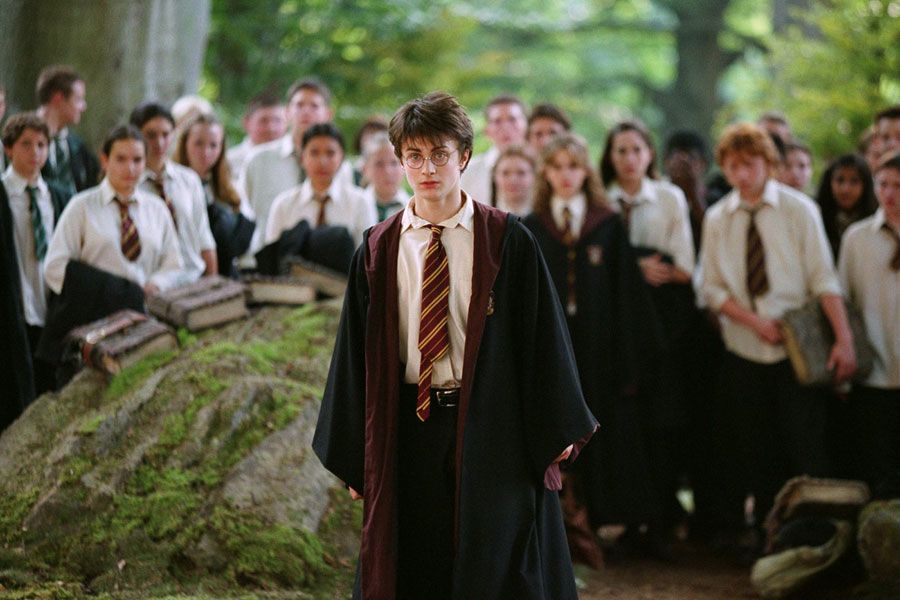
In 'Prisoner of Azkaban', the approach to the characters' clothing changed. Firstly, the characters don't always wear uniforms. The wardrobe was supplemented with ordinary t-shirts, jeans, and hoodies. Secondly, it was in the third part that the actors were allowed to wear Hogwarts house uniforms however they liked. In the frame, students are tucked in, rumpled, with or without ties, messy and slicked back. This decision helped achieve individuality for each character appearing on screen.
The world of 'Harry Potter' has always been filled with various interesting creatures. This applies to both fictional and real ones. And Alfonso Cuarón's film can rightfully be called the most 'alive' in the franchise. Not only were Dementors specially developed for it over many months, and it took 4.5 months of manual work with feathers to construct Buckbeak, but real animals were also filmed in the picture.
Ron's rat, Hermione's cat, Harry's owl, as well as the hippopotamus hiding the Fat Lady after Black's attack and the cow in Hogsmeade village — these are living creatures. Of course, in some scenes dangerous for the animals, they were replaced with animatronics or computer graphics, but in many shots, the animals really did participate.
Speaking of Hogsmeade, attentive viewers have probably noticed that the set for 'Honeydukes' (a fitting name, since the sweets on set were real) looks familiar. The fact is that this room had already been used in previous parts of the franchise. In 'Philosopher's Stone', the room was Ollivander's shop, and in 'Chamber of Secrets', it was converted into the bookshop 'Flourish and Blotts'.
A similar trick was pulled with Dumbledore's office from the second film. In 'Prisoner of Azkaban', the room was used as the location for Harry's unscheduled Patronus lesson with Professor Lupin.
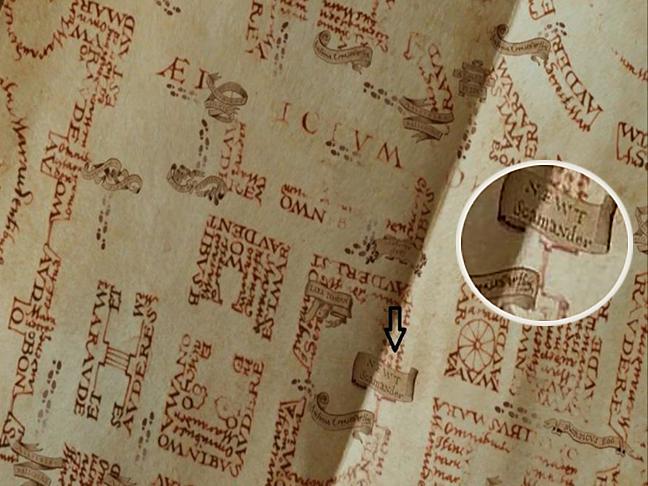
The Marauder's Map deserves a special mention. The design company MinaLima, which still works with the Potterverse, was responsible for creating this work of art. It took a very long time to create the map, because developing such an idea and making the sheets of paper work and unfold as needed was no easy task. Moreover, if you look closely at the map, you can see that all the 'walls' are made of words. Amazing work.
These coffee-stained sheets even contain an Easter egg. When Fred and George first show Harry how the curious gadget works, you can spot a familiar name in the Hogwarts headmaster's office. Dumbledore's guest at that moment was Newt Scamander — the author of textbooks on the care of magical creatures and the main character of the 'Fantastic Beasts' films.
It was mentioned earlier that the franchise films are getting darker. The world that seemed like a fairy-tale place turns out to be far from ideal. The struggle for power, betrayal for personal gain, mistrust, and dark secrets. It turns out that wizards are not so different from Muggles and are also not without their flaws.
However, all the cinematic merits of the film do not cover the fact that it is perhaps one of the weakest parts in terms of plot. The thing is, when writing the novel, J.K. Rowling went too far and added the ill-fated Time-Turner to the plot, which is never used by the characters in the future. A plot hole emerged, the consequences of which the writer would have to deal with throughout all subsequent novels.
“The signs were plentiful, my slippery friend, and the hints even more so”: Harry Potter and the Goblet of Fire
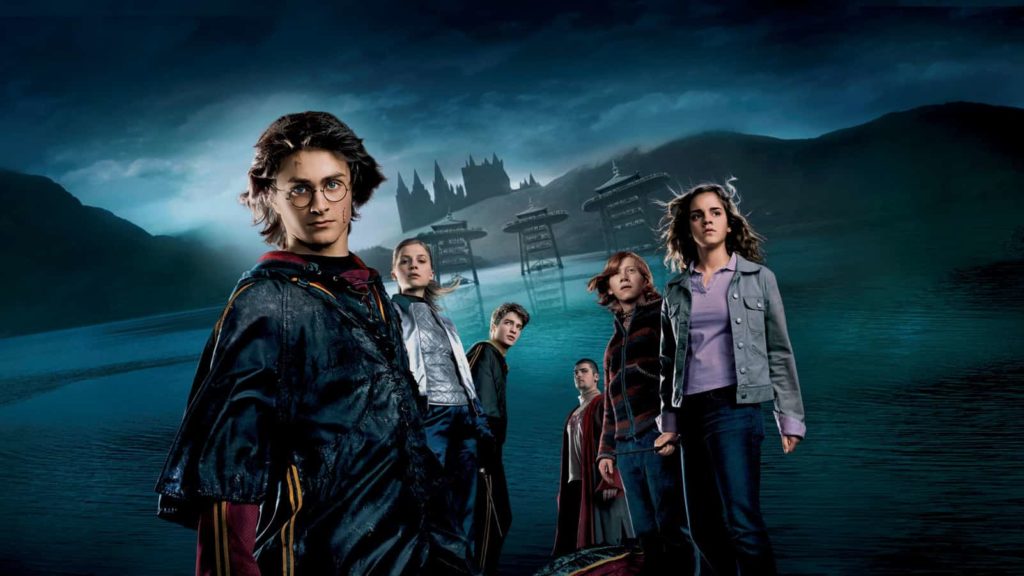
The fourth part of the Harry Potter films was again awaiting a change of director (imagine the stress for the child actors who had recently thought Chris Columbus would accompany them through all seven films). No, Alfonso Cuarón wasn't pushed aside after his creative liberties in 'Prisoner of Azkaban'. On the contrary, the Mexican was offered to continue in the position to finish the teenage story in the universe and smoothly transition to the adult period.
Unfortunately, Cuarón refused, even though he really wanted to continue working on the franchise. The reason for leaving the director's post was the schedule. The director of 'Prisoner of Azkaban' wanted to finish the post-production of the film completely, and after its release, begin preparations for filming the new part. The studio was not satisfied with this arrangement, so it was decided to search for a new film director.
Once again, the question arose: 'Who should take the helm of the franchise?' Initially, the director's position was offered to M. Night Shyamalan, who had previously been considered a candidate for the post. Warner Bros. really liked 'The Sixth Sense'. However, the young director refused.
Due to this circumstance, directing 'Goblet of Fire' was entrusted to Mike Newell. Despite the initial condition being a taboo on actors from countries other than the United Kingdom participating in the films, Newell became the first British director at the helm of the franchise. Finally, a series of British novels had a British director.
After resolving the issue of who would adapt Rowling's fourth novel, a new problem arose. The fact is that the previous three books were not as large in volume as 'Goblet of Fire'. The first three parts did not exceed 350 pages, while the page count of the fourth novel exceeded 600. In this regard, the need to split the film into two parts was discussed, otherwise the script could suffer.
Indeed, although J.K. Rowling rejected the idea of splitting, many moments from the book fell under the scissors. For example, the Dursley family, with whom the viewer was accustomed to beginning their immersion into the world of Harry Potter, was completely cut from the film. Before 'Goblet of Fire', the young wizard's relatives appeared at the beginning of each previous film. There is a version that the family did not make it into the fourth part because the actors could not agree with the studio on their fee.
In addition to the Dursleys, the 'Society for the Promotion of Elfish Welfare' (S.P.E.W.) — an organization created in her fourth year at Hogwarts by Hermione Granger — was also not mentioned. The main goal of the society was to free house-elves from slavery and fight for equal rights with wizards for these creatures.
Perhaps the creation of the organization is not a very significant event for the plot, but such an act by Hermione perfectly reveals the girl as a witch who, despite all her thirst for knowledge, never forgets about the injustice enveloping the magical world.
Frankly, people who haven't read the book can't even imagine the mind-boggling joke concerning the society. The point is that the organization's abbreviation in Russian reads as 'GAVNE' (a crude word for 'crap'), so in the moment where Hermione gives Harry and Ron the task of distributing and agitating other school students to join the society, one of the guys says something like: 'And how do you see that? We'll walk around Hogwarts and say: 'Congratulations, you guys are now in 'GAVNE'. Is that it?' (the best thing in the books, I think).
After a moment of quality humor, let's return to the story of the creation of 'Goblet of Fire'. No matter how much the screenwriters removed, they still needed to include many new characters in the film in such a way that the plot and runtime of the film could accommodate all the important events. The main task was to preserve the story and not overload the viewer with screen time.
To achieve this goal, Mike Newell organized workshops with the actors. At such meetings, newcomers could get to know those who had long been participating in the franchise. After all, Beauxbatons and Durmstrang appeared in 'Goblet of Fire', which meant a whole host of new faces.
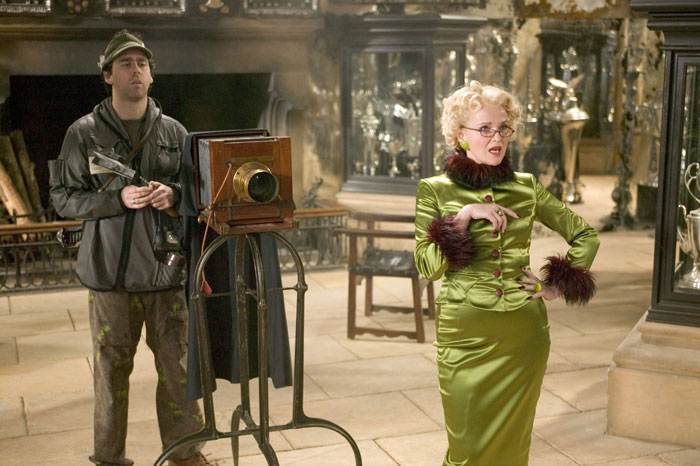
We must not forget the traditional addition of star faces. Brendan Gleeson was made unrecognizable with makeup for the role of Alastor 'Mad-Eye' Moody. The magnificent Miranda Richardson tried on the profession of a journalist, becoming Rita Skeeter. David Tennant briefly appears on screen as Barty Crouch Jr.
And, of course, before turning into a vampire, Robert Pattinson debuted in 'Goblet of Fire'. It's funny that the universally loved Superman and Geralt, Henry Cavill, initially auditioned for the role of Cedric Diggory, but Warner Bros. preferred the debutant. In the battle for the role in 'Goblet of Fire', Batman outran Superman. Sorry.
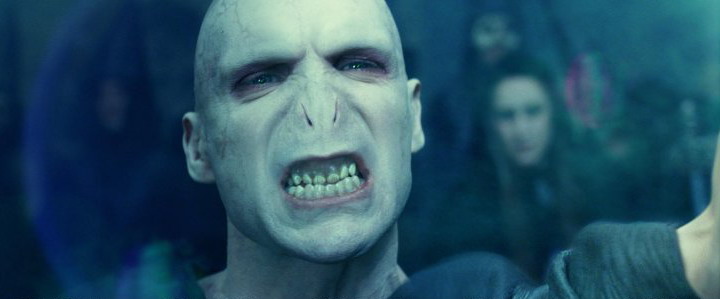
Special mention should be made of the actor whose appearance on set was a whole event. Or rather, not the actor himself, but the character he portrayed. Everyone understood that 'Goblet of Fire' was another turning point film. It is in the fourth part that characters begin to die. But the main event is the resurrection of the Dark Lord. The role of Voldemort went to Ralph Fiennes. The main antagonist didn't even need much makeup (well, almost). Dots were drawn on Fiennes' face, and the Dark Lord's face was created on a computer.
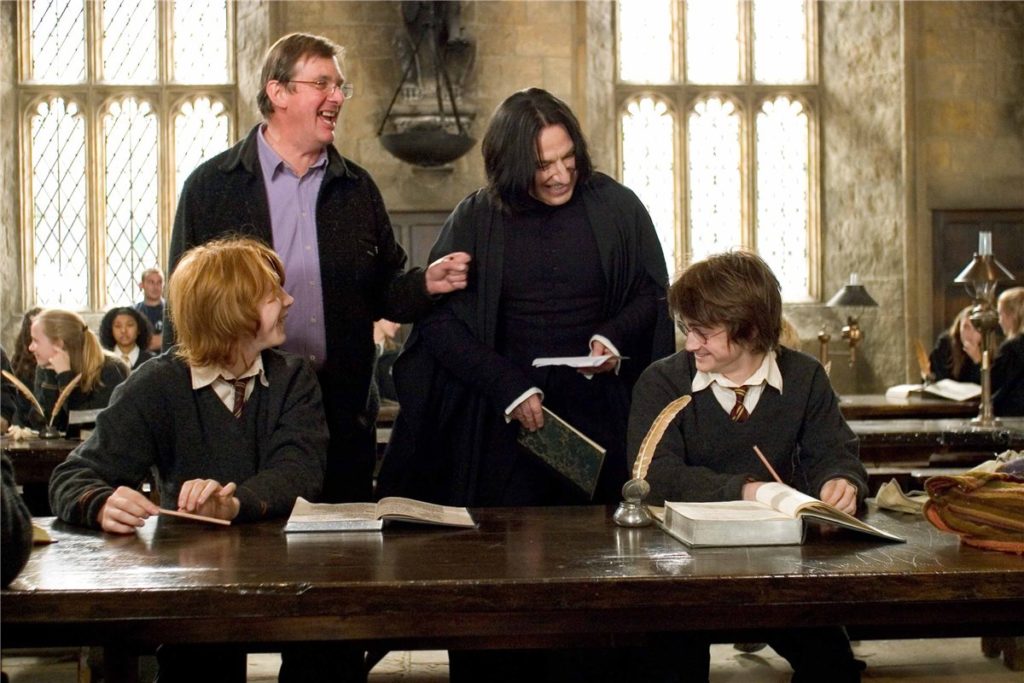
On set, the director communicated with everyone as equals, whether adults or children, thus endearing himself to the entire cast. And while filming the fight scene between the twins Fred and George, Mike Newell decided to show how to fight on camera and broke a rib. That's how deeply the British director immersed himself in the work.
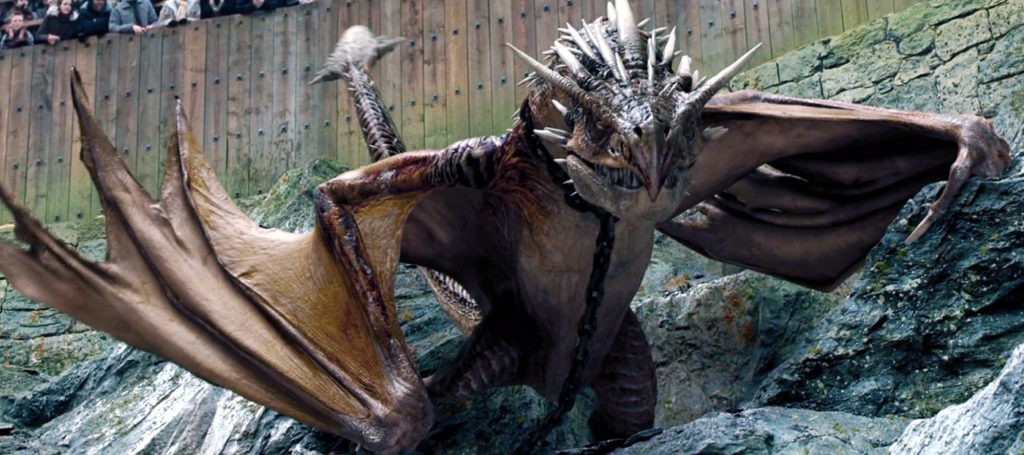
It is even said that the director's first reaction to the Hungarian Horntail was childlike delight. The dragon was made life-size. The animatronic had a wingspan of 4 meters, and flamethrowers were shoved into its mouth. Of course, seeing such a thing, a man of any age would be delighted. Imagine, an almost real dragon.
Not only the Horntail was grand in the fourth film, but also the underwater filming. The second task was extremely difficult for Daniel Radcliffe. The actor had to spend hours in the pool with professional divers. The film crew could only shoot 10 seconds of material per day, and at the end, the divers gave Daniel a book 'Daily Logs of Professional Scuba Divers' with personal achievements. It turned out that Radcliffe had spent almost 42 hours underwater, not counting training and preparations for filming.
As mentioned earlier, the composer changed in 'Goblet of Fire'. John Williams left the post because he couldn't participate due to being busy with other projects. His place was taken by Patrick Doyle. The music in the fourth part becomes less magical and more akin to reality. This decision fits the tone of the film, as the fairy tale is over, but the melodies are no longer as memorable to the viewer. Perhaps due to the change of composer, perhaps because of the abandonment of magical motifs. Who knows. In any case, from Doyle's soundtrack, perhaps only the song by the rock band stands out, which was mercilessly cut from the theatrical version of the film.
As a result, viewers of 'Goblet of Fire' got a good film, but with understatement, a non-canonical Dumbledore played by Gambon, and bland music, but with Voldemort, a beautiful Yule Ball, grand underwater filming, and an almost real dragon. Such was the teenage period of the 'Harry Potter' franchise. Alfonso Cuarón and Mike Newell forever inscribed their names in the film universe, and then the film series was again awaiting a new stage.
Comments
0No comments yet.
Sign in to join the discussion.