
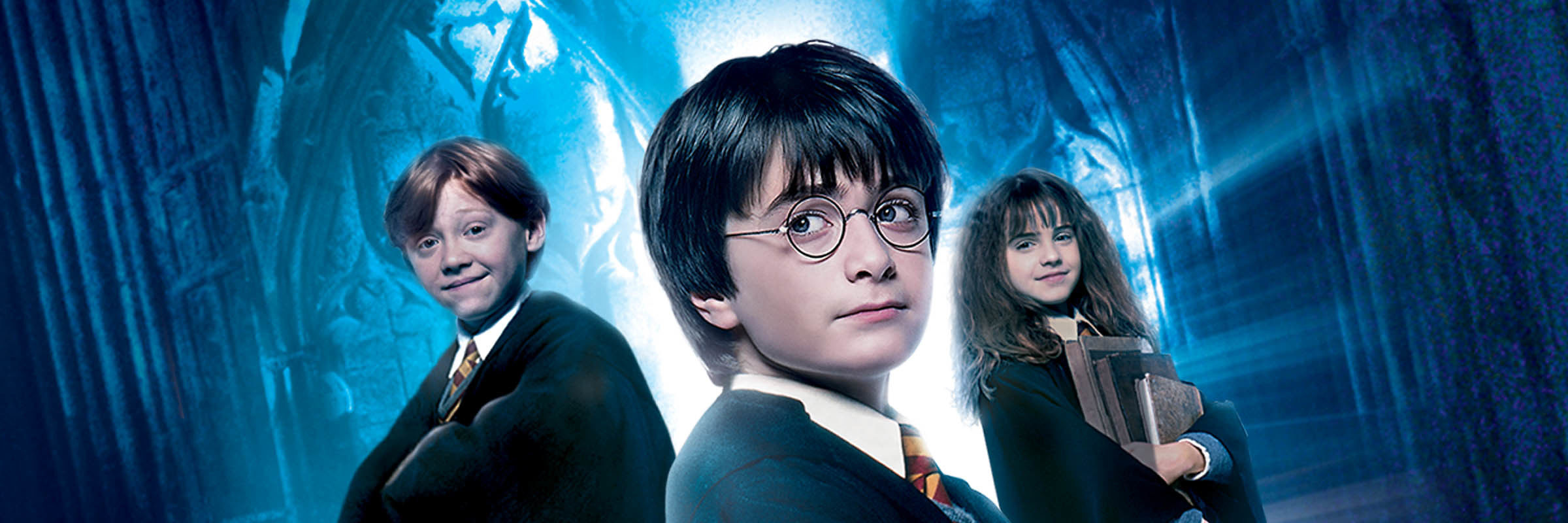
'Harry Potter and the Sorcerer's Stone' celebrates its 20th anniversary, and in honor of this momentous occasion, we have prepared a marathon of 4 articles dedicated to the legendary franchise.
On November 4, 2001, the world premiere of the film Harry Potter and the Sorcerer's Stone took place at the Odeon cinema in London, but the film went into wide release on November 16, meaning exactly 20 years ago. In honor of the anniversary, we invite you to remember how the Harry Potter magical universe franchise began, how it developed, and where it has arrived. If you are ready to go on this journey of four parts with us, then only one small formality remains. Do you solemnly swear that you are up to no good?
Prologue
Now, 'Harry Potter' is a franchise consisting of 10 released films (8 main ones and 2 parts of a spin-off), but Warner Bros. has plans for at least 3 more 'Fantastic Beasts' films, the game Hogwarts Legacy which should be released soon, a series being prepared for HBO, and a recently announced special episode timed to coincide with the anniversary of the first film.
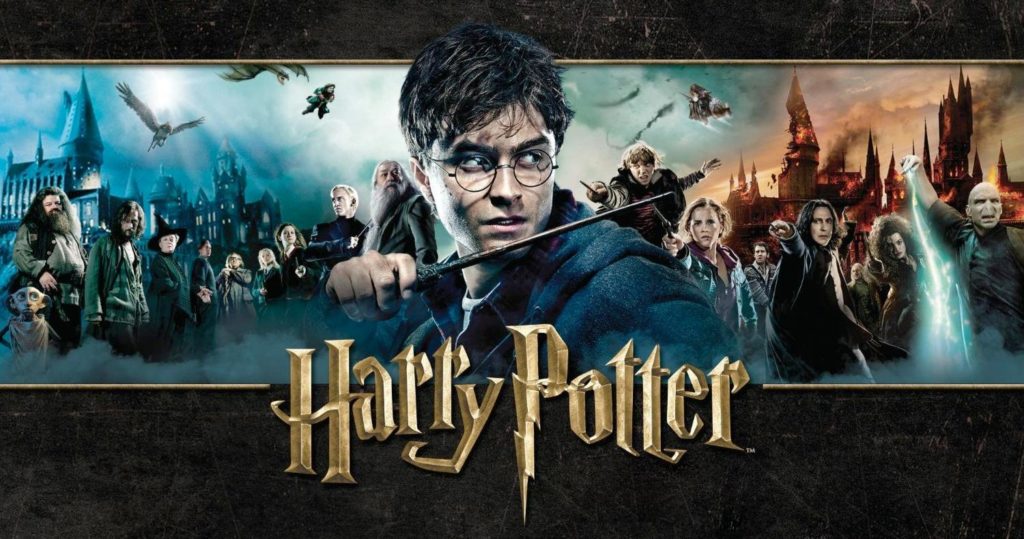
The literary series about the Boy Who Lived became very popular almost immediately after the first book appeared on store shelves. A film adaptation of a work enjoying such colossal demand was only a matter of time.
Of course, today you can almost any time of year stumble upon a marathon of all the films on some TV channel, and every New Year's holiday, the eight main films are almost one hundred percent likely to be included in the program schedule. And many viewers themselves don't mind returning from time to time to this cozy, long-familiar and beloved world of magic and adventure. A whole generation grew up with the main characters.
The franchise has millions of fans, tons of merchandise (from Lego sets and figurines to wands and clothing) and several billion in total box office revenue. As of now, only the film 'Fantastic Beasts: The Crimes of Grindelwald' is not included in the list of the '100 highest-grossing films in cinema history'.
But that's today. And it all began in 1999...
The Fairy-Tale Worlds of Chris Columbus
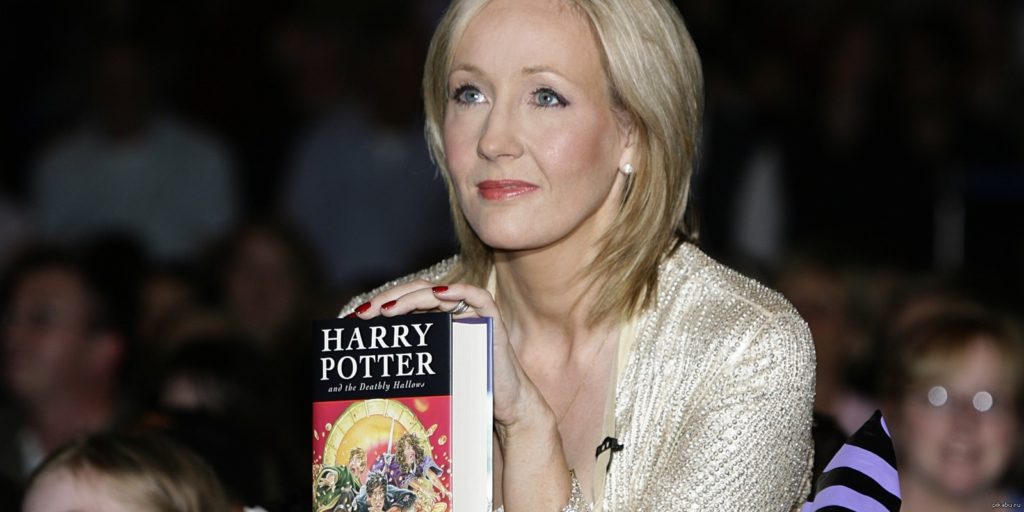
In 1999, Warner Bros. studio bought from J.K. Rowling the rights to adapt the first four books about the young wizard ('Goblet of Fire' hadn't even been finished yet). It is said the deal amount was a modest one million pounds sterling, but more importantly, the writer retained control over the creation of each film, meaning the final word at each stage often remained with her. In addition to the million pounds, Rowling was also to receive a certain percentage of the films' box office earnings.
At the beginning of the new millennium, the search for a director for the first film began. The main candidate for the position was Steven Spielberg, but the director of the Indiana Jones franchise refused because his vision was completely opposite to what WB and Rowling planned to create.
Firstly, Spielberg planned to turn the world of Harry Potter into an animated project. Secondly, he wanted Harry to be voiced by the American Haley Joel Osment. It's important to note that one of the writer's main conditions was to give preference to actors of British origin, not Americans (although a couple of exceptions were made).
The decision was dictated by the fact that the novels take place in the United Kingdom, and the students and staff of Hogwarts are predominantly British (and besides, America has its own school of magic!).
For the same reason, Robin Williams, who really wanted to play Hagrid, could not participate in the project. The actor himself asked to be in the film, but in the end the role went to Robbie Coltrane, and Williams died in 2014, never getting the chance to join the magical world two years later.
The paths of Steven Spielberg and Warner Bros. diverged. Spielberg eventually directed 'A.I. Artificial Intelligence' with that same Haley Joel Osment in the lead role, and the studio looked at another candidate.
The choice fell on Chris Columbus, who already had experience working with children and family films (two parts of 'Home Alone' and 'Bicentennial Man'). It is said that Columbus himself really wanted to adapt the work and even came to the audition with his own version of the script, pleasantly surprising and endearing himself to the employers.
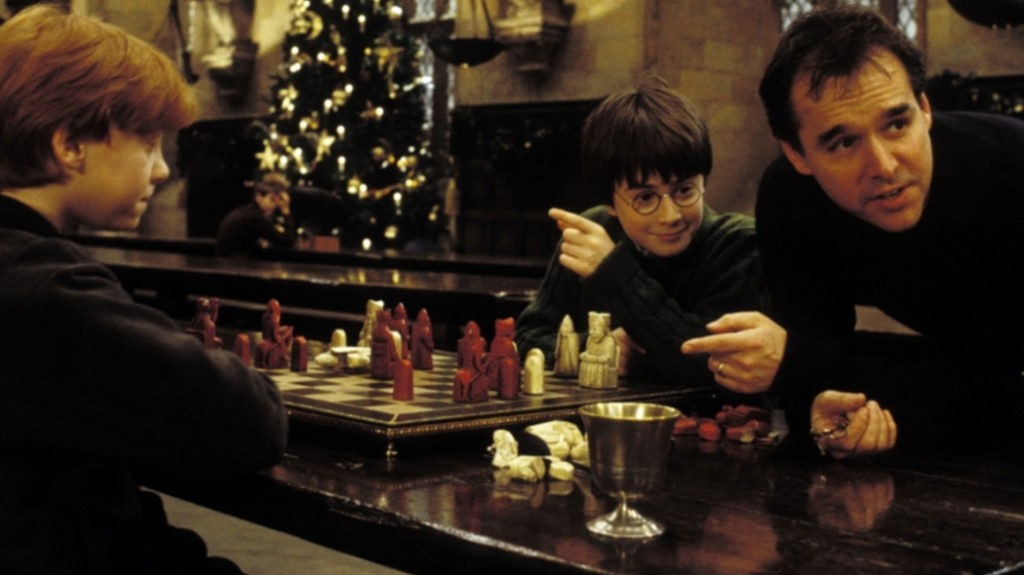
As a result: the director's role went to him, while the script was written by Steve Kloves (he would write the script for all parts of 'Harry Potter', except for 'Order of the Phoenix').
'So it's true what they said on the train. Harry Potter has come to Hogwarts': Harry Potter and the Sorcerer's Stone
Upon the appointment of the director, an open casting call was announced for the main children's roles. Over three months, the director looked at thousands of children but could not find a suitable actor for the role of Harry.
Among the children screened was Tom Felton, who played Draco Malfoy. Initially, Felton tried to become Potter without having read any of the novels. After being rejected, the actor didn't give up and auditioned for the role of Ron. When asked 'What is your favorite moment from the book?', Tom gave the same answer as the previous casting participant, as he didn't know anything else. The producers and director were amused by this approach, and Felton got a role in the film, but not quite the one he wanted.
The role of the Boy with the Scar went to Daniel Radcliffe. The director noticed the actor in the BBC's 'David Copperfield'. Daniel's parents were not enthusiastic about their son's acting career, but the director managed to convince them, promising that Radcliffe would be shielded from the intrusive media.
The role of Ron Weasley went to Rupert Grint, who performed a rap at the auditions, and the role of Hermione Granger, with Rowling's approval, went to Emma Watson. The day before, the writer had spoken on the phone with Emma and was left with a favorable impression of her. Imagine Joanne's surprise when, in person, the young actress turned out to be a beauty. Well, the writer had to accept both Watson's pleasant appearance and Radcliffe's blue eyes (in the book, Harry has green eyes).
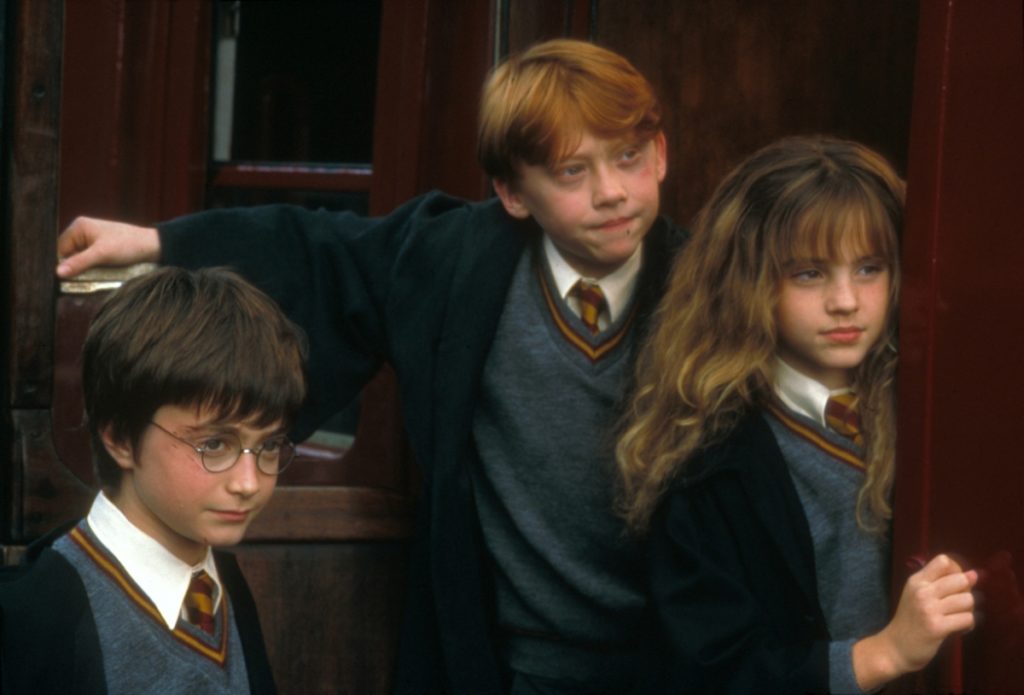
However, everything turned out for the best. Both the main characters and the film were loved by audiences. The film set a record for US box office on its first day of release and earned an impressive $900 million over its entire run, becoming the second highest-grossing film in history at that time. Only James Cameron's 'Titanic' was ahead of it.
Of course, the film's success was not only due to the director and young actors. The film also featured many famous representatives of the British acting school. Richard Harris played the role of Professor Dumbledore, Maggie Smith became Professor McGonagall, Alan Rickman transformed into Professor Snape, and the list goes on.
Notably, Richard Harris initially did not want to accept the offer for the role of the Hogwarts headmaster, as the actor was not familiar with Rowling's novels, and the franchise didn't particularly interest Harris. But he had to change his decision when the actor's granddaughter set a condition for her grandfather: either he agrees to the role, or the girl would never forgive his refusal and would stop talking to him for the rest of his life. Obviously, Richard Harris had no choice but to accept the role offer. The actor did not regret his agreement, and until the very end he assured the producers not to look for a replacement for him in 2002, but unfortunately, he died, appearing only in the first two parts.
Looking ahead, I want to say that balancing on the verge of refusal is almost a tradition among the creators of the franchise. Many people who worked on the film saga were unfamiliar with J.K. Rowling's novels and planned to refuse the positions offered to them, but under the influence of certain people (mainly their children, nephews, and grandchildren) they eventually agreed to participate in the creation of the films.
The filming of the movie took place both in studio facilities and in real locations throughout England. Alnwick Castle and Gloucester Cathedral were transformed on screen into Hogwarts for the viewers. And for studio filming, huge sets of the Great Hall were built, on which a significant portion of the budget was spent. The expense was justified in the future, as hundreds of people (actors and filmmakers) walked on the set floor for ten years, and the stone withstood all this pressure, serving as the Great Hall in all the main Harry Potter films.
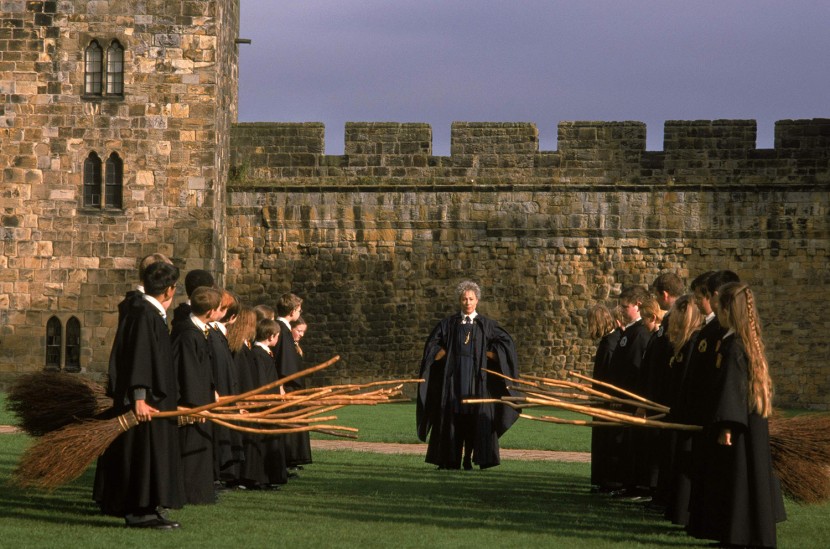
The film 'Harry Potter and the Sorcerer's Stone' is a wonderful world that the creators filled with references to other works, as well as many interesting details placed in the film for the most attentive viewers and devoted fans.
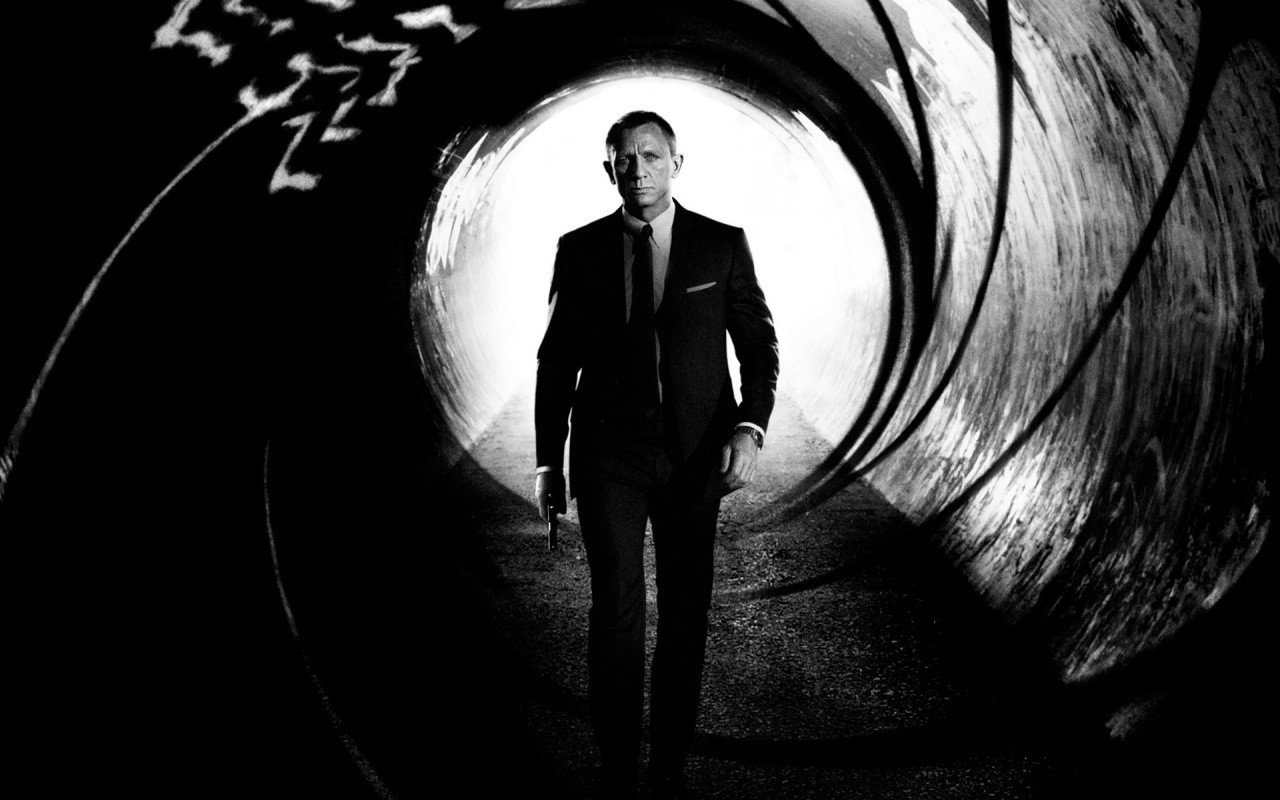
For example, one of the references to British culture is the scene of Draco's introduction to Potter before the Sorting. Malfoy introduces himself in the spirit of the world's most famous spy — .
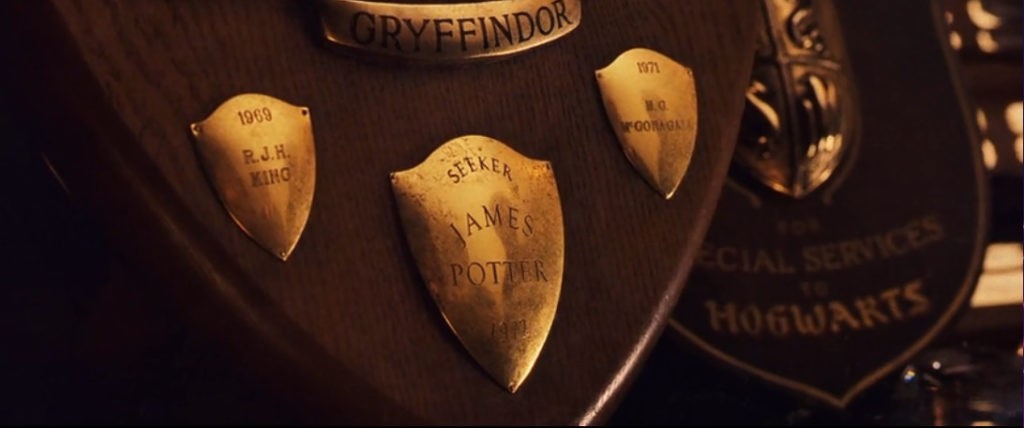
In the scene where Ron shows Harry James Potter's Quidditch award, on the right you can notice an award given to Minerva McGonagall. The Head of Gryffindor House was once an excellent player, but an injury sustained at age 17 during a match put an end to her future performances.
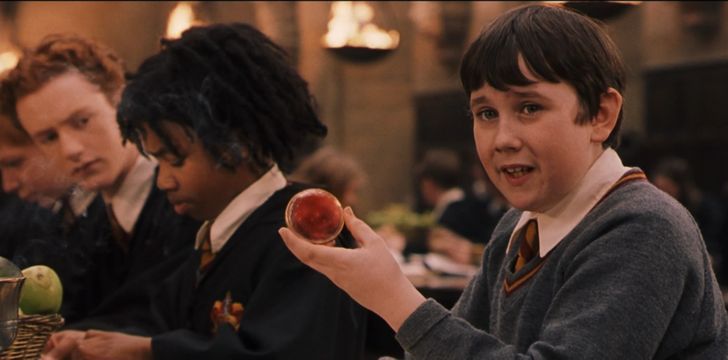
Or the unpacking of Neville's Remembrall. Upon first touch, the Remembrall turns red, and Longbottom says he doesn't remember what he forgot. If you look closely, you can notice that Neville is the only person sitting in the Great Hall without his uniform, so the red smoke likely appeared inside the device for this reason.
And what about the paintings hanging around the castle? In one frame, a portrait of Anne Boleyn flashes by, whom King Henry accused of witchcraft in the real world. It is said that Anne forced the king to marry her using magic, so Boleyn was executed (so it turns out Henry's worries were not unfounded).
I would especially like to highlight the music of the great John Williams. The soundtrack, created by the master of leitmotifs, turned out to be very memorable and literally magical. The main theme, Hedwig's Theme, became the hallmark of the saga. It is the only melody that accompanies the viewer through all the films of the franchise in one form or another.
In general, the entire first film is filled with music, sounding almost constantly. Silence accompanies only the scenes in the real world. With this technique, the director and composer create an even greater contrast between the worlds. Reality in the film is extremely gray, monotonous, and dull, but at Hogwarts, everything is dozens of times more interesting and colorful.
However, not everything was perfect with the special effects of 'Sorcerer's Stone'; there were some problems. Chris Columbus has said more than once that he was not satisfied with the visual component. The director claims that more time should have been spent filming with real actors, and then computer graphics should have been applied to the already shot scenes. The studio did not agree to allocate the time, and therefore in the Quidditch scenes, it is sometimes noticeable to the naked eye that all the player models and the stadium are made using graphics. Yes, if the film had been given a little more time to refine the visuals, some scenes would have looked more realistic, but did it become much worse? I don't think so.
'Learning ballet, Potter?': Harry Potter and the Chamber of Secrets
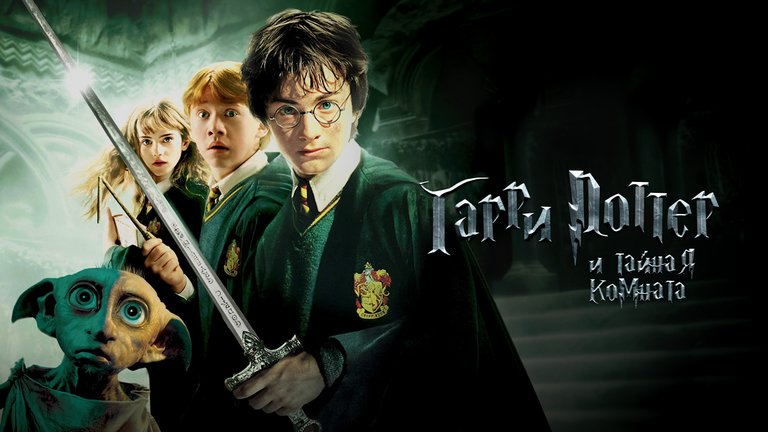
After the stunning success of the first part, the entire team, led by the director, soon began production of the sequel. The second film saw the light of day at the end of December 2002. The cast was joined by Kenneth Branagh, who excellently played the role of Gilderoy Lockhart, and Jason Isaacs, who played the role of Lucius Malfoy (Isaacs was one of those who wanted to refuse the offered role but changed his mind).
The main task of 'Chamber of Secrets' was to show that the films, like the books, were not lowering the bar. The sequel had to be just as interesting, cozy, and atmospheric. The detective element should not wane, and watching the characters should remain just as fun and engaging.
The main actors had grown up a bit; their voices had started to break. These circumstances greatly pleased Chris Columbus, as there was no need to look for new actors for the roles; consequently, the children would go through the entire journey with the viewer from beginning to end, which would be better for everyone.
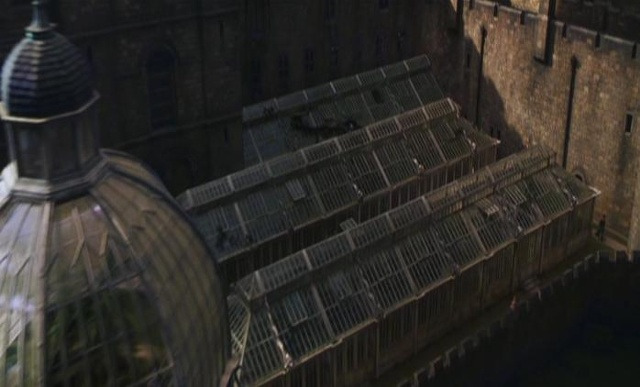
New locations appeared in the second part. For example, the greenhouse where Herbology lessons with Professor Sprout take place, or the inner courtyard where the clash with the Slytherin Quidditch team occurred. Fresh settings were added not only based on the original text but also to refresh the film and prevent the viewer from getting bored with the familiar sets of the first film.
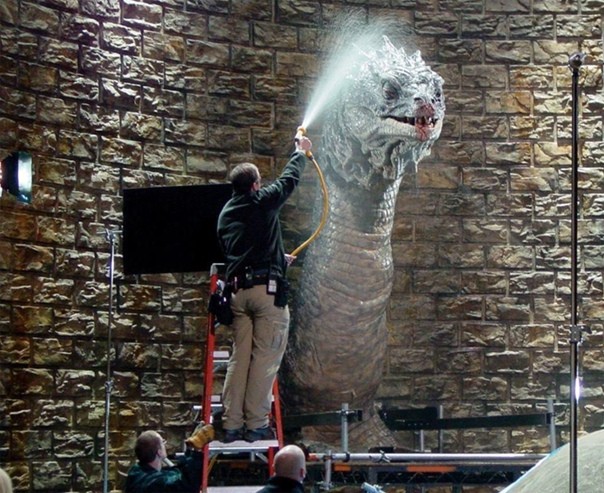
Also present in the sequel are new creatures, such as the house-elf Dobby and the giant serpent Basilisk. And while Dobby was created using a computer (there is a legend that the elf's image in 'Chamber of Secrets' was based on Putin), and Radcliffe had to act his role opposite a tennis ball, the giant serpent was not entirely created using graphics. The creators built a huge head that could open its mouth and emulate snake movements for close-up shots.
The film's sound designer created the Basilisk's roar himself. He made recordings of his own growls and similar sounds, then processed the result in a special program. The voice of the giant serpent was provided by Jason Isaacs, whom the director asked to come up with something between human speech and a snake's hiss.
The film also acquired a new cinematographer, so in 'Chamber of Secrets' you can notice smooth shots, mimicking snake movements, that were not characteristic of the first film.
Compared to 'Sorcerer's Stone', it is noticeable that the director was given more time for special effects. The graphics became an order of magnitude better than in the first part. As for the sets and props, the franchise never had problems with these (especially in the first four parts). For the scenes with the Ford Anglia car, more than ten different models were prepared. Some were cut up for interior shots, others gutted for flying scenes, and some were wrecked as a result of the collision with the Whomping Willow. Don't facts like these speak of the creators' love for the film? By the way, the sounds for the angry tree were also recorded by a human and processed on a computer.
In the second part, Tom Riddle appears for the first time, played by Christian Coulson. Interestingly, a young Eddie Redmayne auditioned for this role, but preference was given to an older actor. Still, 14 years later, Redmayne would join the film universe's cast in the spin-off 'Fantastic Beasts'.
'Harry Potter and the Chamber of Secrets' is a true sequel in the sense that the continuation is felt in everything: in the style, the atmosphere, and even the music. It is noticeable that the same team that worked on the film a year earlier worked on it. In the next film about the Boy Who Lived, the story awaits a new turn and a change of style, which is hard to miss.
Speaking of music. The soundtrack is very similar to the motifs that Williams wrote throughout 2002, and in the scene of the Bludger chasing Potter, almost identical music plays as in the scene of Obi-Wan Kenobi and Anakin Skywalker chasing a criminal on Coruscant from the second episode of 'Star Wars'. It is still unclear how this happened. Whether the composer's assistant mistakenly sent one recording to two studios, or the composer was simply very busy and wrote such similar motifs without noticing the identity, or it was a deliberate musical Easter egg. Unfortunately, this fact will remain a mystery to us.
Upon completion of work on 'Chamber of Secrets', Chris Columbus left the post of director of the Harry Potter films, explaining his departure by saying he had hardly seen his family for 3 years. True, there were rumors that Columbus was going to be replaced after this film anyway. In any case, the news was sad for the young actors, as the children had hoped that the entire journey of seven (no split into parts was assumed then) would be completed together. A new director is always stressful, especially for such young actors, for whom the film set had almost become a new home, as film production takes up the lion's share of time. Even homework had to be done during filming and in between takes. But with an old or new director, after 'Chamber of Secrets', the franchise was waiting for a new step...
P.S. In case anyone didn't know, the film 'Harry Potter and the Chamber of Secrets' has a post-credits scene. We have to inform you about such things.
The continuation can be read here.
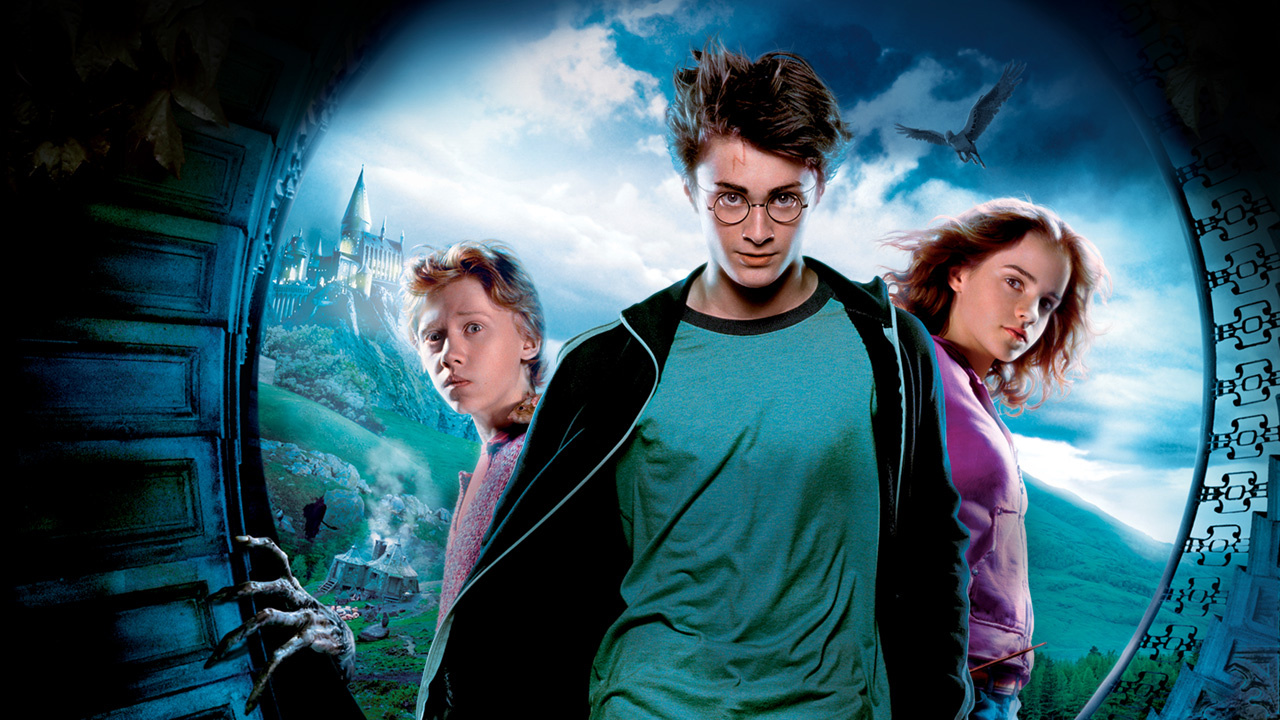
Continuing the marathon of articles dedicated to the 'Harry Potter' franchise. On the agenda are the films of Alfonso Cuarón and Mike Newell.
Open material
Comments
0No comments yet.
Sign in to join the discussion.