
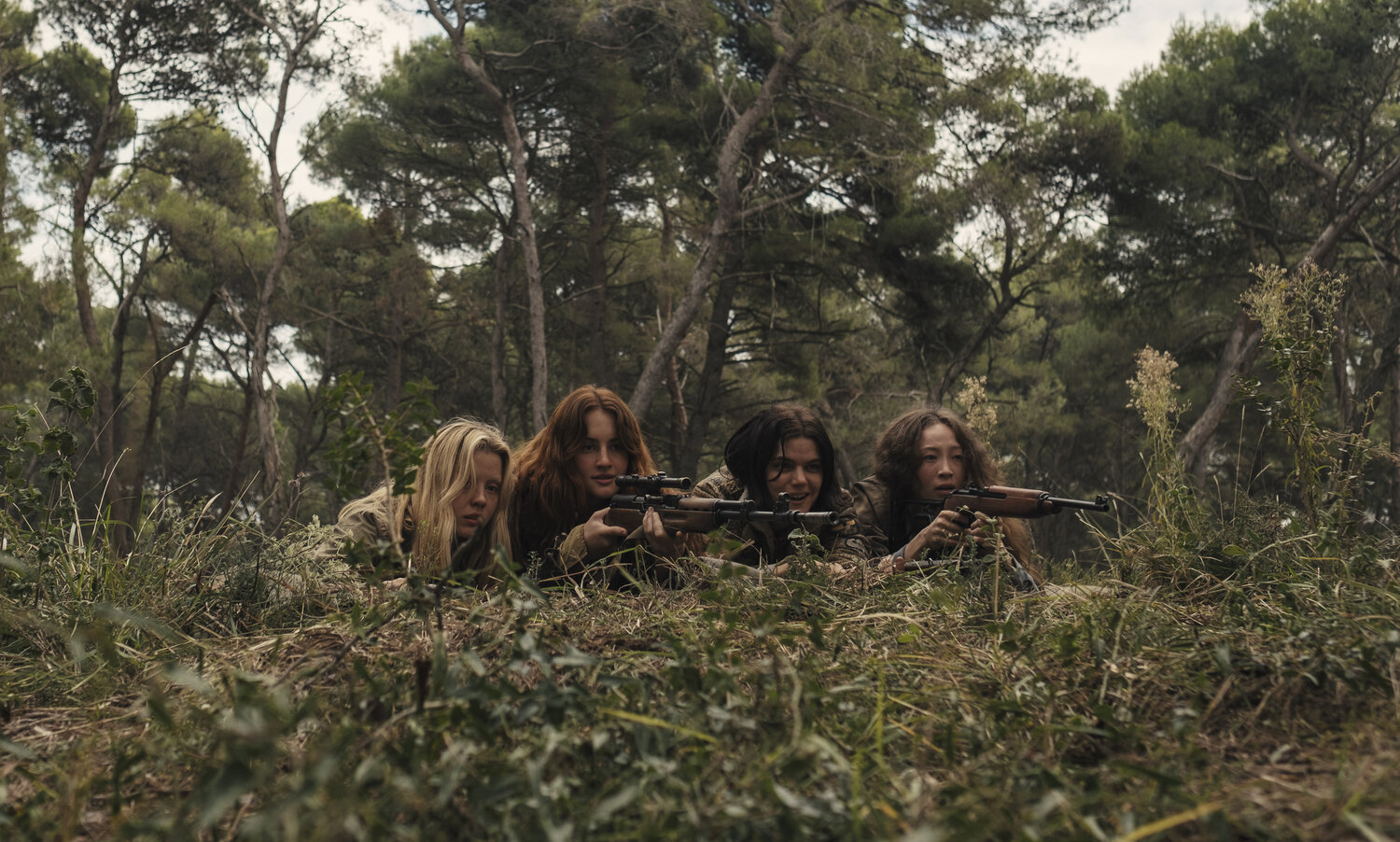
At AMFest, they showed Karen Cinorre's fantasy drama "Mayday", which will be released online on November 2. We tell you whether the film is worth attention.
For Karen Cinorre, "Mayday" is her debut feature film as a director (she also wrote the screenplay). The film was shown in the main program of Sundance, and now it has reached Russian audiences. We tell you what the debut turned out to be and whether the reviews from the trailer match reality.
The text may contain spoilers.
What's the plot?
"Mary. Alpha. Yankee. Delta. Alpha. Yankee" — the words that open the film. On screen, a soldier parachutes down. Flying through the clouds, the camera rapidly approaches the water surface and... the main character (Grace Van Patten) wakes up from a knock on the car window. She is awakened by Dmitry (Theodore Pellerin), as it's time to start her shift as a waitress in the banquet hall.
Today there will be a luxurious wedding. The organization must be impeccable. Disheveled Ana enters the room, and Dmitry re-qualifies from a cook to a musician. The night shift is over, and now he will play at the wedding. The event preparation is almost complete, but a thunderstorm knocks out the electricity. The groom is unhappy, the staff bustles about trying to fix the problem, and the confused bride asks Anastasia to help her get to the restroom. Judging by her appearance, the girl doesn't want to get married at all.
Then the ever-angry head waiter bursts into the women's restroom and once again takes out his anger on Ana, reminding her that she is nobody. Anastasia's nerves can't withstand the pressure and cruel treatment from the management, and eventually the girl climbs into a closet, but not a wardrobe — an oven.
As if in the books of Clive Lewis and Lewis Carroll, Anastasia is transported to a fairy-tale place. Now she is on an island surrounded by an endless ocean. In this world, a brutal war between women and men is raging.
On the shore, Anastasia is met by a girl with the face of the bride, named Marsha (Mia Goth), and takes her to an abandoned military submarine base, where Ana meets Beatrice (Havana Rose Liu) and Gertrude (Soko).
The girl receives a military uniform and joins the resistance. Now four Amazons must confront every male. The modern Sirens send a distress signal via radio, and the men who respond are directed straight into the storm.
What's happening?
Overall, it's clear what agenda the film is filled with. It's a phantasmagoria by the director on the theme of feminism. Women are strong and independent. They can stand up for themselves and survive in a cruel world, but for this they need to unite and join forces against a common enemy — men. Alone behind closed doors, they are weak, but together they will overcome any obstacle.
In our society, feminism is a very important and necessary topic. Any sane person should not grimace and spit when it comes to women's rights. Everyone should have equal conditions regardless of gender, but in "Mayday" it is presented very radically, crudely, and ineptly.

From the very beginning of the film, the viewer is given no information. About Anastasia, besides the fact that she works as a waitress and that her boss unjustly drags her through the mud, nothing is known. Who is she? Why does she sleep in the car? Who is Dmitry to her? (Although if you remember the cartoon "Anastasia", this question disappears).
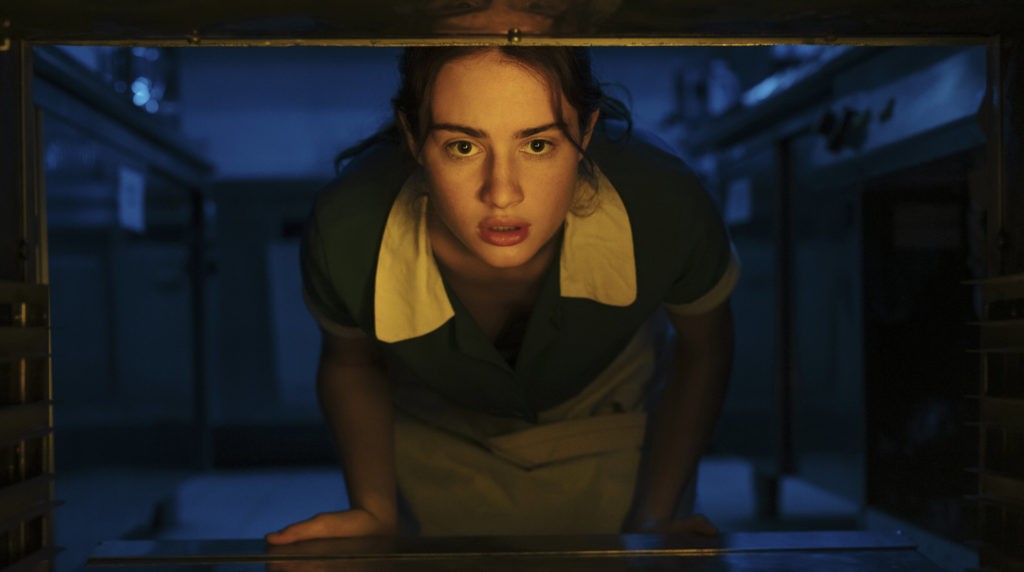
In essence, for the viewers, Ana is indeed nobody, at least that's the picture painted in the real world. When she is transported to a place inspired by Narnia, Wonderland, and the Land of Oz, she becomes part of a collective. So to speak, from "nobody" she turned into "somebody", though it's unclear who. Neither Anastasia nor the viewers are explained anything again. What is happening? Why is there a war of the sexes? Why not take someone prisoner and talk? Why, after all, does no one feel the need to eat throughout the entire film?
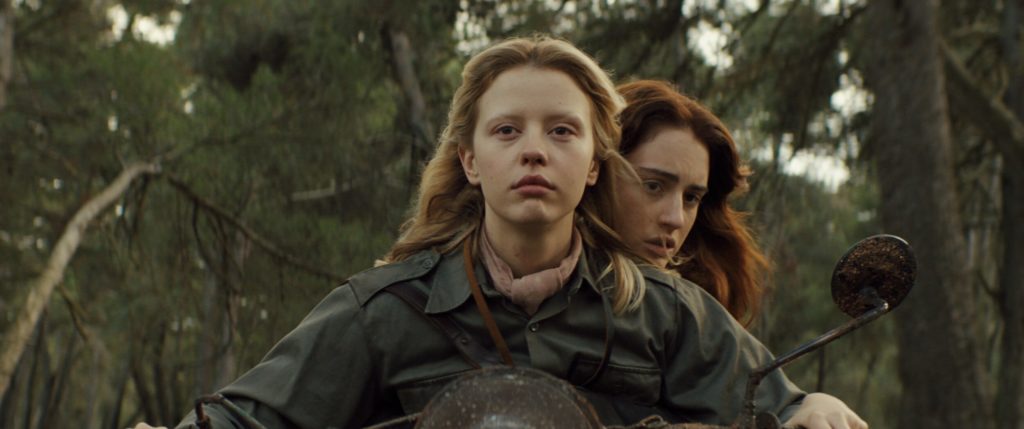
After a short integration into the group, Ana finds it difficult again, because Marsha turns out not to be who she claims to be. When Anastasia begins to doubt and ask at least some questions, the leader of the female resistance reveals herself as a manipulator.
It turns out that she is ready to resort to deception and betrayal just to achieve her goal. The girl pretended to be a protector, but as soon as Ana decided to go her own way, Marsha reminded her that Anastasia is nobody. New questions arise. Why is Marsha so cruel? What drives her? Who is she really?
One might say: "But this is fantasy. Here the author is the King and God. He created this world, so he is free to decide the fate of the characters as he wishes. It's his world, he makes up the laws here." No one argues, but the laws need to be explained, otherwise the creation will be incomprehensible to anyone. War cannot simply exist. Everything has a beginning, is it really that hard to let the viewer in? Not to mention the other questions raised.
And so throughout the film, both the viewer and Anastasia are tormented by misunderstanding, but while we get some vague answers to a couple of questions, most will remain hanging in the air, like black birds over the island.
A familiar face... Where have I seen you?
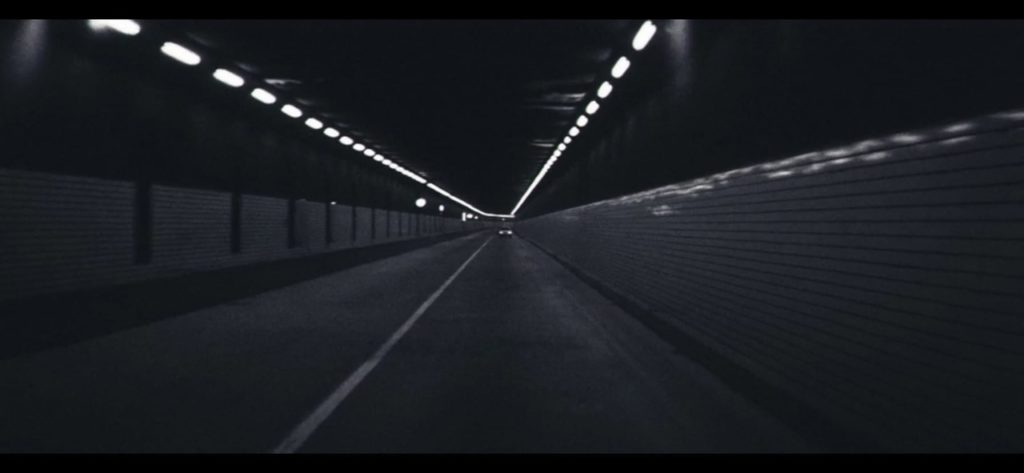
People with faces from the real world constantly meet the heroine on the island. The pastry chef, the photographer, and even the cleaning lady are drawn into this war of the sexes. And it's unclear until the end whether the island is Anastasia's afterlife, who committed suicide with the help of an oven, or an image created by her brain, which included familiar faces. The heroine is connected to reality by dreams, where, as if repeating a scene from "Solaris", she drives through a tunnel, at the end of which there will definitely be a light that gives insight.

However, the faces of Beatrice and Gertrude are not seen in the real world. Considering this fact, and taking into account that at the beginning of the film the pastry chef mentions two certain predecessors of Ana who couldn't handle the work, it can be assumed that Bea and Gert are those predecessors. The girls were transported to the island before Anastasia. Moreover, all three have rather unusual, resonant names, and on the island each performs her role.
Beatrice studies the weather and launches weather balloons to know in advance where a storm is raging at sea. She, like Dante's muse, is a guide to Paradise for women. For men, a less rosy path is laid out.
Gert is most likely a prototype of Gertrude of Nivelles, who was considered a protector of travelers. But, as with Beatrice, the protection applies only to girls. Male travelers receive coordinates where they are unlikely to survive.
Ana is an obvious metaphor for Princess Anastasia Romanova, who, according to legend, miraculously escaped death and lived a happy life abroad.
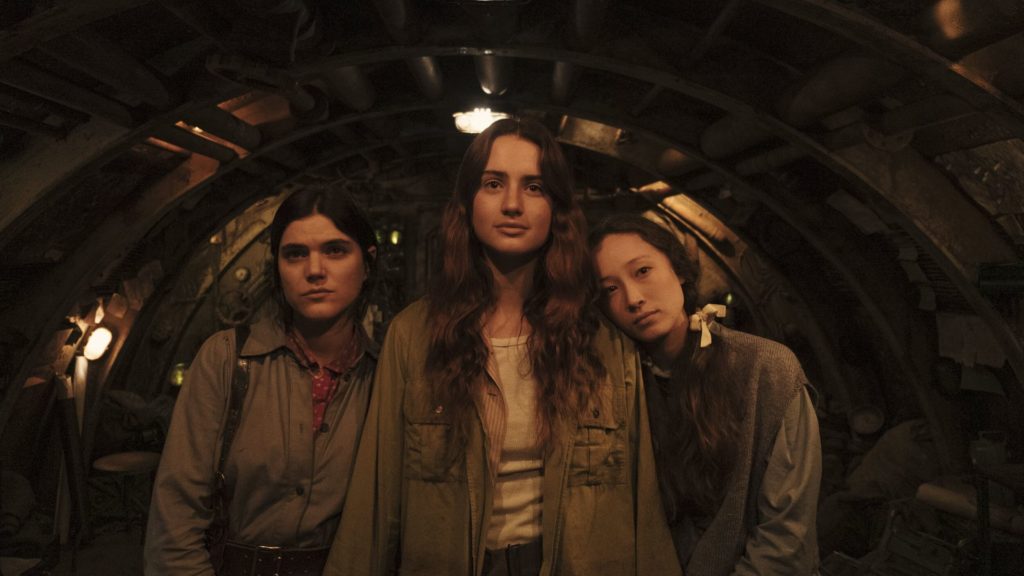
Despite all the metaphor, the film remains rather crude and unpolished. It's clear that festival cinema can sometimes be unusual and strange, but "Mayday" leaves the director's crude statement on the surface, and fills completely the wrong places with depth. With an average runtime, the characters don't really have time to develop, but there are plenty of unnecessary and incomprehensible scenes.
For example, it's completely unclear why, in the middle of the narrative, the film literally turns into a musical for a few minutes. Soldiers dance and jump awkwardly, and then suddenly disappear. On one hand, the scene could be taken as the heroine's hallucination, but after the hallucinations, no real things remain to remind of what happened. As a result, the scene only adds questions and confuses even more.
The eyes rejoice, but the ears wither
Admittedly, the film is visually very beautiful. Cinematographer Sam Levy's camera shows wonderful island landscapes and endless sea expanses. But the main thing the camera highlights is female beauty. The actresses look stunning on screen. The cinematographer catches the sun's reflections on the girls' faces, films their hair blowing in the wind, lingers on bathing scenes, and admires the main character's movements underwater. Sam Levy simply admires the femininity that fills the film and shares his observations with the viewer.

However, what is pleasing to the eyes, the ears cannot understand, and the film has problems with sound. The voice is not mixed with external disturbances but is laid on top. No matter what happens on screen, the characters' speech will be louder than gunshots, wind, and waves.
The opening words are also often heard by the viewer throughout the film. If you read the words by their first letters, you get "MAYDAY" (the original title of the film), which is exactly the distress signal that the Titanic sent in April 1912.
The girls use it to attract men's attention and direct their vessels (air and water) into the epicenter of the storm. They do this under the motto "No one will leave a girl in trouble, so someone will definitely respond." And this phrase absolutely defies all logical concepts. If men are not so bad and would never leave a girl in trouble, then why do you, like Amazons, brutally kill every one? Why do you even think that there are enemies on the other side of the radio? The viewer will not get an answer. Apparently, the opening words act on the girls like on the Winter Soldier: "Rusty. Seventeen. Dawn. Furnace..."
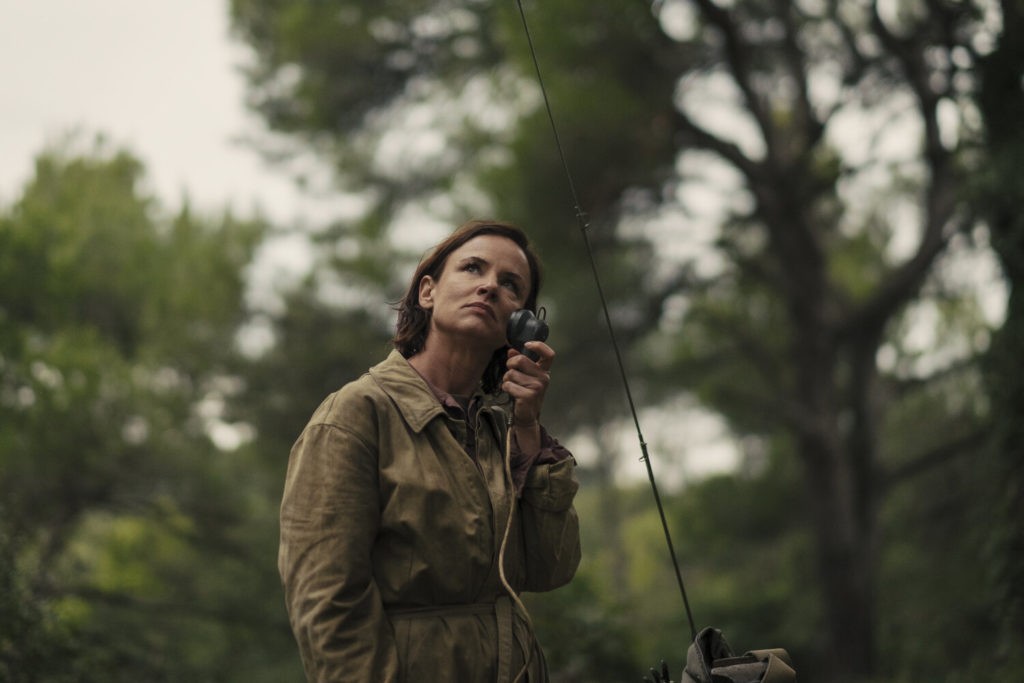
In general, there are plenty of dubious phrases that grate on the ear in the film. For example, Marsha's statement "A heroine and a psychopath are the same thing." Well, how does that align with the concepts of feminism? Not to mention the sexist "Girls spend most of their time in the kitchen" and "You fight like a girl." Hearing this in a film that is supposed to celebrate feminism is at least strange.
What's the bottom line?
To sum up, Karen Cinorre has made a beautiful but very mediocre debut, filled with references and metaphors that are unclear how and what they serve. "Mayday" does not particularly shine with acting. Only Juliette Lewis stands out from the general canvas. The fem-agenda turned out crude and absurd, and the film is incomprehensible, illogical, and inept. Everything the debutante wants to say is broadcast on a frequency where there is almost no chance of being heard. And in the end, the director succumbs to the manipulation of her own heroine. Marsha proudly says: "Stop torturing yourself, do it to others," and Cinorre tortures the viewers.
Comments
0No comments yet.