
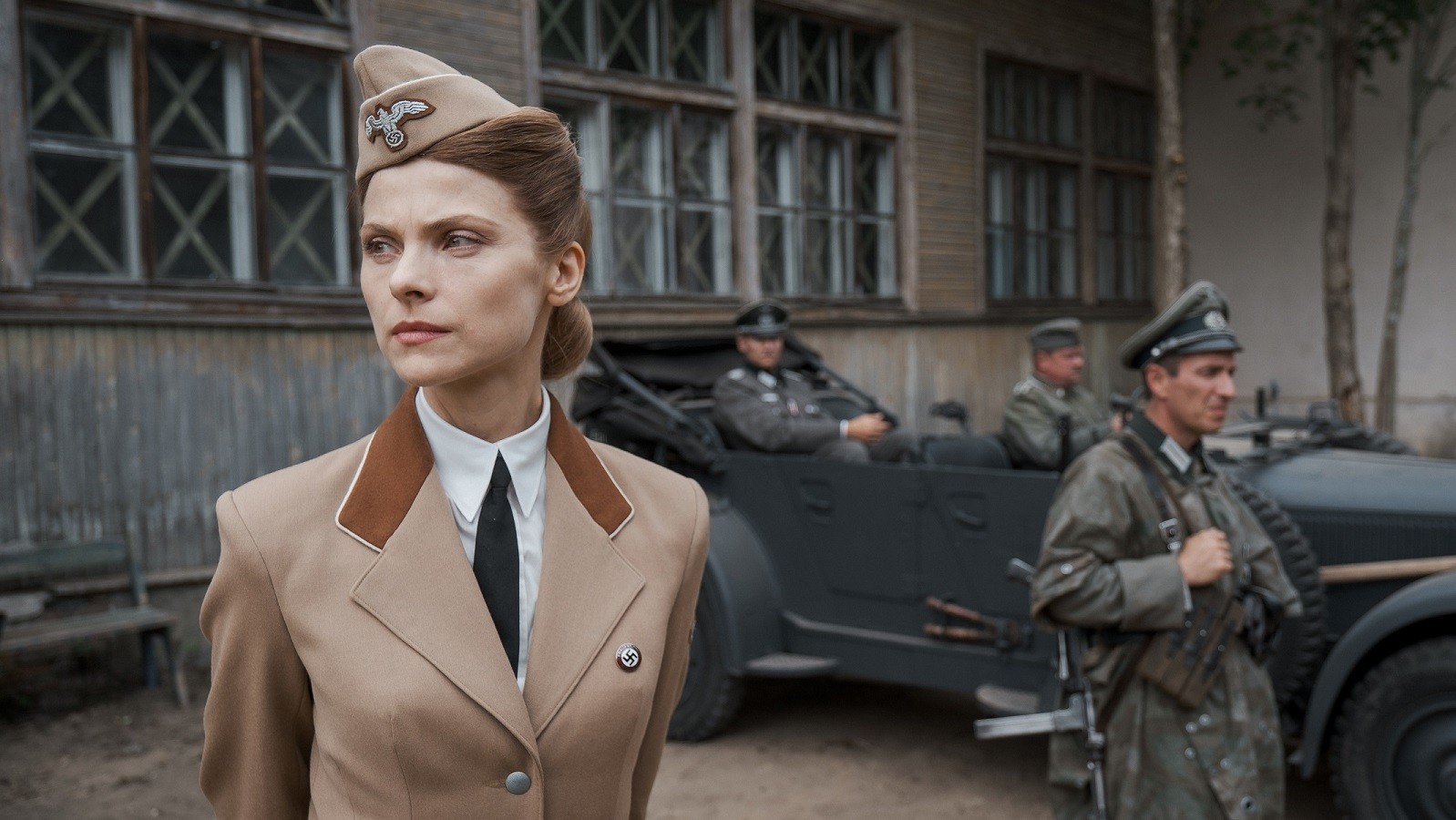
So, a new film by Igor Ugolnikov, “The Fruits of Enlightenment,” is hitting the screens—a picture based on real events about love, betrayal, and, of course, art. Did the creators succeed in realizing such an ambitious concept?
Synopsis
In the territory of the Pushkin Hills, occupied by German invaders, ordinary people are forced to choose whether to join partisan detachments in the forests or stay and try to wait out the hard times. One of the latter is Sergei Trofimov (Sergei Bezrukov), a jack-of-all-trades shell-shocked during the Civil War.
The situation is complicated by the arrival of new leadership in Mikhailovskoye in the person of the strict German woman Maria Schiller (Nastasya Kerbengen), who is convinced of the German people's rights to the legacy of the great Russian poet. Her views begin to change upon clashing with the Russian people, and Sergei grows closer and closer…

Acting
Although I usually like to delve into details a bit later, I can't help but start with the main faces of the film.
“The Fruits of Enlightenment” pleasantly surprised me with strong, even excellent acting performances. And while there is no doubt about Bezrukov's mastery in portraying a simple Russian everyman on screen, the quality of the other actors' work initially raised doubts.
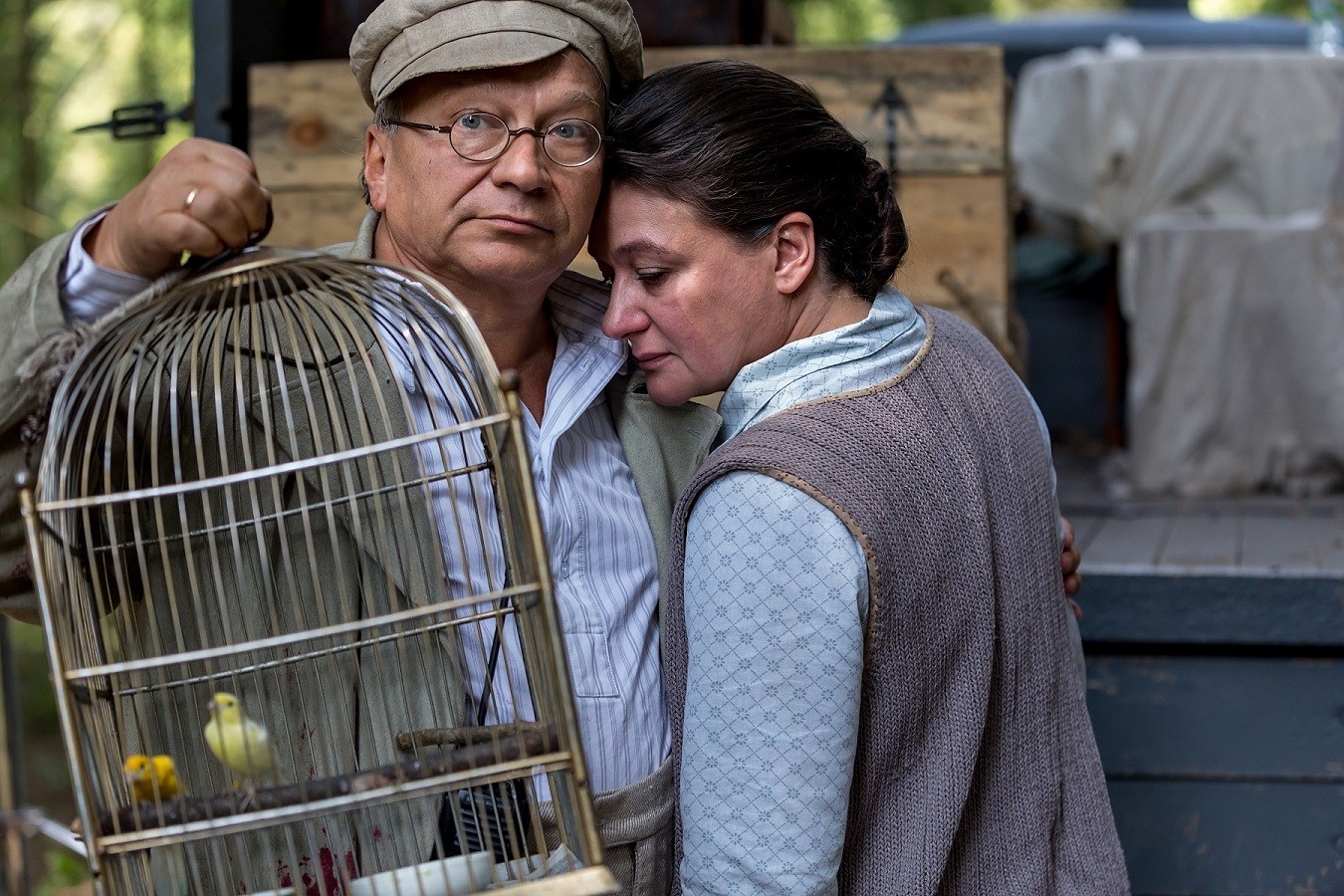
It was all the more pleasant to be fully convinced of both their dedication and the excellent directorial work of Igor Ugolnikov, who even managed to play a major role himself as museum worker Kuzma Antipov.
Nastasya Kerbengen made an excellent pair with Bezrukov; her Frau Schiller turned out quite cold and aloof, without losing sensuality and warmth.
I especially want to mention the colorful German major played by Michael Epp, the wonderfully vile collaborator Andrei Gorbachev, and the local partisan Andrei Nekrasov. These and many other supporting roles truly set “The Fruits of Enlightenment” apart and present it in a very positive light.
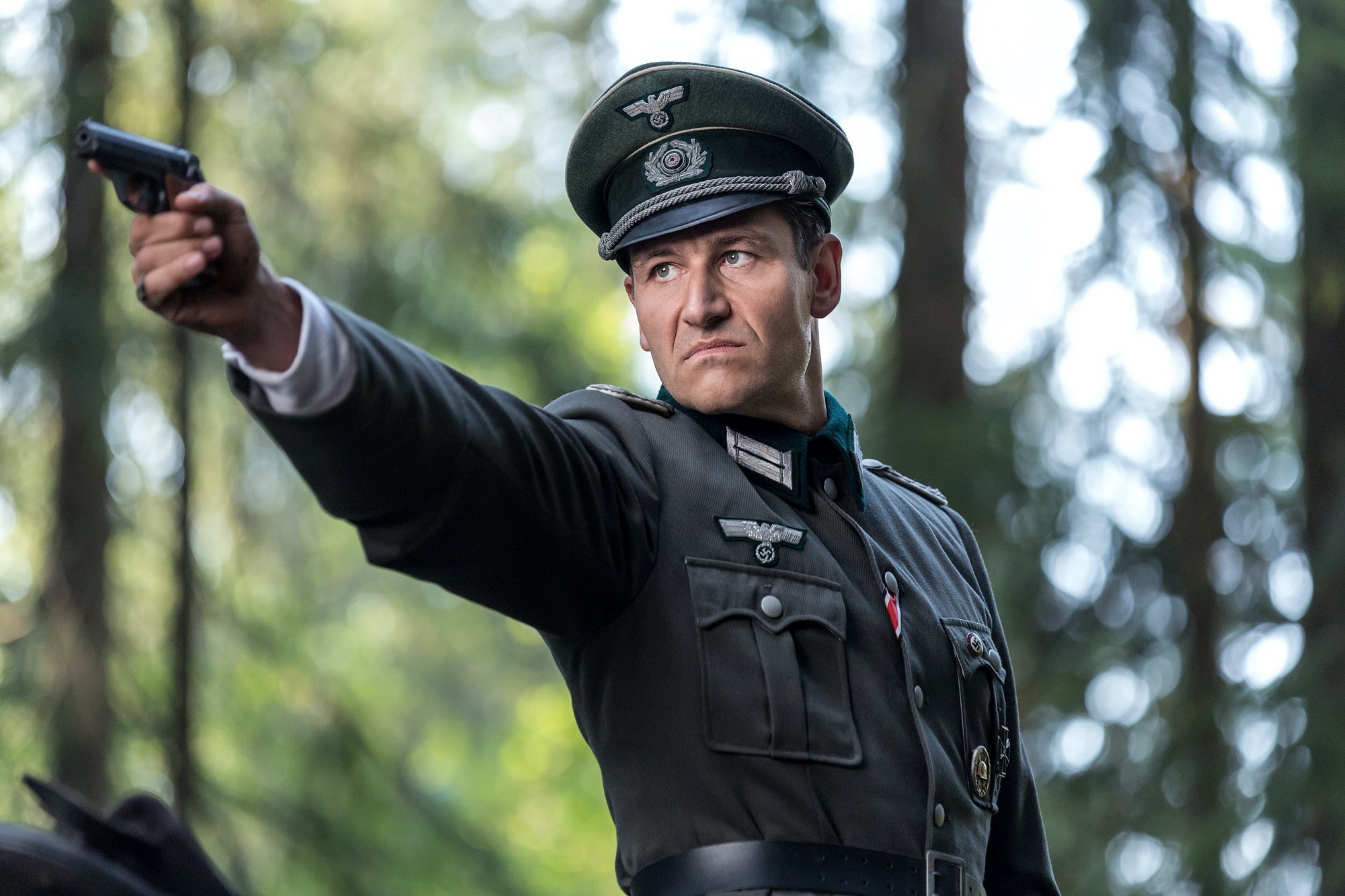
How Good Is “The Fruits of Enlightenment” as a Film?
Despite its rather impressive length (just think—two and a half hours of leisurely storytelling), “The Fruits of Enlightenment” is quite easy and pleasant to watch. The atmosphere certainly deserves praise for Ugolnikov.
The cinematographers also did a remarkable job, giving us several surprisingly beautiful shots. The narrative doesn't feel disjointed or forced; the setting is recreated very well. Special thanks also go to composer Sergei Shustitsky, who did a tremendous job writing an incredibly beautiful 80 minutes of music for the film.
There are a few questions about the plot, namely its love line, which doesn't seem entirely convincing—but that's not the main point here. The creators place the main emphasis on art, which can unite even the most irreconcilable enemies and drive people to rash actions in an attempt to protect it.
So it turns out that “The Fruits of Enlightenment” is an excellent, solidly made, not grimdark, masterfully directed domestic film. And it would be a simply great movie. But only under one condition—if all the action on screen took place in an alternate universe or a fantasy setting.
“The Fruits of Enlightenment” Is Not About the Great Patriotic War
This is where the main and, most sadly, fatal flaw of the film emerges, one that shatters all its strengths. Perhaps somewhere, sometime, something similar could have happened, but definitely not on the territory of the Soviet Union and definitely not during the Second World War. It's all the more disappointing to see the phrase “Based on real events” at the beginning of the film.
Let's digress a bit and recall how the Third Reich treated Jews, Roma, and Slavs. The film's characters emphasize several times that they are considered second-class people. Well, in reality, the Nazis didn't consider them as such because they didn't consider them human at all. And a situation where the German leadership, waging a war of annihilation against the Soviet Union, would allow other Germans to culturally enlighten Slavs could not exist.
Let's not forget the destruction and atrocities of the fascist occupiers at Tchaikovsky's house in Klin. Or how much effort and how many lives were spent clearing the mines from the plundered Mikhailovskoye. The creators assure that Frau Schiller really existed, but they don't mention any specific documents or memoirs, and you won't find information about her on the internet with a quick search.
Many moments in the film feel like a dagger to the heart.
- The fact that most of the atrocities shown are committed by Russian collaborators, while the Germans (except for the aforementioned major) almost always remain beautiful and noble, having come to our lands to enlighten people.
- The fact that the only pure and touching character is also one of the Nazis.
- The fact that the death of Nazi invaders is shown as a tragedy in some scenes, while it is the Russians who betray their own.
And the love quadrangle with cute jokes and quirks of the main characters against the backdrop of the shown executions and skirmishes feels like a slap in the face. For this to work really well and feel as lighthearted as “Heavenly Slug” or “The Restless Household,” the creators themselves would need to show respect for the people they are filming about. Alas, that didn't happen.
Conclusion
We can recommend “The Fruits of Enlightenment” as a very good film. You might even enjoy it, smile at the jokes a couple of times, and maybe shed a tear. But perceive everything happening on screen as a fairy tale, because that's what it is.
Comments
0No comments yet.
Sign in to join the discussion.