
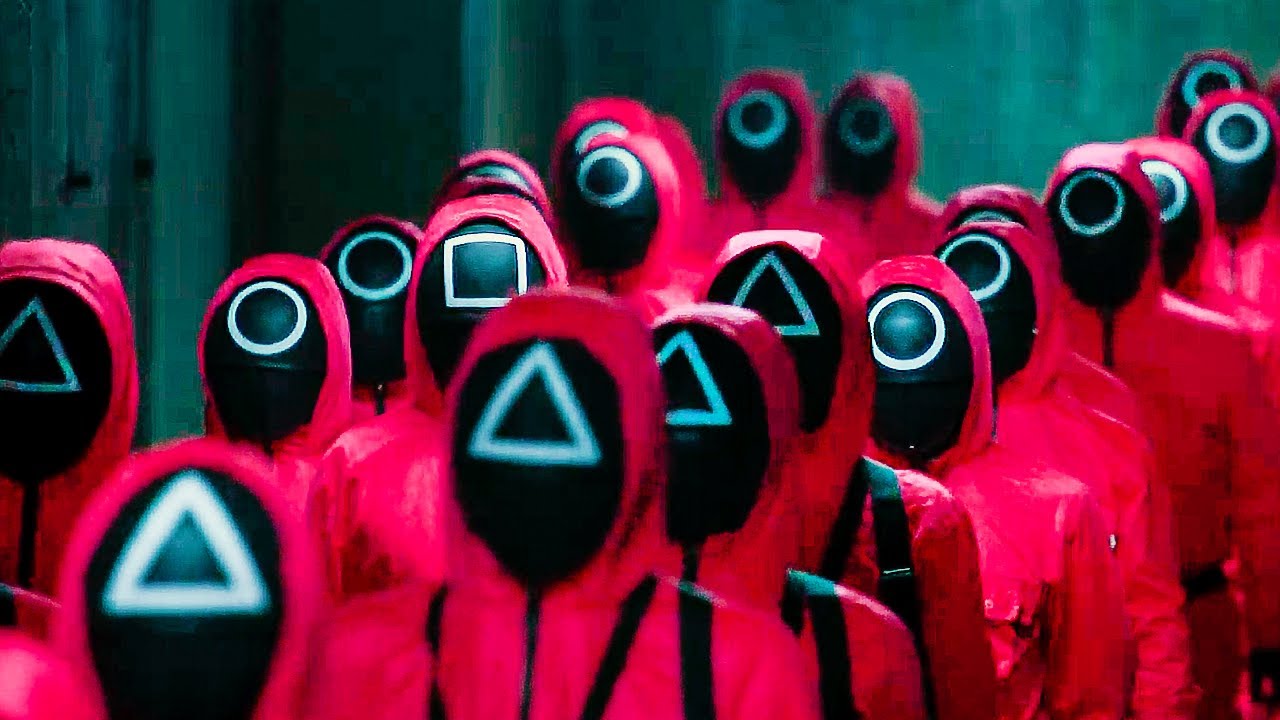
You have probably already heard about the series “Squid Game,” even if you haven’t watched it yet. This Korean project on acutely social themes, disguised as deadly games, is nearly on its way to becoming the most popular Netflix show of all time.
The South Korean series topped Netflix charts in 90 countries, and the show’s main star gained +15 million Instagram followers (by the way, breaking the record for the fastest-growing account), signed contracts with global brands, and attracted heightened attention from Hollywood.
Some call the show a mix of “Parasite” and “The Hunger Games,” attributing viewers’ love to themes of blood, brutality, and the thirst for money. And we’re sure you’ve already watched all the interesting reviews of hidden details. But how did it happen that the whole world became obsessed with a bloody thriller series?

- First of all, we shouldn’t forget that Koreans are strong on sharp social topics. Their view of life and values differ greatly from European and our familiar ones, yet each theme resonates with viewers. Despite a far from new and simple plot, they raised relevant issues presented very realistically. As they say, lifelike.
In Korea, they love to address issues of social stratification—poverty and wealth. Here, it is taken to the extreme: the characters are willing to die just to avoid returning to their old lives and to become rich.
Cross-cutting techniques are also evident, such as ultra-violence, strange humor, and suspense. - In the best traditions of recent Netflix projects—each episode of “Squid Game” ends on the most dramatic note or an intriguing moment that demands continuation. This is the reason for immense engagement.

Who doesn’t love Easter eggs? Many hints, secrets, and hooks are hidden throughout the series. And during the first viewing, it’s impossible to notice everything. This has led to re-watching episodes, searching for answers online, and creating explanatory videos. Within a week, fans figured out who the creator of the game might be. Participants could have learned about all the games in advance—they just needed to look around. The cause of the main characters’ deaths could also be predicted. Plus, a few more symbolic gifts and Escher-like secret staircases for visual content. As a result, the fan base grew so large that it began analyzing literally every episode frame by frame. In a recent post about “Money Heist,” we mentioned the importance of well-chosen visuals, specifically the jumpsuits. The same applies here. As a result, there’s now a boom in the US for popular costumes from “Squid Game.” Great soundtracks that viewers download to listen to and share online. Incidentally, the music for “Squid Game” was composed by the same person who worked on another acclaimed Korean project—the Oscar-winning “Parasite.” The visuals deserve special mention. While watching the series, you enjoy the well-composed shots, geometry, symmetry, colors, and contrasting tones.

The final episodes of “Money Heist” are expected in December, and fans are frantically tearing through theories demanding answers to the questions left by the first half of the season
Open material
- At some point, the phenomenon of Korean dramas had to reach the mass audience. It also had to break the stereotype that all Korean dramas are about sappy love. In reality, many projects have been popular for a long time, but simply didn’t enjoy such love from the mass audience. And none of those series became mainstream.
- Interestingly, after the first wave of popularity in Korea itself, attitudes toward the series have become more negative. Possibly due to the overall impression of life and the state of affairs in the country, as well as the exaggeration of many themes. Meanwhile, no major push for advertising in the US was planned, but it happened on its own.
- Accessibility also plays a significant role. Not all Netflix projects are translated into many languages. But for “Squid Game,” subtitles and dubbing have been added in over 30 languages worldwide.
- Viral advertising—that’s what the streaming service’s creatives took care of. In the Philippines, they installed the killer doll from the series. On TikTok, they released a mask game where you need to cut a shape out of a cookie with your nose. And on YouTube, they launched entire quests. It was viral advertising on Twitter and TikTok that helped the series gain traction. The internet did its job here. The internet also generates memes—hashtags already reveal millions of jokes across different platforms. The recent global Facebook outage did not go unnoticed either.

- Netflix is promoting European and Asian content. This year, the number of high-quality non-English shows has increased significantly—to be precise, interest in their content has grown by 71%. This became very noticeable after the release and success of “Dark”, “Money Heist,” and then the French series “Lupin.”
- Young people, who are increasingly engaged in social media, have become more active in responding to social problems, grievances, or feelings of alienation. This means they empathize even more with all the characters in “Squid Game.”
- A big role, we think, was also played by the fan bases of groups like BTS and Blackpink. The US became a new market for them, which they had always strived for. No one is surprised anymore by the success of BTS, another Korean film at the Oscars, or the release of another drama—over the past few years, the trend toward Korean projects has only been gaining momentum. And Koreans are very good at media and entertainment content—in their country, it is a huge, growing, and highly profitable industry. Perhaps their style is not to everyone’s taste, but denying their influence and market dominance is no longer possible. And perhaps Netflix will soon release even more original content in Korean.
Comments
0No comments yet.
Sign in to join the discussion.