
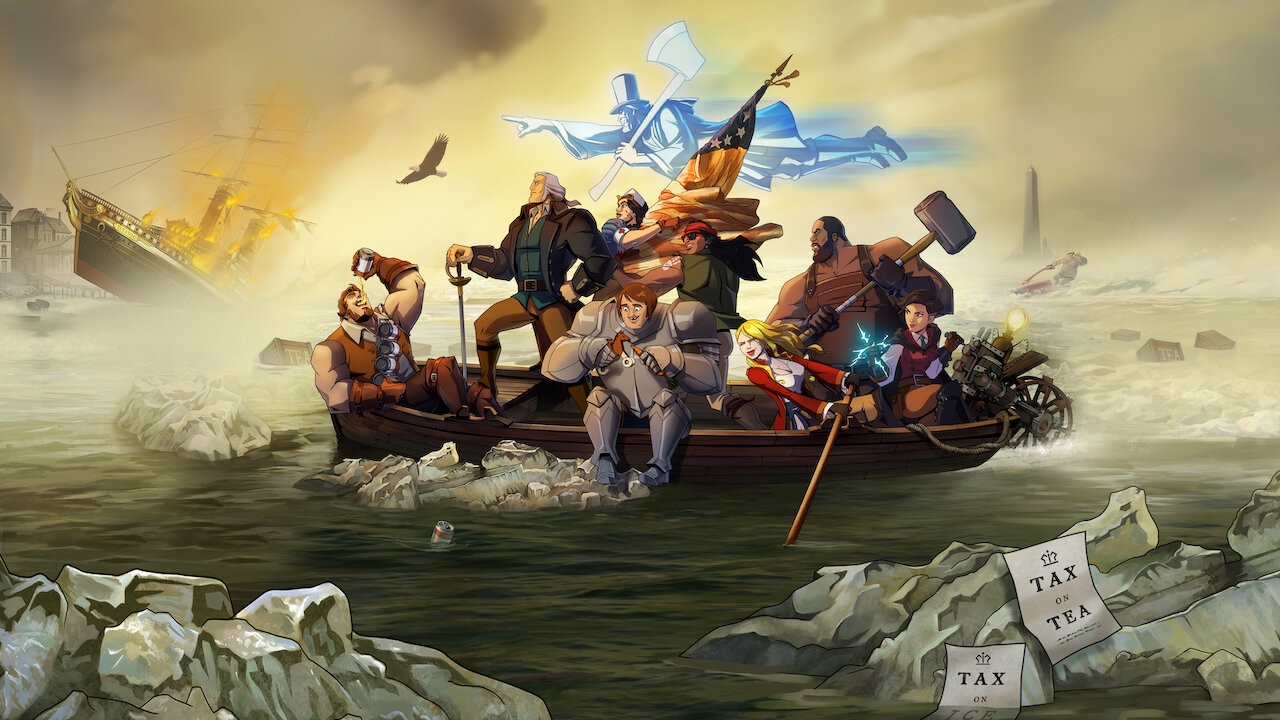
Never before had watching a movie for a review felt like work. “America: The Motion Picture” managed to fix that.
I want to start this review with a slightly altered quote from “Billy Madison”: everyone who watched this cartoon became dumber. And it’s very hard to write reviews for such works—because usually there’s nothing to say except “bad.”
But I’ll try, even if it’s in the form of an essay about what makes abstract comedic animation good. At least that’s something.
What is “America: The Motion Picture” about?
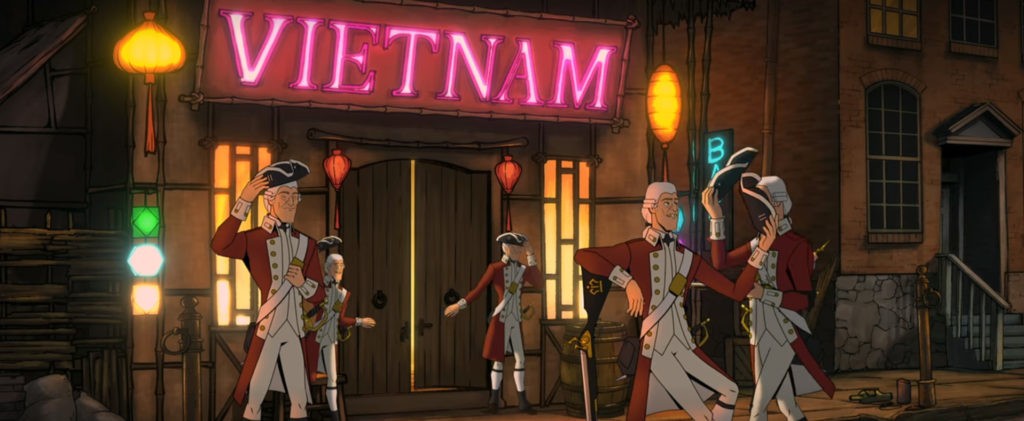
At its core, “America” tries its hardest to be a satire—both of the historical and cultural past of the United States and of recent events. So in a story about George Washington, references to Paul Bunyan, the Titanic, the Vietnam War, etc., suddenly pop up.
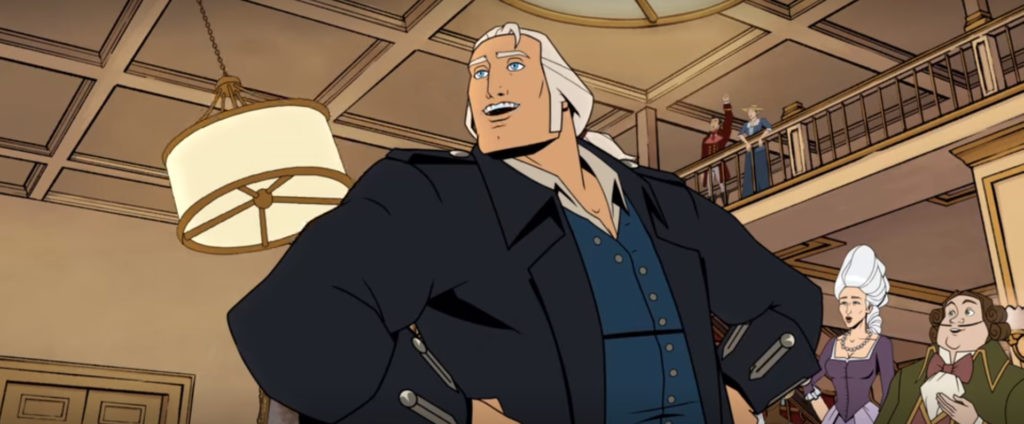
On the other hand, the creators don’t even try to provide any logical justification for the friendship between Washington and Abraham Lincoln or for the appearance of baseball on the battlefield for independence.
In theory, satire could be successfully pulled off in a similar vein. But not this time.
What went wrong with the satire
To understand where “America: The Motion Picture” went wrong, you need to have a good grasp of what satire is. As a phenomenon of mass culture, satire should humorously expose certain aspects of our lives.
Take, for example, one of the best (at least, my favorite) animated satires—namely, DreamWorks’ creation called “Shrek 2.” The satire in the “Shrek” universe works because the contrast between the naivety of children’s fairy tales and the harsh truth of life is obvious enough and provides a huge field for activity.
What do we see in “America”? That “America” can’t decide whether it wants to laugh at or glorify the roots of its country. And the result is a muddled mess.
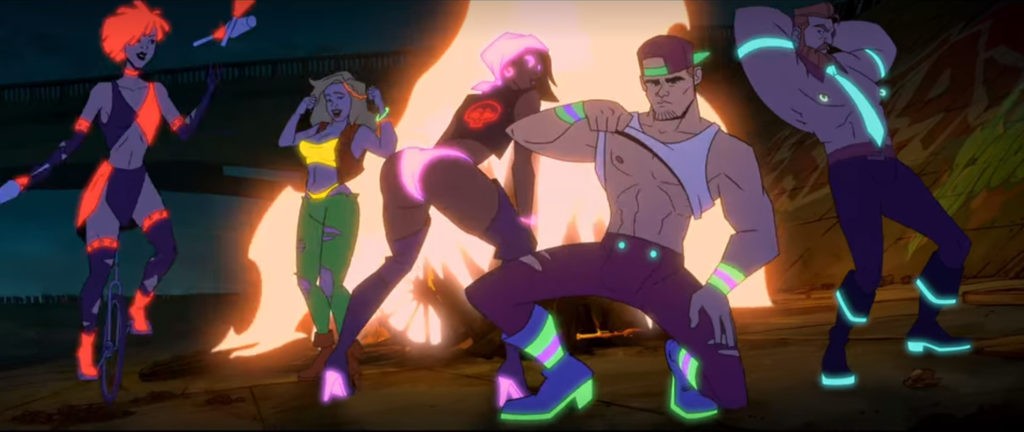
The satire is built on contrasting historical facts with modernity. However, the film doesn’t attempt to give any evaluation of either—we see contrast for the sake of contrast. It’s like watching a completely illogical themed party where historicity is preserved only partially in the costumes.
An additional downside is alienating the foreign audience simply because the average Russian/Finn/Japanese person isn’t familiar enough with US history to catch jokes about the Boston Tea Party or Bunyan.
What went wrong with the humor
Okay, let’s take another example where characters who behave anachronistically are front and center. And again, let’s turn to one of my favorite cartoons—“The Emperor’s New Groove.” Please, we can watch Emperor Kuzco using slang and acting like a typical representative of the “golden youth.”
Why don’t we feel the urge to facepalm? Because this aspect is given in very measured doses, the secondary characters (especially the character named Pacha, with whom Kuzco spends the most screen time) are quite consistent with the setting, and the story doesn’t rely solely on references to all sorts of realities to move forward.
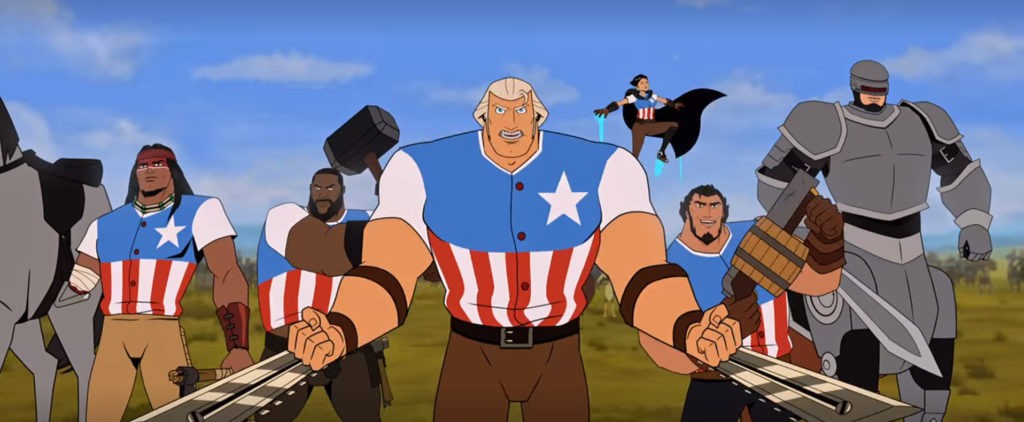
In “America,” all, absolutely all characters exist outside the time being mocked. Each of them inserts inappropriate phrases and behaves like a pompous idiot college student.
I’d like to note two things separately.
First, how much I hate references for the sake of references! For example: George Washington has a son. Guess in two tries what he names him. Of course, Denzel. Why? Because there’s an actor named Denzel Washington. What, you’re not laughing yet?
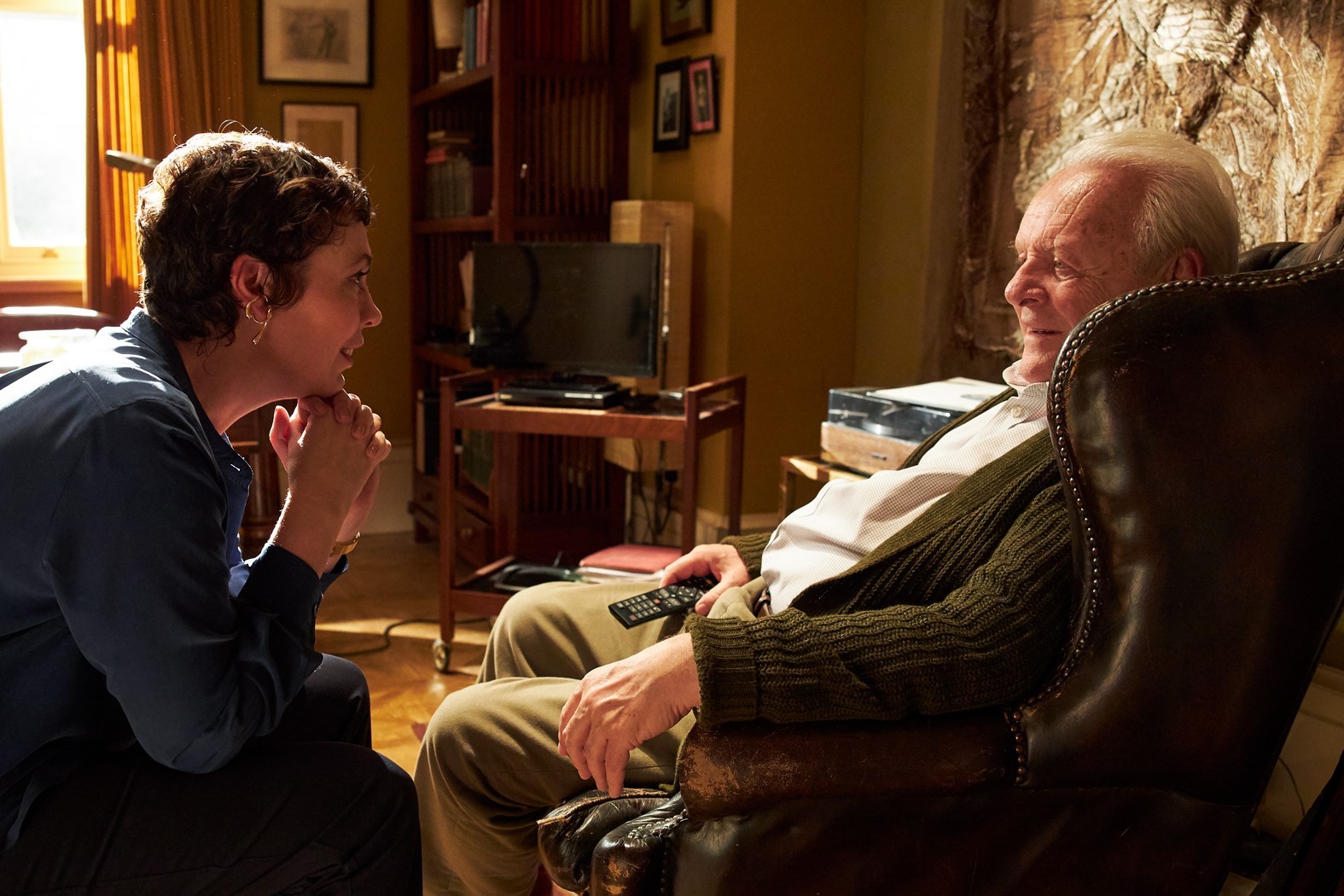
Second, there wasn’t a single—I repeat, not a single!—joke in the film that even made me smile. Not. Once. In. The. Whole. Film. And this is despite the fact that I’m very easy to get emotional (I was sobbing over “The Father” for another fifteen minutes after it ended). They had to try really hard to achieve that.
What went wrong with the structure
We finally get to the biggest problem with “America: The Motion Picture.”
After all, in both examples I mentioned—in “Shrek 2” and “The Emperor’s New Groove”—there are inappropriate Easter eggs or unfunny jokes. So why do I get delighted in one case and feel like vomiting in the other?
Because, despite all the comedy, both of my favorite cartoons have an excellent emotional foundation and aren’t afraid to stop joking.
“The Emperor’s New Groove” perfectly builds Kuzco’s character arc, where he realizes that friendship and mutual help are much more important than selfish desires. And “Shrek 2” delves into deep psychological struggles with self-rejection and the feeling of not meeting one’s partner’s expectations. Wow, I need to rewatch it again.
Is there anything like that in “America”? I think you already guessed.
Conclusion
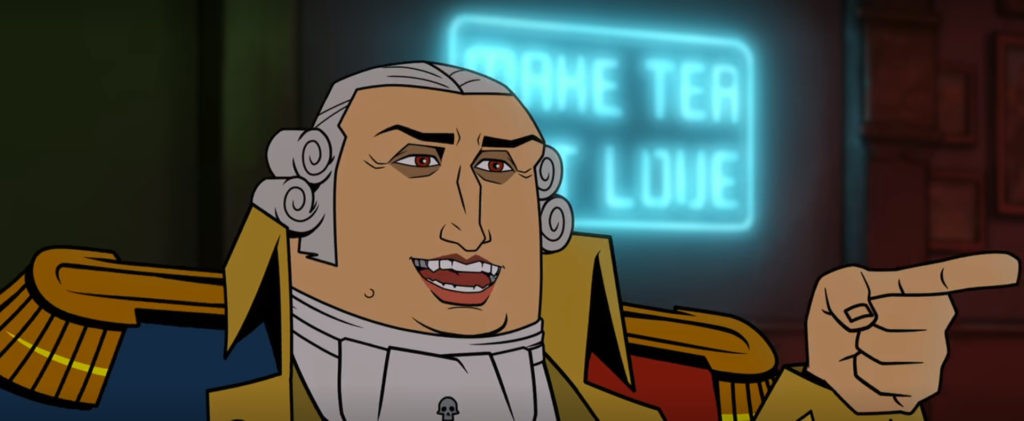
Did I really not like anything at all? Well, the animation is decent, as expected from the creators of “Archer,” plus the character of Benedict Arnold is well-drawn (Andy Samberg at least tried to voice him somewhat interestingly, but that’s only audible in the original).
That’s about it.
And the conclusion here can only be one: if you suddenly feel like watching “America: The Motion Picture,” it’s better to rewatch “Shrek 2.” Remember how amazingly the song “I need a hero” was performed in it? Still gives me chills.
Comments
0No comments yet.
Sign in to join the discussion.