
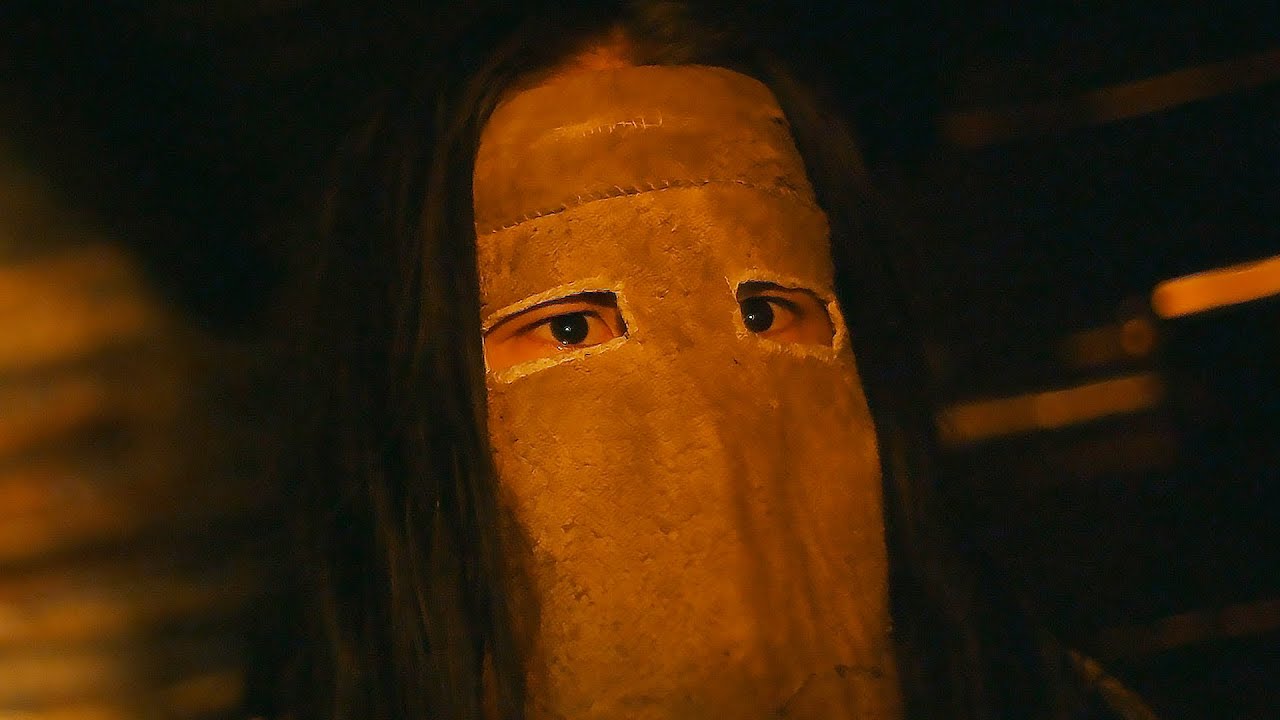
We explain why «Ichchi», although it starts as a typical horror film, is a colorful and engaging movie.
The phenomenon of Yakut cinema has been manifesting itself in an amazing way lately. These films share positive traits with American cinema, rather than with classic Russian cinema, which unsuccessfully copies American cinema. And «Ichchi» by Kostas Marsan is a clear confirmation of this.
Day-Night-Morning
The most large-scale dimension of the film is the 3 stages of a person's dying. In many pagan cultures, they are presented in exactly this way: life, limbo (transition), death (oblivion). All the events of the film take place over just one day, during which we are shown this full life cycle.
Day: A Classic Horror Setup
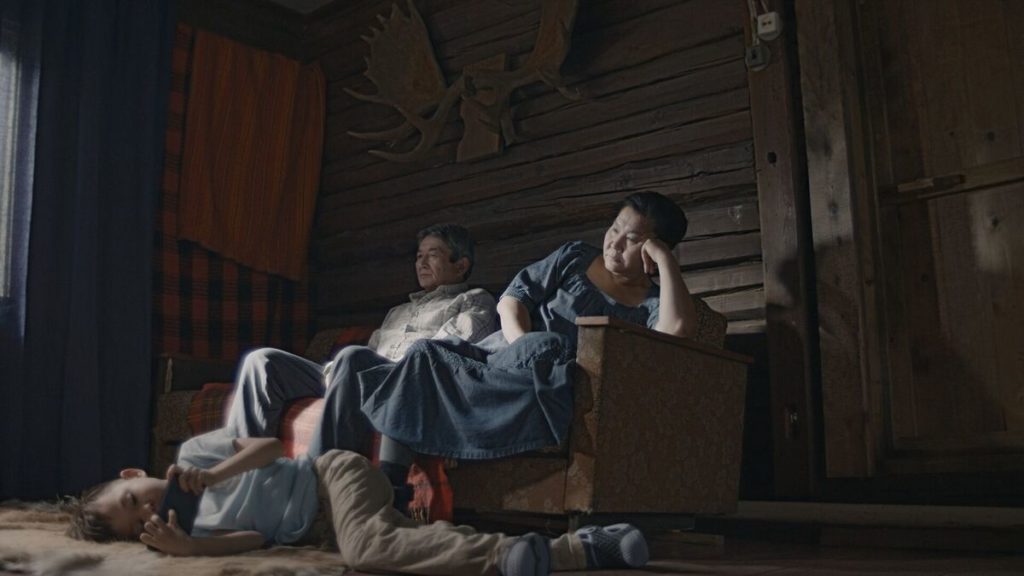
The eldest son from the city arrives with his wife and son at a house in the woods to visit his elderly parents. The younger brother lives with the old folks, helping them with the household chores. He is quiet, unsociable, and not very happy about the arrival of his city relative, unlike the parents, who dote on him.
Getting to know the characters and the grandmother's terrifying stories make the daughter-in-law (and with her, the viewers), who already feels like a stranger in her husband's parents' home, even more tense. And then there's the child — a favorite tool of horror directors, which immediately arouses suspicion in an experienced viewer.
In the setup, it's worth noting separately the handheld camera work of Leonid Nikiforenko, which trembles and wanders across the characters' faces. In this way, the viewer almost always sees the events from a first-person perspective, except for static wide shots of landscapes against which the events take place.
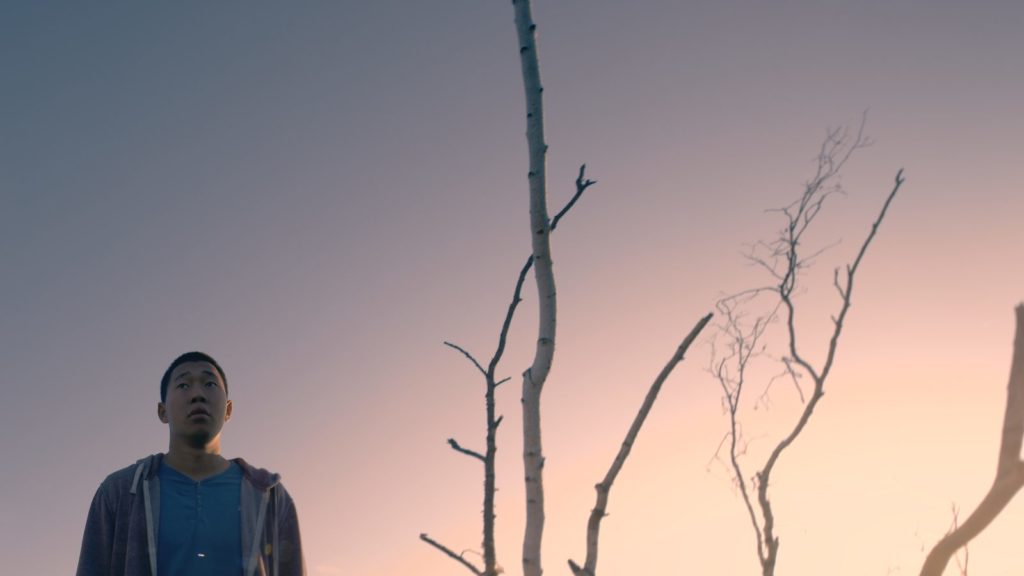
At the beginning of «Ichchi», a domestic drama unfolds in the background, revealing the reason for the eldest son's arrival and showing the relationships between everyone. No mysticism, just everyday life. And a very sad everyday life at that, in the style of Bykov: the husband bullies his wife, the mother disapproves of her daughter-in-law, rolling her eyes and sighing whenever possible, the younger son is pushed into the background and perceived only as a source of labor. The characters are humanized to such an extent that you begin to believe in them as real people. But then night falls...
Night: Fear of the Dark
One of the most beautiful solutions I noticed in «Ichchi» is the work with light in the darkness. Just like the main «day-night-morning» framework, the night is divided into logical fragments, but not by time, but by the volume and nature of light in the frame. First, there is the house glowing with all its windows lit. Then, as people leave the house, they seem to take this light with them. When everyone leaves the house, the light inside goes out as if by a gust of wind. The characters still have flashlights and phones, but as the events unfold — absolutely mystical and terrifying, of course — there is less and less light. When the light goes out, you realize this is the climax. If it was scary before, now you brace yourself for something truly horrible.
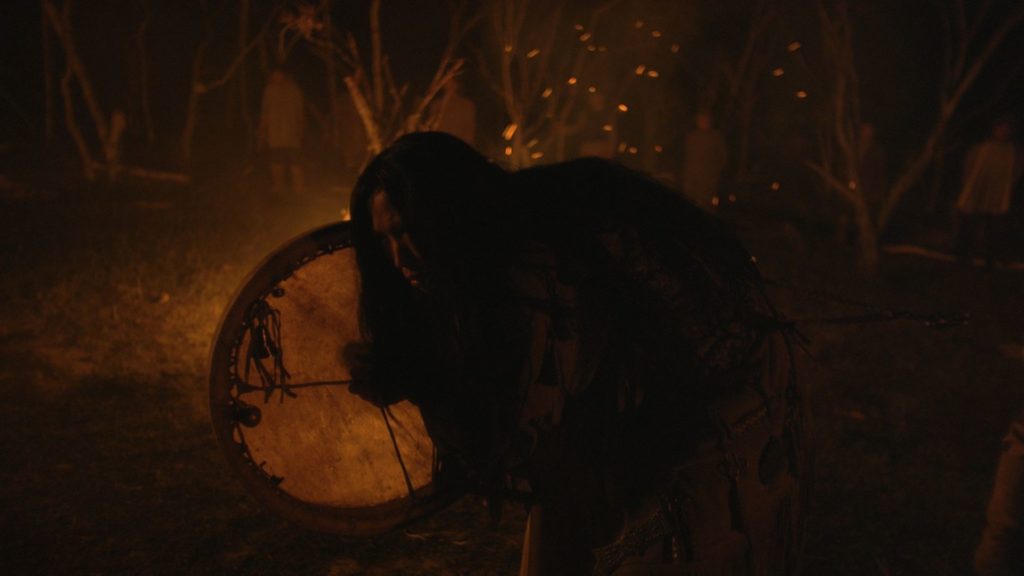
In the general haze of «Ichchi», Kostas Marsan scattered clues for the viewers; not a single detail is accidental. Gradually, they come together into a single story about local shamans and spirits, which became the cause of the night's troubles. And a new type of light appears — fire.
This new source of light gives the story another turn, immersing the viewer even deeper into the events and illuminating the past. Here, fire is a symbol of purification and burial rites, one of the main tools for conducting rituals. In the pre-dawn gloom, it looks alarming and alien to the characters: fire is something dangerous, it's not about light and finding a path; it's about wildness and madness.
Here, perhaps, it's worth stopping, because further on it will be difficult to talk about what the director actually intended without spoilers. And the game of «guess what was real in the frame» is maximally interesting and provides a wide field for interpretation, but doesn't leave many questions unanswered.
The Film Keeps You on Edge Until the Final Frames
Kostas Marsan's film captivates from the first seconds and holds you until the very last frame. The director doesn't give you time to think about references (although you can spot inspiration from Robert Eggers' «The Witch»), because a story that seems quite clichéd at the start begins to unfold into something completely unpredictable, or predictable only for those well acquainted with Yakut folklore and mentality.
Before watching, it wouldn't hurt to learn a little more about Yakut shamans and their worldview in order to fully appreciate the magical world of the film and how deeply it is imbued with this logic of the otherworldly. Even after the film, answering journalists' questions, the director speaks about the mystical events of his story as something self-evident. Ichchi itself is an abstract mystical force of a place/thing, a spirit without a specific form that, for some reason, is acquired by a place or thing. It is a force to be reckoned with. Just like Yakut cinema, which has given us another film we won't forget.
Trailer:
Comments
0No comments yet.
Sign in to join the discussion.