
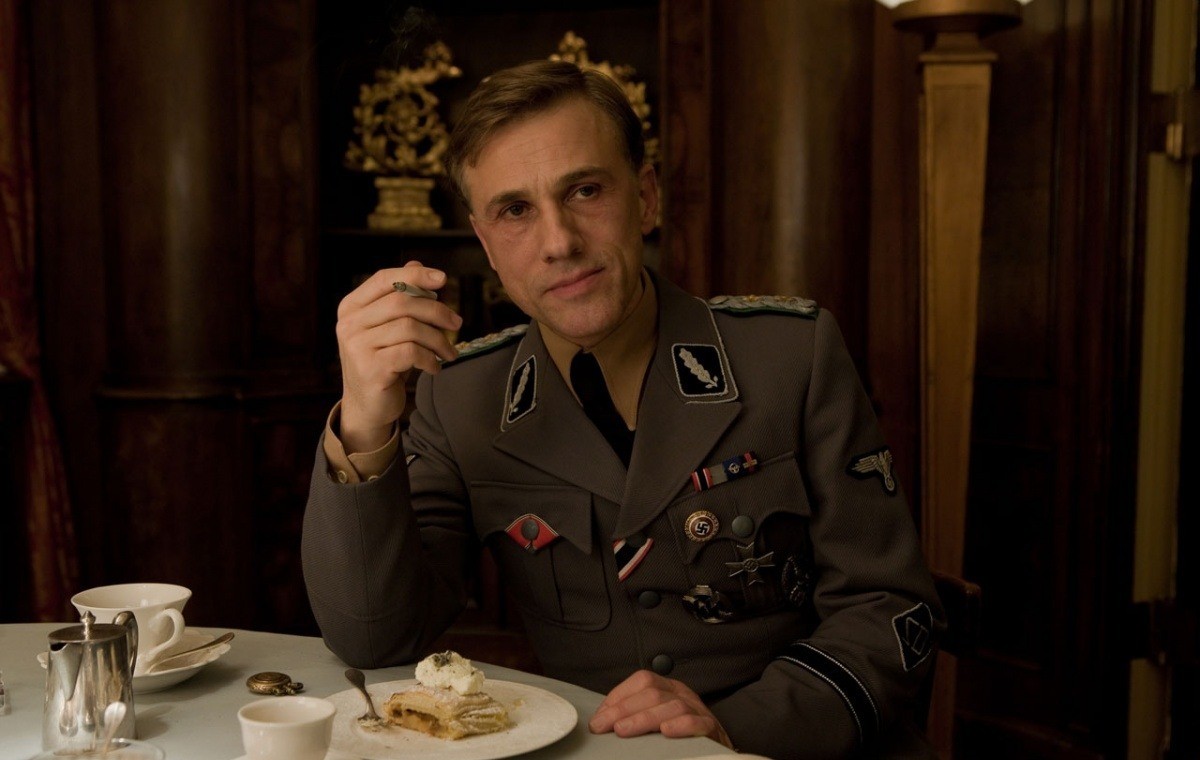
Many movie lovers are happy to name Quentin Tarantino among their favorite directors – and no one will argue with them. Even if we take just one, the very first scene from his film 'Inglourious Basterds', we can clearly show why Quentin is great and unsurpassed.
Warning! It is impossible to avoid several spoilers when discussing the scene. You have been warned.
What Creates Tension When Watching a Movie?
We, the spoiled audience, love to experience emotions while watching cinema, and Tarantino masterfully uses techniques that evoke a feeling of tension in us.
Doing this is both simple and incredibly difficult – through a well-constructed conflict, dissonance, or instability, from which arises a natural desire to move into a more familiar and stable state.
'Inglourious Basterds' begins by showing the everyday life of a simple French farmer and his family, whose stability is suddenly disrupted by the arrival of the Nazis – and this is felt not only by the farmer LaPadite, but also by us, silently witnessing the unfolding events.
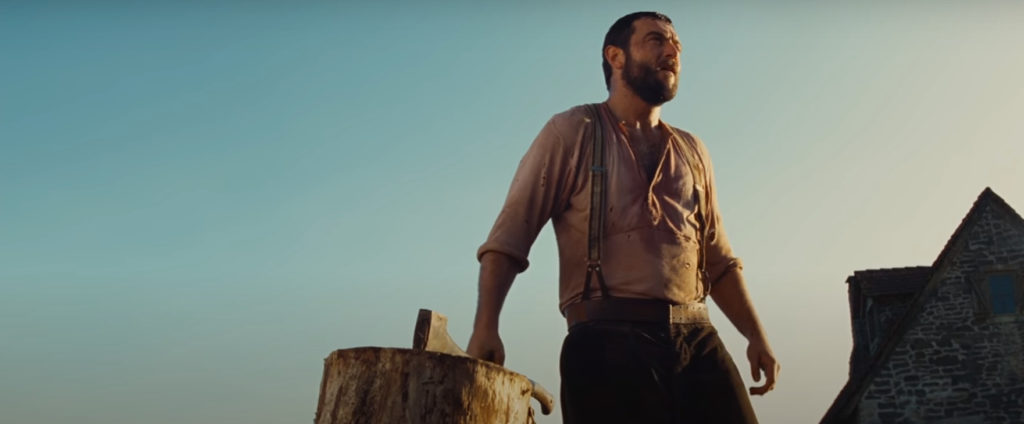
The arrival of the SS also perfectly illustrates another component that, one way or another, creates the right 'wrong' atmosphere – it brings an awareness of the lack of control over the situation. The inability to influence events one way or another leads to a feeling of tension, and in this case, the very art form that is cinema also plays into this – Tarantino masterfully uses the audience's lack of control over what happens on the screen.
The Dialogues Tarantino Writes
When writing the script, Tarantino was well aware that the intensity of tension is directly proportional to our emotional involvement in what is happening, so he skillfully built the upcoming events on paper.
Quentin, like a seasoned magician, hides important plot information in a large number of seemingly insignificant phrases. The viewer does not even realize their significance until they begin to influence the plot.
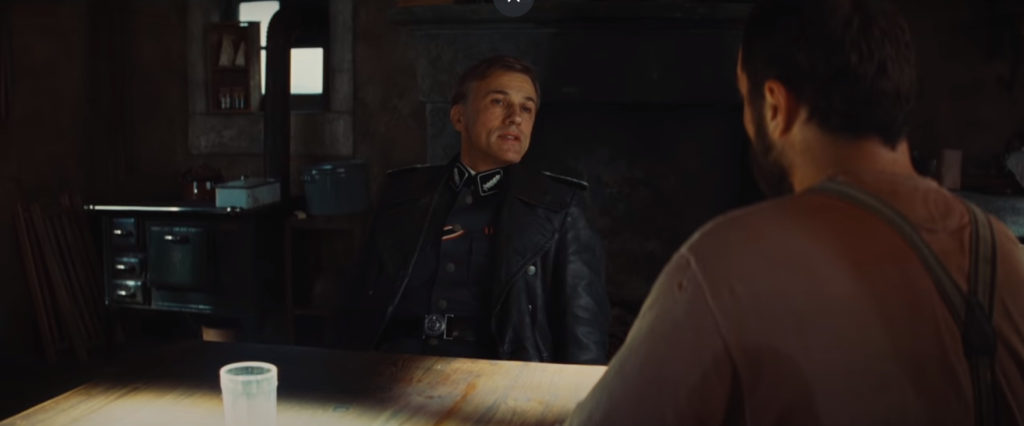
At the same time, the dialogues in this film never serve a single purpose; they always try to accomplish two or more tasks simultaneously. Let's take an example: when Standartenführer Hans Landa, sitting at the table in front of LaPadite, asks the farmer to himself voice the rumors circulating about Landa's activities – this is not just a way to establish exposition and set the pieces on the board, but also an extremely pleasant and necessary assertion of Landa's own power and influence.
Uncertainty
The viewer understands perfectly that for the first half of the conversation, Landa is playing with LaPadite. For example, when he asks for completely unnecessary permission to switch to English. By doing this, he seemingly gives power to LaPadite, although both characters are well aware that this is not the case, since Hans Landa has several armed soldiers at his disposal.
Thus, Tarantino achieves the opposite effect, reminding us of how little control the farmer actually has.
At the same time, uncertainty comes not only from the character of Landa, but also from the lack of information provided to the viewer.
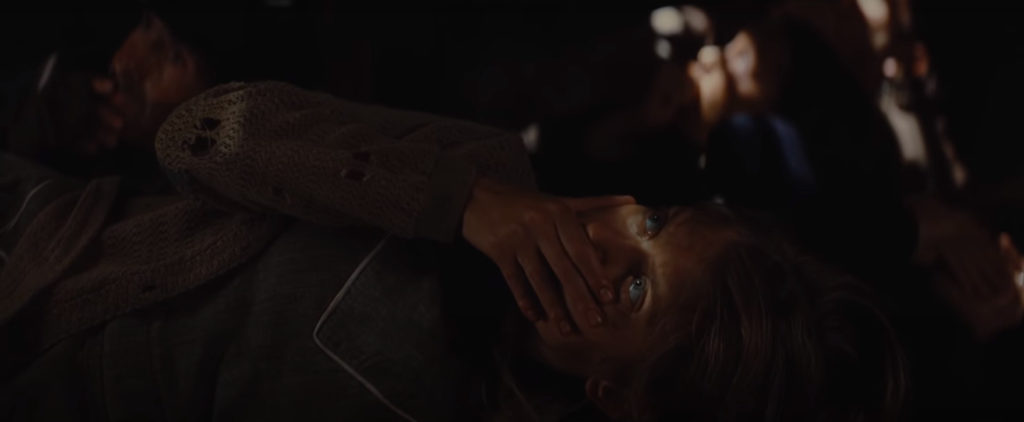
In the middle of the scene, using a clever directorial technique, Tarantino suddenly reveals his cards and provides us with the context that will affect the course and our perception of what is happening in the multi-language conversation – all this time, under the floorboards, LaPadite was hiding a Jewish family, the very ones Landa is hunting.
The Bomb Under the Table
The famous master of suspense, Alfred Hitchcock, when talking about his craft, once proposed the following mental experiment.
Imagine a couple of people sitting at a table, talking, say, about baseball. After five very boring minutes, a bomb suddenly explodes under the table. What effect have we achieved on the audience? Suppose, roughly five to six seconds of shock.
But now we take the same scene and tell the viewer in advance that there is a bomb hidden under the table that will go off in five minutes. Suddenly, it's no longer a boring conversation. Suddenly, every word is filled with the viewer's emotional experience.
At the moment when Tarantino showed us the Jewish family under the floor, every piece of information, even the most insignificant, becomes important to us.
The Effect Produced
Let's return to our scene. Landa finishes his work and heads for the exit – relief, the return of stability and control are so close you can feel them at your fingertips. Then Landa asks for another glass of milk and begins a monologue comparing Germans to eagles and Jews to rats – Tarantino stretches the scene as much as possible, waving the resolution of the conflict right under our noses, but never giving it to us.
We don't understand where it's all going. Due to the uncertainty, the tension keeps building. Suddenly, the metaphor ends with specifics from Landa – and we move from the question 'Will Landa find out about the Jewish family?' to the question 'What will he do now that he knows for sure?'
Any resolution, good or bad, leads us to the establishment of a new stability. And we know Tarantino, who is not afraid of bad resolutions. Stability is achieved again with a simple wave of the hand by Standartenführer Hans Landa.
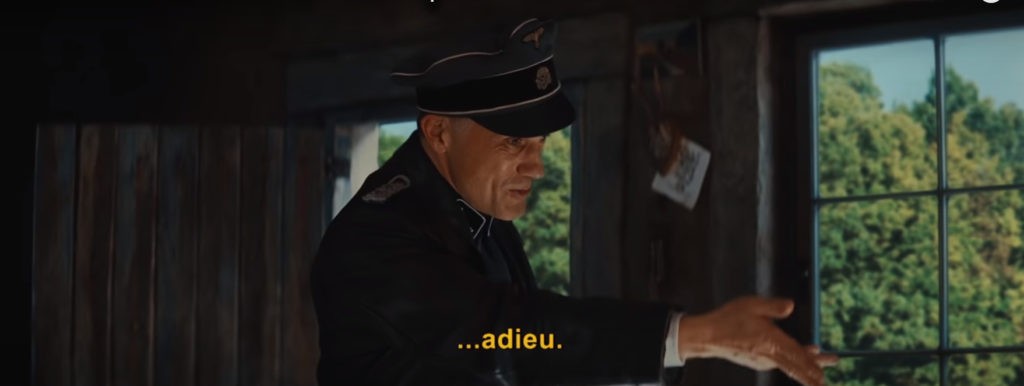
That's how easily the smallest elements can turn a simple conversation over a glass of milk, a card game, or eating dessert into some of the most tense scenes in cinema history.
You can buy tickets for a screening of 'Inglourious Basterds' on May 22 in St. Petersburg and May 30 in Moscow from our wonderful colleagues at #ARTPOKAZ.
The smart ideas for this article were drawn from the brilliant video by the channel 'Lessons from the Screenplay', which you can check out at this link.
Comments
0No comments yet.
Sign in to join the discussion.