

Sometimes a film doesn't need to be innovative, surprising, or eventful to grab your attention and hold it until the very end. "Supernova" is perfect proof of that.
The Story of Sam and Tusker
If you've read the synopsis on Wikipedia, Kinopoisk, or a promotional flyer at the cinema, you already know the full plot of the film. Pianist Sam (Colin Firth) and writer Tusker (Stanley Tucci) embark on a journey through suburban Britain to reach a concert that the retired Sam has agreed to give. Along the way, they reminisce about old times, talk about the stars, and are forced to live with the fact that Tusker, whose dementia is gradually progressing, is no longer the person he used to be.
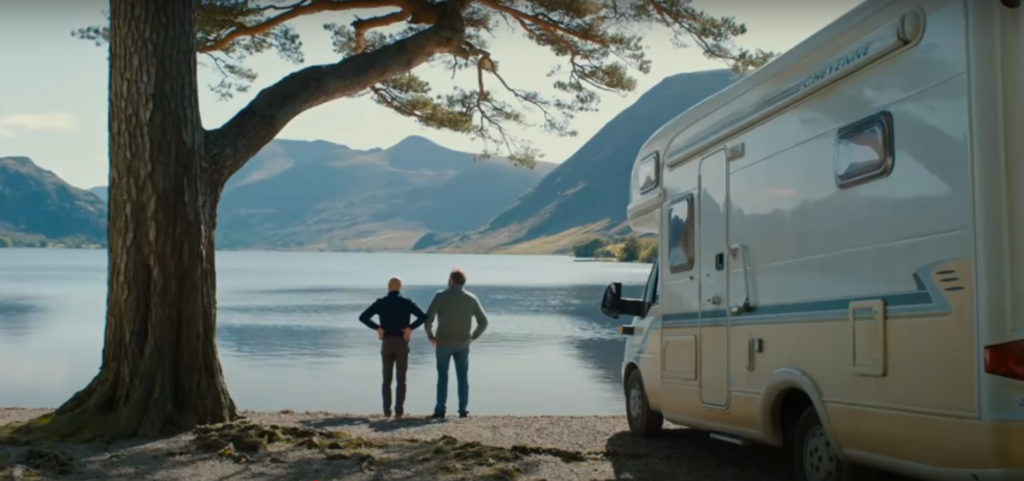
I haven't seen such chemistry on screen in ages as that between Firth and Tucci. You don't just believe them – oh no. Before us are precisely people who have lived side-by-side for many years, knowing each other inside out, capable both of teasing their partner at the right moment and supporting them with the warmest words.
"Supernova" – Ideal Representation
If you haven't figured it out yet, Sam and Tusker are married. However, you'll be watching a film not about the hardships and deprivations of the LGBTQ+ community; they won't remind you every two minutes how tough it is in our time to have a non-standard orientation. No, this is a personal story of two men trying to live with the tragedy that has befallen them.
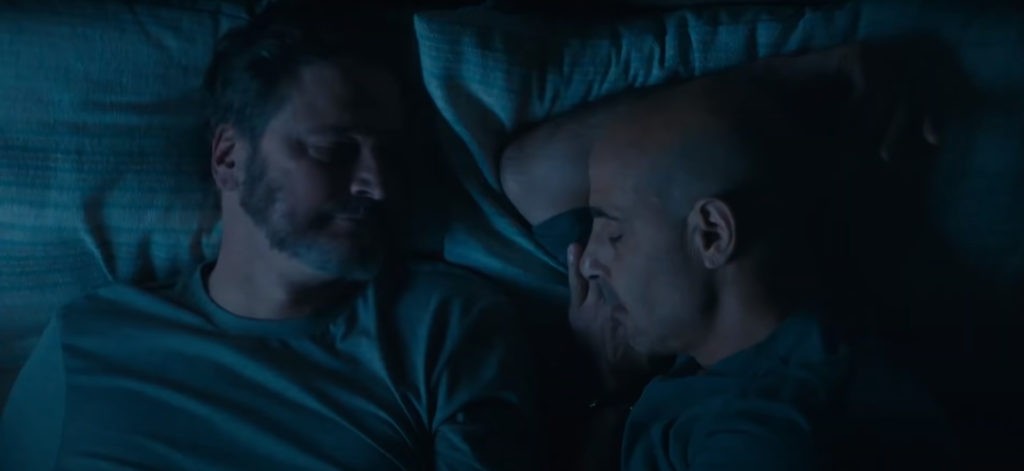
This is exactly the kind of representation that is so pleasant to see on screen – no emphasis on social subtext, no antagonists or bigoted relatives who don't accept our heroes, only endless love and tenderness.
The Landscapes of "Supernova" as Another Character in the Narrative

Wherever our heroes go, they are always surrounded by the endlessly beautiful landscapes of Britain. As if nature itself had traveled with them – so beautiful, yet autumnally gloomy and fading. The color palette perfectly conveys the mood and state of the characters and results in visuals that are so pleasant to watch.
Dementia and Attempts to Resist It
And now, finally, we come to the topic that is the epicenter of this film. Honestly – if you have had a close and dear person who in one way or another suffered from a fairly serious illness, I would advise you to think carefully before watching "Supernova." Is it worth rubbing salt into the wounds?
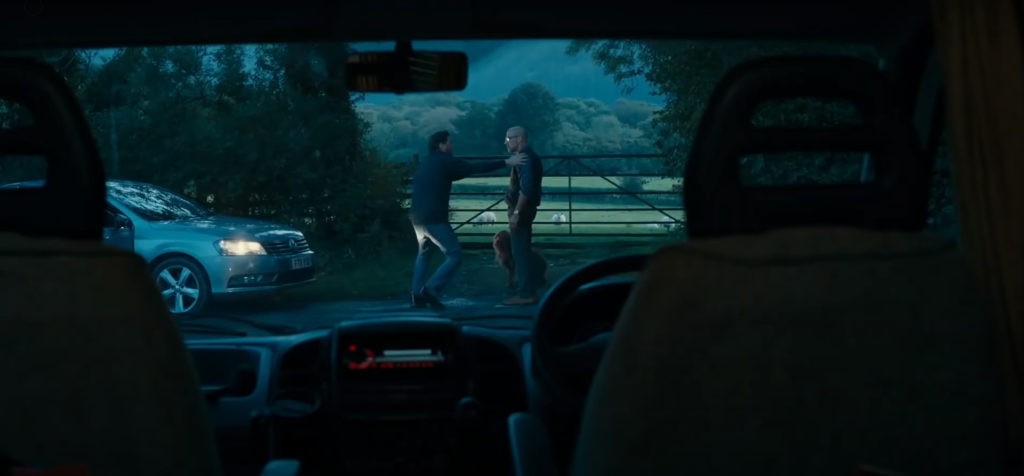
On the other hand, thanks to it, I personally experienced catharsis. Because it is so hard to live next to a person who now only vaguely resembles the one they once were. You still see glimpses, but you know that even though they are still in there somewhere, soon nothing will be left of them.
The tragedy that Sam and Tusker are trying to break through touches them both on an unfathomable level. They both try to pretend everything is fine and nothing has changed, sometimes afraid to admit even to themselves that everything has changed.
And it is very frightening. Very frightening, very sad, and very touching.
A Conversation the Length of a Journey
The film doesn't feel like a collection of scenes during Sam and Tusker's journey, although that's essentially what it is. The film feels like a single conversation that starts innocuously enough and ends with the deepest reflections on the memory that remains within us and that we leave behind.
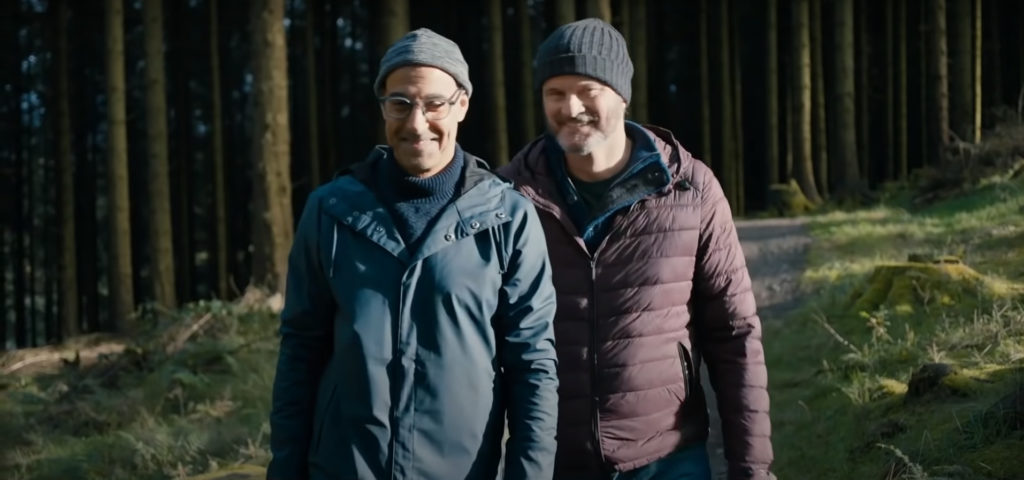
The two heroes exist on screen as if in their own world. They joke, they talk about small things and observations, but they also try to make sense of what surrounds them. Therefore, the film feels endlessly intimate, as if the whole world has converged on these two characters.
Meanwhile, the supporting roles are also excellent and well-acted (especially Pippa Haywood who was a delight), even if they serve more to highlight the main dilemma.
The Ending
The ending, however, is perhaps the strangest and most ambiguous element of the whole story. I wouldn't want to spoil the impression for those who want to watch the film (and if you haven't figured it out yet, I strongly recommend watching this film), but the ending, although inevitable and quite logically follows from the characters' musings, can be very off-putting.
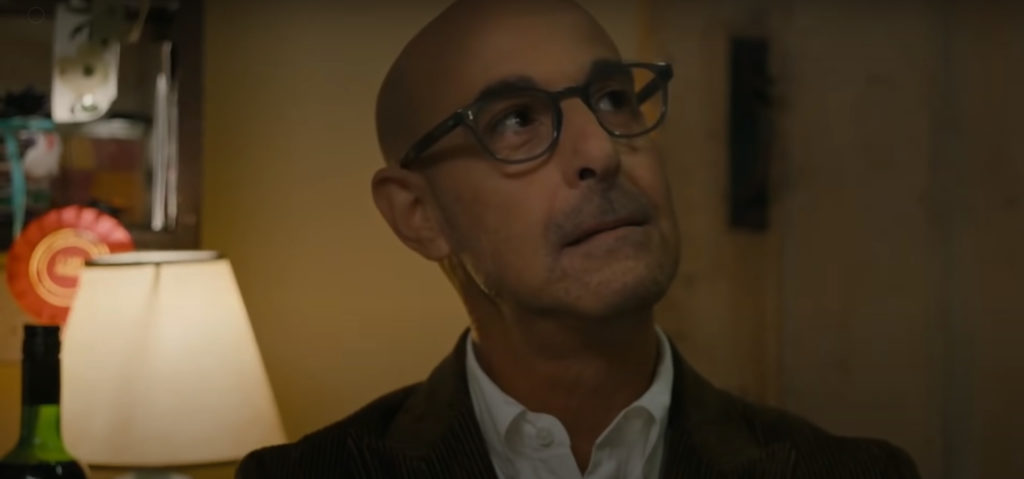
A certain romanticization of the patient's condition, which the film had avoided the whole time, suddenly starts to seep through and ruins the constructed framework. Not enough to make the film ultimately evoke unpleasant feelings, but, again, if you have personally encountered a similar situation, you might have many questions that the film won't answer.
Conclusion
This is excellent cinema. Delicate, endlessly tender, and beautiful, with the emphasis precisely on the attachment of two people to each other, rather than on passion or agenda. Moreover, the film is quite short (about an hour and a half in total), so it definitely won't feel drawn out or get boring, despite its fairly slow pace.
So, if this review has piqued your interest even a little – go watch it. You definitely won't regret it.
Comments
0No comments yet.
Sign in to join the discussion.