
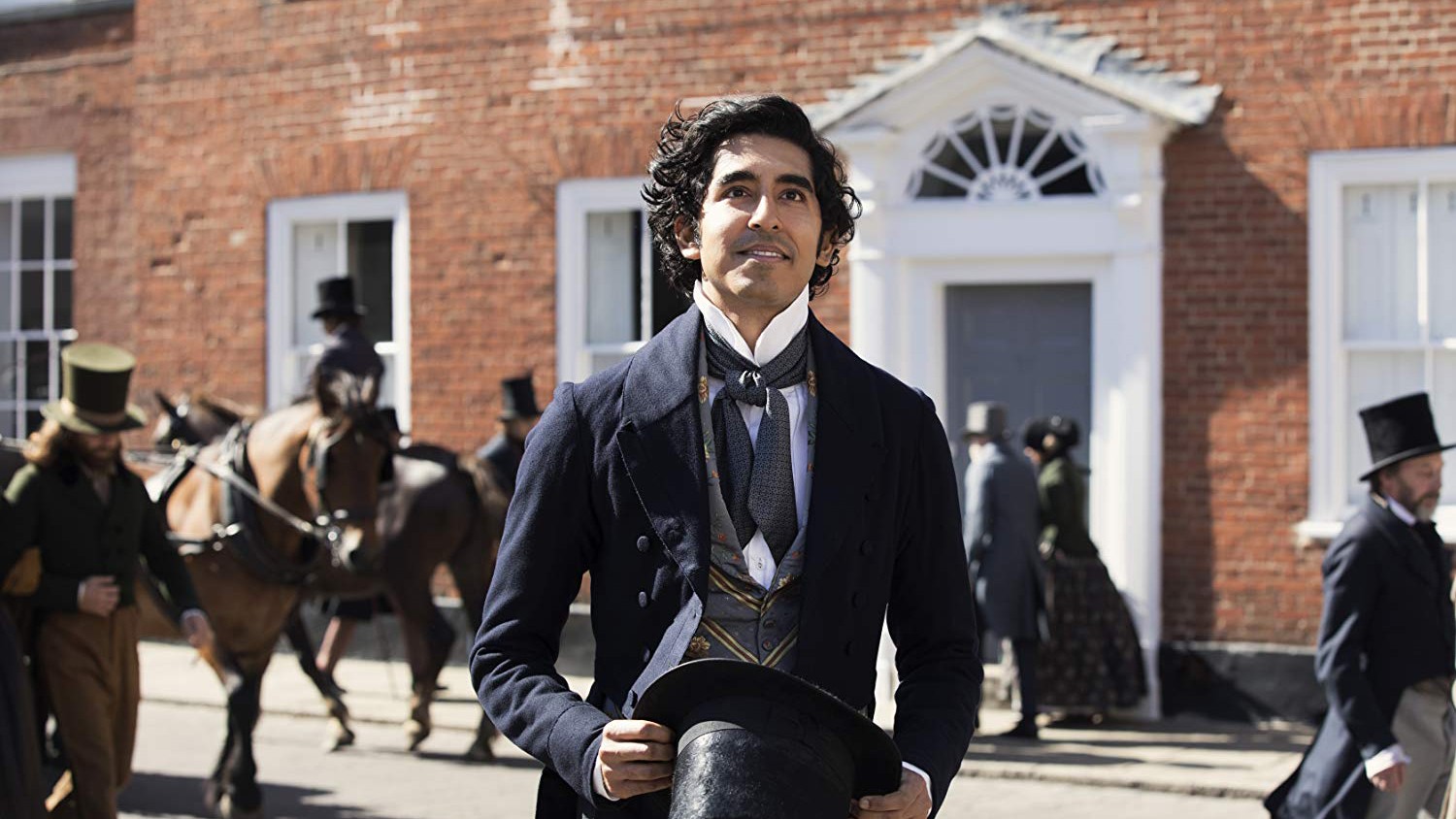
Armando Iannucci in his new film ‘The Personal History of David Copperfield’ attempted to adapt Dickens’s great text without betraying his signature style.
Sometimes after work, you just want to grab a cup of good black tea, hug your beloved cat (or dog, whichever you prefer), and put on a light, positive film. So let’s figure out why “The Personal History of David Copperfield” is perfect for one of those evenings.
What’s the story about?
The eighth novel by Charles Dickens, largely autobiographical, is one of the classic examples of the bildungsroman. And the overall plot has likely crossed your path more than once. A child who lives a relatively happy childhood becomes a victim of an evil stepfather, is forced to leave home, and must try to survive on their own – raise your hand if this setup sounds familiar.

This makes the director’s task even harder – to take a somewhat overused story and present it to the audience with a twist or in a new package; and the fact that Armando Iannucci, who was recently on everyone’s radar thanks to his previous film, “The Death of Stalin,” took the director’s chair only adds to the interest in the film.
Undeniable Pluses of “The Personal History of David Copperfield”
The first thing that catches your eye is the style. Rich, bright, with a swift narrative pace that still allows for occasional breathers. Thanks to this, everything on screen feels like a fairy tale – a vivid fairy tale about life in the Victorian era, with certain conventions you embrace with open arms.

The costume designer deserves a special mention – you just can’t take your eyes off the costumes! Always varied, always perfectly highlighting the character’s emotional state or personality, yet never looking cheap or vulgar.
The sets and location shooting give the atmosphere a certain enchanting charm – sometimes of the British countryside, sometimes of a dirty but lively metropolis. It’s easy to catch the happiness shining in young David’s eyes when he first sees a particular place.
Questionable Decisions
Next, we come to the actors – and here the average Russian viewer experiences the first wave of awkwardness. After all, the presence of racial minorities in London high society of that time is a significant liberty. In light of the news about the new Oscar eligibility rules, it’s hard not to think about “quota casting.” However, the phenomenon of “color-blind casting” is nothing new, and all the actors perform quite evenly, making this liberty easy to forgive.

What’s much harder to swallow is that the acting in this film is rather... faceless, which is especially irritating given the big names of the British acting community. Peter Capaldi and Hugh Laurie are as eccentric as ever, Tilda Swinton is as regal as ever. Dev Patel and Ben Whishaw stand out a bit, making them interesting enough to watch, which helps you not dwell on the secondhand nature of their characters.

It’s also extremely interesting to sit and ponder the difference in mentality between Russian and British audiences. Throughout the film, David Copperfield’s talent for writing manifests primarily through his amazing ability to come up with a fitting metaphor for any occasion and for any person who enters his life. These metaphors so appealed to English-language filmmakers that the script has already won the British Independent Film Award. It’s all the more curious that for a Russian viewer, an overdose of analogies, stripped of English wordplay, might seem far-fetched.
What Didn’t Work?
The biggest drawback of the film is the wrong balance between drama and comedy. Neither feels convincing even on its own – you don’t really want to laugh at the gags, nor do you want to feel sad about the tragedy. And the film itself doesn’t know how to properly transition from a sweet, utterly implausible scene to brutal romantic realism. These transitions are so jarring that the viewer’s first reaction is to assume that everything sweet and fairy-tale-like that came before was just the protagonist’s vivid imagination.

Verdict
Despite the negatives, the film is wonderful, light, bright, and kind, with its core message not getting lost among the vivid and eccentric elements. If you like Dickens, Jane Austen, or the Brontë sisters in an atmosphere vaguely reminiscent of Wes Anderson’s films, even without his trademark symmetrically composed shots, then this film will definitely appeal to you. The main thing is not to expect something radically new from it – but who said that’s always a bad thing?
Comments
0No comments yet.
Sign in to join the discussion.