
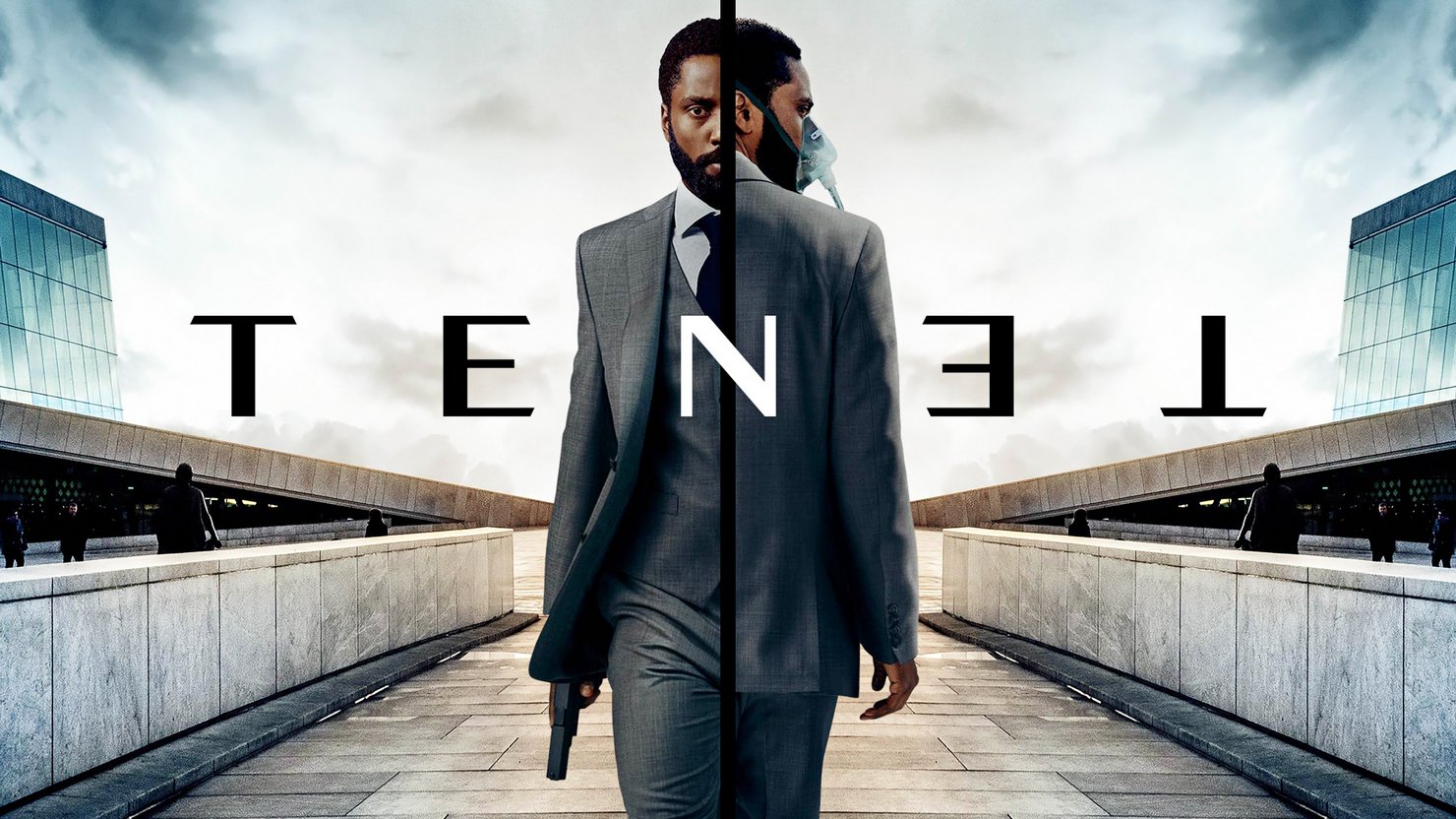
Tenet is not bad, but if you remember that its director was Christopher Nolan...
A short and very emotional essay in which a fragile female reviewer, avoiding spoilers as much as possible, tries to understand what and how went wrong in the new film Tenet.
Introduction
In literature, there is an interesting term, "the death of the author," named after Roland Barthes' 1967 essay. The term usually denotes the refusal to consider the author's personality, ethnicity, political views, or historical context when reading and critiquing a text. This term, as well as the essay itself, has been the subject of much debate since its inception. In cinema, however, the "death of the author" is in the vast majority of cases simply impossible: the director's personality influences too much how we perceive the work. It is impossible to watch the film "Mother!" without considering the biblical allegories that Darren Aronofsky embedded in it. You cannot watch films by David Lynch or Lars von Trier without having an idea of who they are and what they are trying to say with their work.
In recent years, having Christopher Nolan's name in the director's chair has been equated with a mark of quality. If you go to a Nolan film, you are guaranteed beautiful visuals, excellent sound, and an intriguing plot. Christopher has established himself so masterfully that even the small warning signs that were already sounding in "Interstellar" did not prevent film lovers from being crazy about his work.
In the case of "Tenet," Nolan's name affects the film with a minus sign.
General Impressions
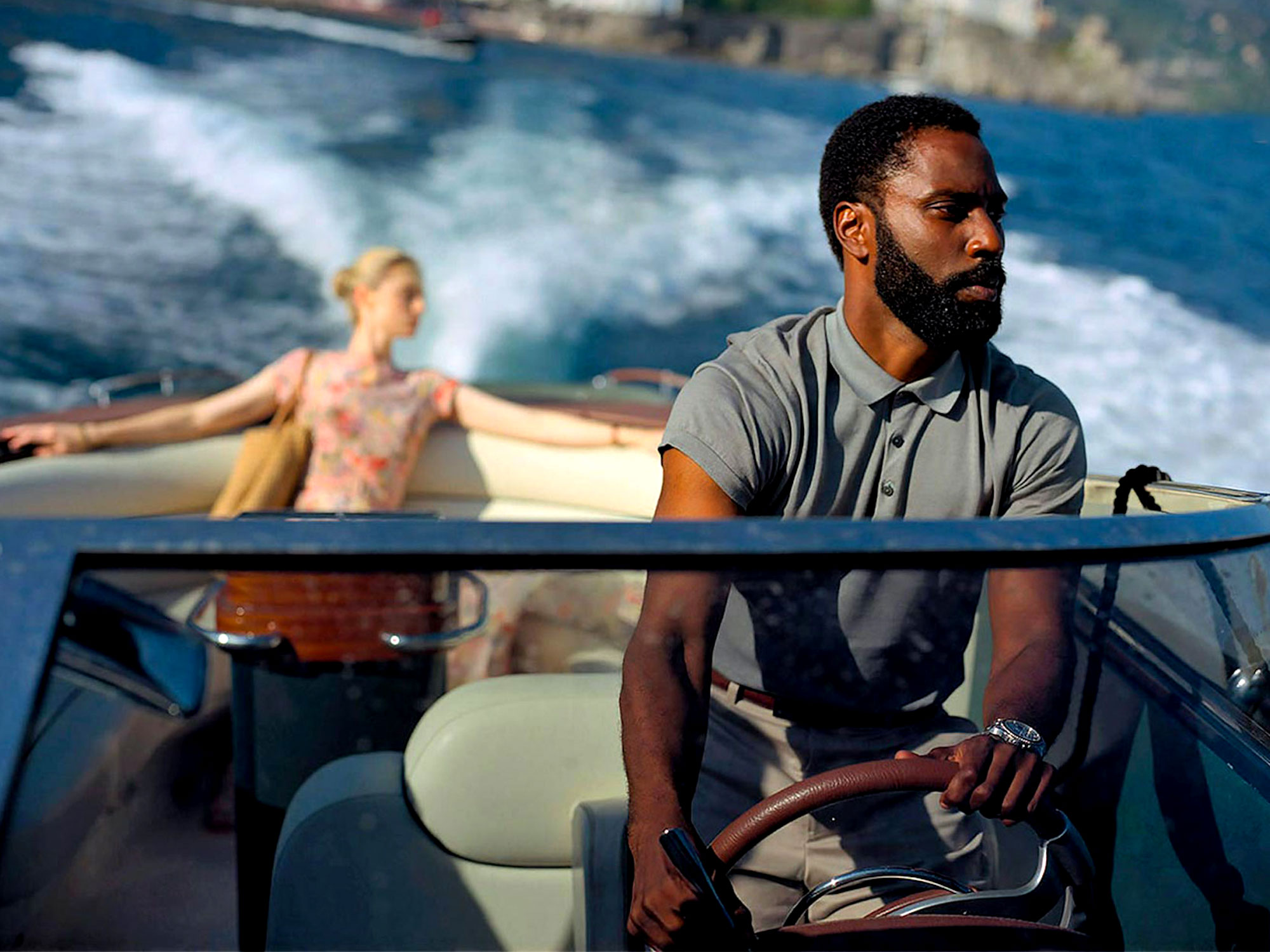
Due to the situation that has taken hold in the world, the release of "Tenet" was not just eagerly awaited by film lovers – people prayed that cinemas in their city would open during its run. This, combined with the director's name, the intriguing storyline from the trailer, and an interesting ensemble of actors, greatly influenced the level of expectation for the film.
My advice to you – never fanatically expect anything, disappointment can be very painful.
Is "Tenet" bad? No. It is not a bad film. It is interesting to watch, the actors try, the visuals please the eye, the music is always fitting. Is "Tenet" good? Well, that is a very difficult question, because the author of this review left the cinema with a lump in her throat and spent a very long time trying to determine her feelings, which she will now try to break down in more detail. Rather, it is good. But that is precisely its main problem – in the word "rather" and the amount of time it took to formulate this simple thought.
First, the Pros
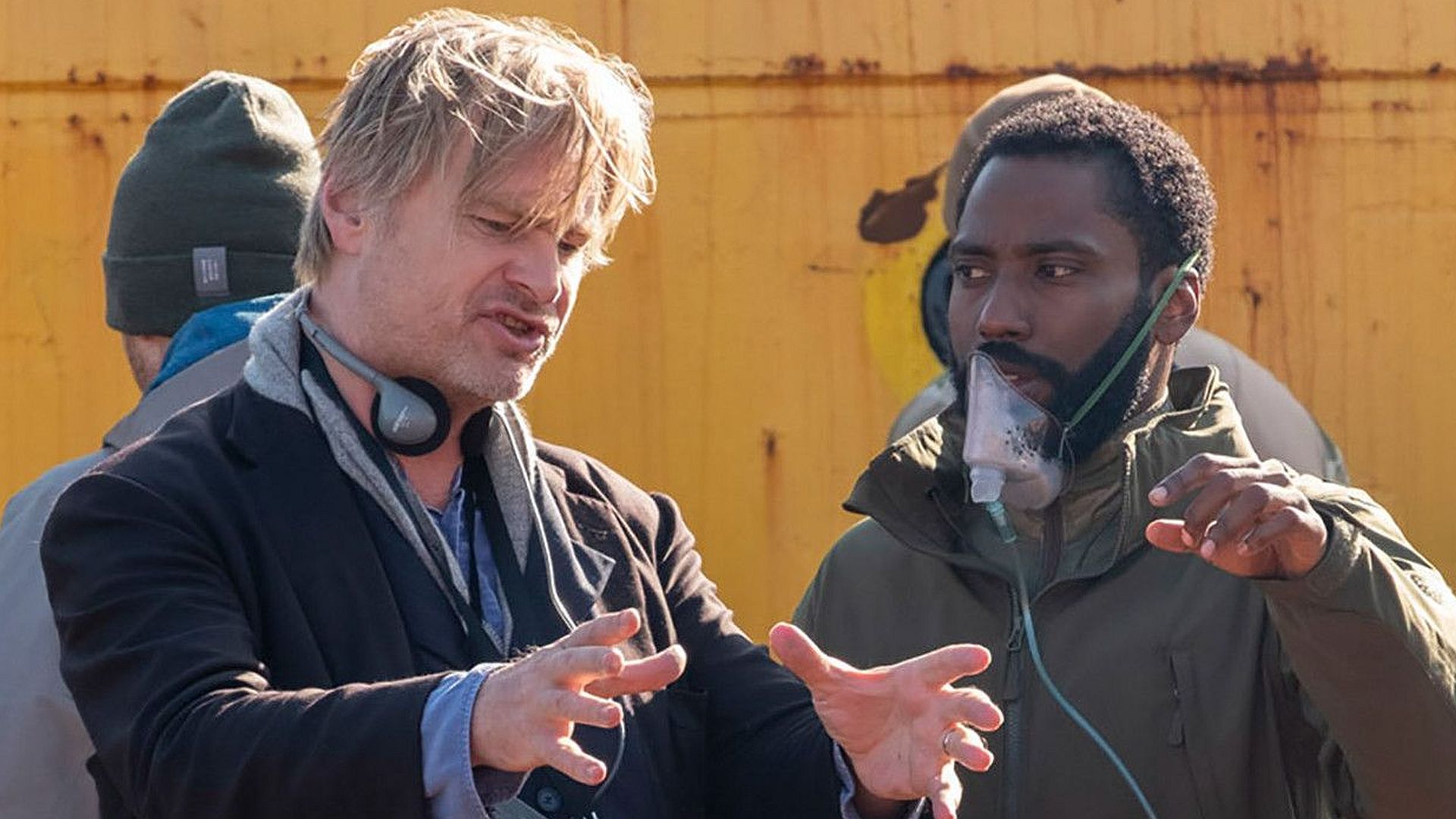
There are many pros. Undoubtedly.
The cinematography is beyond praise. Somehow, Hoyte van Hoytema and Nolan found each other and learned to understand each other without words. There is not the slightest doubt that the film is shot exactly as Nolan wanted it.
Ludwig Göransson, although he tries very hard to resemble Hans Zimmer, perfectly conveys emotions and mood through music, and several experimental moves make this work extremely successful.
The staging of action scenes is more than excellent. Incorporating the unconventional mechanics of time manipulation into the fight choreography adds a wonderful twist to the dynamics of what is happening on screen. At the same time, the stunts are shot in enough detail for you to understand what is happening without losing the tension of the situation.
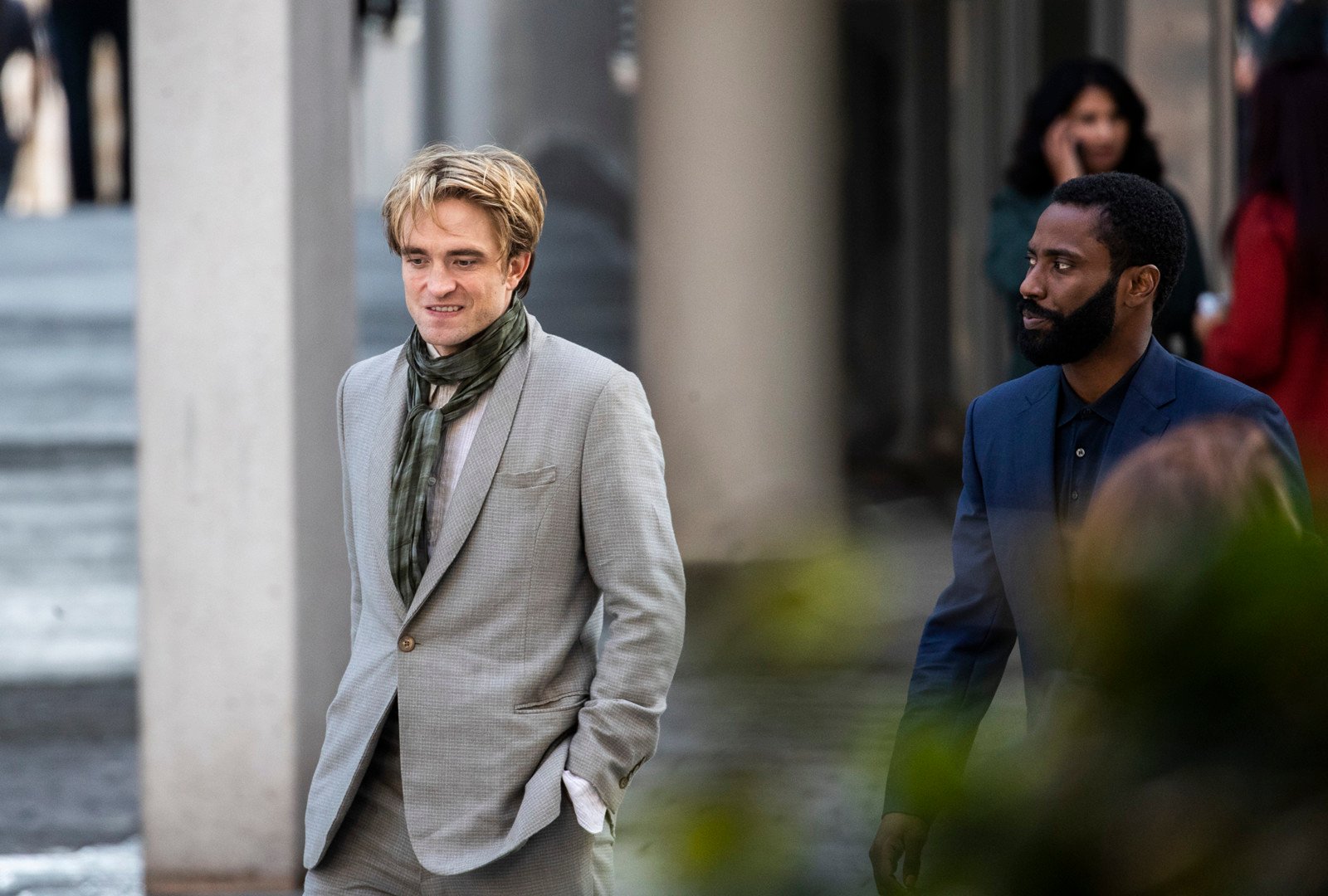
Two performances were particularly surprising, done at the highest level – Robert Pattinson and Kenneth Branagh. Pattinson delivers a very subtle performance, with barely noticeable facial expressions that work perfectly for his character and reveal his relationships with others. Robert once again proves that he is no longer the vanilla, sparkling vampire boy, but a master of his craft. Kenneth Branagh, raised on Shakespearean theater, incredibly managed to take on a completely uncharacteristic role that suits him endlessly.
Now, the Cons

First and foremost, the editing work spoils the impression, highlighting all the film's flaws from the very first minutes. What happened to Jennifer Lame, who worked on the wonderful "Hereditary" and "Marriage Story," is completely unclear. Well-staged scenes are plastered together so that the viewer does not have a minute to catch their breath between the action and at least reflect on what they just saw. The film rushes through events headlong, non-stop, as if out of fear that without fights, gunshots, or jumps every ten minutes, the cinema visitor will lose interest in what is happening on screen. As a result, we have a chaotic pace of narration that prevents us from getting into the film.
The presence of a bland and uninteresting protagonist also does not contribute to the emotional intensity. Washington was apparently told, "Just don't try too hard" – and he didn't. The film's protagonist evokes associations with the fairly popular archetype of Mary Sue (in this case, Marty Stu) – a person who does not need to learn anything, because he already knows and can do everything; a person who is lucky at every step and will find the right answer in any situation. His relationships with other characters are cardboard, you simply do not believe in them – and, accordingly, you do not empathize with him.
The Most Important Thing

What follows is a fairly subjective opinion based on years of consuming cinema and personal preferences. I can only hope that I am not the only one. But I have always infinitely despised works that establish certain rules of existence in the world, and then themselves break these rules for the sake of a beautiful picture. Without spoilers, unfortunately, it is very difficult to do, but in short – Nolan ignores the rules he himself established at every step. Do not even try to find an answer to the question "how does this even work?" Many logical or causal inconsistencies cannot, even with the best will, be dismissed as "artistic license." At the same time, the overall framework is quite simple, the film tries to focus precisely on the fantastic element. Accordingly, the main mechanic on which everything is based falls through. And that should not happen, don't you think?
Conclusion
After watching "Tenet," I seriously began to wonder: is Nolan really that good? In his last few films, he has been much more concerned with the visual component than with telling a coherent story. The screen shows a massive budget and effort expended, but they do not work as they should. This film highlights all of Nolan's flaws that previously one wanted to ignore, and thereby retroactively spoils the perception of his previous films.
Probably, if "Tenet" had been directed by some other, novice director, we would have joyfully welcomed this film and shouted that the creator has enormous potential. But Nolan has long outgrown the stage of a novice director. And the final product remained just that – a product. A good one, but a product.
And I so wanted to love this film.
You can check out the top 10 previous works by Christopher Nolan, carefully arranged by our editorial team from worst to best, here.
Comments
0No comments yet.
Sign in to join the discussion.