
FROM MISTAKEN DECISIONS TO NEW INSIGHTS: EXPERIENCE OF MENTORING STARTUPS IN A CORPORATE ACCELERATOR (3.5 minutes)
We all make mistakes and draw erroneous conclusions, and I am no exception. I want to tell you about one such case. When I worked at my previous company💨, we received an offer to participate in the INDUSTRIX accelerator. After analyzing all the pros and cons, I recommended to my colleagues and management not to participate: at that time, it seemed impractical to solve another company's problems. But later I realized that I had jumped to conclusions – and this refusal became the starting point for massive insights.
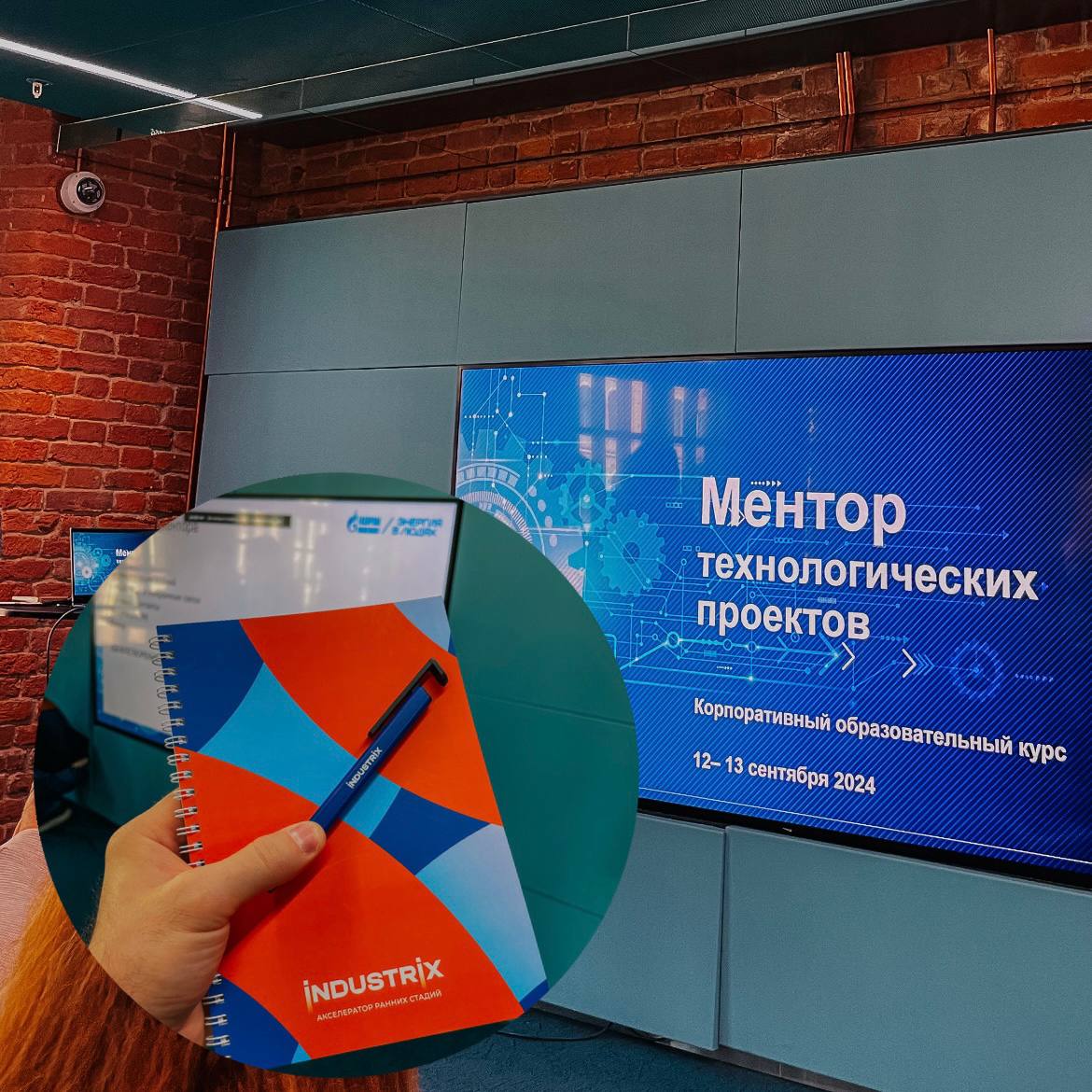
Three months later, already in a new place, I found myself in the role of a mentor for technology startup projects and completed training from the INDUSTRIX accelerator and the Innopolis Special Economic Zone.
This added a completely different understanding of the value of the acceleration approach: startups come not only for demonstration, but also for:
▫️a real pilot
▫️testing an MVP in a live production/market
▫️finding investors
▫️quick product upgrade
▫️prospects for M&A.
My mentoring experience includes two technology cases:
🏭Downstream: a research robot for internal diagnostics of pipelines with complex structures and trajectories
🗼Upstream: a software solution for real-time prediction of well trajectory and BHA position
The key takeaway is that technological challenges are often universal across the industry. A startup can address the pain points of not just one, but several companies at once. A good accelerator helps with this — both in scaling solutions and expanding their level of influence beyond corporate boundaries.
What does mentoring give me personally?
For me, it is an opportunity to apply tools and techniques from books, articles, and corporate courses to real industrial cases.
In the classic sense, an MVP is a test of product viability in the market. In my practice, I expand this principle: I test MVP tools, working frameworks, and product approaches "in the field" before implementing them in my projects.
— this approach not only allows me to quickly identify weak points in processes, exchange experience, but also to test my own competencies and create a valuable collection of effective practices for my own product toolkit.
A little later, I will tell you more about each case, the nuances of the product and working with the team, what decisions had to be made, and how an outside perspective opens up unexpected opportunities.
Comments
0No comments yet.