


Charlie Kaufman's 'I'm Thinking of Ending Things,' from the author of 'Eternal Sunshine of the Spotless Mind,' is a smart, multi-layered film that needs some explanation for even greater enjoyment after watching.
On September 4, perhaps the most unusual, fascinating, and difficult-to-understand film of the year appeared on Netflix. That unabashedly describes the work of Charlie Kaufman, 'I'm Thinking of Ending Things'.
In this article, we'll try to explain the most confusing moments in the film and talk about the cool references you might have missed or overlooked. Our material will be partially based on Kaufman's own interview with IndieWire, where he personally interpreted some episodes and clarified his vision of the characters and the situations they find themselves in.
Warning! This text contains spoilers for the film 'I'm Thinking of Ending Things,' so we strongly recommend watching it before reading.
Free Artist
Charlie Kaufman, one of the most unconventional and daring screenwriters, and more recently directors in Hollywood, is widely known as the author of cult projects like 'Eternal Sunshine of the Spotless Mind,' 'Adaptation,' and 'Being John Malkovich.'
His works are often complex to grasp and open to a wide variety of surprising interpretations. Speaking of 'I'm Thinking of Ending Things,' Kaufman noted that he likes to give viewers the opportunity to fill his ideas with meaning themselves:
I allow people to have their own experience, so I have no specific expectations about what people will think of what they see. I wholeheartedly support individual interpretations.
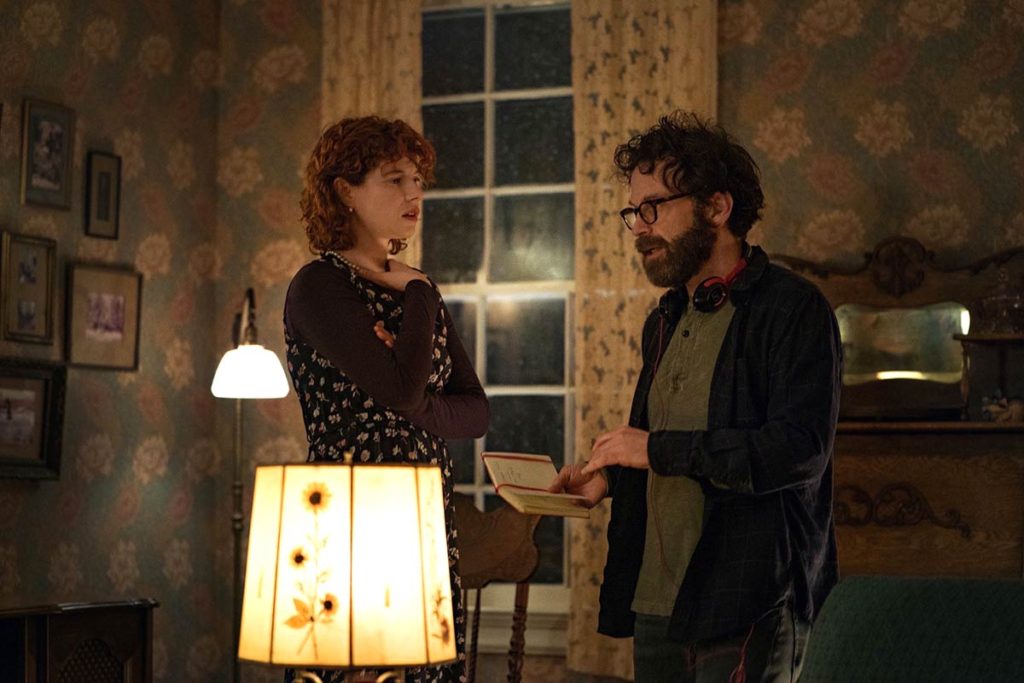
Yet, his new film needs clarification more than any other. Fortunately, collaborating with Netflix gave Charlie Kaufman absolute creative freedom, which he used to the fullest, delving even deeper into the recesses of the human psyche.
Literary Source Material and Departure from the Original
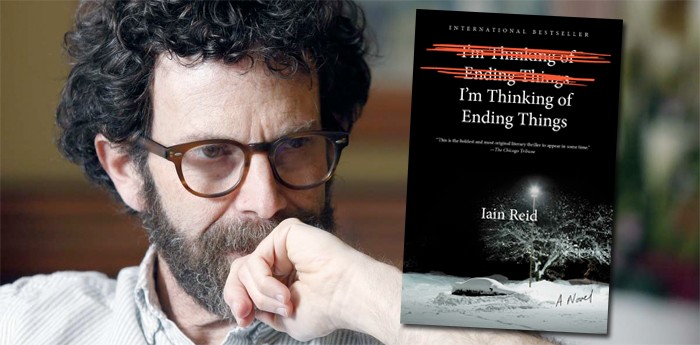
To understand the essence of the film 'I'm Thinking of Ending Things,' you need to know it is based on the novel of the same name by Canadian writer Iain Reid. However, Kaufman's adaptation can hardly be called a direct translation of the Canadian's text to the screen.
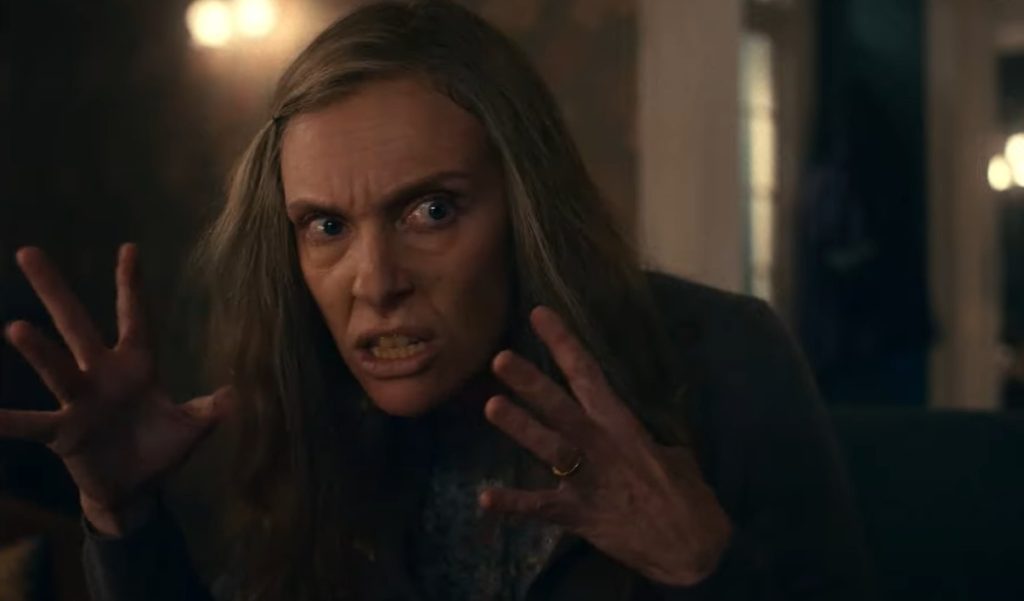
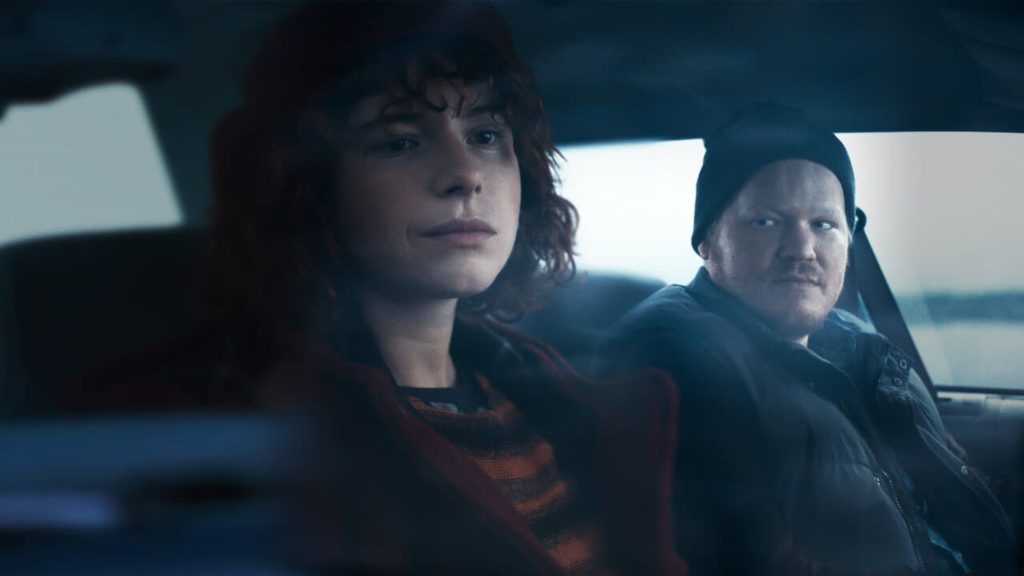
For his work, he took the basis of Reid's plot: a guy named Jake (Jesse Plemons) invites his girlfriend Lucy (Jessie Buckley) to meet his parents (played by the brilliant Toni Collette and David Thewlis). The problem is that Jake's beloved is thinking about leaving him. Then they face a strange and awkward family dinner, a drive through empty snowy streets, a visit to the school where Jake studied and where a mysterious janitor works, who is shown in parallel throughout the film.
The book features a classic climax with a striking twist that explains all previous events. Instead, Kaufman scattered subtle and not-so-subtle hints at the resolution throughout the film, and filled the climax with a mass of ambiguous scenes, dialogues, and even animated inserts.
The result of this approach to adapting the book is a hypnotic narrative, overloaded with information that is almost impossible to absorb on a first viewing. At the same time, it is absolutely not necessary to delve into every nuance and every single reference to enjoy the story. They only further enrich the already intellectually saturated content of the film.
And now it's time to move on to explaining the moments that might have been unclear.
Why does it seem like Jake can hear Lucy's thoughts?
The film begins with a long scene of Jake and Lucy driving to the guy's parents' house. Along the way, the girl thinks about how she should leave him. At the same time, Jesse Plemons' character turns to Lucy several times during her mental monologues, and sometimes even asks her again, even though she doesn't say anything out loud.
It might seem that Jake is a telepath. In reality, it's much simpler or not — Jake and Lucy, whose name changes several times along the way (Lucia, Ames), are one person. The key twist in Reid's book was based on this. Yes, something in the spirit of 'Fight Club.'
Jake (who is also the janitor at the school) invented Lucy, assembling her image from books he read, movies he watched, and random acquaintances. In one episode, for example, she reads a supposedly original poem, which is actually the product of the imagination of poet Eva H.D. titled Rotten Perfect Mouth.
Lucy is the main character, but she doesn't exist?
Formally, that's right. In reality, it's a bit more complicated, otherwise Kaufman wouldn't be himself. He decided to experiment with the narrative and propose an option in which fantasy can exist separately from the author, on its own, so to speak. Here is what Kaufman himself says about the status of Jessie Buckley's character:
I didn't want to make it a twist. I was sure that wouldn't work in cinema these days. You can see the actors playing their roles, meaning they are real. In my opinion, it would be wrong to use an actress, telling her to play something that doesn't really exist.
So Lucy is not a real person?
Correct. She is a product of imagination, but she has some representative power, as Charlie Kaufman interprets it, because Jake tacitly agrees with the impossibility of his own delusion.
At one point in the film, Plemons' character asks Lucy if she has read Anna Kavan's novel 'Ice.' It's worth explaining here: in this book, the action takes place in post-apocalyptic wastelands (which echoes the deserted roads Jake and Lucy travel), and the main character of the story pursues a nameless woman, struggling with the complex nature of his attraction to her.
Jake experiences similar feelings, but the heroine in 'I'm Thinking of Ending Things' fights back. Charlie Kaufman explains that he really liked the idea that a character cannot control what happens even within his own fantasy. Therefore, there are scenes where Jake imagines something, and then himself thinks up how a particular idea doesn't work. Lucy might think he'll be boring, or she might find him not smart enough, and so on.
Lucy's relative freedom, granted by Kaufman, is emphasized by the ending, where responsibility for Jake's fate does not fall on her shoulders, as viewers might have assumed throughout the film. Instead, the man focuses on himself and invents new people.
What does Zemeckis have to do with it?
In one of the funniest episodes of 'I'm Thinking of Ending Things,' a school janitor watches the final scene of a fictional romantic film supposedly directed by Robert Zemeckis. Why him?
Charlie Kaufman said in an interview that this happened completely by chance. His assistant suggested a list of director names he found on the Internet. That's when the filmmaker came across Zemeckis's surname. Explanation from Kaufman himself:
Sometimes things are funny just because they are actually funny. It's unlikely, but I think Zemeckis could make a movie like that.
At the same time, irony creeps into Kaufman's words, because, in his own words, this fictional film is more like the work of Nancy Meyers. And yes, permission to use Robert Zemeckis's name was officially confirmed, for which he was given a special thanks in the end credits.
Why do the parents constantly change age during dinner?
Returning to moments that are unclear at first glance, it's worth paying attention to the strange dinner at the parents' house. Throughout that evening, Jake's parents either become old people or suddenly turn into younger versions of themselves, and this confusion leaves Lucy (and viewers, why not) in absolute bewilderment.
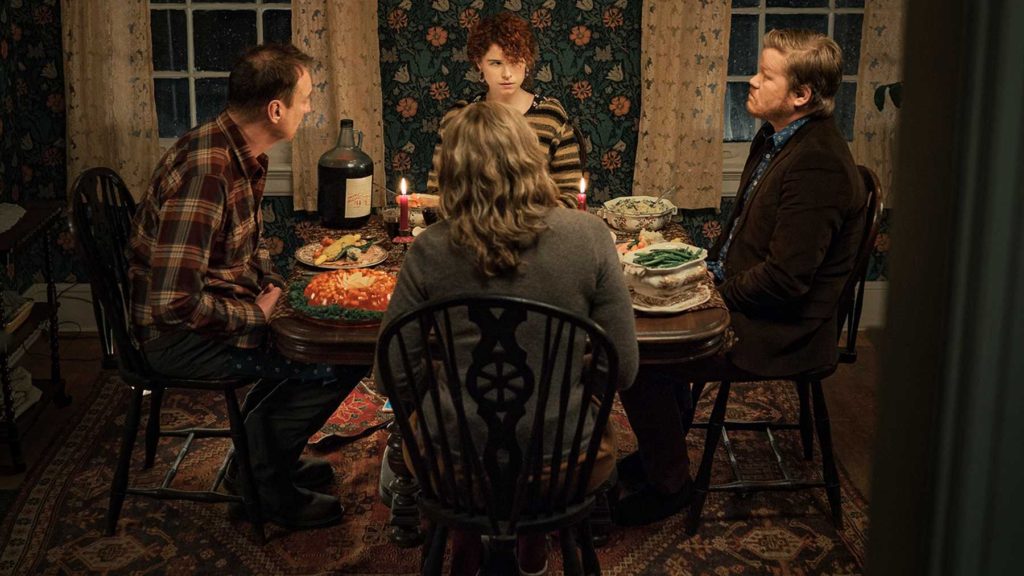
The interpretation of these scenes is quite simple: Jake relives various stages of life with his parents and tries to find the perfect moment into which his passion would fit. Ironically and tragically, such a moment does not exist in any of the time periods. No matter how much Jake tries to stay in the house with Lucy and his parents, they eventually leave the parents at her urging.
Who is Pauline Kael?
While in Jake's house, Lucy ends up in his childhood room. There she sees dozens of movies, books, and other materials related to pop culture. In this episode, attention is drawn to the book 'For Keeps: 30 Years at the Movies' with film reviews by film critic Pauline Kael, published in 1996.
During another dialogue on the road, Lucy and Jake discuss everything from Goethe's color theory to David Foster Wallace's essay from the collection 'A Supposedly Fun Thing I'll Never Do Again.' But the most attention is given to Pauline Kael's review of John Cassavetes' film 'A Woman Under the Influence' (1974). Lucy literally repeats words from that review, talking about Gena Rowlands' performance.

Charlie Kaufman admits he was a big fan of Kael, grew up with her material, and always considered her much smarter than himself. He emphasized this through Jake's actions. After Lucy's convincing monologue about a film he generally liked, he was left speechless without a counterargument.
Ice Cream and Women
The car trip is interrupted at one point by a stop for ice cream from the fictional chain Tulsey Town Ice Cream, which appears literally out of nowhere in the middle of an impenetrable blizzard. The couple stops there, Lucy talks to three female employees, who add mystery to the story.
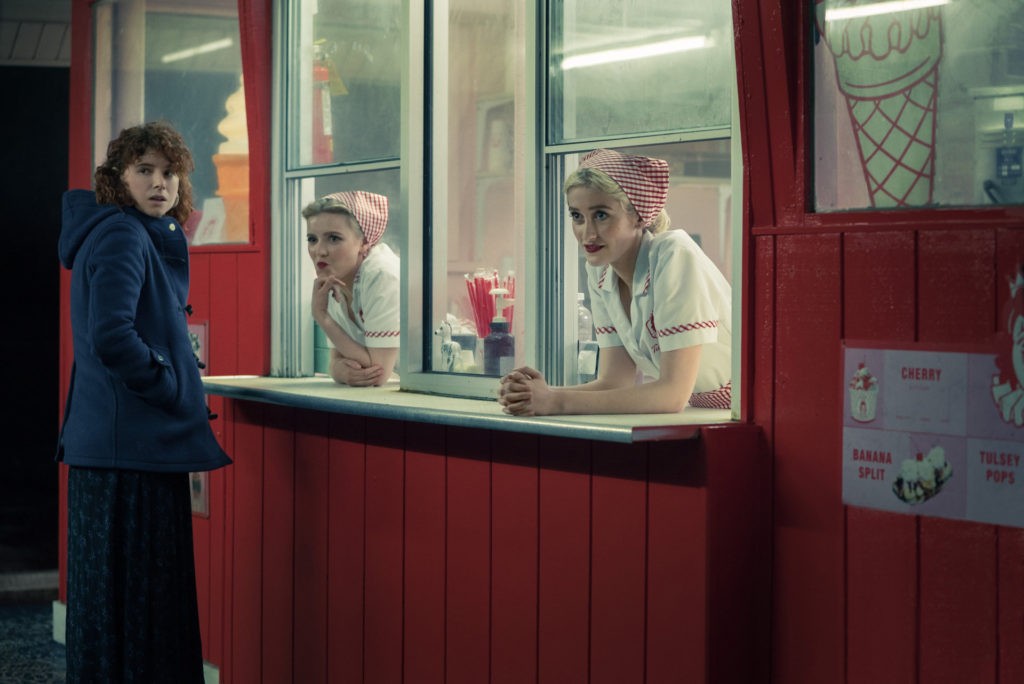
According to Charlie Kaufman, all these women are the embodiment of the ladies Jake has dated before in his life. This whole episode is like a dreamy stop in his past.
What was the point of the dancing?
When the characters arrive at the school, Jake gets angry because the janitor is watching them from a distance, and he runs inside. Lucy follows him, but instead of her Jake, she meets that same janitor. He sends her on her way, indicating that the hero has finally decided to let go of his fantasy.
Following this, Lucy meets Jake in the hall, but they are quickly replaced by ballet dancers in the same clothes who start dancing. The choreography of this scene is based on a similar moment in the musical 'Oklahoma!'.
The plot of this musical somewhat overlaps with the story Kaufman tells. There, the girl Laurey finds herself in the middle of a conflict between cowboy Curly and farmhand Jud. Their fight in the musical ends with Jud's death, while here 'dancer Jake' dies, symbolizing the hero's acceptance of the impossibility of his love. In other words, Jake pretends to be someone else and uses the narrative structure of 'Oklahoma!' to get rid of his obsession.
And there's also this talking animated pig...
When janitor Jake gets into his car, he has some kind of attack, which may lead to his death. In his death throes, he sees an animated advertisement for the already familiar ice cream, and then he meets living animation in the form of a pig with maggots on its belly. Earlier in the film, we already saw this image when Jake gave Lucy a tour of the farm. The pig becomes a kind of guide for the man to the final stage of self-analysis.
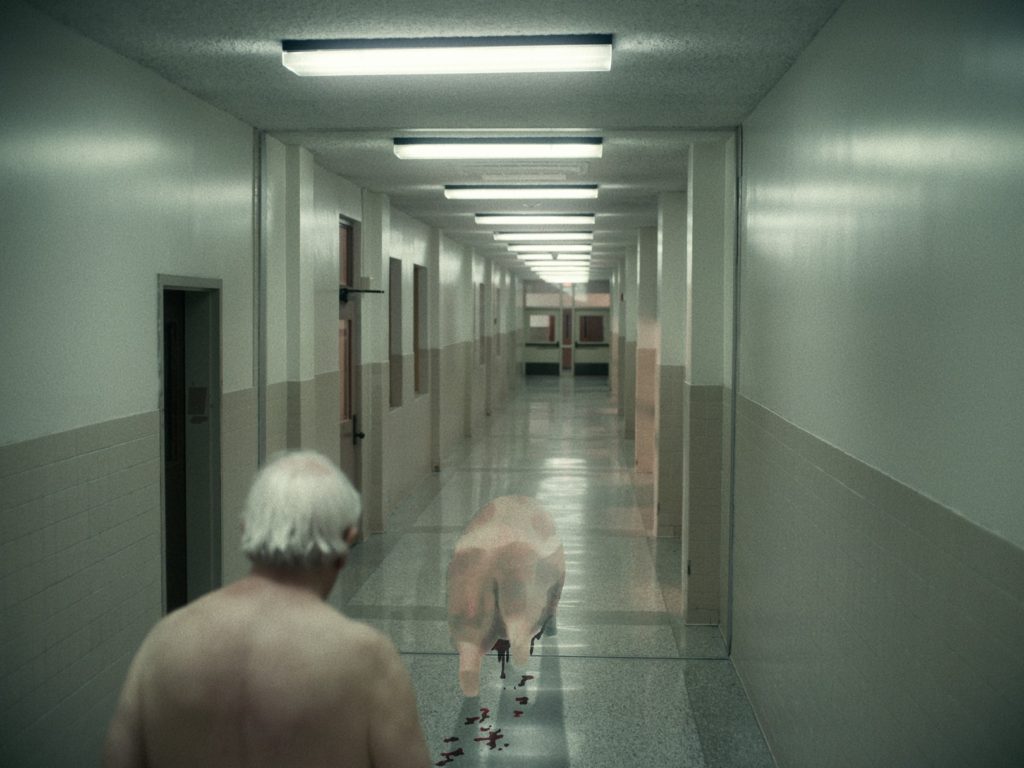
In childhood, the terrifying image of a pig with maggots traumatized Jake's psyche, introducing an imbalance into his worldview. It is this image he returns to in the last moments of his life.
Fake Old People
In the final scene of the film, Jake goes on stage to receive a Nobel Prize, and in the background you can see the set for the aforementioned musical 'Oklahoma!'. Obviously, the man is wearing makeup to make him look like an old man. But he's not alone: everyone in this hall looks like disguised elderly people, including his parents and Lucy.
In one of the early scenes, the janitor finds a book on makeup. This allows him, at the right moment in his mind, to turn everyone into old people using a simple trick. Interestingly, all the other extras in the audience are high school students Jake met while working.
Direct Quote from 'A Beautiful Mind'
While accepting the award, Jake gives a touching speech that may seem very familiar to you. That's right, because it's taken entirely from the film 'A Beautiful Mind' starring Russell Crowe. In fact, the whole scene is specifically constructed to resemble the finale of Ron Howard's film.
And do you think this is a coincidence? Of course not. Earlier in Jake's childhood room, you could see a DVD of 'A Beautiful Mind'.
Meaning-wise, both films are quite similar in terms of a person's struggle with their own psyche, but in Kaufman's work, the emphasis is shifted to a plane where absorbed information becomes part of the personality, and the struggle with oneself never ceases.
And 'Oklahoma!' again
After the fiery speech, Jake begins to sing against the backdrop of a film set resembling his room. He sings Jud's song 'Lonely Room' from the musical 'Oklahoma!'. In it, Jud dreams of a woman he could call his own, which echoes Jake's own desires.
Sitting on a film set built from fragments that define his life, Jake becomes the star of his own story and at the same time finds himself limited by it.
Is that it?
Both yes and no. The final scene shows us a car buried in snow, where janitor Jake obviously died, having relived memories of his life's failures before his death. On top of this image, the credits roll, detailing many of the references in the film, which was very important for Charlie Kaufman. And there is a scene after the credits, or rather a sound, which can be interpreted however one pleases...
All the riddles in 'I'm Thinking of Ending Things' do not try to hide the main meaning from the viewer; they serve to show what a person can go through in the struggle with their demons, and in what form this can be expressed.
Comments
0No comments yet.
Sign in to join the discussion.