
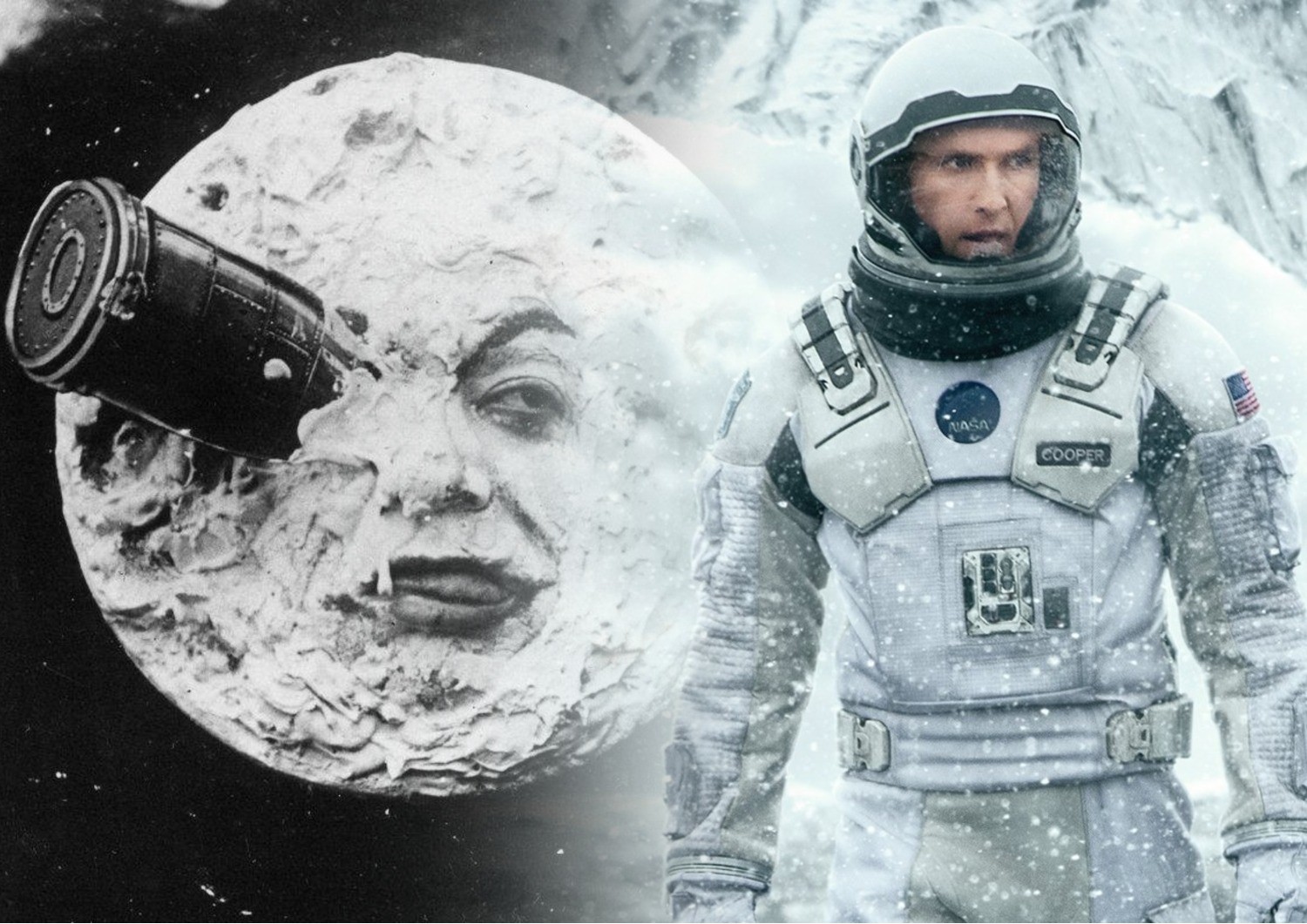
Science fiction is one of the most diverse film genres, and observing its long-term evolution can reveal some extremely interesting trends.
Science fiction was one of the first genres in the history of cinema, and over its hundred-plus years of existence, it has changed in the most radical ways. Sci-fi itself emerged long before the advent of cinema; its roots can be found in novels from the early nineteenth century. Many literary historians consider Mary Shelley's Frankenstein to be the first example of the genre, which defined many of its trends for a long time—such as the "arrogant genius" and the "potential danger of scientific ambition."
Making the leap from literature to cinema in the 1900s, science fiction was able to significantly expand its reach. What began as a transmission of thoughts on paper flourished before the camera, and the genre began to explore new, exciting subgenres on screen. Dozens of popular novels were adapted into films, giving them visual materiality. But it wasn't just adaptations that allowed directors to conquer new horizons—many of their stories reflected everyday life through the lens of futurism. Films like Planet of the Apes, Blade Runner, and The Terminator influenced the development of science fiction as a genre with its own tropes, characteristics, and cinematic language.
As popular as sci-fi is now, it wasn't always this way. Observing the successes of modern representatives of the genre, it's important not to forget that this popularity is the result of many years of transformations and the production of hundreds of films that were not afraid to take risks and push boundaries. Each decade contributed its own new films, trends, tropes, and ways of presenting the future.
1900s
In the early 1900s, cinema was far from its current status as the dominant form of entertainment. Moreover, the first known film, Roundhay Garden Scene, was shot just 12 years before the century began. At the dawn of the twentieth century, cinema suddenly began to be recognized as a form of entertainment, whereas before it had been viewed solely from a scientific perspective. The Lumière brothers, who first showed moving pictures to the public, believed that cinema was needed exclusively for the truthful depiction of the surrounding world. Unlike documentary films, their footage was not edited: raw recordings were used to capture the realities of life, as free as possible from external manipulation.
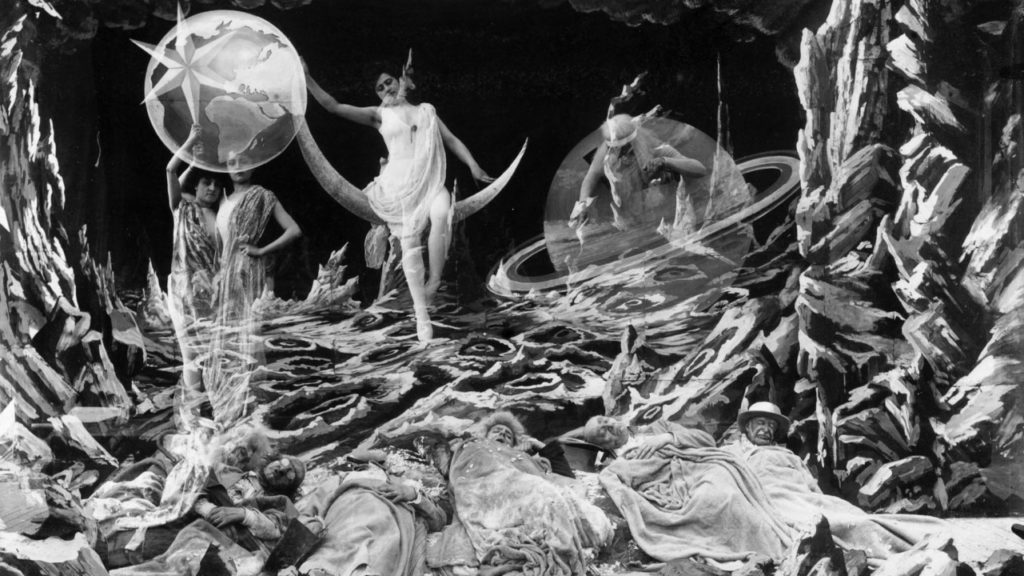
Although such footage was wildly popular in its time, cinema inevitably began to be used in the entertainment sphere. Aspiring filmmakers like Georges Méliès started to expand the boundaries of what a film could be—certainly with the help of his works, such as A Trip to the Moon (1902) and The Impossible Voyage (1904). Both films conveyed the general atmosphere of science fiction that prevailed at the time, even though today we would classify them more as scientific fantasy. Méliès's films told stories of scientists and theorists who embarked on journeys into the unknown to achieve incredible goals, using absurd and only vaguely scientific devices. The films achieved worldwide success, inspired many imitators, and elevated science fiction in the earliest stages of cinema.
1910s
In the twenty years following the creation of the first movie camera, cinema became a more accessible art form. Although it was far from modern productivity, creators from other fields around the world increasingly saw cinema as a kind of revolution, leading to the creation of more and more films. Following Georges Méliès's last film, The Conquest of the Pole, sci-fi films gradually began to move away from pure fantasy and lean toward a more realistic atmosphere.
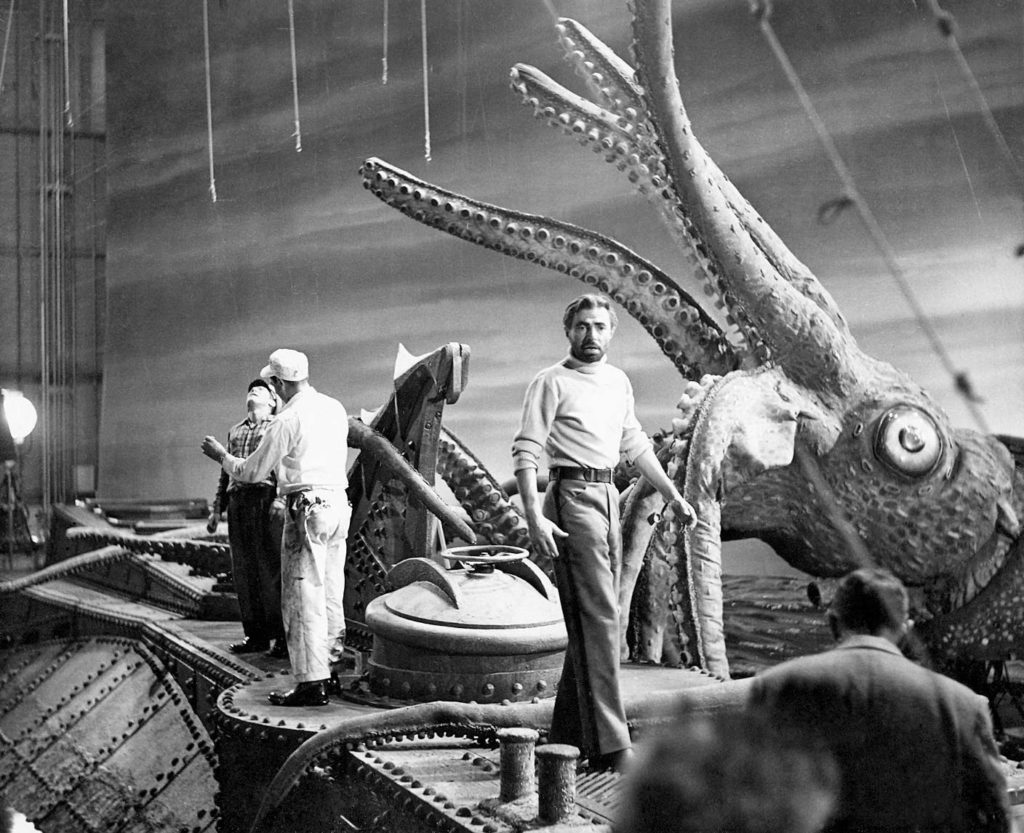
Films like 20,000 Leagues Under the Sea (1916) (the first film partially shot underwater) and The Master Mystery (1918) (an American film featuring Harry Houdini) showed cinema's transition to more tangible science fiction. Their themes included scientific exploration and robotics, markers of global interest in technological progress. Due to the rapid development of technology, audiences also began to get used to what we now call feature-length films, gradually pushing short films into a more niche art form.
1920s
Most films in the early days of cinema were fantasies of escapism, experimental stories. However, the 1920s marked a shift in focus for many genre films, especially sci-fi. Cinema became more sophisticated; screenwriters and directors began to weave social commentary into their films. If literature started the trend of allegories about contemporary society, cinema only strengthened it.
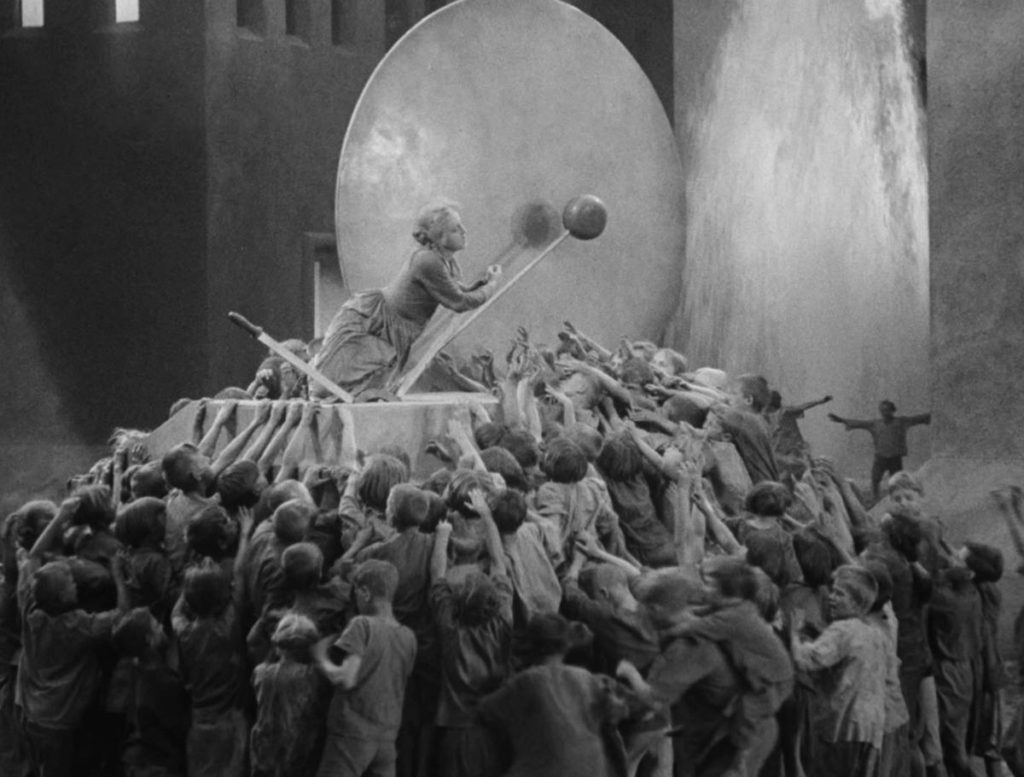
The biggest example of this throughout the decade was Fritz Lang's masterpiece Metropolis (1927), the pinnacle of German Expressionism. Inspired by the industrialization of Germany and the growing gap between the wealthy elite and the poor working class, Metropolis depicts a future where ordinary people toil underground while the one percent of the wealthy live in skyscrapers. The monstrous inequality between the two classes was portrayed as a reaction to the economic disorder in Germany after World War I. To this day, Metropolis remains the gold standard not only for dystopias in particular but for the entire science fiction genre in general.
1930s

Despite the genre's previous prosperity, in the thirties the world was trying to crawl out of the economic horrors of the Great Depression. As a result, science fiction ceased to be as idealistic as it had been before. Both literature and cinema shifted into darker depths of the genre, blending science fiction with other genres.
That decade was marked by sci-fi horror films from Universal and Paramount studios, the most famous of which were Dr. Jekyll and Mr. Hyde and The Invisible Man. These films were something between the escapist fantasies of early cinema and the harsher sci-fi of the twenties and thirties. In the end, we got films in which science and technology represented growing fears and concerns related to the Great Depression. Unfortunately, in the next decade, the global situation only worsened, leading to even greater horrors in world history.
1940s
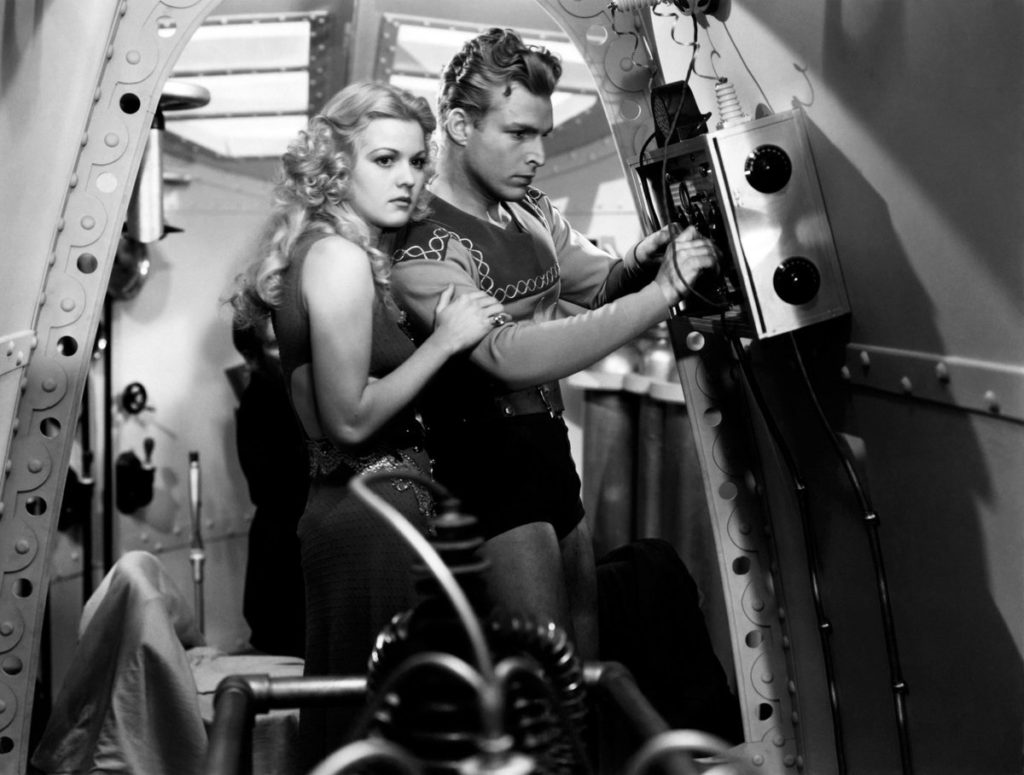
The forties witnessed the largest global conflict of all time—the brutal World War II. Countless lives were lost during this period, and the war's influence on culture and art was felt across the globe. Although the most popular films at the time were war films—especially those aimed at propaganda for either side—sci-fi also felt this influence. In addition to Universal and Paramount continuing to produce horror films, many American studios began using sci-fi tropes in more pulp works, such as Flash Gordon, depicting the horrors of fascism and authoritarianism.
One film from that era, Strange Holiday (1945), carries an unambiguous anti-authoritarian message. John Stevenson, the film's protagonist, returns from vacation to find that the United States of America has been taken over by fascists. Like most "light" films of the time, the picture was actually produced by General Motors, which was standard practice then. Many industrial enterprises provided assistance to help achieve victory, including funding films that justified US military actions in the eyes of the public.
1950s
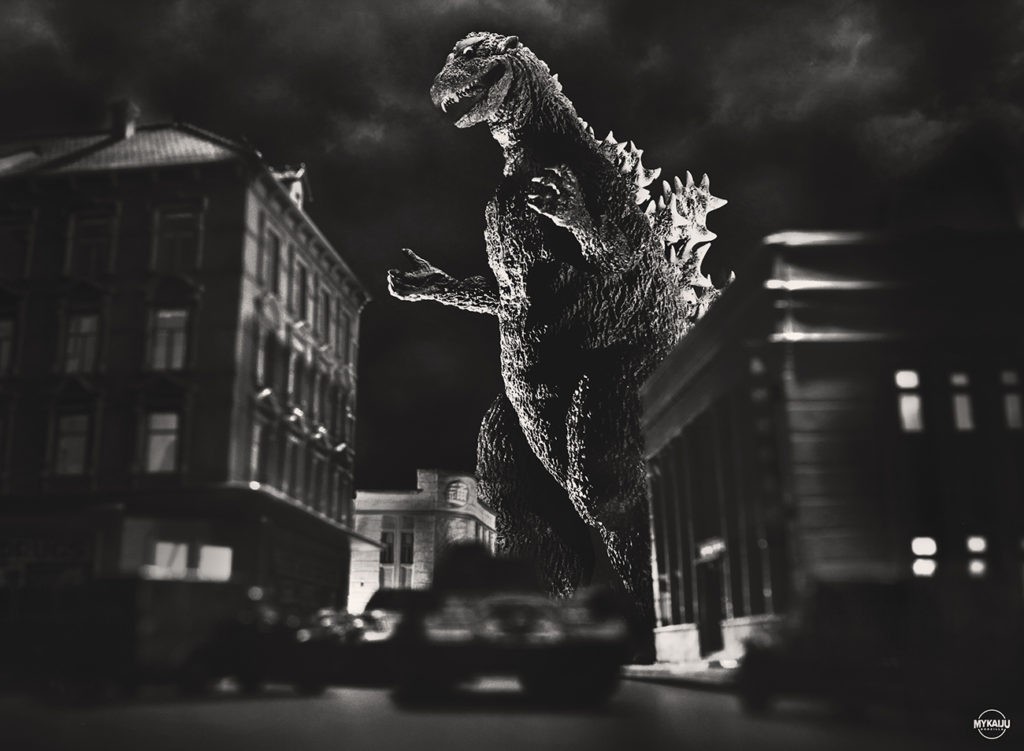
Science fiction in the fifties experienced the biggest shift in the genre's history, a change directly linked to one of the most terrifying scientific discoveries. The first and only recorded combat use of nuclear weapons occurred at the hands of the US on Japanese territory at the end of World War II. The bombs "Little Boy" and "Fat Man" were dropped on the cities of Hiroshima and Nagasaki in August 1945, three days apart, resulting in two hundred thousand human casualties. Since then, the shadow of nuclear annihilation has loomed over international relations.
Science fiction films were the first form of entertainment art to address this event. Using vivid, grotesque techniques, films like Them! and It Came from Beneath the Sea frightened audiences with giant animals, either mutated or awakened as a result of nuclear explosions. The progenitor of kaiju films, Godzilla, was directly inspired by the horror born from the atomic bombings.
However, the atomic era was not the only social issue that sci-fi addressed. With the rise of the Soviet Union's influence and power, the threat of invasion became a major theme, a thinly veiled allegory for American fear of communism. The original Invasion of the Body Snatchers came out at that time; the film about emotionless alien imitators paradoxically contained allusions to both the Red Threat and the McCarthyist "witch hunt."
1960s
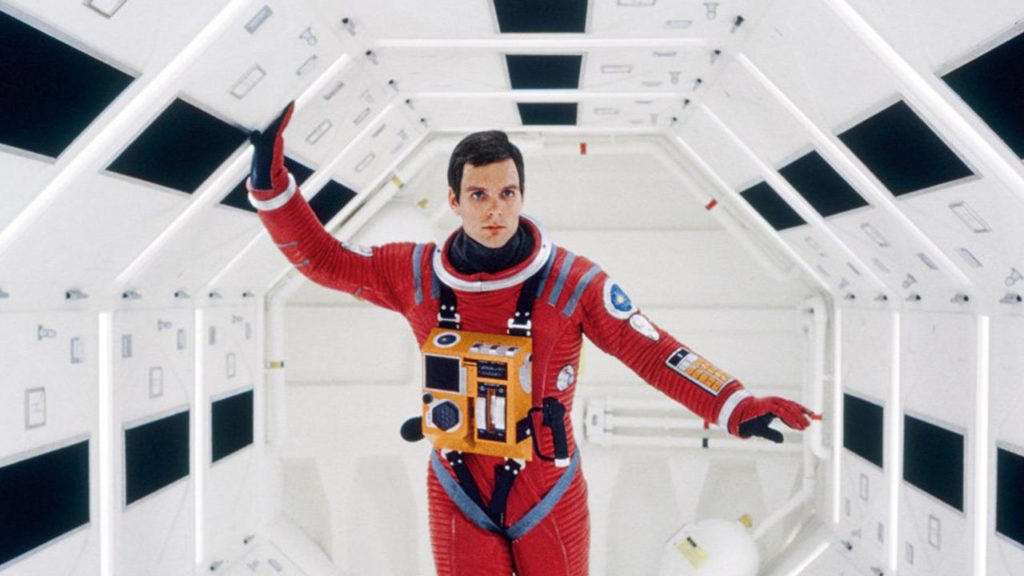
The popularity of sci-fi horror and the dominance of Showa-era Godzilla films produced during the Golden Age of science fiction in the sixties captivated audiences. For most of the sixties, it seemed that aliens and radioactive monsters would be everywhere—such films could be produced on relatively small budgets and were guaranteed to bring in box office revenue for studios. However, the end of the sixties marked an era of rebirth for the sci-fi genre, thanks to two films that rejected the banal tone of their predecessors and picked up the thread of the highly social Metropolis.
1968 gave moviegoers Franklin J. Schaffner's Planet of the Apes, a scathing critique of nuclear obsession with revolutionary special effects. Later that same year, Stanley Kubrick's universally acclaimed science fiction film 2001: A Space Odyssey was released, exploring many themes ranging from humanity's search for meaning to the sentience of artificial intelligence. Both films ignited a new spark for intellectual screen science fiction, paving the way for many beloved films.
1970s

Although simple science fiction did not disappear, 2001 directly led to a wave of smart sci-fi thrillers that swept the world. Films like The Andromeda Strain, Soylent Green, and Solaris were measured, methodical science fiction films that delved deep into philosophical reflections. At the same time, filmmakers began to understand the power of the blockbuster and what could be achieved by combining it with other types of films.
The one-two punch of Star Wars in 1977 and Superman in 1978 forever changed the film industry. One film was based on an original script, the other an adaptation of a comic book; both were wildly successful and led to the creation of massive and revolutionary franchises. Superman preceded the superhero film wave by twenty years and paved the way for the development of special effects, and Star Wars... well, everyone knows what Star Wars did.
1980s

As often happens with popular films in Hollywood, Star Wars spawned many imitations, most of which ranged in quality from "cheap" to "decent." Battle Beyond the Stars became the most famous of these imitations for many, mainly due to the advanced special effects of James Cameron. Cameron himself later set the direction for eighties sci-fi films with his own film, The Terminator. As one of the first truly original time travel stories, The Terminator not only became a benchmark example of the temporal paradox but also fit into the eighties sci-fi trend of setting stories in a futuristic-apocalyptic setting. Many different films used this trend in one way or another, including Blade Runner and the animated Akira—the collective panic about a bleak technological future was undoubtedly inspired by the uncertainty surrounding the Cold War.
1990s

If the fifties reflected paranoia and fear at the dawn of the nuclear age, the nineties delved into the mass anxieties surrounding the birth of the internet age. Countless sci-fi films of that period approached technology with curiosity and horror—for example, Hardware, which tells of a killer robot rampaging through post-apocalyptic wastelands. Terminator 2 also touched on cybernetic paranoia, showing that the Skynet system emerged as a result of creating a complex super-processor.
Undoubtedly, no film from the nineties delved into postmodern reflections on the development of technology and the rising internet as successfully as The Matrix. Woven from many different sources of inspiration (including Buddhism, Superman, and Ghost in the Shell), the Wachowskis' vision of a dystopian world where humanity is enslaved by robots perfectly captured the cultural zeitgeist and inspired a wave of films addressing the same themes.
2000s
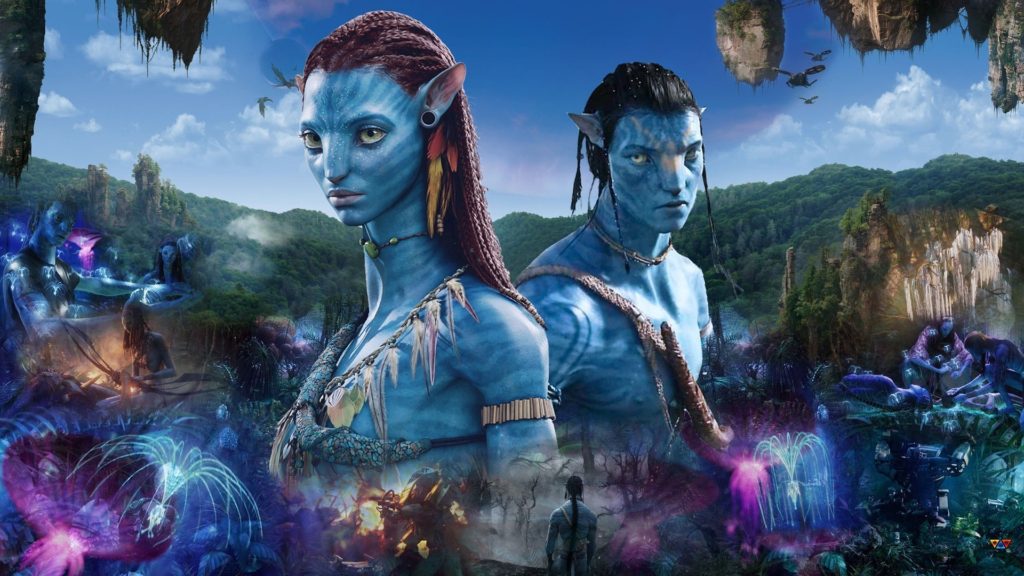
During this period, the advent of computer graphics greatly influenced many films, especially those in the science fiction genre—and nowhere is this more evident than in the Star Wars prequel trilogy. Despite the complex and detailed world of the trilogy, the triumphant return to a galaxy far, far away never quite materialized, largely due to an overemphasis on visuals and an oversaturation of cheap humor. However, this did not stop other filmmakers from using Lucas's pioneering work with CGI and applying it to other projects. James Cameron's Avatar (2009) remains one of the most revolutionary films in history, thanks to advances in visual effects. The fusion of CGI and 3D technology allowed audiences to experience an audio-visual experience that cannot be overstated.
2010s

Since their dawn in the seventies, blockbusters became increasingly popular among studios, and interest in them reached a critical level in the 2010s. This period saw the flourishing of huge and powerful franchises, such as Transformers and the Marvel Cinematic Universe. Although the focus was on superheroes, these films were rooted in pulp science fiction concepts, manifested in the depiction of artificial intelligence and alien heroes.
By the end of this period, the popularity of arthouse sci-fi grew. Following the path blazed by 2001, independent filmmakers came with pleasant and original concepts like Under the Skin and Ex Machina. Even studios occasionally took risks with big intellectual science fiction films, such as Nolan's Interstellar.
2020s and Beyond

Even analyzing all the trends of previous decades, it's hard to say exactly where sci-fi will go in the future. As audiences eagerly await upcoming releases like Tenet and the long-awaited adaptation of Dune by Denis Villeneuve, no one can know for sure what awaits the genre next. From its earliest days on the pages of classic literature, science fiction has reflected discoveries and events in society. As long as culture and technology continue to develop hand in hand, science fiction will continue to shock and amaze people around the world.
Original article can be read at the link.
Text translated and adapted by Varvara Ulianenok.
Comments
0No comments yet.