


“I May Destroy You” is one of the boldest and most ambitious new series of 2020.
The HBO channel can sniff out potential hits from a mile away, and it also has a knack for spotting talented showrunners. That was the case with “Betty” and Crystal Moselle. Now, their new discovery is the series “I May Destroy You,” which is entirely the work of the little-known Michaela Coel (she serves as writer, director, and lead actress, and the plot is based on her personal experience).
New episodes of the series are currently released weekly on “Amediateka.” Since most of the episodes are already out, we can talk about at least 3 reasons why you should start watching “I May Destroy You” right now.
Reason #1 — A Bold Theme with an Original Presentation

The main character of the story, Arabella, is an aspiring writer who needs to finish work on her second novel after a successful debut. She just can’t seem to do it, so on the night before her draft is due, seeking inspiration and a chance to unwind, Bella goes out to hang out with acquaintances. Alcohol, drugs, dancing until she drops — that evening stays in the girl’s memory in fragments, one of which involves her being raped by an unknown guy.
The key theme of the entire series “I May Destroy You” is sexual violence. A fresh take? Not really. Is it relevant to talk about this issue now? Absolutely. Moreover, unlike, say, “Unbelievable,” Coel chose a completely different path and tone of conversation.
Arabella is assaulted, but she doesn’t immediately understand or accept it. To some extent, she is even curious to understand what happened to her and why she doesn’t feel like a victim. She is practically not shy about talking about what happened, and she doesn’t avert her eyes during uncomfortable conversations. At the same time, the author deftly and wittily plays with the audience’s perception, because some graphic episodes deliberately make you think that Bella is to blame for everything herself and that it’s typical for her.
The series doesn’t emphasize how to fight rapists, nor does it claim that everyone around is an abuser. Instead, it shows that people can react differently to such phenomena. It could be depression, it could be emotional breakdown. Violence can lead to a rethinking of one’s own views. And “I May Destroy You” covers all these aspects in a fresh and important way. If for no other reason, this series is worth watching for its unusual approach to addressing the issue of violence.
Reason #2 — A Successful Balance Between Drama and Comedy

“I May Destroy You” can also be watched for its skillful balance at the intersection of comedy and drama. Yes, from the description it might seem that a series about violence is inherently devoid of humor, but that’s not the case. There are plenty of jokes about dating apps and a bunch of mutual jabs between characters. This helps to relieve tension at the right moments.
The series could aptly be described as a “disguised drama,” because, like its heroine, it sometimes hides pain and suffering behind external tinsel. The subplots tell the story of a failed actress whose only success in life is her friendship with a talented writer, or a gay man who also experiences violence, but who would believe an adult man that this is even possible? Not the cheeriest stories, frankly, but still, a note of optimism can be traced in each of them, whether it’s an attempt to explore new facets of one’s own sexuality or finding oneself in helping others.
Reason #3 — Realism
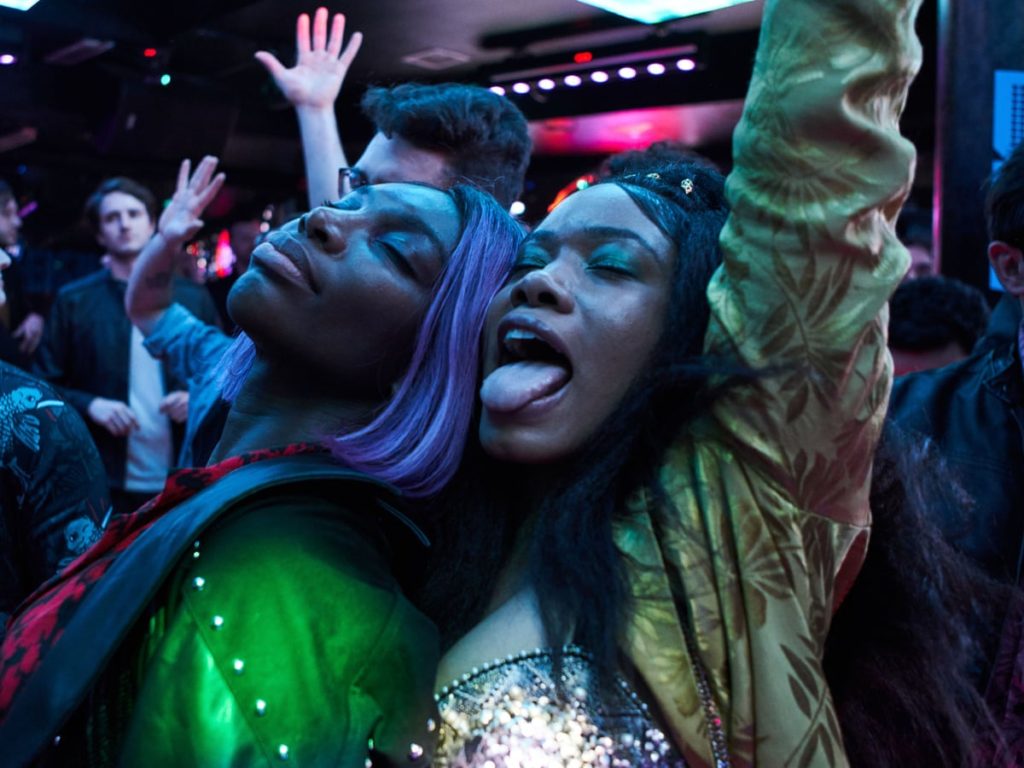
At some points, “I May Destroy You” is frighteningly realistic. A drug high here isn’t marked by songs and dances like in “Euphoria,” and sex during a period doesn’t come without a blood clot.
For added realism, the camera in the series often switches to “handheld” mode, and the characters speak in broken colloquial language. This not only looks effective but also allows you to better connect with the story and its characters.
Perhaps some unflattering details, like explicit scenes of violence, might put off some viewers. At the same time, it cannot be said that any moments are added for effect or shock value; each such episode is justified and influences the development of the story. A certain feeling of rejection of what is happening on screen is clearly what Michaela Coel was aiming for and succeeded in achieving.
Trailer:
Comments
0No comments yet.
Sign in to join the discussion.