

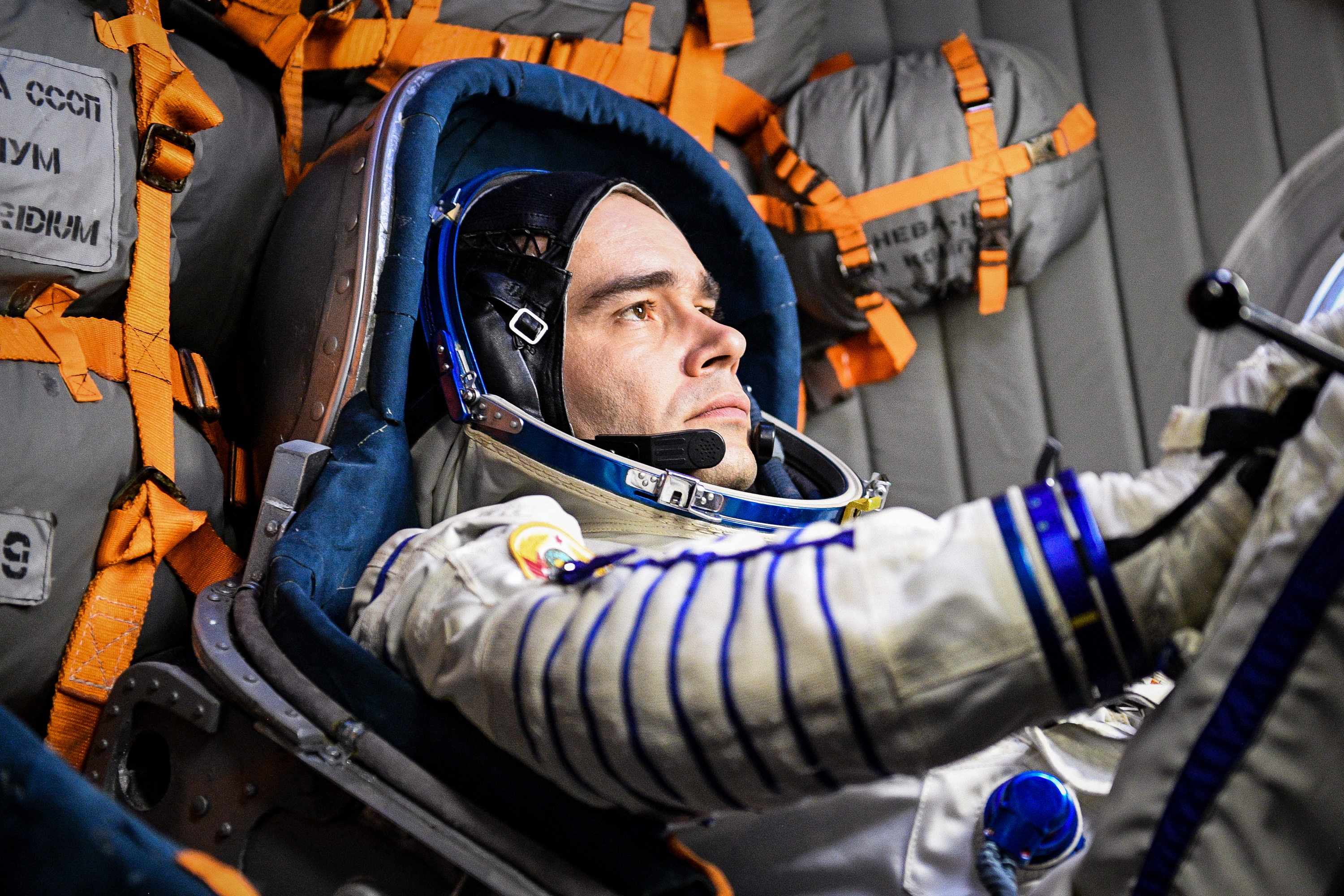
'Sputnik' — a new milestone in Russian genre cinema or another high-profile failure for Fyodor Bondarchuk?
The Russian sci-fi film 'Sputnik' by Egor Abramenko, produced by Fyodor Bondarchuk, has debuted online. The film is immediately being compared to Ridley Scott's legendary film 'Alien', and there are several obvious reasons for that. How appropriate are such comparisons, and what can attract viewers to this new film? Let's try to answer these questions in our review.
Horror in a Soviet Setting
The story begins with a journey beyond planet Earth by two Soviet cosmonauts. After an unclear incident, their ship lands, but only Konstantin Veshnyakov (Pyotr Fyodorov) survives. Along with him, a certain space parasite ends up on Earth. Soon, neurophysiologist Tatyana (Oksana Akinshina) is brought to a base called the 'institute' through the efforts of Colonel Semiradov (Fyodor Bondarchuk) to assess the condition of the national hero and help figure out what is happening.

The main intrigue in the film doesn't last very long. Moreover, it was somehow included in the synopsis, even though the mysterious condition of the outwardly unchanged cosmonaut could have been used for clever plot twists. The filmmakers clearly did not prioritize the script, leaving everything to spectacle and a oppressive atmosphere. These are the strong points of 'Sputnik': the ascetic Soviet sets build suspense no worse than a well-drawn alien monster. The film also has a couple of truly tense scenes with correctly placed accents and well-chosen musical accompaniment. All this suggests that the attempt to play horror in a USSR setting (thankfully without 'hurrah-patriotism') turned out quite intriguing and spectacular.
How 'Sputnik' Reminds of 'Alien'
In fact, there aren't that many similarities between the domestic film and the genre classic. First and foremost, they are united by the motif of fear of the unknown, which has always frightened and will continue to frighten most people.
Another similar aspect is the central role of a strong female protagonist. But while Ripley was the person who fought her way to survival with her fists, and even the alien creature couldn't stop her, Akinshina's character is a one hundred percent example of humanity and righteousness, if you will. Even after all the horrors she has seen, she tries to find a rational solution without causing unnecessary harm to others.

Of course, the films are also united by the presence of a formidable alien monster. However, its use is driven by completely different goals. In one story, it serves as a catalyst for human behavior in an extreme situation and motivation to reach the limit of one's own capabilities; in the other, it is needed to demonstrate reflections on the theme of choice and personal freedom.
The Script as a Plague of Russian Mainstream Cinema
And just when it seems that we have a one hundred percent and intelligent hit for a mass audience, 'Sputnik' runs into the constant problem of Russian mainstream cinema: a weak script. All the merits (setting, solid cinematography, convincing actors, interesting concept) are overshadowed by yet another manifestation of the scriptwriting impotence of domestic authors.
Starting roughly from the middle of the film, the characters begin to commit completely illogical actions (who, tell me, would let an infected person, whose contagion is not fully understood, roam freely around the premises?!), the story hastily tries to attach social subtext to reveal the personalities of the main characters, and the unsupported sentimentality looks no less alien in the film than the monster in Veshnyakov's body.

The final third of the film turns into a jumble of incoherent action, strained drama, and a completely unnecessary twist that is supposedly meant to impress the viewer and leave them with their mouth open in surprise.
Why couldn't the script have been developed? Adding coherent flashbacks to reveal the characters of Akinshina and Fyodorov's heroes, making the narrative a little less linear, prompting the viewer to think — all this could have launched 'Sputnik' into a new orbit of genre cinema.

Why, for example, did Denis Villeneuve's somewhat similar film 'Arrival' amaze viewers and leave a mark on their memory? There was no teeth-grinding action, but there was soul and an attempt to convey interesting thoughts to the audience, to touch them deeply. Abramenko and Co., however, rejected this opportunity in favor of 'bread and circuses', but creating the conditions for a compelling story is not enough; it also needs to be presented properly. External framing alone, alas, is insufficient.
Is 'Sputnik' Worth Watching?
Despite all the problems, Egor Abramenko's debut work turned out to be intriguing. It is an unusually stylish and atmospheric film, and for that alone it deserves a chance. But once again, in relation to Russian cinema, we have to lament missed opportunities, and that is very frustrating.
Trailer:
Comments
0No comments yet.
Sign in to join the discussion.