


Olivier Assayas's film 'Wasp Network' tells about Cuba, spies, Fidel Castro, and complex politics. But is it interesting to watch? Let's figure it out.
French director Olivier Assayas, known to many Russian viewers for films with Kristen Stewart ('Personal Shopper', 'Clouds of Sils Maria'), embarked on a peculiar experiment this year. His new work 'Wasp Network' is entirely dedicated to Cuba and operates in the field of political thriller.
Plot
The film's story begins in Cuba in the early 1990s, where pilot René (Edgar Ramírez) boards a plane and flies to the US in search of a new life. Meanwhile, he leaves behind his wife Olga (Penélope Cruz) and young daughter without informing them of his plan. At his new place of residence, René becomes involved in the struggle for Cuban freedom from Fidel Castro's oppression.
Another refugee, Juan Pablo (Wagner Moura), also a pilot, joins René and other freedom-loving Cubans, while maneuvering between his own goals and the desires of US intelligence agencies.
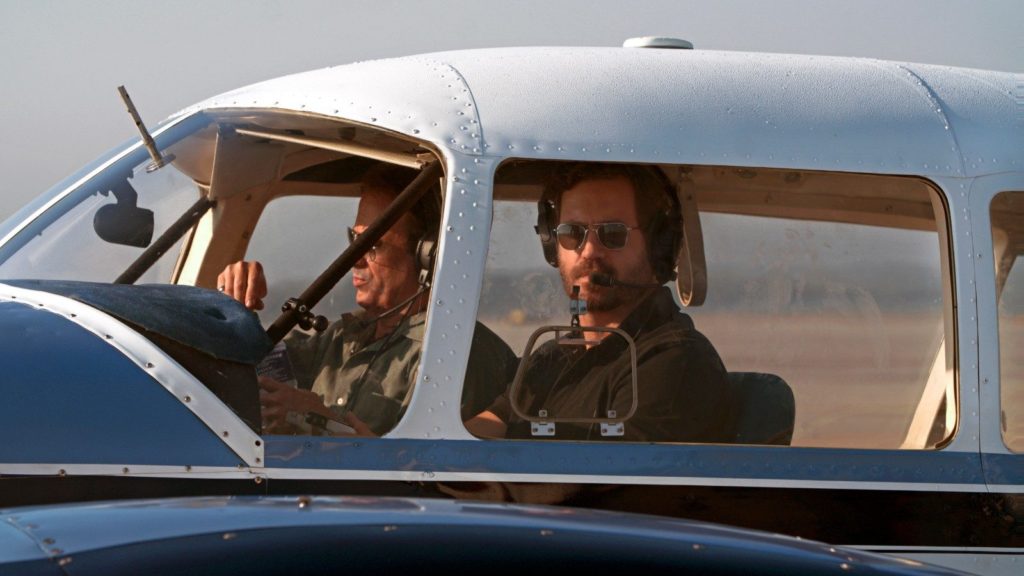
Wasp Network
The original title of the film ('Wasp Network') gives a more accurate idea of the narrative, offering no hints of a dashing and adventurous journey, but informing history buffs of an important subtext to the events unfolding on screen.
At its core, Assayas's work 'Wasp Network' is a genuine political thriller that slowly immerses the viewer in intricate spy games. Here, every character may turn out to be someone other than who they claim to be, and any deal or scheme can lead to completely unexpected consequences. And all this is revealed through dialogue. No chases, no action, no heroic bravado in this film—and this should be taken into account before watching.

Context and Conclusions
Assayas's idea is quite intriguing, and the complex relations between America and Cuba can be fertile ground for a variety of fascinating stories. The director's problem, who also wrote the script, is that an unprepared viewer (undoubtedly the majority) will not be able to grasp the difference between the characters and organizations flashing on screen.
For someone not well-versed in Cuban history, distinguishing the so-called 'Brotherhood of Salvation' from Cuban nationalists is an impossible task. Add to that the US intelligence agencies that keep intervening, trying to keep track of everyone, and you are guaranteed a muddle in your head.
The problems with explaining the context affect not only the overall perception of the film but also the level of empathy for the characters. There are several key characters in the story, but it is absolutely unclear to the viewer whether René is a hero or a traitor, why Juan Pablo acts one way or another, why female characters are written into the plot, only adding further confusion. And this despite the fact that Penélope Cruz's performance in 'Wasp Network' is arguably one of her best. In the role of the martyred wife, the actress gave 100% and even a little more than the presented character deserves. Meanwhile, the talent of Ana de Armas was not used by the creators at all, as she was given only the role of a pretty face and a simple addition to Wagner Moura's character.

The desire to highlight the male struggle for justice through the lens of their relationships with women is understandable and generally acceptable, but the level at which it is executed in the film 'Wasp Network' leaves much to be desired.
Perhaps if Assayas had implemented his idea in a mini-series format, he would have been able to properly set the accents, dilute the subtleties of geopolitics with simple and understandable empathy for the average viewer, but in the format of a 2-hour film, he unfortunately did not succeed. And even the absolutely wonderful Gael García Bernal, who breaks up the monotonous narrative in the middle of the film, does not save the situation.
Trailer:
Comments
0No comments yet.
Sign in to join the discussion.