
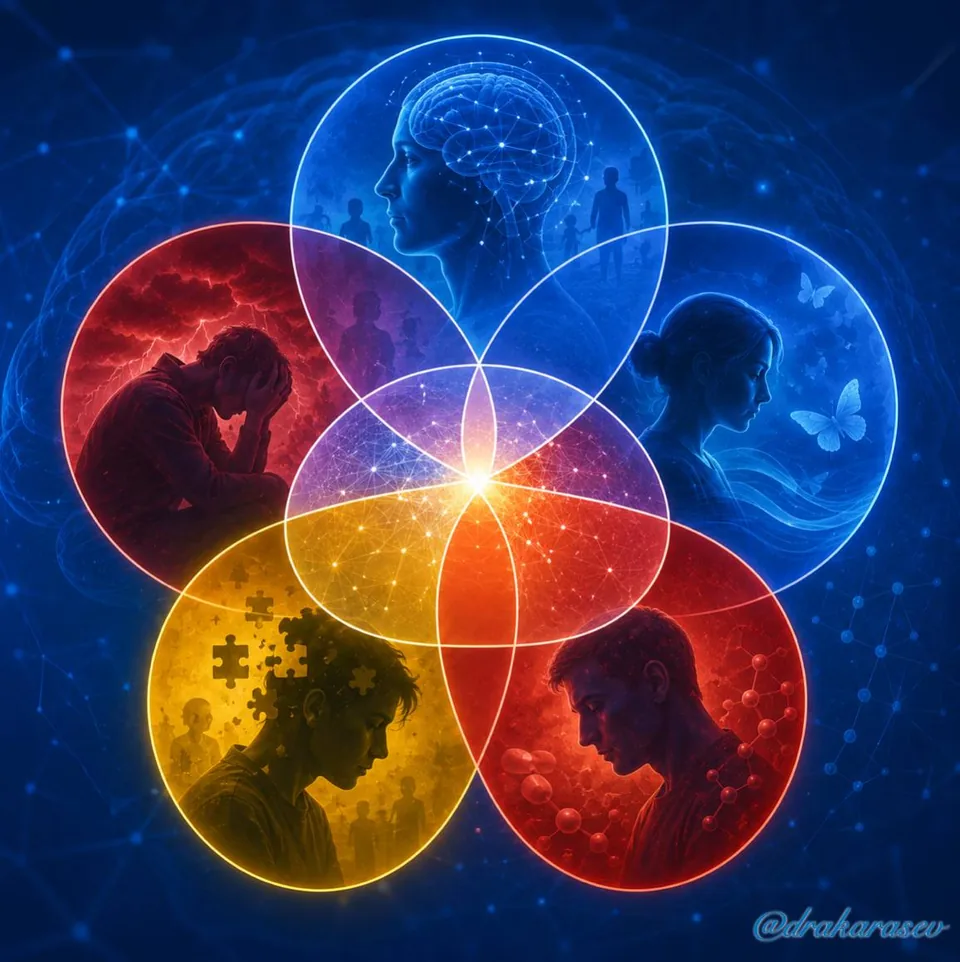
The Psychiatric Genomics Consortium (PGC) — an international association of hundreds of scientists from dozens of countries — collected and analyzed genetic data from more than 1 million people with mental disorders and nearly 5 million healthy individuals. Such a scale has never been seen in this field before.
The study design is based on comparing the genomes of people with 14 different psychiatric diagnoses (from childhood ADHD and autism to schizophrenia, depression, and addictions). The scientists used several advanced statistical methods to "stratify" genetic risk and understand which DNA regions are common to many disorders and which are unique to a specific one.
🔬 Main discovery: 5 genomic factors
Instead of 14 separate diagnoses, the researchers found that genetic risks cluster into 5 large groups:
• Compulsions,
• Schizophrenia-bipolar syndrome,
• Neurodevelopment,
• Internalization,
• Addictions.
These five factors explain on average about 66% of the total genetic variability of each individual disorder. This means that most of the genetic causes of mental illnesses are shared, not unique to each diagnosis.
What does this mean for doctors and patients?
1. Diagnoses in psychiatry are not "rigid" categories.
Schizophrenia and bipolar disorder, long considered completely different diseases, turned out to be genetically almost indistinguishable. This confirms that mental disorders are better understood not as separate "types" but as spectra that often overlap.
2. Clear targets for new drugs have emerged.
Genes common to all 14 disorders were found to be linked to basic processes of regulating the work of other genes. More specific factors pointed to particular brain cell types:
• SB factor (schizophrenia and bipolar disorder) — associated with excitatory neurons. • Internalizing factor (depression, PTSD, anxiety) — linked to the biology of oligodendrocytes (cells that insulate nerve fibers).This gives pharmacologists specific "threads" to pull in order to develop therapies that target the root cause rather than symptoms. Randomly discovered psychoactive substances will become more explainable.
3. Theories of mental disorders tied to a single neurotransmitter are gradually crumbling. Do not criticize drugs that do not work for a given diagnosis, do not look for a "dopamine" medication or consider serotonin the "happiness hormone." It is all different. The system is different.
What's next?
The authors emphasize: this study is a map, not a ready treatment plan. Next steps:
• In-depth study of mechanisms. Scientists now need to understand exactly how changes in these genes and cells lead to diseases. • Development of new drugs. Knowing specific biological pathways allows for the creation of drugs that target them precisely. For already approved drugs, it is necessary to search for common effects — both primary and side effects. • Classification of diagnoses that does not unify under effective treatment requires revision. The results provide an argument that future psychiatric nosology (disease classification system) should rely not only on symptoms but also on biology. And one should not trust specialists who claim to know how the brain should work.This study is the biggest step toward understanding that mental disorders share common genetic roots and that our view of the nature of these diseases needs to change.
@drakarasev
Psychiatrists, what do you say?
Comments
0No comments yet.
Sign in to join the discussion.