
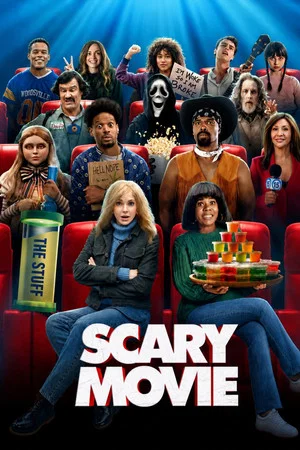
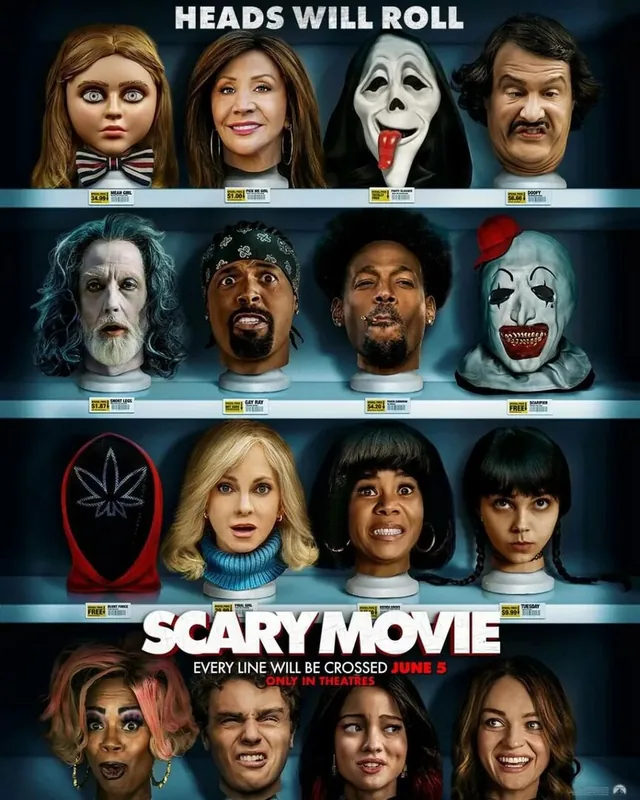
A half-forgotten guest from the past unexpectedly swam into the deep waters of the gray steel of Russian cinemas. “Scary Movie 6” does not hide its biological age and brings back nostalgia for the 2000s with all its pros and cons. Does the Wayans brothers’ creation bring the parody franchise out of a coma, and why does it face a long rehabilitation with an unpredictable prognosis? We’ll tell you in our article.
“Run, Cindy, Run!”
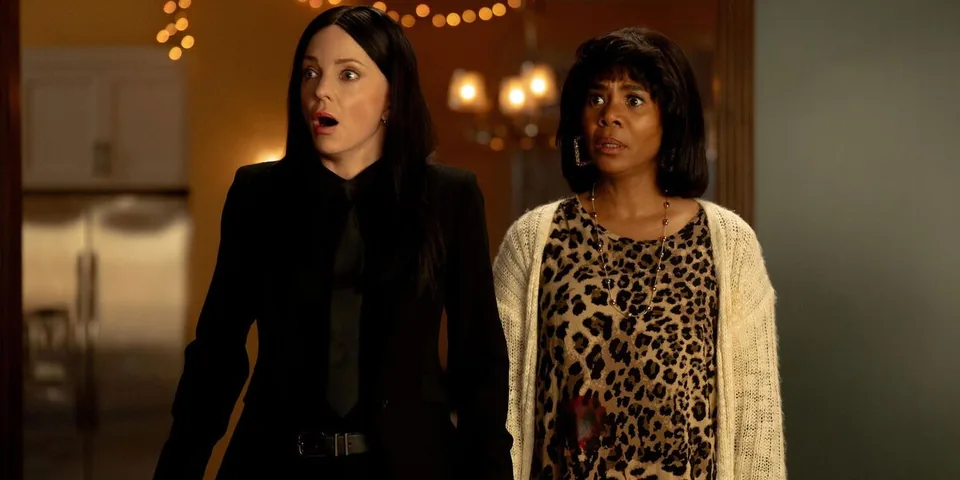
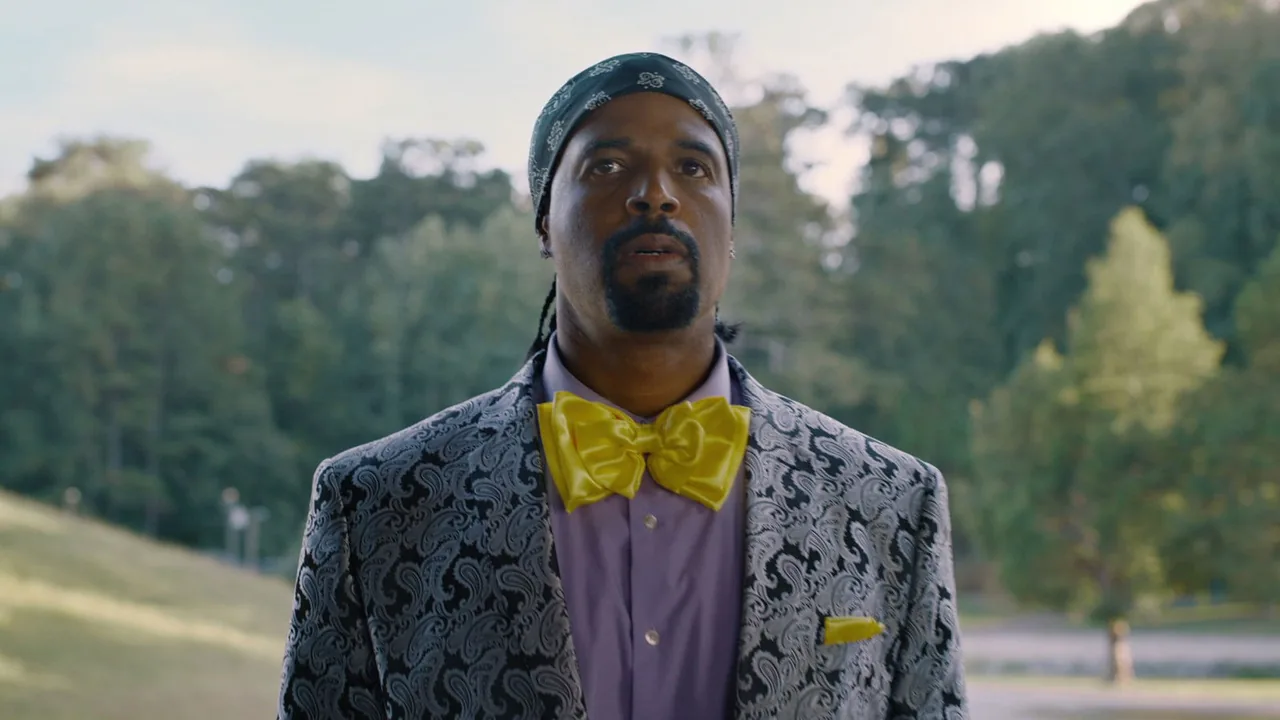
After several memorable encounters with Ghostface, brave Cindy Campbell (Anna Faris) retired, had children, and became a recluse. But her well-deserved retirement is interrupted by the return of an old friend with a smile on his face. The mask “worked” on the heroine’s daughter Tuesday and dug up the hatchet. Gathering old acquaintances in the form of Brenda (Regina Hall), Shorty (Marlon Wayans), who swapped phone pranks for streams, and Ray (Shawn Wayans), again hiding old secrets, the blonde scream queen and her A-team remember the good old days and prove there’s still gunpowder in the powder kegs.
“Genre on Its Last Breath”
Parody is as old as the hills and first stunned audiences almost immediately after the Lumière brothers’ lineup raced across the screen. One of the first westerns in film history—Edwin Porter’s “The Great Train Robbery” with its fourth-wall-breaking bandit—was practically begging to be mocked. In its ironic twin “The Little Train Robbery,” the robbers were preschoolers, the heavy locomotive shrank to a model on a toy train set, and instead of a money car, there were candies and toys. For a long time, the genre remained on the sidelines, rarely flaring up with bright strokes like the adventures of Abbott and Costello: the comedy duo parodied both horror with Frankenstein and vampires and Charlie Chaplin’s cult anti-militarist “The Great Dictator.”
New blood in the form of the comedy troupe Monty Python and the 2000-year-old man Mel Brooks revived parody in the 70s. The Pythons mocked the canons of the Knights of the Round Table and biblical stories, stuffing every second of screen time with all-pervasive absurdity. The father of “Young Frankenstein” taught noble bandits to wear tights and stern cowboys tolerance. By pushing genre clichés to distilled grotesque, the director created golden standards of comedy that remain popular to this day (Indians speak Yiddish, and the alien that bursts from John Hurt’s chest dances like a cabaret dancer).
For our audience, the heyday of parody cinema came in the 80s, when the ambitious trio Zucker, Abrahams, Zucker launched their “Airplane!” Mocking the seriousness of disaster films, this mighty bunch of comedy filmmakers turned everything upside down and went into a steep dive for several decades. They took the inscrutable, gray-from-birth Leslie Nielsen as the pilot. In the 90s, the owner of the most charismatic poker face put on a police badge and exposed all the flaws of procedurals in the “Naked Gun” trilogy—the genre’s last hero.
After that, parody became a parody of itself and lost all the cool points earned over years of hard work. There weren’t many targets left for laughter, and the jokes became flatter and flatter.
The Wayans family briefly revived this direction in cinema. After mercilessly mocking the sacred cows of blaxploitation in “Don’t Be a Menace to South Central While Drinking Your Juice in the Hood” (the film’s title is a string of references to the movement’s main representatives), these breakers of all rules of decency chose popular slashers and horrors as their victim, which by that time desperately needed a good shake-up. “Scary Movie” became a box office hit and earned a fan base of teenagers hungry for “fresh flesh.” The abundance of below-the-belt jokes, provocative scenes, and genuinely witty gags—like the cinema massacre or Cindy’s virtuoso fight with the killer from “Scream”—ensured the film’s cult status even in its lifetime.
Happiness was short-lived because the Weinstein brothers, greedy for money and more, decided to milk the franchise dry. After the second part, the Wayans were “asked to leave” and began to hammer nails into the coffin lid of the undead genre time after time. Inviting Zucker as director and Leslie Nielsen and Charlie Sheen to the cast barely kept the subsequent films afloat, although the future was visible to the naked eye. The humor didn’t evolve; an abundance of vulgarity drowned the last sensible scenes. The films’ popularity, however, did not wane. But the real enemy and secret killer of the genre was always hiding in plain sight.
Jason Friedberg and Aaron Seltzer (if you see them on the street, cross to the other side or throw a stone), who previously appeared in minor roles in the credits of “Scary Movie,” rode the franchise’s success wave, became “demolition men,” and began churning out “timeless classics” like “Superhero Movie” or “Disaster Movie,” literally flushing this type of cinema down the toilet. The illegitimate children of the Wayans franchise, who made a fortune on the bones of their ancestors, cheerfully held a wake, creating real monsters like Jack Waterheater and his brother Harry Sprout.
The genre buried itself deep underground and showed no signs of life. The 2010s and 2020s no longer needed it. Many horror films learned to mock themselves. Jordan Peele’s “Get Out” is an example. Most topics and reasons for laughter began to be considered offensive and toxic. A pleasant exception in the parody drought was Akiva Schaffer’s reboot of “The Naked Gun.” By successfully combining politically incorrect and slightly offensive jokes with new trends, such as satire on corporations and artificial intelligence, the spiritual heir gave hope for the reincarnation of a genre that had become a dusty artifact of another life.
“We’ve Come to You for an Hour”
“Scary Movie 6” immediately hooks you with its original cast. The long-awaited reunion has happened, and our ghostbusters are back in full combat readiness. Slightly aged, the heroes have acquired wrinkles and noble gray hair, but they haven’t lost their youthful fervor and swagger. Anna Faris seems to have never left a cryo-chamber, because her facial expressions and movements are the same as 25 years ago. Marlon Wayans hasn’t thought of stepping out of the character of a laid-back dude who can knock out even a serial killer with a forbidden move. The new installment even brings back secondary characters like the infernal Bobby and the creepy butler from the second part, though they only get ceremonial roles.
A particular joy is hearing that the dubbing actors were chosen with voices maximally similar to the canonical dubbing of the first films. This is a solid plus for the sequel’s karma, because many became fans of the franchise back then, in front of a bulky TV in the early 2000s.
“Line Up, Scary Kids, Line Up!”
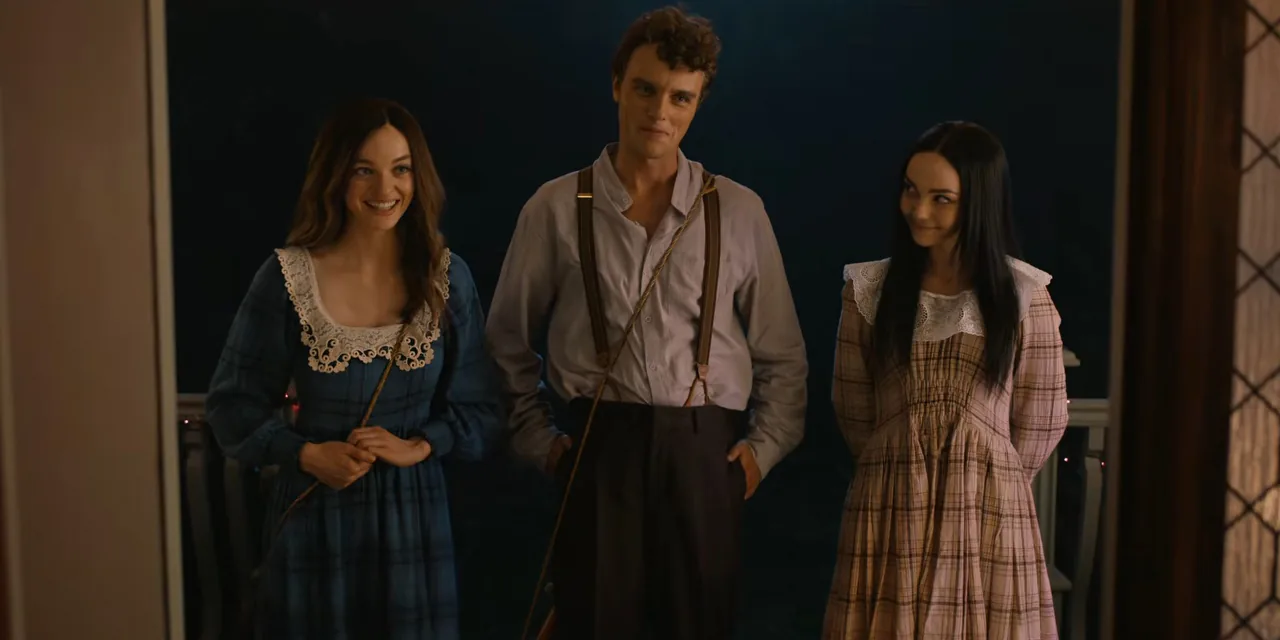
But the excitement quickly turns into a questioning expression as the film progresses. By putting children at the forefront, just like in the main object of the film’s mockery, “Scream 7,” the Wayans brothers openly declare that they won’t give up their “turf” for any price. Having suffered with the Weinsteins and going through a tough time for the parody genre (their previous efforts like “A Haunted House” flopped), the creative duo doesn’t let the Zoomer generation fully shine. Olivia Rose Keegan and Cameron Roberts are certainly far from their parents’ generation in comedic terms; for now, they can only offer hot temper and youthful charm, but that’s no reason to push the youth into a corner.
The teenagers in the film are openly mocked and cruelly joked about, from their widespread obsession with therapy, antidepressants, and self-discovery, to the phrase: “Your own fault, weaklings.” And this at a time when the genre desperately needs fresh blood capable of filling it with boiling energy and getting rid of outdated techniques. The Wayans, who again contributed to the script as they did in the first and second parts, this time behaved like real old farts.
“What’s Your Favorite Scary Movie?”
Previous parts of the very funny franchise took one or two popular horror films and slashers (“Scream” and “I Know What You Did Last Summer”) and dissected all the clichés and standards, pushing familiar themes to complete absurdity and grotesque. Sometimes they mixed in a handful of other pop culture films like “The Matrix” and “Charlie’s Angels” for variety. As a result, horror films received the necessary therapy and shed layers of truisms and templates. Then the recipe changed, and other authors overdid the ingredients. As a result, the even narrative canvas onto which parody gags were layered turned into a sketch show of varying freshness.
The sequel suffers from the same problems, and it feels like in 30 years the brothers haven’t had time to learn from their mistakes. In one scene, the characters find an abandoned shack with Sergeant Doofy living in it, a product of the 2000s who has outlived his usefulness. Nowadays, hardly anyone in their right mind would joke about neurodivergent people. He has lost touch with reality: he’s afraid of COVID, became a Trumpist, and never lets go of the TV remote. The situation with the Wayans is similar. All this time, they seem to have been in a long hibernation and missed all the major upheavals of the 21st century, and upon waking up, they wrote a long angry tirade on X/Twitter, lumping everything together. Otherwise, it’s hard to explain gags about the pandemic and the Capitol riot in a 2026 film.
In the advertising campaign, the authors promised viewers that they would go beyond the pale and break all norms of decency, bringing back the feeling of the free 2000s. And that turned out to be the film’s main joke. It’s hard to imagine more toothless and herbivorous satire. The political jokes about the current US president look extremely harmless, and it’s hard to catch any caustic, accusatory humor, while the moment with the appearance of the Epstein files is downright stupid and incoherent.
As for the parodies themselves, the brothers have lost their edge and forgotten the basic precepts of the genre from the other brothers—the Zuckers. Mock not the film, but the concept itself, so that the viewer, without knowing the source material, gets the humor. When “Airplane!” came out, few had seen the original film “Zero Hour!”, but people were falling out of their seats in fits of laughter instantly. “Scary Movie” in its early parts followed this principle. It was funny because of the basic genre techniques cranked up to the max, like a chase from a maniac or survival rules in a haunted house. To understand most of the sequel’s jokes, you’ll have to watch horror films from the last decades to death. Otherwise, you risk missing a sarcastic reference to “Sinners,” “The Collector,” “The Substance,” or “The Tool.” It’s commendable that the Wayans are interested in new horror classics and try to be trendy at least here; it’s a pity it doesn’t do much for the film itself.
The level of humor, unfortunately, hasn’t changed much in a quarter of a century. The franchise was never known for refinement and good taste, preferring mostly toilet humor and vulgar jokes, but what was considered audacity and boldness back then can now look like a demonstration of complexes and disorders of already adult people who don’t want to psychologically grow up. Many decent scenes, like the inventive final fight copying “Everything Everywhere All at Once,” or Shorty’s meeting with “The Pale Face,” could have been more successful and memorable if the brothers didn’t consider viewers to be pubescent teenagers without a gram of critical thinking.
The viewer grew up back in the 2010s and voted with their wallet. Therefore, the mockery of the parody genre ended at that time, leaving many ambitious businessmen outside the gates of film studios. Greasy jokes and an abundance of sex scenes no longer brought profit. Humor became more meta-ironic and complex. Parodies became more geeky. Edgar Wright’s “Cornetto” trilogy appeared with an abundance of intertextual humor. The Wayans probably saw this, so at one point the characters realize they are inside a film, fire off references to past parts, joke about the requel (sequel and remake at the same time), but it comes out weak. It looks like the famous meme with Steve Buscemi and a skateboard. They are afraid to admit that the time of their “edgy” humor is gone forever, and the only thing that awaits them is a place as written-off goods in a dark corner of some streaming service.
“A Nightmare on Wayans Street”
“Scary Movie 6” delivers a hefty dose of nostalgia, bringing beloved characters back from oblivion. Old friends find the strength to fight an old enemy but lose outright to the new times. The Wayans brothers desperately fail to give parody cinema novelty and mischief, drowning the comatose genre in worn-out themes and stale gags. The sequel to the once cult franchise looks like a belated epitaph to old carefree times that are not destined to rise from the dead. Don’t waste your time on the exorcist.
Comments
0No comments yet.
Sign in to join the discussion.