
It all began on April 17, 2041 at 03:18 UTC.
The Chinese private company SkyBridge was launching another batch of satellites for its global communications network. It was a routine launch — by that time, nearly 180,000 satellites from various companies and countries were already operating in low Earth orbit. The internet, navigation, banking, maritime shipping, aviation, weather forecasting, stock exchanges, and military systems were all completely dependent on space infrastructure.
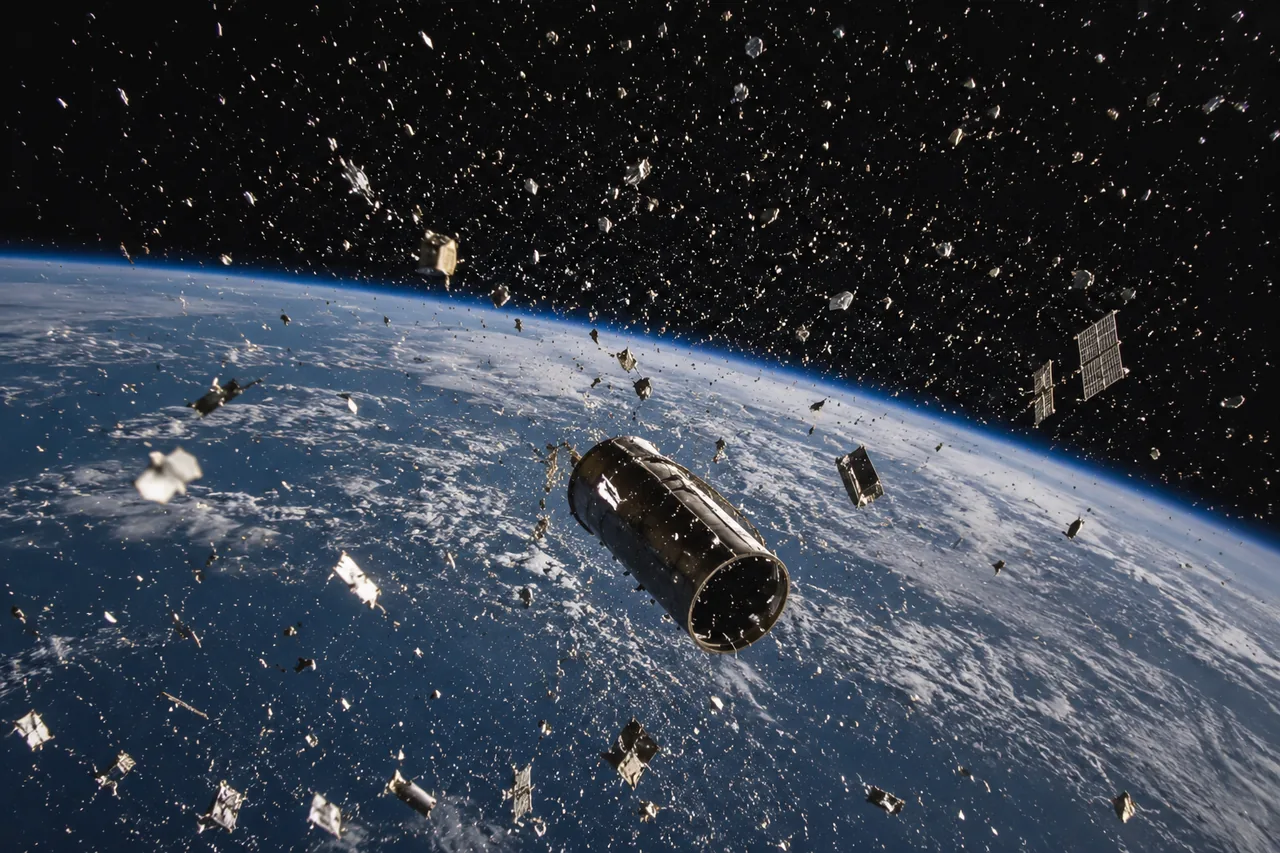
During the ascent to operational orbit, the upper stage experienced an attitude control system failure. Instead of a controlled deorbit, the multi-ton stage collided with an old European Earth observation satellite at a speed of nearly 14 kilometers per second. At first glance, the event seemed insignificant. Similar collisions had occurred before. But this particular accident happened in the most congested part of the orbit. The impact created about two million fragments larger than one centimeter and tens of millions of smaller particles. Each of them continued to orbit Earth at the speed of a rifle bullet. Three hours later, the debris cloud crossed the orbit of an American satellite communications constellation. Seven satellites were destroyed. Another twenty minutes later, their own debris struck Japanese and Indian satellites.
From then on, no one could control the process. Each collision generated new collisions. Each new explosion created even more debris. This exact scenario was described back in 1978 by American scientist Donald Kessler, but at the time it seemed more like a theoretical warning than a real threat. By the end of the first day, humanity had lost nearly three thousand satellites.
At first, most people didn't even notice. Sometimes the internet would go down, the GPS would start erring by a few dozen meters, weather forecasts would update with a delay. News channels talked about a "major space accident," but no one expected the consequences to be so severe. On the third day, international transoceanic flights stopped operating. Modern aircraft were too dependent on satellite navigation and constant communication. Flights began to be canceled one after another. Within a week, maritime carriers reported that they could no longer guarantee safe vessel movement. Container ships anchored in ports around the world.
Stock exchanges continued to operate, but banks increasingly faced synchronization errors. International transfers were delayed first by hours, then by days. When satellite weather maps stopped updating, farmers finally realized the scale of what was happening. Hurricanes and droughts could no longer be predicted with the same accuracy. Crop yields began to plummet. The most alarming report came from the European Space Agency two weeks after the accident.
According to scientists' calculations, the density of debris at altitudes between 500 and 1200 kilometers had become so high that launching new satellites was practically impossible. Any spacecraft had too high a chance of being destroyed within the first hours after reaching orbit. This meant humanity could not simply replace the lost infrastructure. At an emergency UN summit, representatives of the major space powers used the term "space blockade" for the first time.
The military proposed an unusual solution. The US, China, Russia, India, and the European Union jointly launched Project "Shield." The plan was to create heavy unmanned spacecraft with laser systems and nets to gradually collect the largest debris. However, the first test vehicle was destroyed twenty-seven minutes after reaching orbit.
The next three met the same fate. It became clear that the problem had reached a point where any new launches only increased the amount of debris.
By 2042, the world began to restructure. Smartphone manufacturers widely reintroduced support for offline maps and autonomous navigation. Railways once again became the primary mode of freight transport on continents. Ocean shipping was cut nearly in half. The military restored ground-based radio navigation systems similar to those used during the Cold War. Thousands of tall radio masts began to be built around the world.
The internet changed too. Without satellites, it was impossible to provide connectivity in remote areas of the planet. Vast territories of Africa, Siberia, the Arctic, and oceanic islands effectively disappeared from the global network. The internet once again consisted of regional networks connected mainly by undersea cables.
Climate scientists were hit especially hard. Previously, thousands of satellites observed Earth around the clock. Now most of that data was gone. Humanity had gone blind, so to speak. Many natural disasters came as a surprise.
Space agencies suffered the heaviest losses. All lunar exploration programs were shut down. Expeditions to Mars were canceled without new dates. Orbital stations gradually deorbited because it became impossible to service them. The last crew of the international station returned home in February 2043. It was humanity's last crewed flight into space.
Ten years passed.
By 2051, humanity had learned to live in the new world. Communication was restored thanks to a network of high-altitude drones constantly patrolling the stratosphere at about twenty kilometers. They could not fully replace satellites, but they provided internet and navigation over densely populated regions. Cities became much more autonomous. Almost all critical systems learned to operate without constant contact with space. Planes flew across oceans again, but much slower and only on strictly controlled routes. Ship captains once again studied celestial navigation, and paper charts ceased to be museum exhibits. But the most severe consequence was psychological. Every night, people still saw the Moon, stars, and familiar constellations. Only one thing was missing. The slowly moving points of satellites, which used to be visible to the naked eye, were gone. And every schoolchild knew that beyond the atmosphere now orbited a deadly cloud of billions of metal fragments. It had turned space from a road to the future into an insurmountable wall. Scientists calculated that natural atmospheric drag would clear the most dangerous orbits only in 150–300 years. Until then, humanity remained forever bound to Earth. The greatest irony of this story was that Earth had never stopped being capable of sending rockets into space. It just could no longer get them through its own orbit.
Comments
0No comments yet.
Sign in to join the discussion.