

Sports cinema in Russia has always been in a zone of special risk: it’s too easy to slide either into a jingoistic propaganda piece or a saccharine melodrama where sport serves merely as a backdrop for a love story. As happened this year with the series “On the Ice” and what the series “Jive” portends.
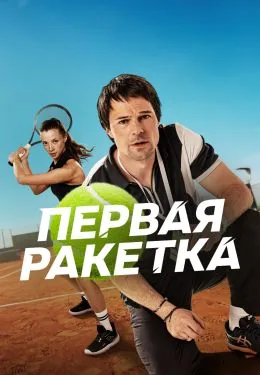
“First Racket,” released on the Wink platform, becomes a rare example of balance, where genre expectations are met but not at the expense of psychological depth. The series tells the story of twenty-two-year-old tennis player Katya, who, after a string of failures and personal dramas, gets a chance to start from scratch under the guidance of the odious and long-lost-faith-in-himself coach Igor Strelnikov.
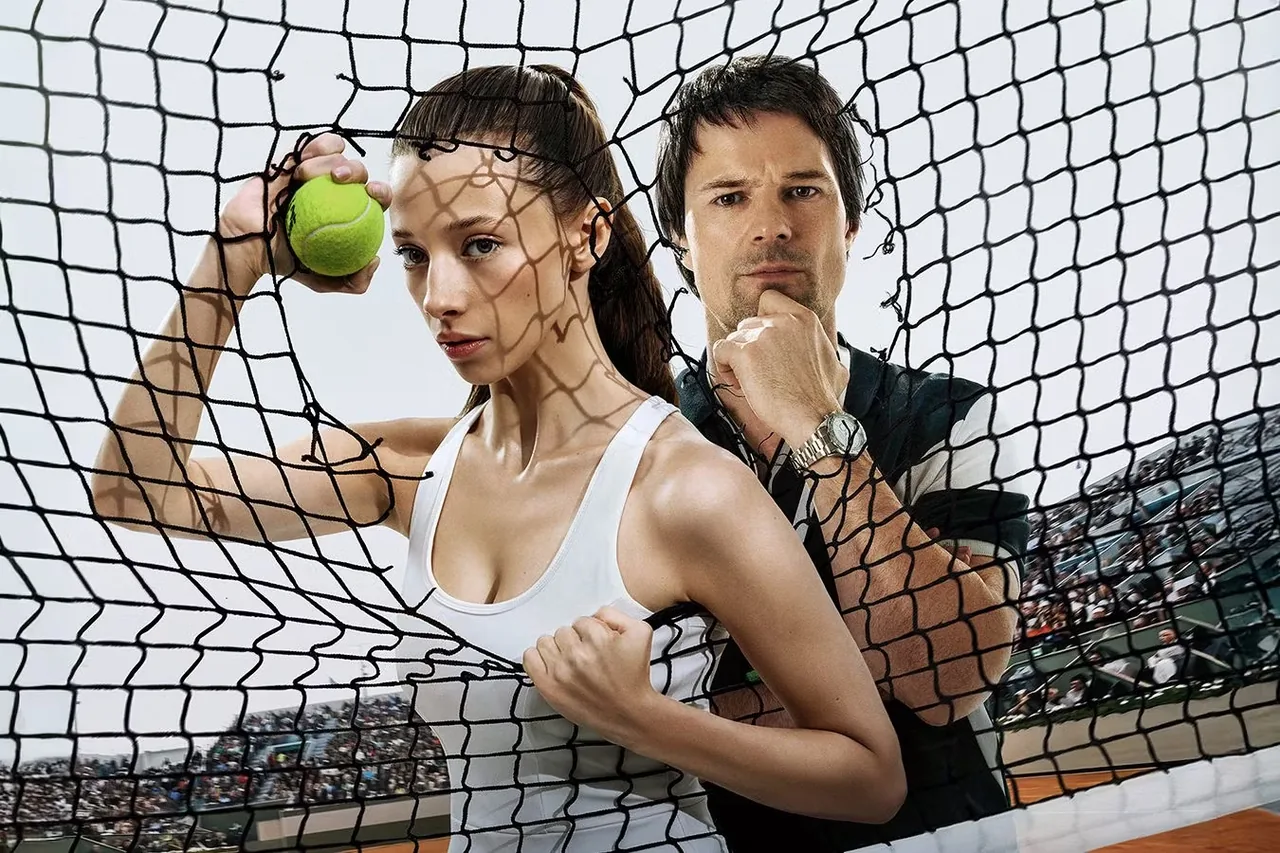
The synopsis sounds almost like a formula, but the execution takes the project beyond a banal sports saga. The creators focus not so much on the pursuit of cups and rankings, but on the slow, sometimes painful recovery of the human soul, which learns to trust the world, accept defeats, and not run from its shadows.
And here the key trump card of the series is Polina Gukhman. Her Katya is a prickly, wary creature, accustomed to relying only on herself and not expecting help, but it is in this protective armor that such fragile sincerity shows through that the viewer can only empathize with her unconditionally.
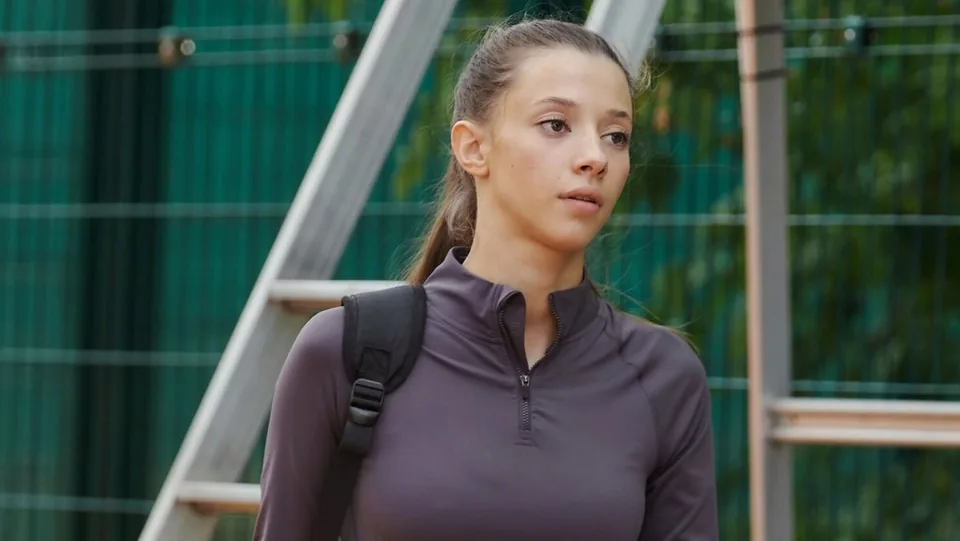
Gukhman manages to convey a whole range of states: from animal fear of the big stage to cold determination when you no longer see the ball but feel it with your back. Danila Kozlovsky as Strelnikov does not overact, as sometimes happens with his screen images, but on the contrary, demonstrates restrained, tired male pain of a man who once failed to cope with the burden of expectations and now fears to believe in a miracle again. Their duet is built not on spectacular quarrels and reconciliations, but on tense silence, non-verbal contacts, and rare but precise dialogues where every word carries weight. It is this acting chemistry that turns the standard “coach-protege” story into something more—an exploration of the relationship of two solitudes forced to find a common language through ball and racket.
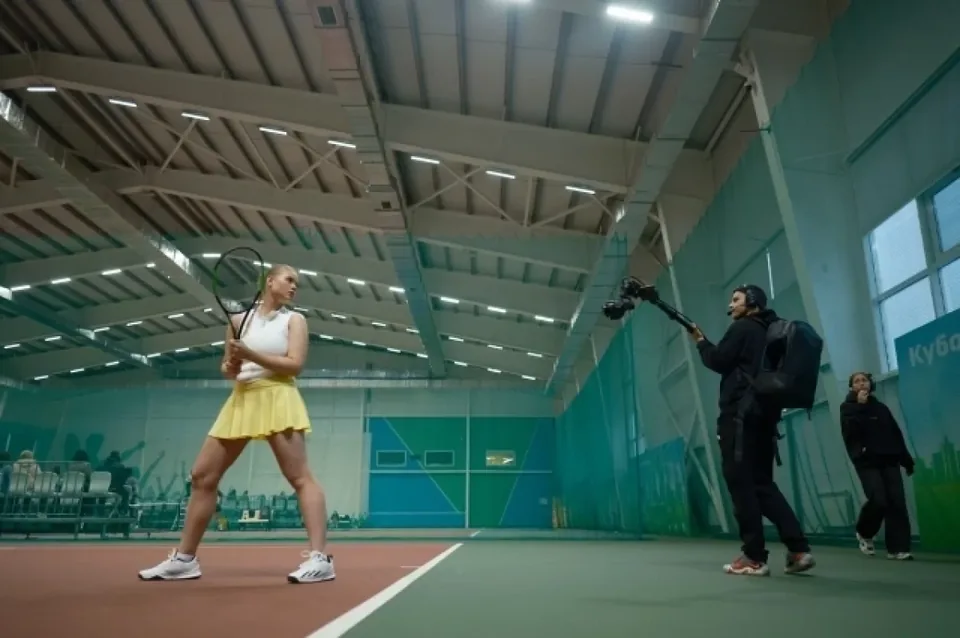
Also worthy of special mention is the visual component of the project. The creators managed to avoid the main pitfall of sports dramas—staticity. The tennis scenes are shot with cinematic flair: the camera work catches angles, the camera seems to breathe with the players, now approaching sweaty faces in moments of extreme tension, now soaring upward to show the geometry of the court and the rapid movement of athletes. This is not just a recording of matches, but a full-fledged visual score, where every shot and every broken rhythm reflects the inner state of the characters.
At the same time, the series does not sin with excessive pathos, which often plagues projects about big sports. Instead, there is the cold pragmatism of tournament life, where victory is work, and defeat is not a catastrophe but a reason for analysis. The script, written with obvious knowledge of the tennis kitchen, carefully weaves into the plot the nuances of rankings, contracts, medical bulletins, and psychological loads, which adds documentary authenticity to what is happening.
True, it was still not possible to do without genre clichés: the images of rivals, the environment, and newspaper interviewers sometimes add up to slightly too schematic figures, and some plot twists are guessed several episodes ahead. However, in this case, predictability works rather in favor—it allows you not to be distracted by external intrigues and focus on what the project was started for, that is, the internal evolution of the main character. In addition, the creators handle the love line surprisingly delicately, not turning the story into another soap triangle, but leaving the romantic subtext rather as a background than a driver of the plot.
As a result, “First Racket” turns out to be that rare case in the modern Russian series space when a genre work suddenly acquires a face and character. This is not a movie about cups or glory—it is about how to find yourself after the world has said “no” to you, how to learn to lose with dignity and win without strain. The series has a visual style and, importantly, a desire to talk to the viewer on equal terms, without a mentoring tone and intrusive moralizing. It does not claim to be a super hit, but it is honest, well-crafted, and, as they say, made with love for its hero and for the game to which he dedicated his life.
Comments
0No comments yet.