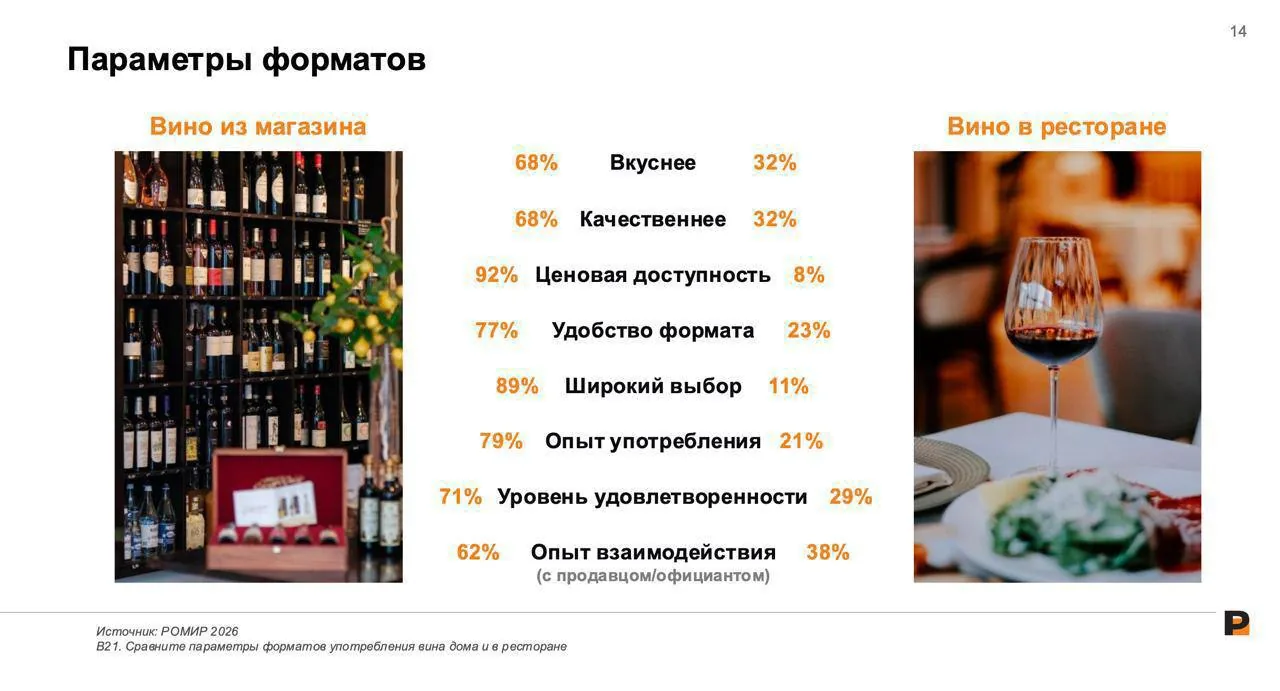
The May holiday post about wine pricing sparked some discussions in the comments. And today I came across this video, and it seems like a study (or survey) was also released today about the perception of wine in restaurants and at home.
I don't know the exact methodology of the study, but the overall trend is clear: restaurants, as a channel that engages people in wine culture, risk becoming, on the contrary, a factor that repels them from it.
But besides wine, there is an even stranger object of pricing — drinking water.
Of course, there are many cafes and restaurants where filtered water is served for free. People understand that this is a so-called "essential good," and thank them for that.
But there are restaurants — like in the video — where water is strictly rationed, and even if you ask for a glass of filtered (!!!) water to take a pill, they will literally "drip" it for you (or may even refuse altogether).
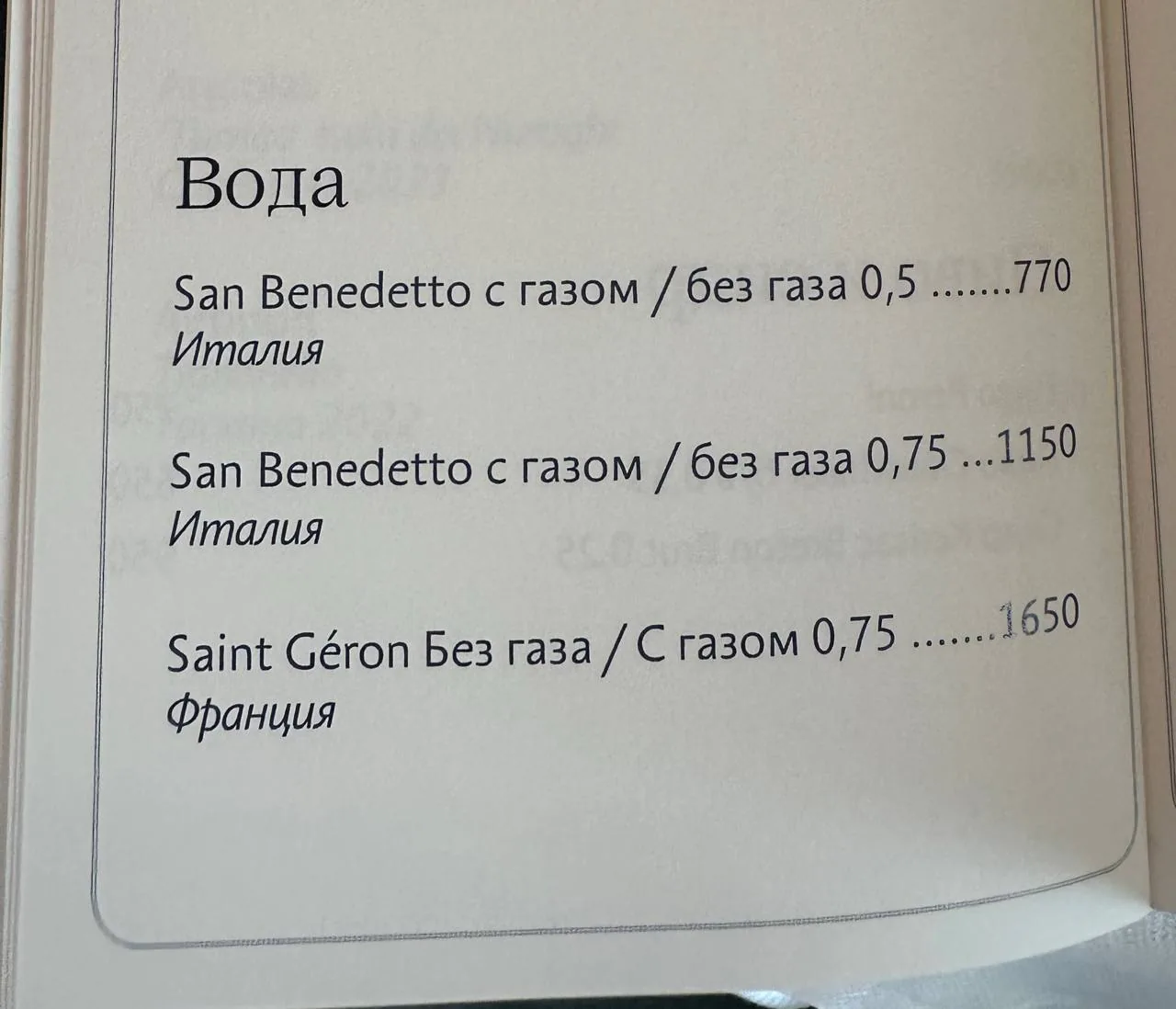
As for bottled water, the situation is not great almost everywhere.
In more democratic establishments, it's 700–800 ₽ per 0.75 L bottle (8-10 euros).
If it's domestic water, you might get it for 600 ₽, but that's already rare.
In higher-end restaurants, it's from 1000 to 1800 ₽ per 0.75 L bottle (11-20 euros).
Of course, everyone decides for themselves, but I'm sure such prices also do not foster a trusting relationship between the customer and the restaurant.
The situation is exactly the same as with wine: too high a markup for "chilling, bringing to the table, and opening." No magic or finishing cooking happens, so paying 5–8 times the purchase price is already too much. And people understand that.
As in the post about wine, I can give an example of Italian pricing.
In "democratic" trattorias, a bottle of normal water 0.75 L costs from 2 to 4 euros (180–360 ₽), in restaurants — from 5, but most often no more than 7 (450–630 ₽).
And often it's some "niche" and tasty water from Trentino or Tuscany.
We are talking about resort towns on the Ligurian coast, which are hard to accuse of striving to be affordable and inexpensive, especially during the tourist season.
People after an evening dinner or on the way to the beach take several bottles with them to avoid looking for a store.
We don't even have such a behavior pattern, which makes you think.
Comments
0No comments yet.
Sign in to join the discussion.