

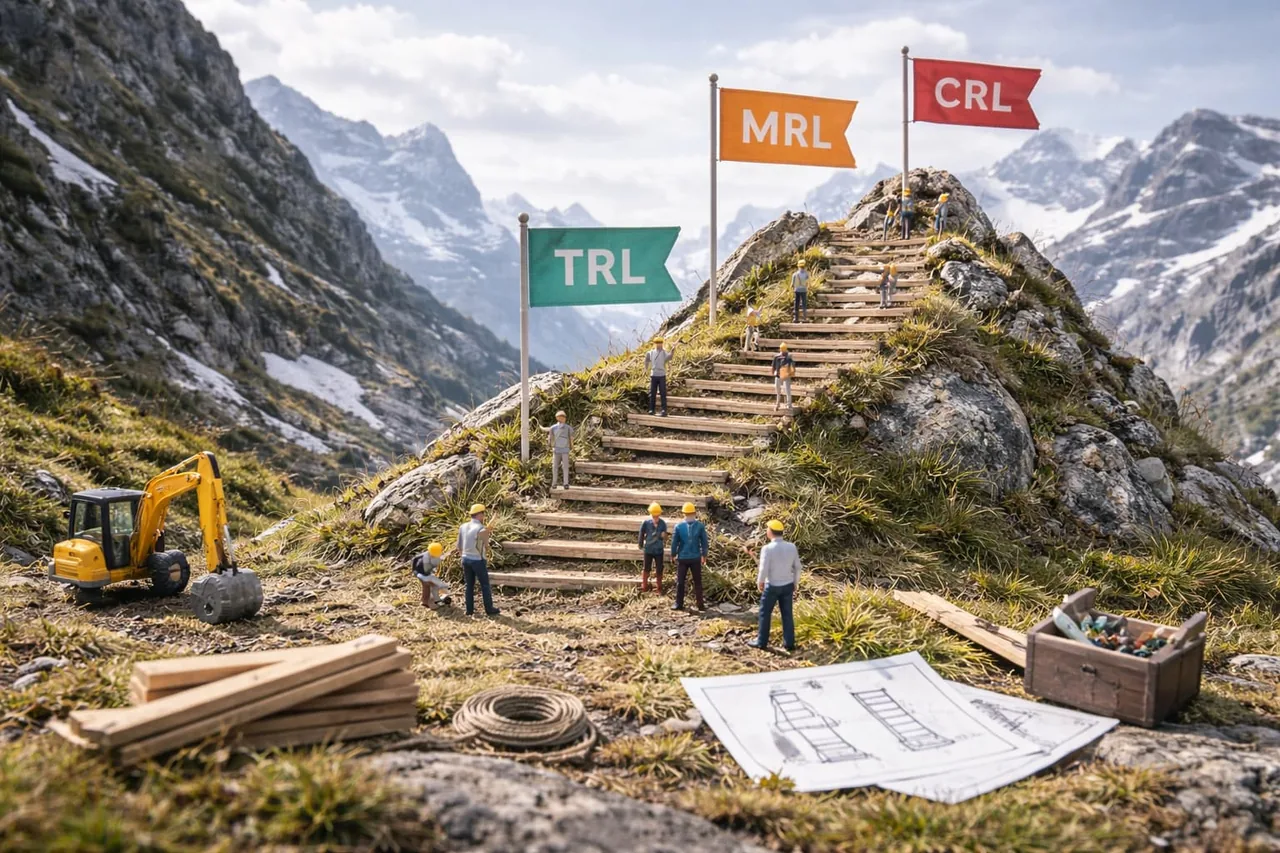
Readiness Levels are methodologies for assessing the maturity of various aspects of startups and businesses. They help entrepreneurs and investors understand at what stage the project is and what needs to be done next to develop it further. The most widely used are TRL (Technology Readiness Levels), CRL (Commercial Readiness Levels) and MRL (Manufacturing Readiness Levels).
Why are readiness levels needed?
Many startups and technology companies often focus only on the technical aspect of their product or service, forgetting about other crucial elements of the business. This can lead to problems with sales, production and scaling. Using readiness levels helps avoid such problems, providing a structured approach to assessment and development of a project across different key areas.
Examples and Descriptions of Approaches
TRL (Technology Readiness Levels)
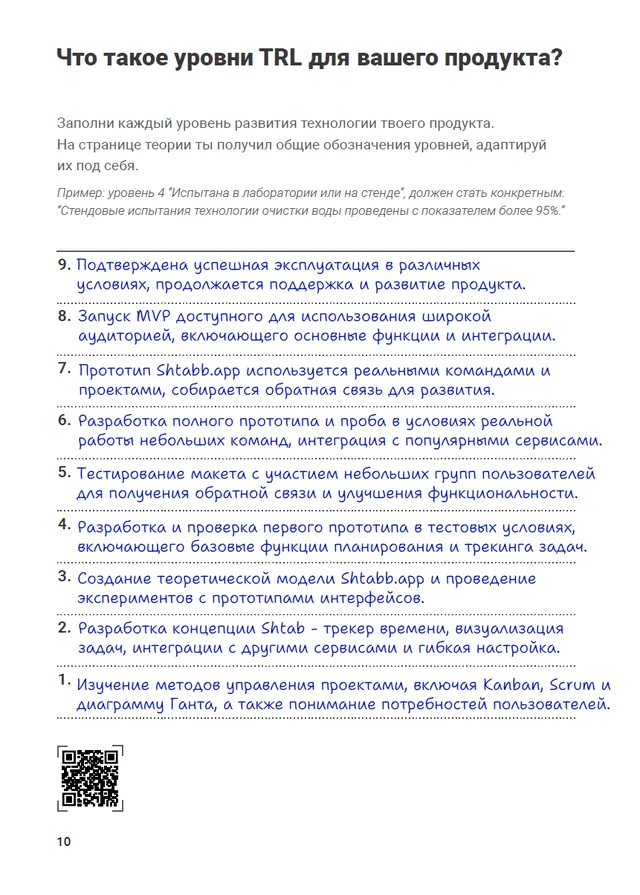
TRL measures the maturity of technology, starting from ideas and concepts to a fully operational system, ready for deployment. This approach is widely used in scientific and research institutions (R&S), especially in aerospace and defense. Example: a startup develops a new type of battery for electronics. At early stages (TRL 1-3), fundamental research and laboratory tests are conducted. At mid stages (TRL 4-6), the technology is tested in controlled environments. At later stages (TRL 7-9), the batteries undergo pilot testing in real world conditions and are ready for commercialization.
CRL (Commercial Readiness Levels)
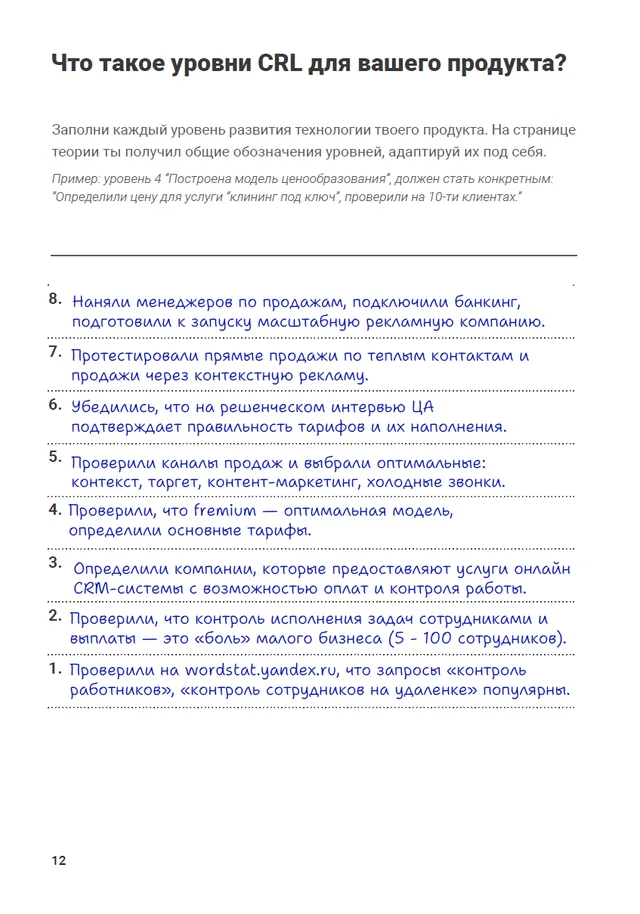
CRL assesses the ability of a startup to enter and successfully sell its product or service. This includes analysis of the market, marketing strategy, sales and customer support. Example: a startup develops a new mobile app for fitness. At early stages (CRL 1-3), market research and development of a basic marketing strategy are carried out. At mid stages (CRL 4-6), the product undergoes testing with a limited audience and receives the first customer feedback. At later stages (CRL 7-9), the application is actively promoted on the market, scaling user acquisition and expanding to new markets.
MRL (Manufacturing Readiness Levels)
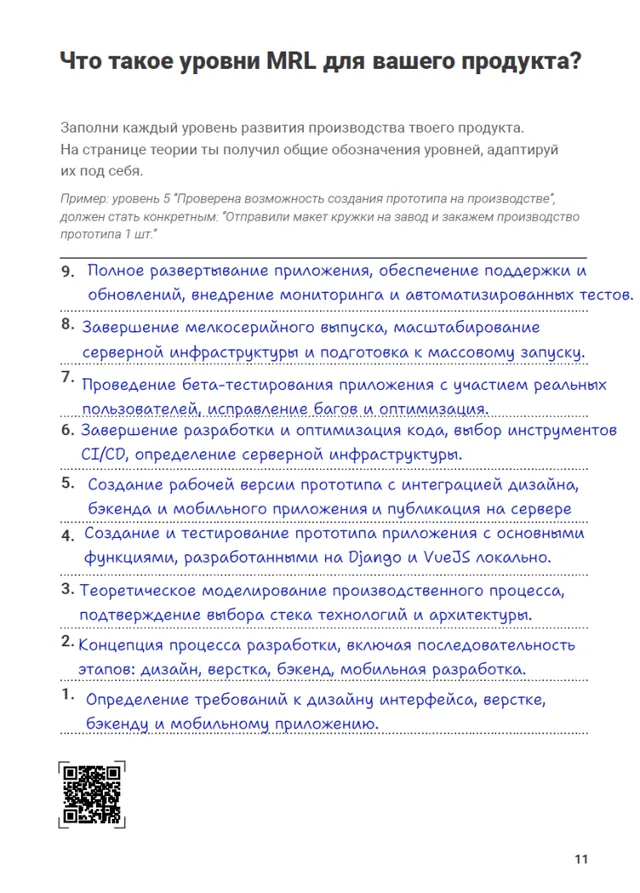
MRL assesses the ability of a startup to produce its product in the required quantities with the necessary quality. This includes development of production processes, quality control and supply chain management. Example: a startup produces innovative medical devices. At early stages (MRL 1-3), concepts are developed and prototype tests are conducted. At mid stages (MRL 4-6), production processes are developed and optimized. At later stages (MRL 7-9), production is carried out on full-scale manufacturing lines with all quality standards met.
Other readiness levels
While TRL, CRL and MRL are the main instruments for assessing startups, there are other scales that can be useful depending on specific situations:
- Organizational Readiness Level (ORL)
- Investment Readiness Level (IRL)
- Risk Readiness Level (RRL)
- Integration Readiness Level (IRL)
- Scaling Readiness
- Regulatory Readiness Level (RRL)
- Technology Preparedness Level (TPRL)
These scales can provide a more detailed representation of various aspects of business, but for most startups it is sufficient to focus on TRL, CRL and MRL.
Task
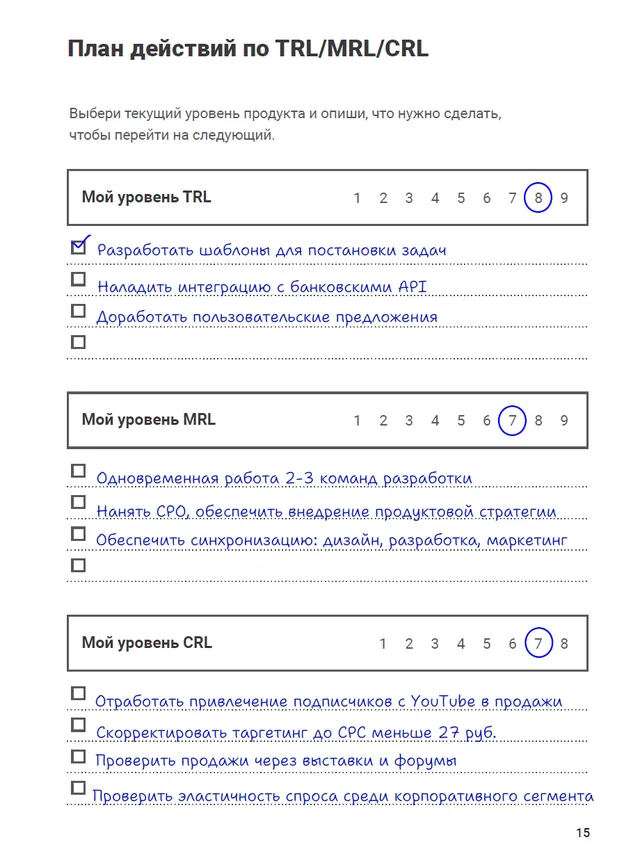
Further on pages 10, 11 and 12 there are templates for the same TRL, MRL and CRL for your product. By following the links you can read more about each readiness level. You need to fill out these templates, understanding what level your business is at. This will help you correctly assess the dynamics of growth of each of the three levels. For this you will need to fill on pages 13-15 “Plan of actions for TRL/ MRL/CRL”
Examples
FAQ
Why should I use three different readiness levels, or is there another option – TPRL?
If you try to apply only one description of TRL, MRL and CRL to your product, you will find that the levels abstraction will be too large and it will be hard to translate theory into practical application and to do so accurately. Joining them and also using abstract definitions will only increase the complexity of the levels. That's why we recommend using TPLR is the best way to avoid unnecessary complexity.
How can I use readiness levels (TRL, CRL, MRL) for planning startup development?
Readiness levels can serve as a roadmap for startup development. They help determine the current stage and what needs to be done next to move to the following level. For example, if your startup is at TRL 5 (technology prototyped in relevant environments, ready for real-world), the next step is to test it in real environments (TRL 6-7). For CRL, if you are at level 4 (early sales and feedback from customers), you need to develop and realize a full marketing strategy for mass production (CRL 5-6). For MRL, if you are at level 3 (development of concepts), you need to start developing and testing production processes (MRL 4-5). This way, readiness levels help structure and plan startup development, ensuring a consistent move forward.
Comments
0No comments yet.
Sign in to join the discussion.