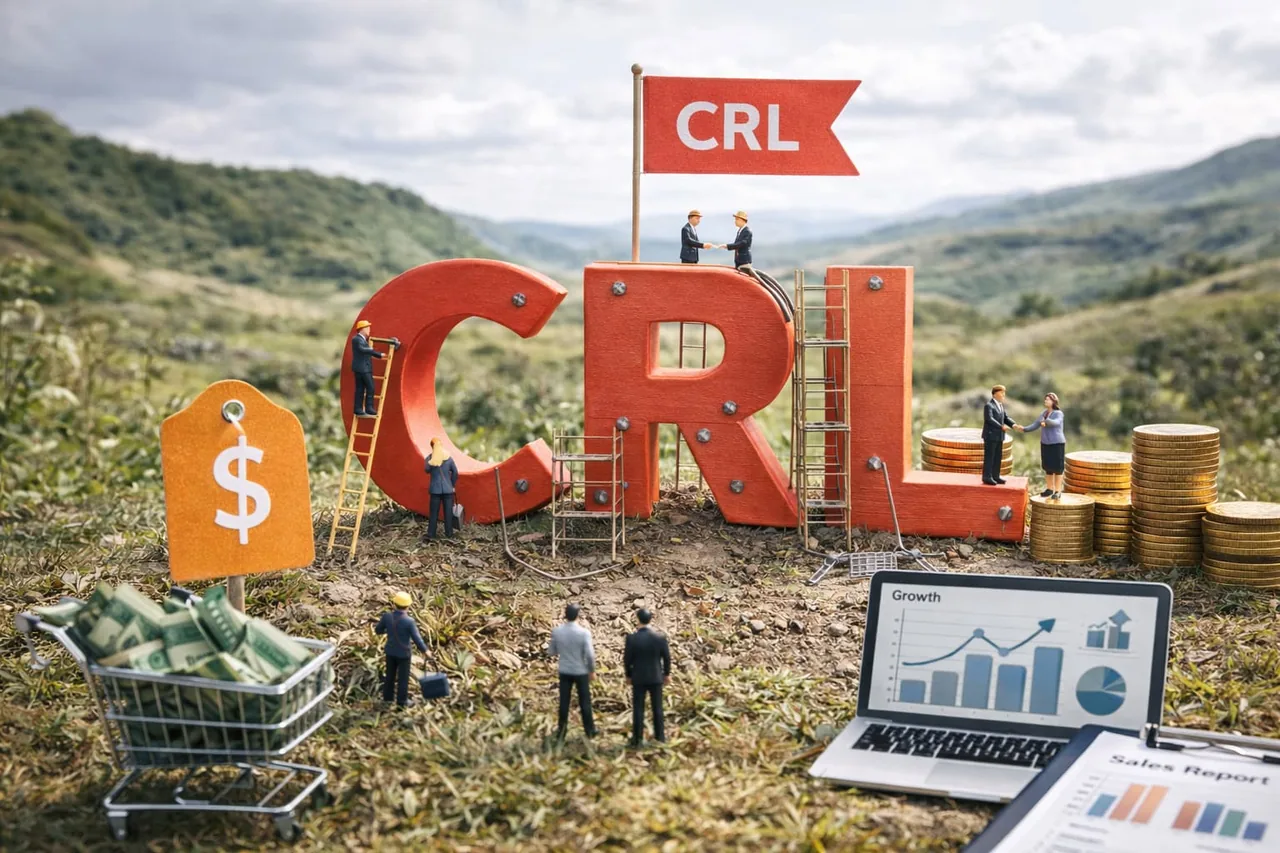
CRL (Commercial Readiness Level) is, simply put, how well our sales process is established. And many consider this indicator one of the most important. Since nowadays almost anything can be produced, and certainly in almost any volume, but can everything be sold? Of course not, so everyone developing startups first checks whether they have made something people need. Are they ready to pay for it? This block will be the easiest to fill out because, unlike technological or production readiness, sales are quite similar from product to product.
First, read in more detail what each level of commercial readiness means.
CRL 1: Demand confirmed through online research
Description: At this level, initial market research is conducted to confirm the existence of demand for a product or service using online research.
- Example for a mobile app (B2C): The development team conducts online surveys and analyzes search queries to confirm user interest in a sleep improvement app.
- Example for chemical pipe protection (B2B): The research team analyzes publications in industry journals and search query results to assess the interest of oil companies in a new chemical composition for pipe corrosion protection.
CRL 2: Target audience defined
Description: Definition and segmentation of the target audience that will be interested in the product or service.
- Example for a mobile app (B2C): The team identifies target audience segments, such as young professionals, students, and people suffering from sleep disorders, who may be interested in the app.
- Example for chemical pipe protection (B2B): The company defines the target audience among oil companies that are concerned about reducing costs for maintaining and replacing pipelines due to corrosion.
CRL 3: Competitive analysis conducted, monetization methods found
Description: Conducting competitive analysis to understand the product's market position and identifying possible ways to monetize it.
- Example for a mobile app (B2C): The team analyzes competing sleep apps, evaluates their features and user reviews, and considers various monetization models such as subscriptions and in-app purchases.
- Example for chemical pipe protection (B2B): The company studies existing solutions for pipe corrosion protection, evaluates their cost and effectiveness, and considers sales models such as direct sales and technology licensing.
CRL 4: Pricing model built, competitors refined
Description: Developing a pricing model and further refining the competitive analysis for more accurate market positioning.
- Example for a mobile app (B2C): The team develops several pricing models for the app (e.g., monthly subscription, one-time purchase) and refines the list of main competitors.
- Example for chemical pipe protection (B2B): The company develops a pricing model based on material costs and production expenses, and refines competitive advantages compared to similar solutions on the market.
CRL 5: Sales channels selected, priority suppliers identified
Description: Identifying the most effective sales channels and selecting priority suppliers.
- Example for a mobile app (B2C): The team identifies key sales channels such as the App Store and Google Play, and plans marketing campaigns to attract users.
- Example for chemical pipe protection (B2B): The company selects priority suppliers of raw materials for producing the chemical composition and identifies key sales channels such as direct sales to oil companies and participation in industry exhibitions.
CRL 6: Business model and product characteristics confirmed
Description: Confirming the viability of the business model and product characteristics based on testing and customer feedback.
- Example for a mobile app (B2C): The team launches a beta version of the app for a limited audience, collects feedback, and confirms that the chosen business model (e.g., subscription) and app features meet user expectations.
- Example for chemical pipe protection (B2B): The company conducts pilot tests of the new chemical composition at facilities of several oil companies, confirming its effectiveness and the viability of the chosen business model (e.g., selling the product with additional service offerings).
CRL 7: Preliminary market launch conducted
Description: Preliminary launch of the product to the market to assess its demand and gather feedback for further improvement.
- Example for a mobile app (B2C): The app is released in a limited number of markets to gather user feedback and make necessary improvements before a large-scale launch.
- Example for chemical pipe protection (B2B): The new chemical composition is sold to several oil companies to obtain feedback and make improvements to the product before mass production.
CRL 8: Feedback addressed and sales scaling ready
Description: The product is fully ready for scaling sales after addressing all feedback and refinements based on received input.
- Example for a mobile app (B2C): The app receives updates based on user feedback, and the team is ready for a large-scale marketing campaign to increase sales in all key markets.
- Example for chemical pipe protection (B2B): The company completes all refinements to the chemical composition based on feedback from initial customers and is ready for mass production and sales in the international market.
Task
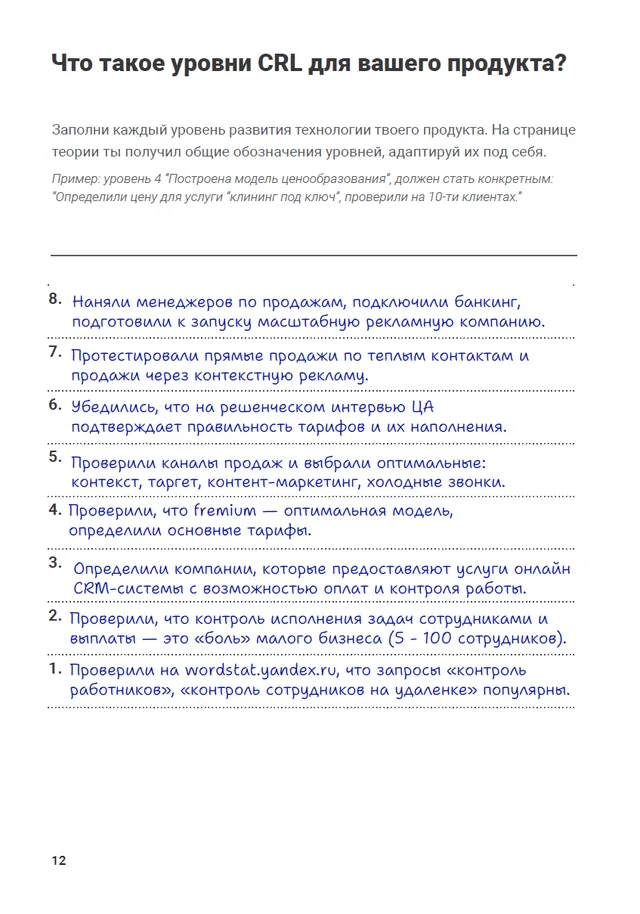
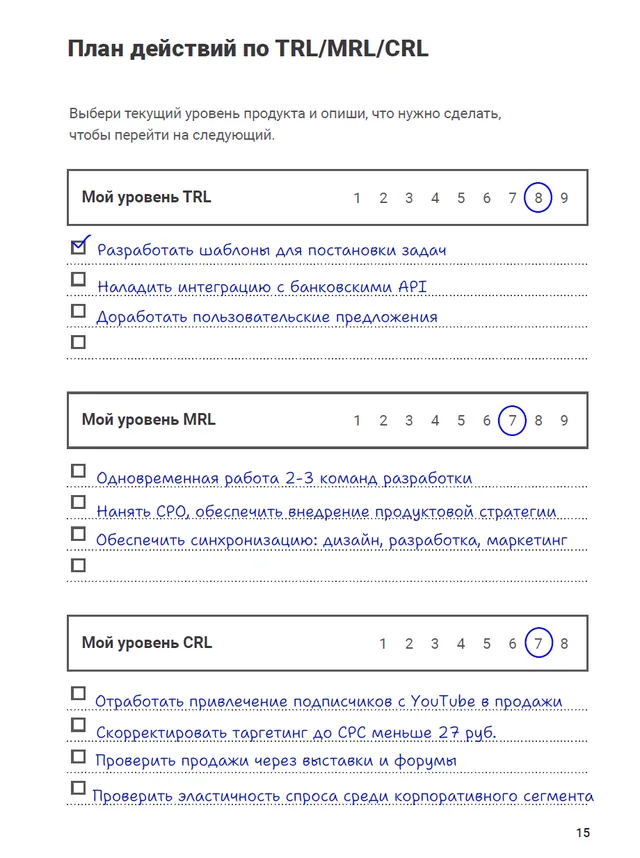
Now you have two templates to fill out. The first one is the CRL levels for your startup. In this template, you need to decipher the general formulations and try to come up with how these levels sound for your startup, what exactly needs to be confirmed to be sure that it has been achieved? This depends most on the sales model, market, b2b or b2c, or maybe even b2g, etc.
Examples of filling out the planner
Filling out the planner using the example of the CRM system Shtab.app
FAQ
What are the main factors considered when assessing the Commercial Readiness Level (CRL)?
When assessing the Commercial Readiness Level (CRL), factors such as market demand, competitive environment, product readiness for sale, effectiveness of marketing strategy, and the company's ability to scale sales are considered. It is also important to evaluate consumer feedback and the degree of market acceptance of the product.
Why is it important to consider CRL when launching a new product?
Considering CRL is important because it helps determine how ready the product is for a successful market launch and subsequent commercial success. It allows for assessing market risks, optimizing sales and marketing strategies, and preparing the necessary resources and processes for scaling the business. This reduces the likelihood of failures and increases the chances of successful product adoption.
How often should the Commercial Readiness Level (CRL) be reviewed and updated?
The Commercial Readiness Level (CRL) should be reviewed and updated regularly, especially when there are significant changes in the market, competitive environment, or product. The frequency of reviews may vary, but on average, it is recommended to assess CRL every six months or at each key stage of business development. This helps to respond promptly to new challenges and opportunities.
How can companies use CRL for strategic planning?
Companies can use CRL for strategic planning by analyzing the current level of commercial readiness and identifying areas that need improvement. This helps in building more accurate forecasts, developing effective marketing and sales strategies, and making informed decisions about investments and resources. Ultimately, using CRL in strategic planning contributes to more sustainable and successful business development.
Comments
0No comments yet.