

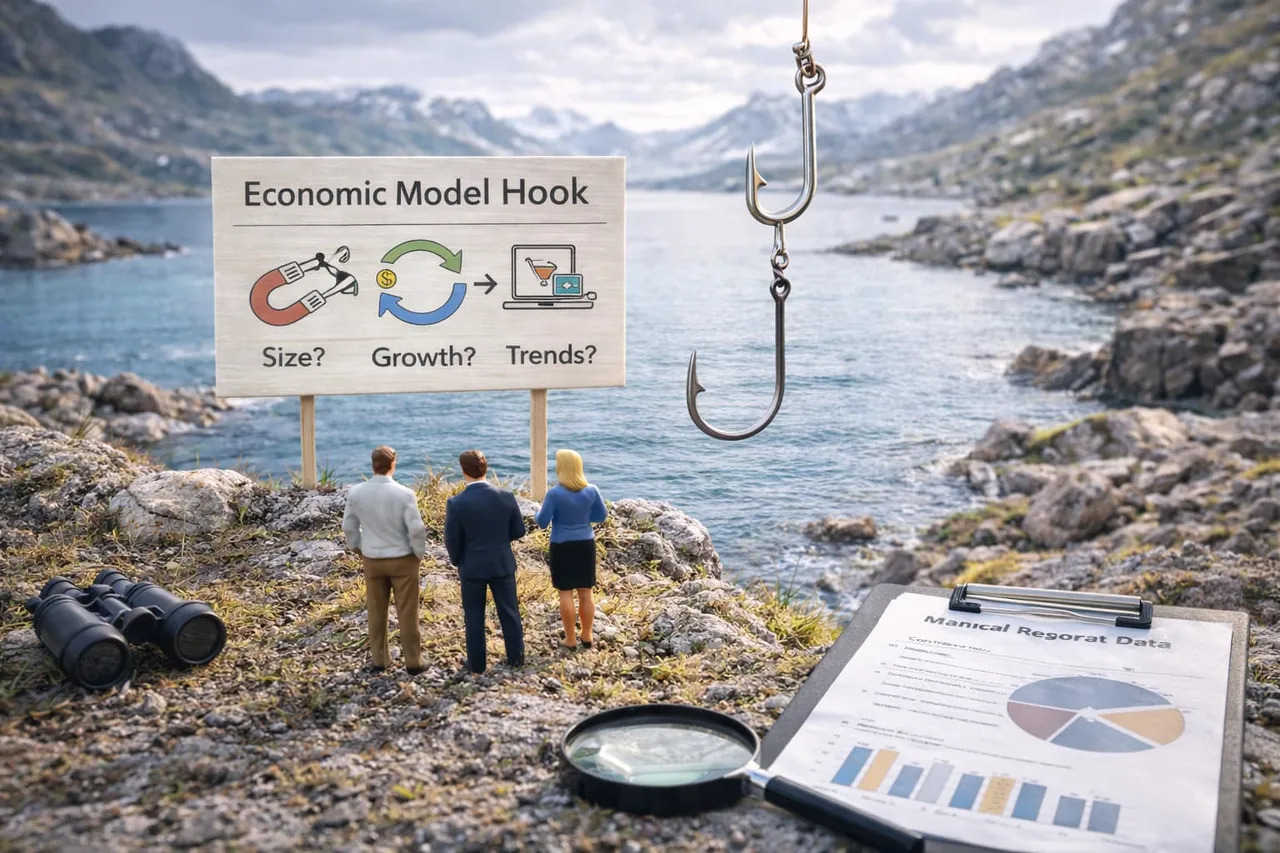
In the modern world, successful companies create products that not only solve users' problems but also form habits. One of the most effective tools for achieving this is the Hook Model, developed by Nir Eyal. The Hook Model is described in his book “Hooked: How to Build Habit-Forming Products,” published in 2014. This model helps understand how companies can form habits in users using four key stages: trigger, action, reward, and investment.
The Hook Model is based on how dopamine, the pleasure hormone, is involved in habit formation. Companies use this model to create products that become an integral part of users' lives, allowing them to return to the product again and again without significant effort.
Why are habit-forming products useful for business? First, they significantly improve user retention, as users more often solve their tasks with these products. Second, such products can increase the customer's lifetime value (LTV) and their willingness to pay for the product, ultimately leading to increased revenue and business stability.
How the Hook Model Works
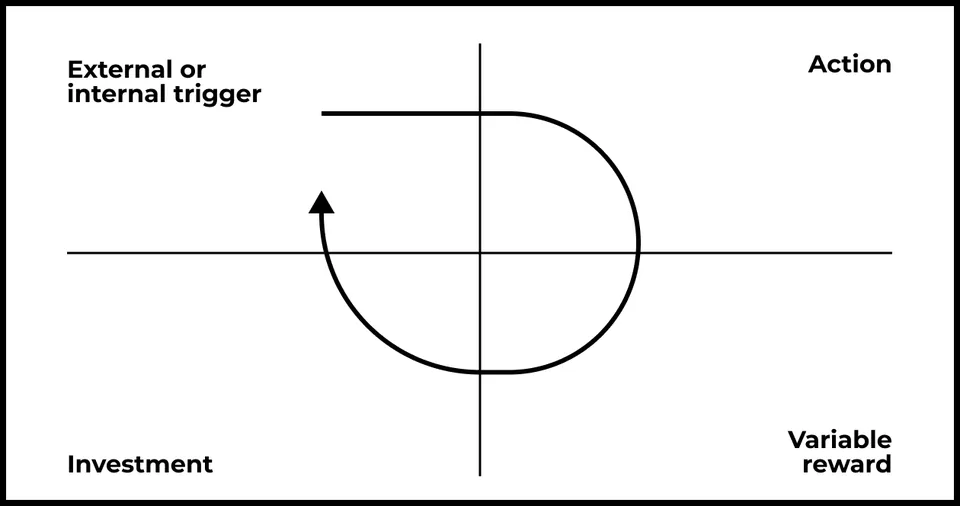
The Hook Model includes four steps:
- Trigger
- Action
- Variable reward
- Investment
Trigger — is a call to action for the user. Triggers are divided into external and internal. An external trigger can be a push notification, advertisement, email, news, app icon on the screen, and others. An internal trigger can be boredom, loneliness.
Action — the action the user performs after the trigger: publish a photo, reply to a message. At this stage, it is important to consider the user's motivation and ability to perform the action, that is, to make the action as simple and undemanding as possible.
Variable reward — the user receives something pleasant for the action they performed. The inconsistency and variability of the reward are closely related to unpredictability, which, as we have already noted, stimulates a higher release of dopamine.
In a mobile game, the reward can be receiving various bonuses or satisfaction from progress, in an entertainment service — pleasure from a funny video, and in a social network — a like or a message from another person. The key condition is that the moment of receiving the reward and its nature should be as unpredictable and variable as possible.
The Hook Model includes three types of rewards:
- Reward of the hunt — obtaining valuable information or making a profitable deal within the app.
- Reward of the self — confirmation of mastery in a skill, for example, a player defeats increasingly stronger bosses and reaches a higher level.
- Reward of the tribe — approval from the community, expressed in likes, comments, reposts.
Investment — a certain work that the product asks the user to perform after receiving the reward: fill in profile data, indicate interests, explore new features, or invite friends. The investment is aimed at improving the user experience in the future and increasing the chances that the user will return to the product.
As a result of actions at the Investment step, the product becomes increasingly valuable to the user over time. For example, they build a contact base, achieve certain progress in a game or character development, accumulate favorite playlists and movie selections.
“Investments can be used to make the trigger more engaging, the action easier, and the reward more exciting with each pass through the cycle.”
Nir Eyal
To form a habit, it is important that the user goes through this cycle repeatedly and, through positive experience, reinforces the connection between action and satisfaction. As a result, they will develop an internal trigger, that is, an incentive to return to the app. The emergence of internal triggers in a user is a sure sign of a formed habit.
Examples
Coca-Cola and New Year Advertising Campaigns
Coca-Cola actively uses the Hook Model in its New Year advertising campaigns to create a stable habit in consumers of associating their product with holiday mood.
- Trigger: External triggers include television and internet ads, store windows decorated in holiday themes, and New Year events sponsored by Coca-Cola. Internal triggers are associated with consumers' associations with the holiday, family gatherings, and traditions.
- Action: Consumers buy and drink Coca-Cola, enjoying the taste and creating a festive mood.
- Reward: The reward is positive emotions and nostalgia that arise when consuming Coca-Cola during the holidays.
- Investment: Consumers invest their time and money by purchasing Coca-Cola products and share holiday moments on social media, which strengthens the brand's association with the holiday.
Kinopoisk
An example of how the habit of watching movies on Kinopoisk is formed through the lens of the Hook Model:
- Trigger: news about a new release, recommendation from friends, app notification, feeling of boredom
- Action: watching a movie/episode
- Reward: emotions from watching
- Investment: leave feedback, recommend to a friend, publish a review on social media. The investment is aimed at improving recommendations for the user themselves, resulting in a trained algorithm for that specific user.
Task
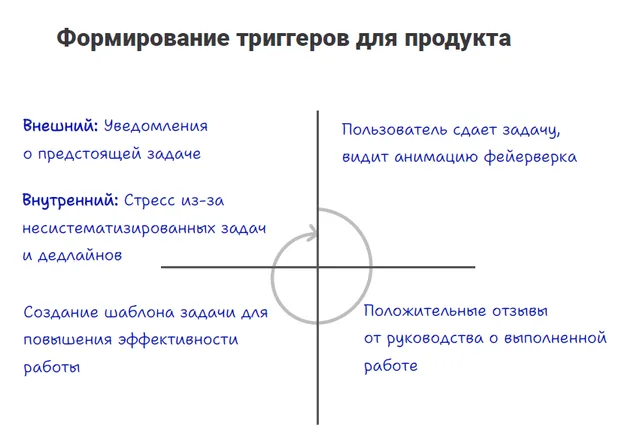
Formulate several Hook Models for your product on pages 80-82 of the planner. The models should describe real product capabilities, and you should understand how you will implement them and test whether they work, whether the external trigger becomes internal after several iterations. To develop an action plan, you can use note pages or formulate HADI hypotheses.
Example of Filling
FAQ
How can the success of implementing the Hook Model in a product be measured?
The success of implementing the Hook Model can be measured through user engagement metrics such as frequency of product use, time spent in the app, number of repeat visits, and user retention rate. You can also track metrics related to customer lifetime value (LTV) and revenue. Regular surveys and user feedback will also help assess how much the product has become part of their daily lives.
Can the Hook Model be used for all types of products, or is it only suitable for certain ones?
The Hook Model is most effective for products that involve regular use and user engagement. It is especially useful for digital products such as social networks, mobile apps, and online services. However, the principles of the model can be adapted for physical products and services if they include elements that can form habits.
What is the “Investment” stage and why is it important for habit formation?
The “Investment” stage is that users invest their time, effort, money, or data to improve their experience with the product. Typically, this involves improving their profile, creating a more comfortable environment for use. In short, these are investments after which it will be harder for a person to replace this product with an alternative. For example, we invest in YouTube when we subscribe to channels and like videos, improving recommendations. After a well-functioning recommendation system and subscriptions, it will be difficult for us to switch to a similar service, as we would have to redo all of that.
Comments
0No comments yet.
Sign in to join the discussion.